Executive Order 14421 Can Reach Grid Equipment Already Installed: What Section 2(b) Allows and Who Counts as a Covered Foreign Entity
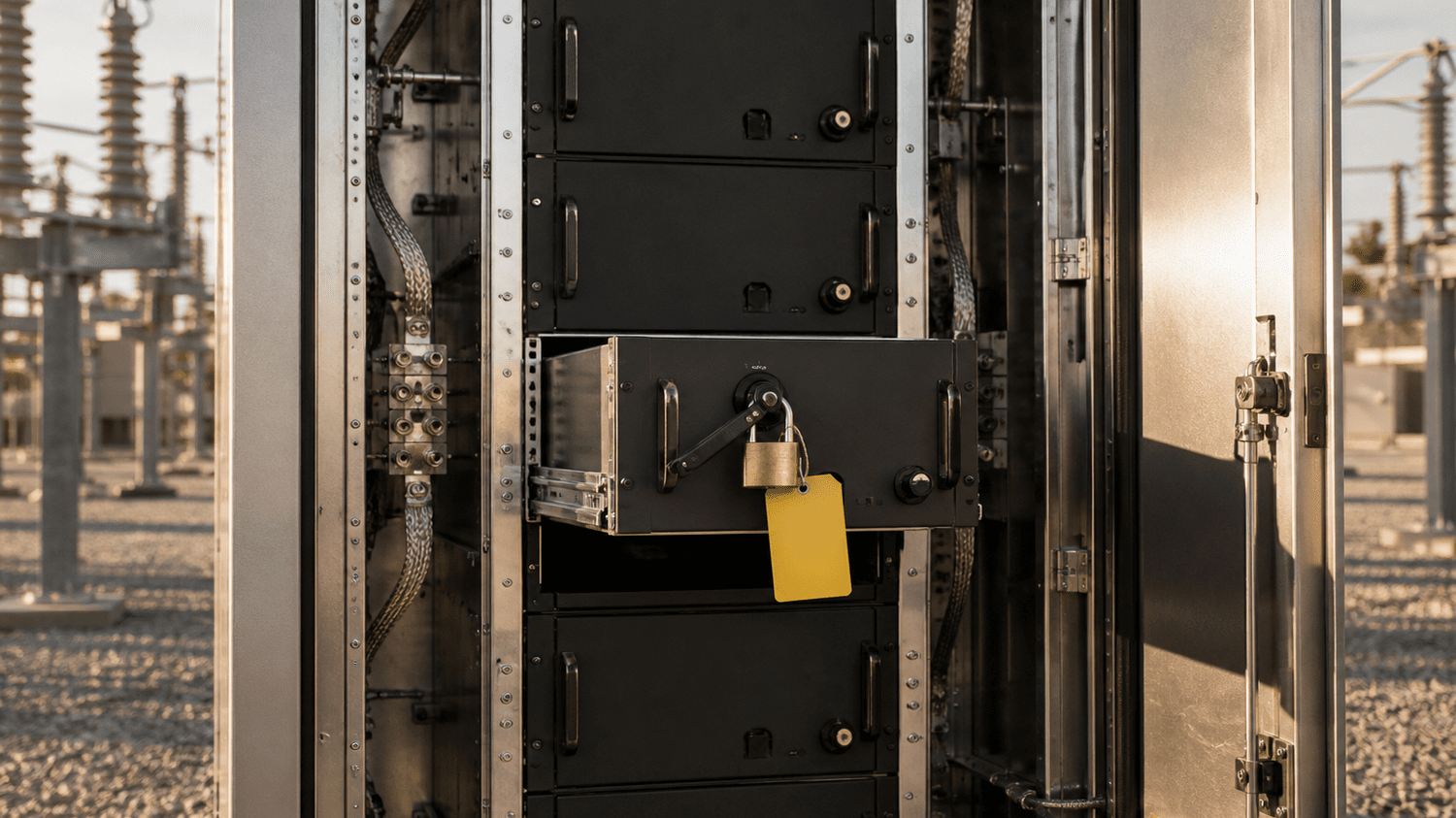
Somewhere in an American switchyard there is a transformer that was energized years ago, passed every inspection since, and has a firmware update path back to a vendor on another continent. Nothing about it changed on 26 August 2026. What changed is that the United States government now claims the authority to order it disconnected.
That authority arrived in Executive Order 14421, Declaring a National Emergency To Secure the United States Bulk-Power System, signed on 26 August 2026, filed with the Office of the Federal Register on 28 August 2026 at 11:15 am, and scheduled for publication on 31 August 2026 at 91 FR 55995–55999 as FR Doc 2026-17843. It invokes the International Emergency Economic Powers Act (50 U.S.C. 1701 et seq.), the National Emergencies Act (50 U.S.C. 1601 et seq.) and section 301 of title 3, United States Code. It took effect on signature. There is no comment period, and section 7(c) states that the order is not intended to and does not create any right or benefit, substantive or procedural, enforceable at law or in equity by any party against the United States or its officers. It disclaims rights arising under the order; it leaves claims arising under other law where they stood.
Practical takeaway. The reportable provision is section 2(b). An import prohibition changes what a utility may buy next; a power to condition the continued operation of installed equipment changes what a utility already owns. An asset register should be able to answer two questions: which items are used in substations, control rooms or generating stations serving transmission at 69,000 volts or more — including the relays, remote terminal units and programmable logic controllers inside them, whatever voltage they themselves run at — and for each of those, who supplies the firmware and who holds the remote-access path.
Section 2(a) stops the next purchase; Section 2(b) reaches the equipment already in the ground
Section 2(a) prohibits any acquisition, importation, transfer or installation of foreign-produced bulk-power system electric equipment, by any person or with respect to any property subject to United States jurisdiction, where the transaction involves any property in which any foreign country or a national of one has any interest, including through an interest in a contract for the provision of the equipment, where the transaction was initiated after 26 August 2026, and where the Secretary of Energy makes two findings. The first is a supply nexus: the equipment, or any critical component, software, firmware, digital service, maintenance service or remote-access capability associated with it, was designed, developed, manufactured or supplied by a person owned by, controlled by, or subject to the jurisdiction or direction of a Covered Foreign Entity. The second is a risk finding: undue risk of sabotage, subversion, unauthorized access, malicious remote action or supply disruption; undue risk of catastrophic effects on critical infrastructure or the economy; or an otherwise unacceptable risk to national security. The Secretary acts in coordination with the Director of the Office of Management and Budget and in consultation with the Secretaries of War, Commerce and Homeland Security and the Director of National Intelligence.
Section 2(b) applies the same determinations to a different population. On making them, the Secretary may impose conditions on the continued use, operation, maintenance, servicing or updating of foreign-manufactured or foreign-operated bulk-power system electric equipment acquired or installed before the date of the order, including requirements to identify, isolate, monitor, secure, disconnect, replace or remove it. The duty it creates runs forward from 26 August 2026 onto equipment already in service. It does not reopen or invalidate the purchase itself, and the distinction matters for anyone reading the order as a sanction on a past transaction. Section 2(d) adds that the prohibitions apply notwithstanding any contract entered into or any licence or permit granted before 26 August 2026.
The order attaches a procedural condition to that power. Before directing isolation, disconnection, replacement or removal, the Secretary shall consider effects on reliability and safety, the availability of secure replacements, and continuity of essential service, and may establish phased compliance. Section 2(e) works in the other direction: the Secretary may set criteria to pre-qualify particular equipment and vendors and publish that list, while retaining authority over any transaction involving them. Section 2(c) allows negotiated mitigation measures as a precondition of approval, which is the machinery under which a supplier keeps its position by accepting conditions.
Section 5(b) reaches inverters, battery storage and the controllers inside a substation
The scope is set by two definitions that should be read together. Section 5(a) defines the bulk-power system to include transmission lines rated at 69,000 volts or more and to exclude facilities used in the local distribution of electric energy. Section 5(b) then lists the equipment: reactors, capacitors, substation transformers, utility-scale and other grid-connected inverters, battery energy storage systems, uninterruptible power supply systems supporting critical infrastructure, current coupling capacitors, large and small and backup generators, substation voltage regulators, shunt capacitor equipment, automatic circuit reclosers, instrument transformers, coupling capacity voltage transformers, protective relaying, metering equipment, high voltage circuit breakers, generation turbines, industrial control systems including remote terminal units, programmable logic controllers and intelligent electronic devices, distributed control systems, and safety instrumented systems.
Agencies may also consider associated software and firmware, remote access capabilities, lifecycle maintenance and update mechanisms, and other supply chain dependencies. The order closes the definition by excluding items outside the list, and items with broader application beyond the bulk-power system unrelated to the national security concerns it identifies. That exclusion is where the argument will happen. Grid-connected inverters, battery energy storage and uninterruptible power supplies are general commercial products with enormous non-grid markets, and the same model numbers appear on both sides of the line.
Section 5(e) defines a Covered Foreign Entity in two limbs, and only one rests on a published regime
Everything above turns on a single term, and section 5(e) gives it two independent limbs. The first points outward to published law: a country, or any person owned by, controlled by, or subject to the jurisdiction or direction of a government of a foreign country, that is subject to a United States arms embargo or sanctions regime under the International Traffic in Arms Regulations at 22 C.F.R. 126.1. The countries are readable there today, with the conditions and partial carve-outs the regulation attaches to several of them. Applying the limb to a given supplier is still a factual exercise, because ownership, control, jurisdiction and direction are questions about corporate structure and influence. Nationality on a letterhead does not settle them.
The second limb is a determination. A Covered Foreign Entity is also any country or person that the Secretary of Energy, in consultation with the Secretary of War, the Director of National Intelligence and the Assistant to the President for National Security Affairs, has determined is engaged in conduct detrimental to the national security or foreign policy of the United States. The order names the deciding official and the officials who must be consulted, so the limb is not procedureless. What it does not supply is an evidentiary threshold, a notice or hearing mechanism, or any requirement that an individual designation be published. Two routes to designation then coexist: a determination by the Secretary under section 5(e), and rules under section 3(b), which may determine that particular countries or persons are a Covered Foreign Entity exclusively for the purposes of this order. Section 3(b) also requires the Secretary to publish implementing rules within 120 days, in the order's words, as needed.
The findings name artificial intelligence and data centers as the reason dependence grew
Section 1 explains why the threat is described as more acute than in 2020. The order states that since the President's first term, the rapid growth of advanced manufacturing, data centers, artificial intelligence, and defense production has increased the Nation's dependence on abundant, reliable electricity and magnified the consequences of a successful attack or supply disruption. That sentence sits in the operative findings of an emergency instrument. It is the cleanest dated federal source for a proposition analysts have been asserting on their own authority: the electricity demand of computation is now treated as a national-security variable.
The order does not name its own predecessor. It says only that the President made a finding during his first term, and the document that finding belongs to is Executive Order 13920 of 1 May 2020, Securing the United States Bulk-Power System, at 85 FR 26595. Between the two sits Executive Order 13990 of 20 January 2021, which suspended 13920 for ninety days, and Executive Order 14262 of 8 April 2025 on grid reliability and security at 90 FR 15521. Six years separate the two bulk-power orders. Both carry a prohibition on future transactions. What 14421 adds is the installed-base power in section 2(b) and the naming of compute demand in its findings.
Two dates follow from the signature: 24 December 2026 and 22 February 2027
Section 3(b) gives the Secretary of Energy 120 days from 26 August 2026 to publish rules or regulations implementing the delegated authorities as needed, which falls on 24 December 2026. The section is permissive about their content: such rules may determine that particular countries or persons are a Covered Foreign Entity exclusively for the purposes of the order, may identify equipment or countries warranting particular scrutiny, and may establish licensing procedures. The pre-qualified equipment and vendor list is a separate authority, which section 2(e) says the Secretary may exercise and publish. None of these is a duty to produce a particular document by December. Section 3(c) separately directs the Secretary, as soon as practicable and without a fixed date, to identify equipment posing undue risk and to recommend to the President, through the Assistant to the President for National Security Affairs, ways to identify, inventory, isolate, monitor or replace it.
Section 4 opens a procurement channel. Within 180 days, which falls on 22 February 2027, the Secretary must submit recommended revisions to the Federal Acquisition Regulation to ensure national security risks are considered in federal procurement of energy infrastructure and to prioritize United States-manufactured energy infrastructure. The FAR Council then has 90 days from receipt to consider proposing amendments for notice and public comment. The pattern repeats what the federal post-quantum programme has been doing all year, where a policy commitment becomes real when it reaches the acquisition regulation. A rule that changes what the government may buy changes what vendors build for everyone else.
How Quentir Reads It
Three properties of this instrument matter more than its headline. The first is that its reach runs on a term the executive branch can extend on its own motion. The ITAR limb of section 5(e) sends a reader to published law; the conduct-detrimental limb is a designation the Secretary of Energy can make in consultation with three officials, and while the criterion is printed in the order, it comes with no evidentiary standard, no notice or hearing step, and no duty to publish an individual designation. Either the Secretary's determination under 5(e) or a rule under 3(b) can bring a country or a company inside the order. The practical scope is therefore whatever those two routes make it, and the honest position today is that it is undetermined.
The second is the asset class. Equipment installed in a substation has a service life measured in decades and a firmware relationship with its vendor measured in weeks. That combination — long physical life, short update cycle, remote access as a standard feature — is the same structural problem that the post-quantum migration addresses in cryptography, and it now carries an emergency powers hook. Nothing in the captured text of Executive Order 14421 mentions cryptography, and no post-quantum obligation should be read into it. The overlap is in the asset register, not in the legal instrument.
The third is a civic point about who bears the risk of the remedy. Section 2(b) permits an order to disconnect equipment that hospitals, water treatment plants, heating systems and households depend on, and the drafters saw that: the safeguard sentence requires the Secretary to weigh reliability, safety, replacement availability and continuity of essential service before directing isolation or removal, and permits phased compliance. Section 7(c) then disclaims any right or benefit enforceable under the order itself, while leaving whatever claims other law already provides. The people whose supply is affected get no cause of action out of this instrument, and the protection it gives them is an obligation on the Secretary to weigh their position before acting. Whether rules issued under section 3(b) turn that obligation into a documented process, or leave it as an internal consideration, is the substantive question those rules would answer.
Our next Signature Brief takes the section 2(b) power apart in full: the fixed scope, the determination chain from finding to order, the interaction with existing DOE prohibition orders, and the refresh triggers for the December rulemaking and the FAR channel, with an internal-use licence for circulating it. This post gives the reading of the text and the two dates. The brief gives the operating document. Readers who want the free stream can follow the running coverage on Quentir Intelligence.
One question is worth carrying to 24 December 2026. Section 2 is operative from signature and does not wait for rules, and section 5(e) lets the Secretary determine without them. The criterion itself is public and printed in the order. What the order leaves unfixed is how it will be applied: no evidentiary threshold, no notice or hearing step, no duty to publish an individual designation. If the 5(e) route is used before any rules issue, the first entity brought inside the order would be named under a criterion whose application has no published standard, and whoever receives the resulting determination, whether a utility, a supplier or an agency, would be among the first to learn what it means in practice.
Sources: Executive Order 14421 of August 26, 2026, “Declaring a National Emergency To Secure the United States Bulk-Power System”, Federal Register Doc. 2026-17843, 91 FR 55995–55999, signed 26 August 2026, filed 28 August 2026 at 11:15 am, publication date 31 August 2026 (full text read 29 August 2026 from the Office of the Federal Register full-text service and the GPO print PDF at govinfo.gov). All quoted provisions are from that text: section 1 findings on advanced manufacturing, data centers, artificial intelligence and defense production; section 2(a) prohibitions and the Secretary of Energy's two determinations; section 2(b) conditions on equipment acquired or installed before the order and the reliability, safety, secure-replacement, continuity and phased-compliance sentence; section 2(c) mitigation measures; section 2(d) notwithstanding-any-contract clause; section 2(e) pre-qualified equipment and vendors; section 3(b) rules within 120 days and order-specific designation of a Covered Foreign Entity; section 3(c) identification and recommendations through the Assistant to the President for National Security Affairs; section 4(a) Federal Acquisition Regulation recommendations within 180 days and section 4(b) the FAR Council's 90-day consideration; section 5(a) the 69,000-volt threshold and the exclusion of local distribution; section 5(b) the equipment list and the software, firmware, remote access and lifecycle-update sentence; section 5(e) the two-limb definition of Covered Foreign Entity; section 6 reports to Congress under 50 U.S.C. 1641 and 50 U.S.C. 1703(c); section 7(c) no private right of action. Statutory authorities as cited in the order: International Emergency Economic Powers Act, 50 U.S.C. 1701 et seq.; National Emergencies Act, 50 U.S.C. 1601 et seq.; 3 U.S.C. 301. Proscribed-country list referenced by section 5(e): 22 C.F.R. 126.1, International Traffic in Arms Regulations (current eCFR text, consulted 29 August 2026). Predecessor and adjacent instruments, identified from the Federal Register presidential-document index rather than inferred: Executive Order 13920 of 1 May 2020, “Securing the United States Bulk-Power System”, 85 FR 26595; Executive Order 13990 of 20 January 2021, 86 FR 7037, section 7(c) of which suspended Executive Order 13920 for 90 days; and Executive Order 14262 of 8 April 2025, “Strengthening the Reliability and Security of the United States Electric Grid”, 90 FR 15521. The 120-day and 180-day deadlines given as 24 December 2026 and 22 February 2027 are calculated from the 26 August 2026 signature date stated in the order. All sources above were fetched and read on 29 August 2026.
Published intelligence, built to inform your own decisions. Published: August 29, 2026.