Zhejiang University Pairs Diamond Quantum Sensors With Structured Illumination to Map Oxidative Stress Inside Live HeLa Cells: Nature Communications, 10 October 2026
Diamond quantum sensors map oxidative stress inside live cells in Hangzhou
Quentir Medicine Monitor
Evidence-based insights for quantum medicine.
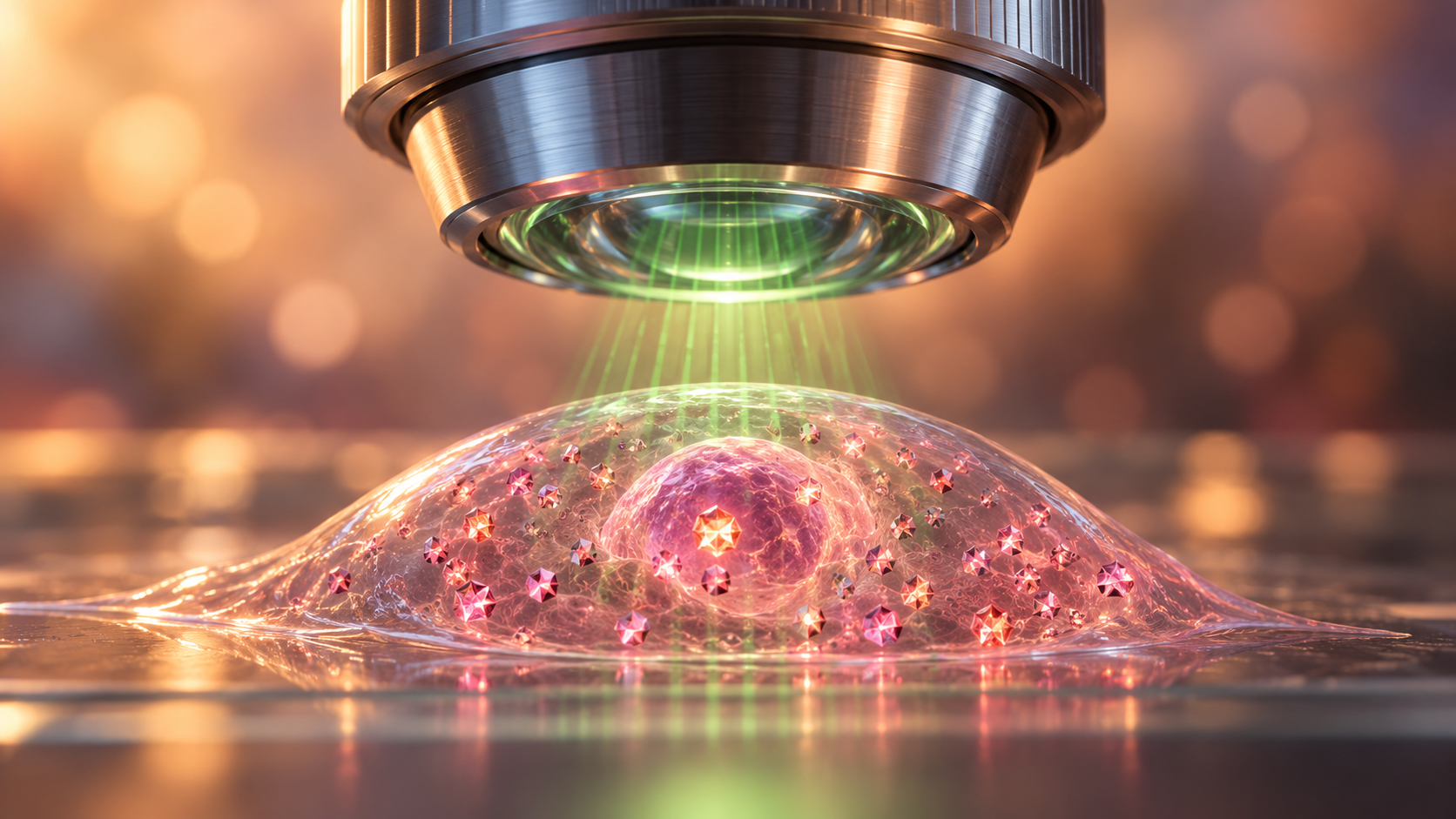
A team at Zhejiang University in Hangzhou has built a microscope that reads diamond quantum sensors inside living human cells at roughly twice the sharpness of conventional fluorescence imaging, and used it to watch reactive oxygen species change from one part of a cell to another. The paper, published in Nature Communications on 10 October 2026, reports that small diamonds in different regions of the same cell responded to two drug treatments in five distinct ways, a variety that a conventional averaged measurement smoothed into a single trend.
The performance figures in the abstract need careful reading, because they come from different experiments. The headline spatial resolution of 136 nanometers was measured on nanodiamond samples outside cells. Inside a live cell the team reports 161 nanometers for the optical image and 178 nanometers for the quantum sensing map. The 150 millisecond figure is the update interval of the sensing images, which the instrument reaches by reusing recent exposures in a rolling reconstruction. The 180 by 180 micrometer field of view is a mosaic of 5 by 5 smaller fields, captured in 12 seconds.
The article in Nature Communications (DOI 10.1038/s41467-026-78321-2) lists Yuxian Lu, Yibo Yang and Ke Xu as equal first authors, with Jiandong Feng as corresponding author. Most of the eleven authors work in the Laboratory of Experimental Physical Biology in Zhejiang University's Department of Chemistry, with co-authors from the university's College of Optical Science and Engineering, Zhejiang Normal University and China Jiliang University. The journal has released the accepted manuscript ahead of the final Version of Record.
The sensing element is the nitrogen-vacancy center, a defect in diamond where a nitrogen atom sits beside a missing carbon atom. Its electron spin responds to temperature and to magnetic noise in its surroundings, and the defect reports that response as a change in red fluorescence. The team fed HeLa cells, a standard human cancer cell line, with fluorescent nanodiamonds about 100 nanometers across, which the cells took up over roughly a day.
Europol and UC3M's 7 October 2026 Harvest Now, Decrypt Later Report Puts Health Records in the Ten-Year Risk Window: Hospital TLS, Archives and the EU Roadmap's 2030 Target
Europol names medical records among data worth stealing now and decrypting later
Quentir Medicine Monitor
Evidence-based insights for quantum medicine.
A patient's file can stay sensitive for most of a lifetime. A diagnosis made in childhood, a psychiatric admission, an HIV test or a genetic result can still matter to that person forty years later, for insurance, for employment and for plain dignity. The symmetric ciphers that encrypt the content of that file, such as AES-256, are considered robust against quantum attack. The weak point is the public-key cryptography, RSA and elliptic curves, that sets up those content keys in transit or wraps them in an archive. It was designed for a far shorter horizon, and it rests on mathematics that a large enough quantum computer is expected to break.
On 7 October 2026 Europol put that mismatch on paper. Its cybercrime unit, EC3, released two reports on quantum computing, and the second, titled harvest now, decrypt later and written jointly with Universidad Carlos III de Madrid (UC3M), lists medical records among the kinds of information that must stay confidential for many years and are therefore worth stealing in encrypted form today. The attacker in this scenario needs no quantum computer at the moment of theft. They copy encrypted traffic or files now and keep them until the means to read them exists.
For hospital security officers, health-IT vendors and the people who buy their systems, the report is useful because it is specific. It names the protocols at issue, explains which configurations leak the most, and ties its advice to the move to post-quantum cryptography, the new public-key algorithms designed to resist both conventional and quantum attack. It also says plainly that there is currently no clear evidence of this technique being exploited systematically at scale.
The Europol press release of 7 October 2026 announces two publications. The first, on cryptocurrencies, concludes that wallet keys are the main point of exposure for digital assets. The second, the Harvest Now, Decrypt Later report, was produced by Europol and UC3M within the Europol EC3 Advisory Group on Research and Development. The release states that the approach is particularly relevant to government communications, intellectual property, medical records and law enforcement files.
Quantum X Labs and SciSparc, 6 and 7 October 2026: CliniQuantum's Search of 7.3 Billion Gene Triplets From 11 Patients Ran on IBM's Qiskit Aer Simulator and One NVIDIA GPU
A quantum-simulated gene search, 11 patients and one GPU
Quentir Medicine Monitor
Evidence-based insights for quantum medicine.
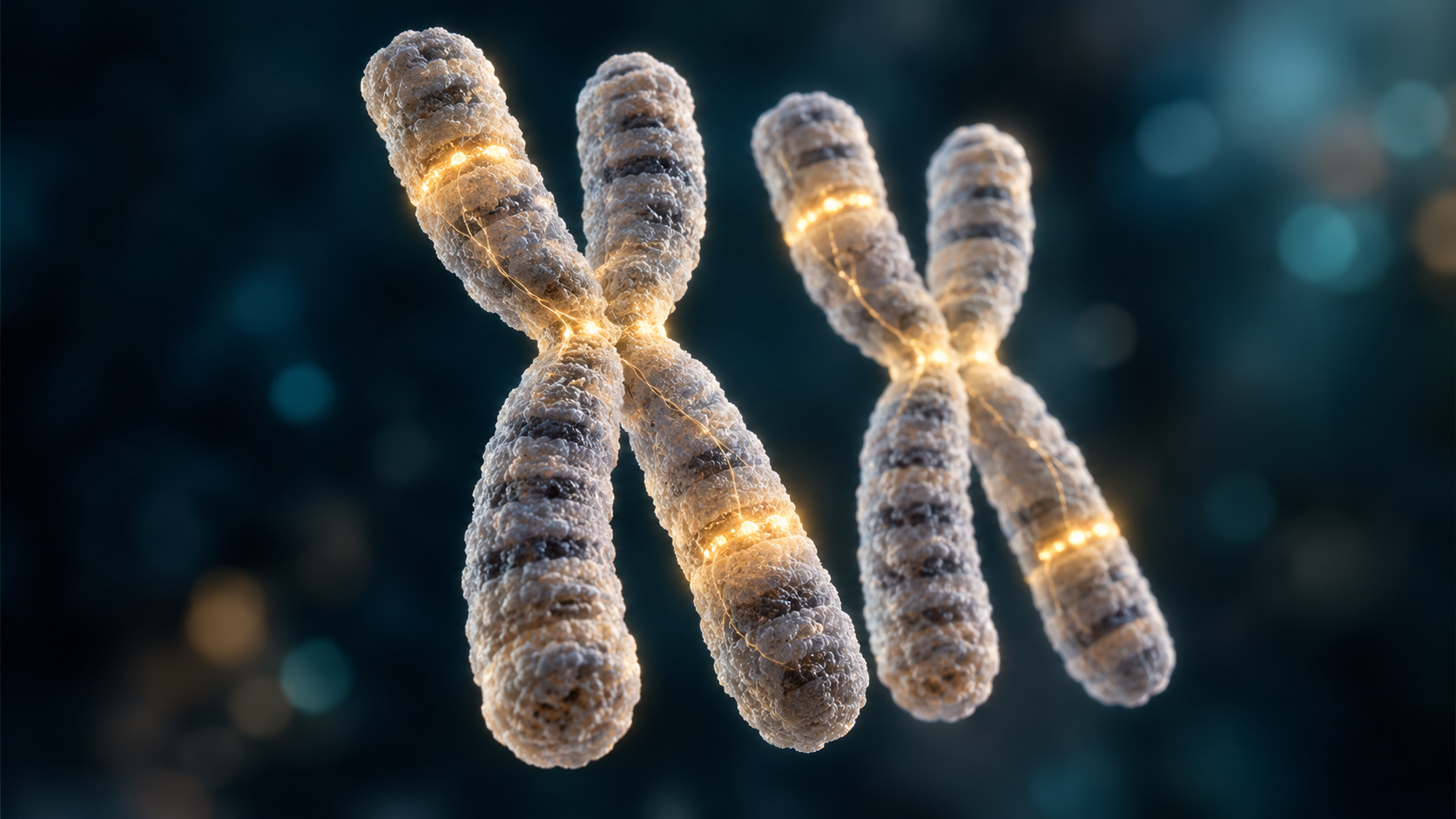
Precision oncology and many other parts of personalized medicine depend on finding small groups of genes that move together in a patient's tumor or blood. When a laboratory measures thousands of genes in only a handful of patients, the number of possible gene groups grows into the billions, and computing time becomes a real constraint on the analysis.
Two Nasdaq-listed companies announced the same benchmark of that kind of search this week. On 6 October 2026 Quantum X Labs said that CliniQuantum, which it describes as its subsidiary, had analyzed a clinical gene-expression dataset of 11 patients and 3,531 genes, testing every possible combination of three genes for correlated behavior. On 7 October SciSparc published nearly the same text, describing CliniQuantum as the majority-owned subsidiary of NeuroThera Labs, which SciSparc in turn controls. Both releases call the work quantum-enabled. The computation itself ran as a quantum simulation on conventional hardware: IBM's open-source Qiskit Aer simulator, accelerated by a single NVIDIA graphics card on a rented Amazon Web Services machine.
For a hospital genomics lead, a clinical research director or an investor reading the headlines, the useful work is to separate three things the releases put side by side: what was computed, how fast it was computed, and what the result means for patients. The releases answer the first two with specific numbers. On the third they are candid: the benchmark, in their own words, did not evaluate or establish the clinical validity, predictive value or potential utility of any gene combination it found.
The Quantum X Labs release of 6 October, distributed by GlobeNewswire, reports an approximately 16.8-fold computational acceleration. The comparison is between one machine using only its 64 virtual processor cores and the same machine using a single NVIDIA T4 graphics processor. The search took about 8.4 hours on the processors alone and about half an hour with the graphics processor, and both runs returned the same set of qualifying gene triplets. Dr. Tidhar Turgeman, quoted in the release as head of clinical trials data analysis, called the result an important development milestone.
IIT Bombay Review, 8 October 2026: Where Diamond Quantum Sensors and Fluorescent-Protein Qubits Stand for Medicine, From Living Cells to a Rat's Heartbeat
Quantum sensors for medicine, from diamond to fluorescent proteins
Quentir Medicine Monitor
Evidence-based insights for quantum medicine.
A cardiologist reads the heart through electrodes on the skin, and a neurologist reads the brain through sensors on the scalp. A small research field is trying to place quantum sensors next to the molecules themselves, inside cells and tissue, where they can report temperature, magnetic fields or chemical stress from within.
On 8 October 2026 three engineers at the Indian Institute of Technology Bombay posted a review of where that effort stands. Jyotiprakash Parhi, Ayan Majumder and Kasturi Saha follow quantum sensors for biomedicine from their established form, tiny defects in diamond, to a newer one: the fluorescent-protein qubit, a sensor a living cell can make for itself from its own genetic instructions. Between those two ends sit the nanodiamond probes that have already been placed inside cells to measure heat and the stiffness of the material around them.
The paper, "From Solid-State Spin Defects to Fluorescent Proteins: A Perspective on Quantum Optical Sensing Platforms for Biomedical Applications," is a preprint on arXiv (2610.11644) and has not been peer reviewed. It reports no new experiment. Its value for a hospital research director, a pathologist or a medical-device buyer is the map it draws: which measurements have been shown in cells, which in a living animal, and which problems the authors say still stand between these sensors and clinical use. A summary table sets out, sensor by sensor, the furthest biomedical stage reached, the representative study and the main barrier to translation.
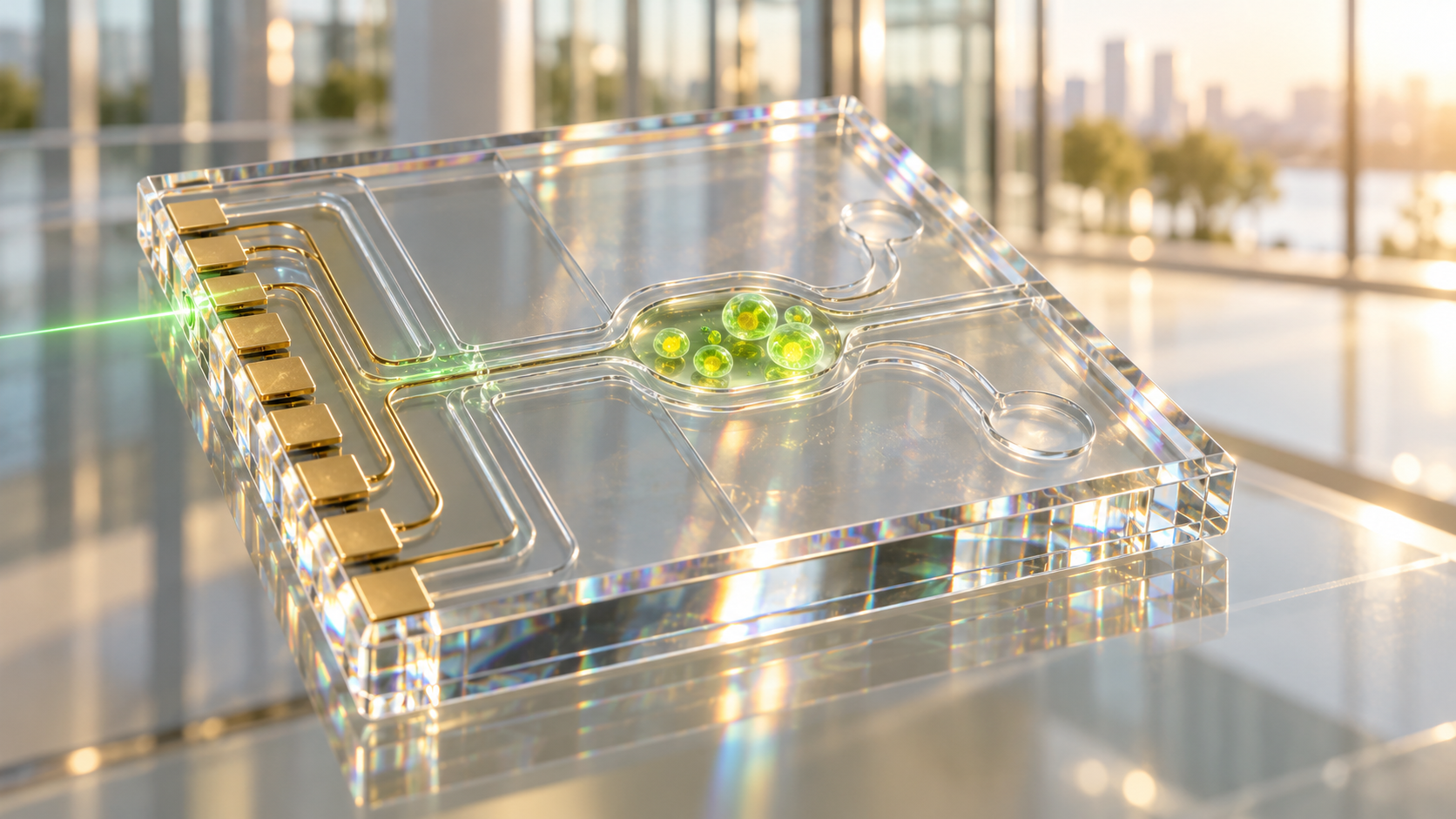
The common thread is a defect or molecule whose electron spin changes how brightly it glows. Shine green or blue light on it, often together with a weak microwave signal, and the glow dims or brightens depending on the magnetic field, the temperature or the chemistry nearby. Because the readout is light, a microscope can collect it from inside a cell without wires.
Researchers in Taiwan, Korea and at Brookhaven Test a Quantum Attention Model on Merck's Alzheimer's Drug Verubecestat: arXiv 2610.04588, 3 October 2026
A quantum attention model tested on an Alzheimer's drug series
Quentir Medicine Monitor
Evidence-based insights for quantum medicine.
Merck stopped its large Alzheimer's trial of verubecestat early, a pill designed to block the enzyme BACE1, which helps produce the amyloid found in the brains of patients. The drug had been carefully refined molecule by molecule, yet in a trial involving 1,958 participants with mild-to-moderate disease it did not reduce cognitive or functional decline compared with placebo.
That chemistry now has a second life as a test set. On 3 October 2026 five researchers from National Yang Ming Chiao Tung University, KAIST, Taiwan's National Center for High-Performance Computing, Brookhaven National Laboratory and Taipei Medical University posted a study of quantum attention for drug discovery. They used the compound series that led to verubecestat as a case study, asking whether a model with a small quantum circuit inside it orders those molecules by potency the way the laboratory did. The same models were also scored on standard benchmarks, including whether a molecule can cross the blood-brain barrier.
The paper, "Variational Quantum Attention for Molecular Graph Learning," by Yu-Cheng Lin, Yu-Chao Hsu, Tai-Yue Li, Nan-Yow Chen and Samuel Yen-Chi Chen, is a preprint on arXiv (2610.04588) and has not yet been peer reviewed. For a pharmacologist, a hospital formulary lead or a research director weighing quantum computing claims in drug discovery, its value lies in how plainly it reports what changed and what did not.
Software that predicts molecular properties is already a routine filter in early drug discovery. Chemists draw large numbers of candidate structures, and models rank them for solubility, brain penetration or binding strength before anyone spends money on synthesis and testing. A poor ranking sends chemists after the wrong molecules. The question this paper asks is narrow and useful: what happens to such a model when one small part of it is replaced by a quantum circuit?
QST's Heat-Etched Nanodiamond Quantum Sensors Cut Particle-to-Particle Variation to a Quarter and Raise the Signal 55 Percent: ACS Nanoscience Au, 7 October 2026
Uniform nanodiamond quantum sensors for blood diagnostics
Quentir Medicine Monitor
Evidence-based insights for quantum medicine.
A diagnostic test is only useful when it gives the same answer for the same sample, whichever batch of reagent the laboratory happens to open that morning. Tiny diamond particles that act as quantum sensors have shown remarkable sensitivity in research settings, yet each particle has behaved slightly differently, and that spread has stood between the laboratory result and a test a hospital could rely on.
On 7 October 2026 Japan's National Institutes for Quantum Science and Technology (QST), with Chiba University, Institute of Science Tokyo, Kyoto University and the Chiba start-up Type-I Technologies, reported a new way to make nanodiamond quantum sensors that behave far more alike. According to the QST press release of 7 October 2026, the new process reduces particle-to-particle variation to about a quarter of that of conventional particles and raises the quantum signal by 55 percent. The groups see the work as groundwork for quantum liquid biopsy, the detection of very small amounts of disease-related molecules in blood, and for batch production of uniform sensors rather than hand-picking a few outstanding particles.
The paper, "Spin-Uniform Nanodiamond Quantum Sensors for Reproducible Intracellular Thermometry," by Chihiro Suzuki, Ryuji Igarashi and nine co-authors, appeared online in ACS Nanoscience Au (DOI 10.1021/acsnanoscienceau.6c00068) on the same day. For a laboratory director, a diagnostics buyer or a clinician following early cancer detection, it addresses the question that comes before any claim of sensitivity: whether two sensors given the same sample report the same value.
A nanodiamond sensor depends on a defect called the nitrogen-vacancy center, a spot in the diamond lattice where a nitrogen atom sits next to a missing carbon atom. When green laser light falls on the particle, the defect glows red, and microwave measurements of that glow, a method called optically detected magnetic resonance (ODMR), reveal small changes in temperature and in the chemical surroundings. Particles a few tens to a few hundred nanometers across can enter living cells.
The conventional route crushes larger diamond into nanoparticles first and creates the sensing defects afterward. QST explains that mechanical crushing leaves scratches and strain that differ from particle to particle, so every particle carries its own quirks into the measurement. The new process reverses the order. The team first builds nitrogen-vacancy centers into relatively large diamond particles of good crystal quality, then heats them gently in air so that the surface oxidizes away a little at a time. Diamond faces oxidize at different rates, and the researchers tuned the conditions so that disordered outer material goes first. What remains is the most orderly central tenth of the original particle, still small enough for work inside cells.
Post-Quantum Authentication for Internet of Medical Things Devices: Sutradhar and Venkatesh's Lattice-Signature Prototype of 3 October 2026 and the Gap to NIST FIPS 204
Post-quantum signatures for medical device reports
Quentir Medicine Monitor
Evidence-based insights for quantum medicine.
A heart-rate reading from a wearable patch or a bedside monitor only helps a clinician if it really came from that patient's device and arrived unchanged. Hospitals already depend on digital signatures for that assurance, and most of those signatures rest on mathematics that a large quantum computer is expected to break.
Two computer scientists in India have posted a prototype that addresses this problem for the Internet of Medical Things, the growing population of connected wearables, bedside monitors and telemedicine devices. Kartick Sutradhar of the Indian Institute of Information Technology Sri City and Ranjitha Venkatesh of GITAM University Bengaluru describe a scheme for post-quantum authentication of medical device reports in arXiv preprint 2610.04661, posted on 3 October 2026. Its most practical feature is batch verification: a hospital gateway checks the signatures of many incoming reports in one vectorized step instead of one by one.
For a chief information security officer, a biomedical engineering lead or a procurement team writing device requirements, the paper gives a clear picture of what a quantum-resistant telemetry chain has to do, and it shows how much work remains between a laboratory prototype and a device a hospital could buy.
The design has three parts. First, each patient device packages its readings, such as heart rate, blood oxygen saturation (SpO2) and temperature, into a medical report in canonical JSON, a fixed text layout that always produces the same bytes for the same content. The report carries a timestamp, and the device signs it with a private key using what the authors call an ISIS-like lattice construction, a signature built on a hard problem over mathematical lattices.
Second, a hospital gateway receives the reports, looks up each patient's public key and checks every signature. Because the timestamp is inside the signed content, a captured report cannot simply be sent again later without detection, provided the gateway enforces a time window or rejects duplicates, which the authors list as an implementation requirement.
Ubikare, Multiverse Computing and Vicomtech's Q-CLINIC Receives the Ennova Health AI Prize, Announced 2 October 2026: Quantum-Inspired Language Models for Coding Clinical Notes in SNOMED CT and LOINC
A quantum-inspired language model for clinical coding
Quentir Medicine Monitor
Evidence-based insights for quantum medicine.
Much of what a hospital knows about its patients sits in free text. A discharge letter, a nursing note or a dictated consultation carries diagnoses, medications and test results in ordinary sentences, and someone has to turn those sentences into structured codes before the information can feed a registry, a quality report or a research query.
Three companies from the Basque Country say they are building a tool for that job. The health software company Ubikare leads Q-CLINIC with the research center Vicomtech and the quantum software company Multiverse Computing. According to a press release distributed through Europa Press on 2 October 2026, the project has received the Ennova Health prize of the Spanish medical and pharmacy titles Diario Médico and Correo Farmacéutico, in the category of artificial intelligence and data management. According to the partners, the system combines quantum-inspired compression of large language models with an extraction pipeline that codes clinical entities using SNOMED CT and LOINC, with HL7 FHIR for data exchange.
The prize was collected by Ángel Díez, chief executive and founder of Ubikare, Gorka Unamuno, head of innovation and strategic alliances at Multiverse Computing, and Gonzalo López, business development manager for digital health and biomedical technologies at Vicomtech. The project is funded by the Basque Government through the Smart Industry Quantum Technologies 2025 program of the regional development agency SPRI. The stated goal is to cut the administrative time of healthcare professionals by up to 40 percent.
For a hospital information officer or a clinical coding manager, the interest lies in two promises: a language model small enough to run on the hospital's own servers, and output that arrives already mapped to the terminologies and exchange formats the hospital uses. Both deserve a close reading, because the public material so far describes an approach and a goal and reports no test results.
University of Michigan Quantum Hamiltonian Model Infers a 14-Gene Regulatory Network From 127,000 Glioblastoma Cells: The arXiv 2602.19496 Revision of 1 October 2026
A quantum model of glioblastoma gene regulation
Quentir Medicine Monitor
Evidence-based insights for quantum medicine.
Glioblastoma is the most common primary malignant brain tumor in adults, and one reason it resists treatment is that its cells keep changing what they are. A single tumor holds cells that resemble astrocytes, neural progenitors, oligodendrocyte precursors and mesenchymal cells, and they can move between those states.
Four researchers at the University of Michigan have now tried to model that movement with the mathematics of quantum mechanics. In a paper first posted to arXiv on 23 February 2026 and revised on 1 October 2026, Mohammad Aamir Sohail, Ranga R. Sudharshan, S. Sandeep Pradhan and Arvind Rao describe a quantum Hamiltonian-based gene expression model, which they call QHGM, and an algorithm that learns its parameters from single-cell RNA sequencing data. They apply it to about 127,000 cells from glioblastoma patients and report a network of activating and repressing links among 14 genes.
For oncologists and genomics groups, the paper is worth reading for what it attempts and for how far it still is from the clinic. The model runs as a simulation on conventional graphics processors, its biological results have been compared with published literature and not yet with laboratory experiments, and its strongest benchmark numbers come from synthetic data that the model itself generated.
A gene regulatory network describes which genes switch other genes on or off. Single-cell RNA sequencing measures how strongly thousands of genes are expressed in each of many thousands of cells, and a family of computational methods tries to read the network back out of those measurements. The authors compare their approach with four established classical methods, ARACNE, GeneNet, GENIE3 and SINCERITIES.
University of South Africa Quantum Dot Sensor Recovers Added SARS-CoV-2 Spike Protein From Wastewater Samples: The June 2026 Discover Electrochemistry Paper
Quantum dot sensor for SARS-CoV-2 in wastewater
Quentir Medicine Monitor
Evidence-based insights for quantum medicine.
Wastewater can show that an infection is spreading through a community before clinical case counts catch up. Reading that signal usually means shipping samples to a laboratory with PCR equipment and trained staff, which many rural districts and smaller municipalities do not have.
A team at the University of South Africa's Institute for Nanotechnology and Water Sustainability has built a small electrochemical sensor aimed at that gap. In a paper published in Discover Electrochemistry on 29 June 2026, Nolwazi T. Gazu, Xolile Fuku, Zikhona N. Cabunda, Bhekie B. Mamba and Usisipho Feleni describe an aptasensor that pairs the conducting polymer polyaniline with gadolinium telluride selenide quantum dots to detect the SARS-CoV-2 spike protein. The team reports a limit of detection of 0.04 femtomolar, measured in buffered saline, a figure that places the device among the most sensitive electrochemical approaches published for this target, according to a summary of the work that Bioengineer.org posted on 30 September 2026.
For hospital infection-control teams and public health laboratories, the interest lies in wastewater surveillance that could one day run closer to the treatment plant. The Monitor reads the paper as a careful laboratory result with a clear next step. The sensor has been tested on real effluent to which purified spike protein was added, and it now needs testing on wastewater that carries the virus naturally.
Polyaniline is a cheap, robust polymer that conducts electricity, which makes it attractive for low-cost electrodes. Its weakness is that conductivity drops sharply at neutral pH, the condition under which environmental water samples are usually analyzed. The researchers grew the polymer directly on a glassy carbon electrode and co-deposited the quantum dots with it. Quantum dots are semiconductor nanocrystals whose electronic properties follow from quantum confinement, the effect that appears when a crystal is only a few to a few dozen nanometers across. Here they act as electron mediators, lowering the resistance to charge transfer and compensating for the polymer's weakness at neutral pH. X-ray diffraction put the crystallite sizes between 10 and 32 nanometers, with an average of 17.
NEC and Taiho Join NEDO Quantum Cancer Research Program: The 2 October 2026 Announcement and ABCI-Q
NEC and Taiho enter NEDO quantum cancer research program
Quentir Medicine Monitor
Evidence-based insights for quantum medicine.
A cancer research partnership becomes easier to assess when its sponsors explain who will do the work and when the results should arrive. Readers following quantum medicine can then judge each later announcement against the original commitment.
NEC's 2 October 2026 announcement describes a NEDO-selected partnership applying quantum computing and AI to cancer immunotherapy research. Taiho participates in the project, which plans to use ABCI-Q. Our assessment focuses on how future reports can connect that research ambition to evidence that outside institutions can judge. The strongest eventual account would make the reasoning behind each claimed improvement accessible to readers beyond the partnership.
The Monitor's assessment is that the useful news here is the opportunity to follow a research commitment from its beginning. A partnership announcement supplies a starting point for questions about responsibility and delivery. It gives a reader a reason to look for subsequent publications, but leaves the reader to distinguish a promised capability from a measured outcome. That distinction matters for any organization deciding how much attention, staff time or research funding to devote to a new computing approach. A successful collaboration could produce useful knowledge even if some of its original expectations need revision.
Our reading also separates the interests of different audiences. A research funder may reasonably want to know whether a project creates reusable methods and publishes enough information for independent assessment. A pharmaceutical research manager may ask whether the collaboration makes a practical research decision easier or cheaper. A clinician will eventually need evidence that any resulting intervention helps patients. These questions can be connected over time, while retaining their own standards of proof. Treating them separately makes an early announcement easier to understand and gives later results a fairer hearing. It also leaves room for informative negative findings, which can save other teams from spending years on an approach that does not work as expected.
Chalmers, Lund and Jülich Designed Lattice-Protein Sequences on IBM's Torino Quantum Processor: What Physical Review Applied Published on 28 September 2026
Quentir Medicine Monitor
Evidence-based insights for quantum medicine.
Most drug-discovery stories about quantum computers ask a folding question: given a chain of amino acids, which shape will it settle into? Protein designers work the other way round. They start from a shape they want, a pocket that grips a drug or a surface that binds a virus, and search for a sequence of building blocks that will fold into it. A team from Chalmers University of Technology in Gothenburg, Lund University and the Jülich Supercomputing Center has now measured how far one of today's quantum processors gets on the first half of that design problem.
Their paper, "Designing lattice proteins with variational quantum algorithms", appeared in Physical Review Applied (volume 26, article 034065) on 28 September 2026, a year after a first preprint on arXiv in August 2025. Hanna Linn, Lucas Knuthson, Anders Irbäck, Sandipan Mohanty, Laura García-Álvarez and Göran Johansson compare two families of variational quantum algorithms on a task they call protein sequence optimization, and they run the more robust family on IBM's Torino quantum processor, a device built on IBM's Heron r1 chip. With circuit settings carried over from noiseless computer simulations, the hardware found the correct sequence in more than 10 percent of its attempts for 17 of the 22 test problems, including the three largest, chains of 27 to 29 units.
The test proteins are simplified models drawn on a flat grid, and the authors say so plainly. The paper is still a careful read for anyone who funds or buys computational chemistry. In one controlled setting, with every right answer known in advance, it shows where current quantum hardware helps on a design task, where it breaks down, and which engineering choices made the difference.
The test bed is the HP model, one of the oldest simplifications in protein physics. Each protein is a chain of beads on a two-dimensional square grid, and every bead is one of only two kinds. H beads are hydrophobic, the water-avoiding kind of amino acid that real proteins tend to bury in their core. P beads are polar. The energy of a folded chain drops by one unit for every pair of H beads that touch on the grid without being direct neighbors along the chain, so the model rewards a compact hydrophobic core. Real proteins have twenty kinds of amino acid, side chains and three dimensions, so the HP model is a laboratory for methods. Its great advantage is that for chains of up to 30 beads, exhaustive classical enumeration has already listed the exact answers, which lets researchers grade a new algorithm without guessing.
Quantum4Health Tests Quantum Computing on Galicia's 061 Emergency Service and Genomic Variant Calling: What Fujitsu España and Red.es Reported on 29 September 2026
Quentir Medicine Monitor
Evidence-based insights for quantum medicine.
When someone in rural Galicia calls the regional emergency number, how fast the call is answered depends on how many call handlers are on shift, and how fast help arrives depends on where the nearest ambulance or helicopter is waiting. Both are planning problems that a health service solves every week with limited staff and limited vehicles. A Spanish public research project now tests whether quantum and quantum-inspired computers can help plan them, and whether other quantum computing approaches can help read DNA.
The project is Quantum4Health, funded by Red.es, the public digital-transformation agency under Spain's ministry for digital transformation. Its progress was described in a project statement published by the Spanish outlet Demócrata on 29 September 2026 and distributed the same day through Europa Press. Fujitsu España and Fsas Technologies, both part of the Fujitsu Group, lead the work. Two technical tracks run side by side: optimization on the Fujitsu Digital Annealer, a quantum-inspired machine that runs on conventional digital hardware, and quantum machine learning for variant calling, the step in genome analysis that finds mutations in a patient's DNA.
The statement describes work in progress. According to the partners, the project has so far defined its use cases, built first models and prototypes, and compared different technical approaches on real problems from the health sector. It reports no accuracy figures, no response-time savings and no patient data results. That makes it a useful view of where European health services are pointing quantum computing today, and a thin basis for any claim about benefit.
The consortium mixes a large vendor, research centers and one real health-service user. Red.es funds and drives the initiative. DigitalES, the Spanish association of digital technology companies, acts as the lead industry partner. The technology center Eurecat, the Galician Supercomputing Center (CESGA) in Santiago de Compostela and the Barcelona quantum company Qilimanjaro bring advanced computing and quantum expertise. The end user is the Public Foundation for Health Emergencies of Galicia, known as 061, which runs emergency medical calls and dispatch for the region.

Kraków's J-PET Group and 21 Co-Authors Publish a Roadmap for Quantum Entanglement PET: What arXiv 2607.12182 and the June 2026 First-in-Human Scan Show
Quentir Medicine Monitor
Evidence-based insights for quantum medicine.
Every PET scan starts with a positron meeting an electron inside the patient. The two annihilate and send out a pair of gamma photons in opposite directions, and the scanner finds the tracer by catching both photons at once. Those photon pairs also carry a quantum property that no clinical scanner reads today: their polarizations are entangled. A group of physicists and imaging engineers now argues that this unused signal could sharpen PET images and add new diagnostic readings.
Their case is set out in "Roadmap Towards Quantum Entanglement Positron Emission Tomography (QE-PET)" (arXiv 2607.12182), posted on 13 July 2026 by 22 authors led by Paweł Moskal of the Jagiellonian University in Kraków, with teams from the University of California Santa Cruz, IIT Bombay, the University of Tokyo, the University of Sydney, the University of Zagreb, Japan's National Institutes for Quantum Science and Technology and others. The roadmap surveys how quantum entanglement PET could be built, from the plastic-scintillator J-PET scanner in Kraków to crystal, semiconductor and Compton-camera designs. It also describes a new candidate biomarker, the degree of quantum entanglement of the photon pair, which may depend on the tissue in which the positron annihilated.
Two experimental findings from the past three years made the idea worth pursuing. In 2023 an experiment showed that the quantum correlation between the two photons survives when one of them scatters off an electron, which most physicists had expected to destroy it. In 2025 the Kraków group reported in Science Advances that photons from annihilation in matter are less than maximally entangled, and that the degree of entanglement depends on how the annihilation happened. If that dependence tracks the chemistry of tissue, such as oxygen content, a scanner could read it as a new measurement alongside the usual tracer uptake.
A companion preprint makes the idea concrete. On 28 June 2026 the Kraków team and colleagues posted "First-in-human quantum entanglement imaging" (arXiv 2606.29421), reporting that the J-PET scanner produced, in one patient, both an image of a gallium-68 DOTA-TATE tracer and, from the same research acquisition, an image of the degree of entanglement. The roadmap reads that scan as a start. The authors state plainly that whether entanglement-based imaging and pH mapping can reach clinical practice "remains an open question."
Florence and Barcelona Researchers Run a Quantum Diffusion Model's Noise Step on IBM's 133-Qubit Torino for Blood-Cell, Brain MRI and Rib CT Images: What arXiv 2609.31070 Shows
Quentir Medicine Monitor
Evidence-based insights for quantum medicine.
Generative AI can now draw convincing medical images: blood-cell smears, brain scans, slices of a CT volume. Hospitals and research groups want such synthetic images to enlarge small training sets, to share data without exposing patients, and to test diagnostic software on rare cases. The most successful generators today are diffusion models, which learn to turn random noise back into a plausible image. A preprint posted on 25 September 2026 asks whether a real quantum computer can take over one half of that process.
The paper, "Quantum Diffusion Models for Medical Image Analysis" (arXiv 2609.31070), comes from Francesco Aldo Venturelli and Miguel A. González Ballester of Universitat Pompeu Fabra and the Barcelona Supercomputing Center, Stefano Martina, Marco Parigi and Filippo Caruso of the University of Florence, and Alba Cervera-Lierta of the Barcelona Supercomputing Center. They built a hybrid quantum diffusion model in which the step that adds noise to an image runs on IBM's 133-qubit ibm_torino processor, while a classical neural network learns to remove that noise again. They then used it to generate synthetic medical images from three public collections: blood-cell photographs, brain MRI slices and 3D rib CT volumes.
The authors report that their hybrid model is competitive with a classical diffusion model of the same design, and better on some measures, especially for the 3D rib volumes. The comparison is limited: 100 generated samples per dataset, small images, and a classical baseline the team reproduced itself. No radiologist judged the images, and no diagnostic task was run on them.
That leaves a narrow but real result. It is one of the few medical-imaging studies in quantum machine learning that runs part of its pipeline on physical quantum hardware with public medical-image datasets, and it deserves a precise reading of what the hardware did and what the numbers show.
NYU's Tautomer-Predictor Skips Quantum Calculations and Flags 126 PDBbind Ligands: What the September 2026 Chemical Science Paper by Pan, Han, Han and Zhang Shows
Quentir Medicine Monitor
Evidence-based insights for quantum medicine.
A single hydrogen atom can sit in two places on the same drug molecule. When it moves, the pattern of single and double bonds shifts with it, and the molecule presents a different face to the protein it is meant to bind. Chemists call these interchangeable forms tautomers, and choosing the wrong one at the start of a computer-aided drug design project can distort the docking scores and free-energy estimates that follow.
A paper in the Royal Society of Chemistry journal Chemical Science, "Deep learning of tautomer stability from crystallographic proton positions" by Xiaolin Pan, Chao Han, Fengyang Han and Yingkai Zhang of New York University, published online in September 2026, attacks this problem with an unusual source of training data. The team mined hydrogen positions resolved in small-molecule crystal structures from the Cambridge Structural Database, built more than 1.1 million tautomeric states from them, and trained a graph neural network to predict tautomer stability directly from a molecule's two-dimensional structure. The authors state that the model needs no 3D conformers and no quantum-mechanical calculations, which is what makes it fast enough for structure-based drug discovery at library scale.
The quantum-medicine interest lies in what the network replaces. Quantum chemistry has long been the accurate but slow reference for deciding which tautomer a molecule prefers, and it is also one of the problems quantum computing companies cite when they pitch molecular simulation to pharmaceutical buyers. Here a classical model trained on experimental crystal data takes over a large part of that job on a single GPU node.
The results come from retrospective tests on public structure collections. The study screened no new compounds in the laboratory and involved no patients, and its training labels describe molecules in the crystal, which is a different environment from a protein pocket or blood plasma.
RPI and Kipu Quantum Ran Autism Biomarker Selection on IBM's 120-Qubit Nighthawk Processors: What the 24 September 2026 arXiv Preprint Found
Quentir Medicine Monitor
Evidence-based insights for quantum medicine.
A blood sample from a young child can yield hundreds of metabolite measurements, while a typical autism biomarker study enrolls a few dozen children. Choosing which handful of those measurements a diagnostic model should rely on is a hard combinatorial search. A team at Rensselaer Polytechnic Institute in Troy, New York, working with the Berlin company Kipu Quantum, posted a paper on arXiv on 24 September 2026 that runs this search on IBM quantum processors.
The paper, "Quantum Feature Selection for Biomedical Data Analysis" by Hongbin Liu, Robert Lahmann, Benjamin Campbell, Zhemin Zhang, Zhiding Liang, Siona Bapat and Juergen Hahn, poses metabolomic feature selection as a binary optimization problem and solves it on two IBM Nighthawk processors, ibm_rensselaer and ibm_miami, each with 120 qubits. The test data come from three published studies, two of blood plasma and one of the gut microbiome, in children with autism spectrum disorder and typically developing peers. The quantum solver picked five-feature subsets that classified about as well as several standard classical methods, and the authors state plainly that their results do not claim a quantum advantage.
For clinicians and hospital laboratories the interest lies in the diagnostic problem underneath. Blood-based autism screening has been studied at least since 2012, when the oldest of the three datasets used here was published, and every such test depends on a short, stable list of markers. This preprint tests whether current quantum hardware can help build that list. It does not test a diagnostic, and it enrolled no new patients.
The work is a first hardware feasibility study on retrospective data. It has not yet been peer reviewed, and its datasets are small: the largest group has 83 children with an autism diagnosis and 76 without.
QTomo Says Quantum Computing Can Rebuild CT Scans From 10 Percent of the X-Ray Data: What Kyungtaek Jun's Papers From 2023 to 2026 Tested
Quentir Medicine Monitor
Evidence-based insights for quantum medicine.
A Korean start-up called QTomo says its quantum algorithms can rebuild a CT scan from one tenth of the usual X-ray projections, which would cut a patient's radiation dose by 90 percent. The company's founder, Kyungtaek Jun, made those claims in a newspaper interview published on 24 September 2026, and his own peer-reviewed papers show how far the method has actually been tested.
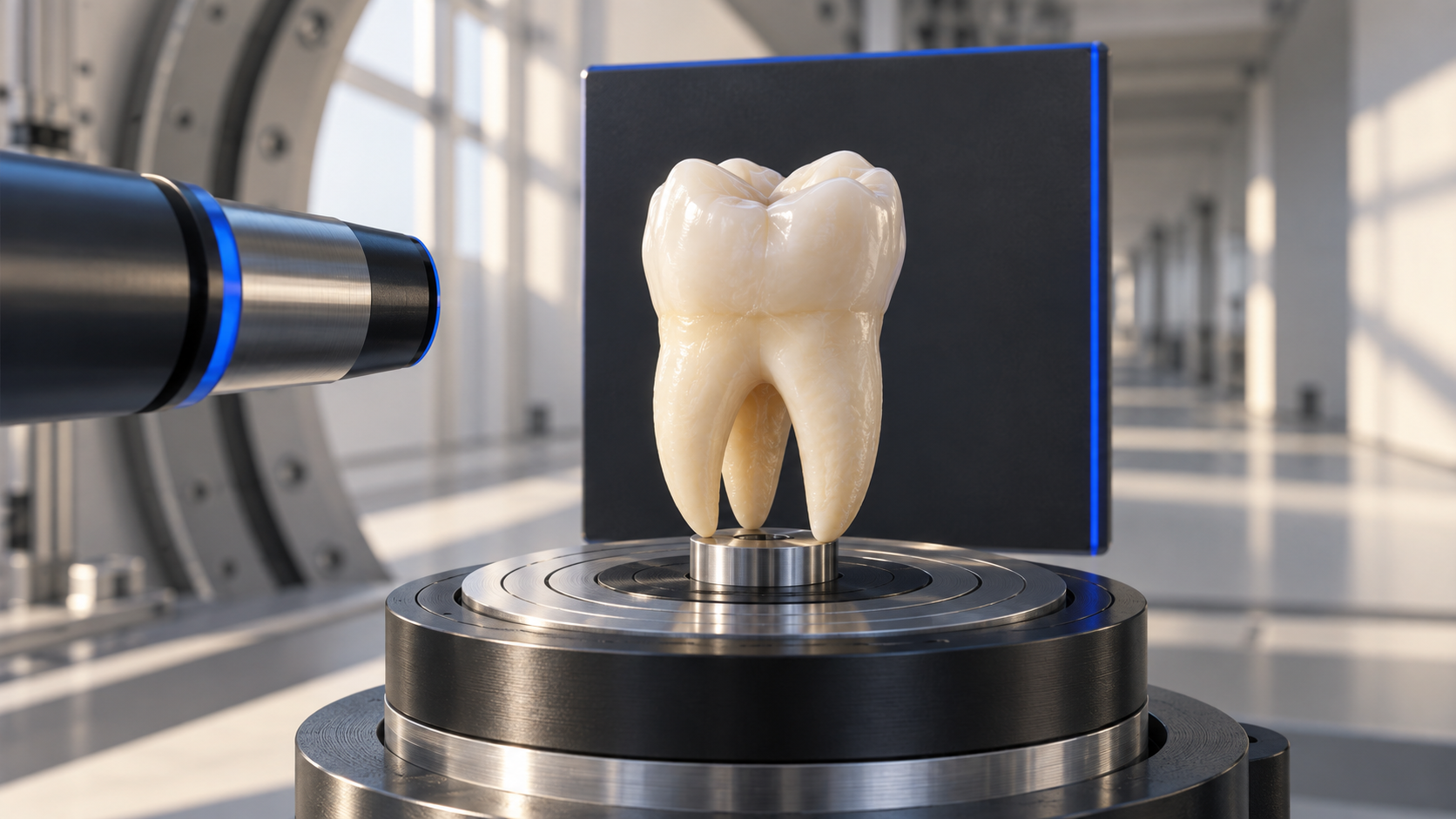
Jun has published the core of QTomo's approach in Scientific Reports in 2023 and 2025, in two arXiv preprints in April and May 2025 and in EPJ Quantum Technology in July 2026. The experiments in those papers perform quantum CT reconstruction on images of at most 100 by 100 pixels, solve the problem on the D-Wave hybrid solver, which combines a quantum annealer with classical computing, and use test objects such as the Shepp-Logan phantom, a standard computer-drawn head outline, a model tooth or a single existing chest CT slice. The 90 percent figure appears as an estimate in the April 2025 preprint, and none of the papers reports a scan acquired from a patient for the study, a dose measurement or a clinical validation.
That gap matters for radiology departments and hospital buyers, because the interview lists early cancer detection, breast and heart imaging and dental work among the technology's proposed clinical applications. The published papers describe a careful and interesting research program at a much earlier stage.
Set side by side, the interview's figures and the papers' measurements separate into three groups: claims with peer-reviewed support on small test images, one estimate from a preprint, and figures that appear in no paper at all. The first group shows steady progress by a small research team. The second would need a scanner study to confirm it, and the third would need data that QTomo has not yet made public.
Simulated Quantum Annealing Ranked Known Drug Pairs First for Diabetes and Rheumatoid Arthritis: Ramos, Coutinho and Magano in Quantum Machine Intelligence, 23 June 2026
Quentir Medicine Monitor
Evidence-based insights for quantum medicine.
Three researchers from Porto and the German Aerospace Center have written drug-pair selection as an energy problem that a quantum annealer could solve, and tested it on diabetes, rheumatoid arthritis, asthma and brain tumors. In simulation, the lowest-energy answers were dominated by drug combinations that doctors already use, and one of the top new suggestions for rheumatoid arthritis matches a pairing that a 799-patient trial found to roughly double remission rates.
The paper, by Diogo Ramos, Bruno Coutinho and Duarte Magano, appeared open access in Quantum Machine Intelligence on 23 June 2026 as article 70 of volume 8. It builds on the Complementary Exposure idea from network medicine, turns it into an optimization problem, and samples answers with simulated quantum annealing, a classical computer program that imitates how quantum annealing hardware behaves. Its central test is how often validated drug combinations appear among the top-ranked answers when they make up less than a tenth of a percent of the candidates.
Combination therapy is standard across chronic disease and oncology, because two drugs together can allow lower doses and fewer side effects. The search space is the problem. With more than a thousand approved drugs and thousands of diseases, the number of possible pairs grows far faster than any laboratory or trial program can test them.
For a pharmacology team or a hospital formulary committee, the study offers a clear example of what quantum optimization can and cannot yet contribute to that search. The ranking method works in simulation on four diseases. No quantum computer was used, and the authors state plainly that their predictions are hypotheses for experts to examine.
Simulated Quantum Kernels Lost All 24 Matched Tests to a Default Classical SVM on Brain MRI and Breast Ultrasound: Journal of Imaging Informatics in Medicine, 21 September 2026
Quentir Medicine Monitor
Evidence-based insights for quantum medicine.
On 21 September 2026 the Journal of Imaging Informatics in Medicine published a study by four computer scientists in Lahore, Abu Dhabi and Manchester that put two quantum machine-learning classifiers against ordinary statistical tools on brain MRI scans and breast ultrasound images. In all 24 matched comparisons the top-scoring quantum model scored lower than the top-scoring classical model, and simulating the quantum models on ordinary computers took roughly 50 to more than 220 times as long as running the classical one.
The paper, by M. Usman Hashmi, M. Adnan Hashmi, Muazzam Ali and Raheem Sarwar, asks whether quantum kernels improve medical image classification once every model gets the same features, the same training budget and the same protection against data leakage. Its answer, for the settings it tested, is no: a standard RBF-SVM with its default settings outperformed both quantum kernels in every condition. The authors describe their design as a leakage-controlled benchmark, and that design is the reason the study deserves a close reading.
Many earlier papers on quantum classifiers for radiology and pathology reported encouraging accuracy figures. Several compared a tuned quantum model with a weak classical one, or tested on a single split of the data, where a small overlap between training and test images can inflate a score. This study sets out to give both sides the same conditions and then measure what is left.
For a radiology department or a hospital buyer, the result gives a practical reference point. When a vendor or research partner proposes a quantum classifier for imaging, the first question is whether it was compared with a strong, well-configured classical baseline under the same conditions. This paper shows how large the difference can be when that comparison is made carefully. It also lists the controls such a comparison needs: identical inputs, preprocessing fitted on training images only, several random seeds and reported calibration.