
IonQ and Synopsys Put a 36-Qubit Forte Run Inside Ansys LS-DYNA, Cutting Wall-Clock Time by About 12 Percent on Hardware and Up to 14.6 Percent in Simulation, First Place at IEEE Quantum Week 2026
Eight authors from IonQ and Synopsys wired a non-variational quantum optimization routine into Ansys LS-DYNA, ran the first nested-dissection cut on the 36-qubit Forte trapped-ion system, and measured finite element analysis wall-clock time falling by about 12 percent on hardware and up to 14.6 percent for the drill in a simulated 80-qubit experiment, while simulated experiments overall reached 150 qubits only for the jet engine. We read what a faster crash and vibration solver means for survivability and airworthiness work, why the hybrid quantum-classical workflow is dual-use by construction, and what a missing classical ablation and best-case timings leave between an IEEE Quantum Week first-place paper and a program office relying on quantum-accelerated graph partitioning.

NIST Widens Superconducting Nanowire Single-Photon Detectors to 0.1 Millimeter and Cuts Dark Counts by Ten Orders of Magnitude, Published in Optica on August 19, 2026 Under DARPA's SynQuaNon Program
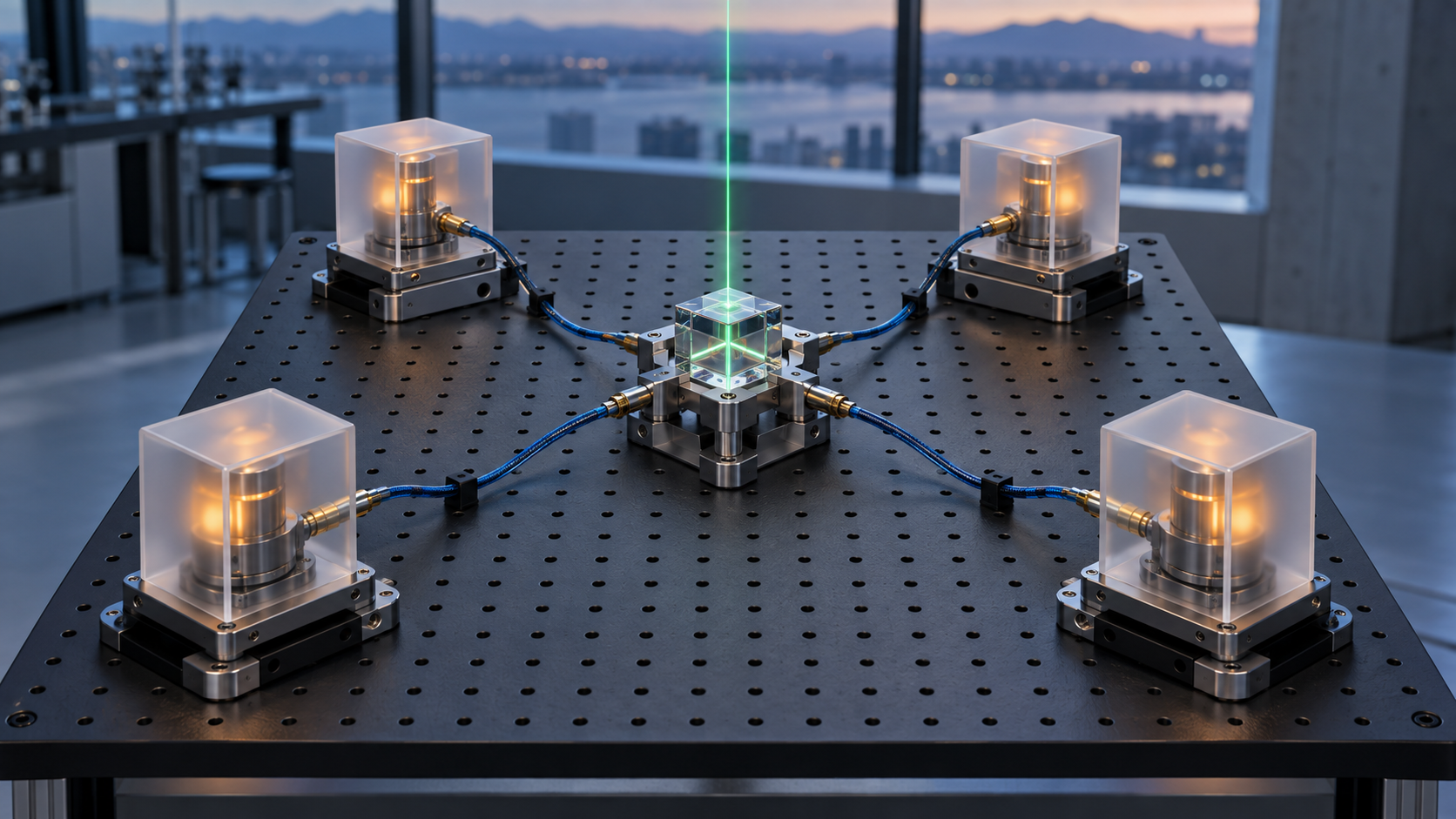
Sorbonne, Welinq and Leiden Demonstrate Private Quantum Networked Sensing With a Four-Photon GHZ State at 96.9 Percent Fidelity, arXiv 15 September 2026

Malaysia Is the Only ASEAN State Rated Tier 1 for Post-Quantum Cryptography Migration Readiness in SITG-Consulting's September 2026 Assessment of the ASEAN-10
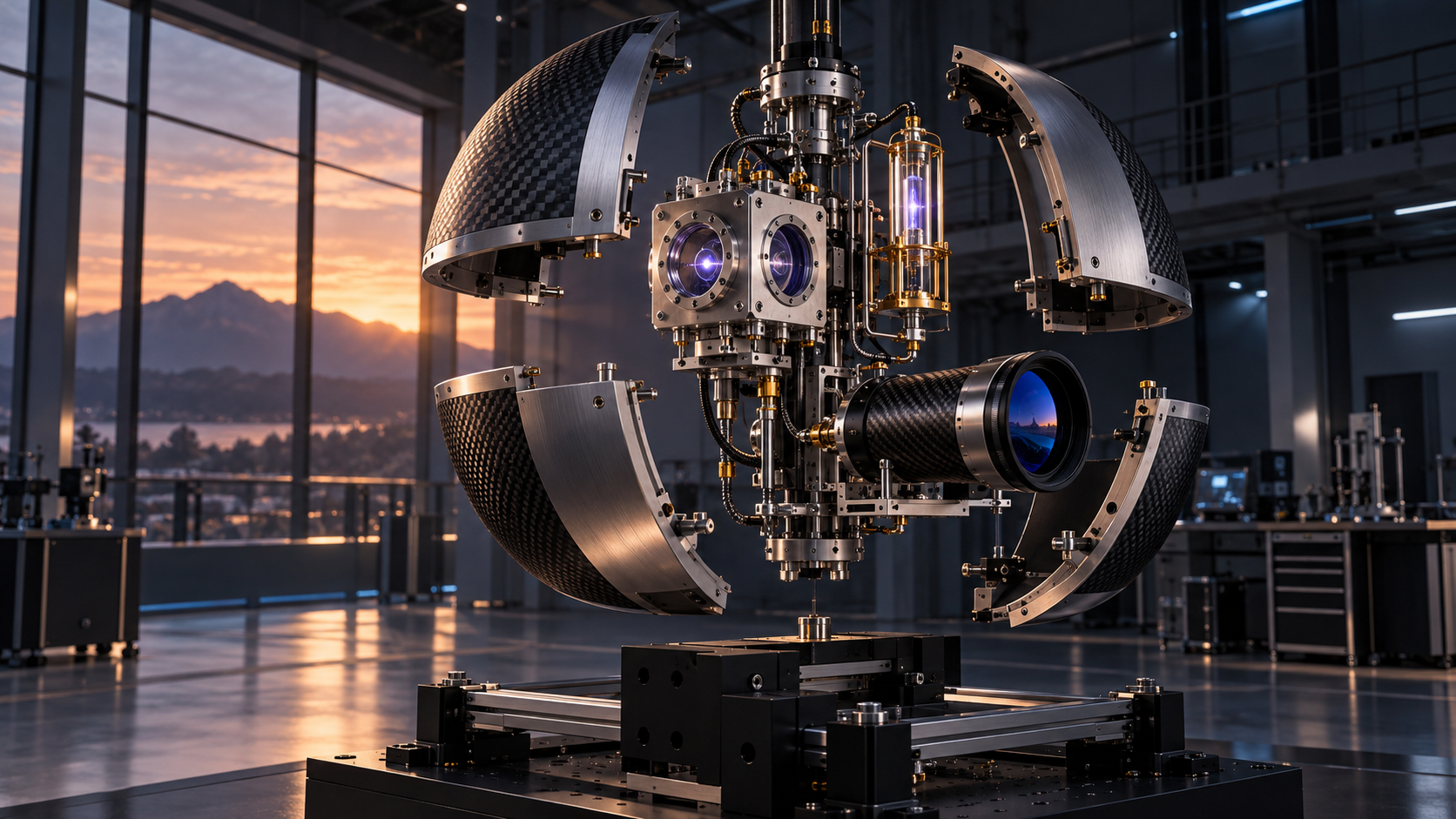
The 27.4 Million Euro ADEQUADE Project Closed in June 2026: Thales, Indra, Leonardo and Diehl Hand Europe Roadmaps for GNSS-Denied Navigation, Rydberg RF Detection and Single-Photon Imaging
Indra's September 14 announcement announces ADEQUADE's June conclusion, the 27.4 million euro European Defence Fund project in which Thales, Indra, Leonardo, Diehl and 27 other partners spent three and a half years deciding which quantum sensing technologies Europe should carry toward its platforms. We read what the project establishes across GNSS-denied navigation, Rydberg RF detection and single-photon imaging, and what still separates a concluded research action from a system a program office can rely on.
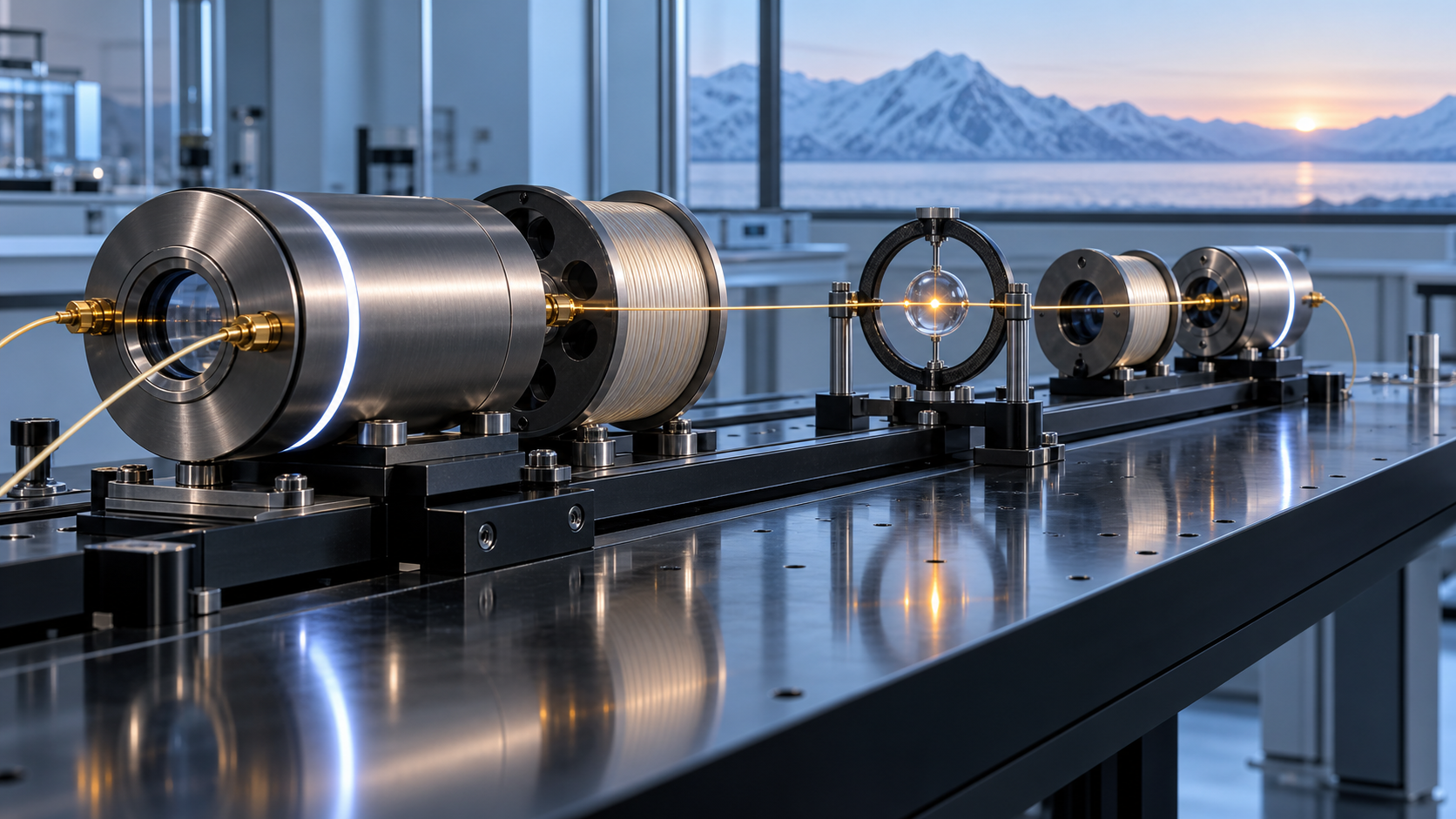
USTC Demonstrates Quantum Position Verification With 75-Meter Accuracy Over 2 Kilometers of Fiber, Published in Nature Physics on September 3, 2026

Lockheed Martin's F-35A Offset With armasuisse Pays for Switzerland's First IBM Quantum System Two at CSCS Lugano, With Alloy Simulation and Quantum Navigation as the Defense Research Slate
IBM and Lockheed Martin turned part of a 3 billion dollar F-35A offset obligation to armasuisse into Switzerland's first IBM Quantum System Two, to be installed at CSCS in Lugano under an ETH Zurich hub announced September 10, 2026 and expected to be operational by the end of 2026. We read the two reserved research projects, quantum navigation and printed-alloy metallurgy, against the one checkable result behind them: a sample-based quantum diagonalization study of methylene on 52 qubits, and we lay out what separates this defense industrial offset hub from a materials pipeline a program office can rely on.
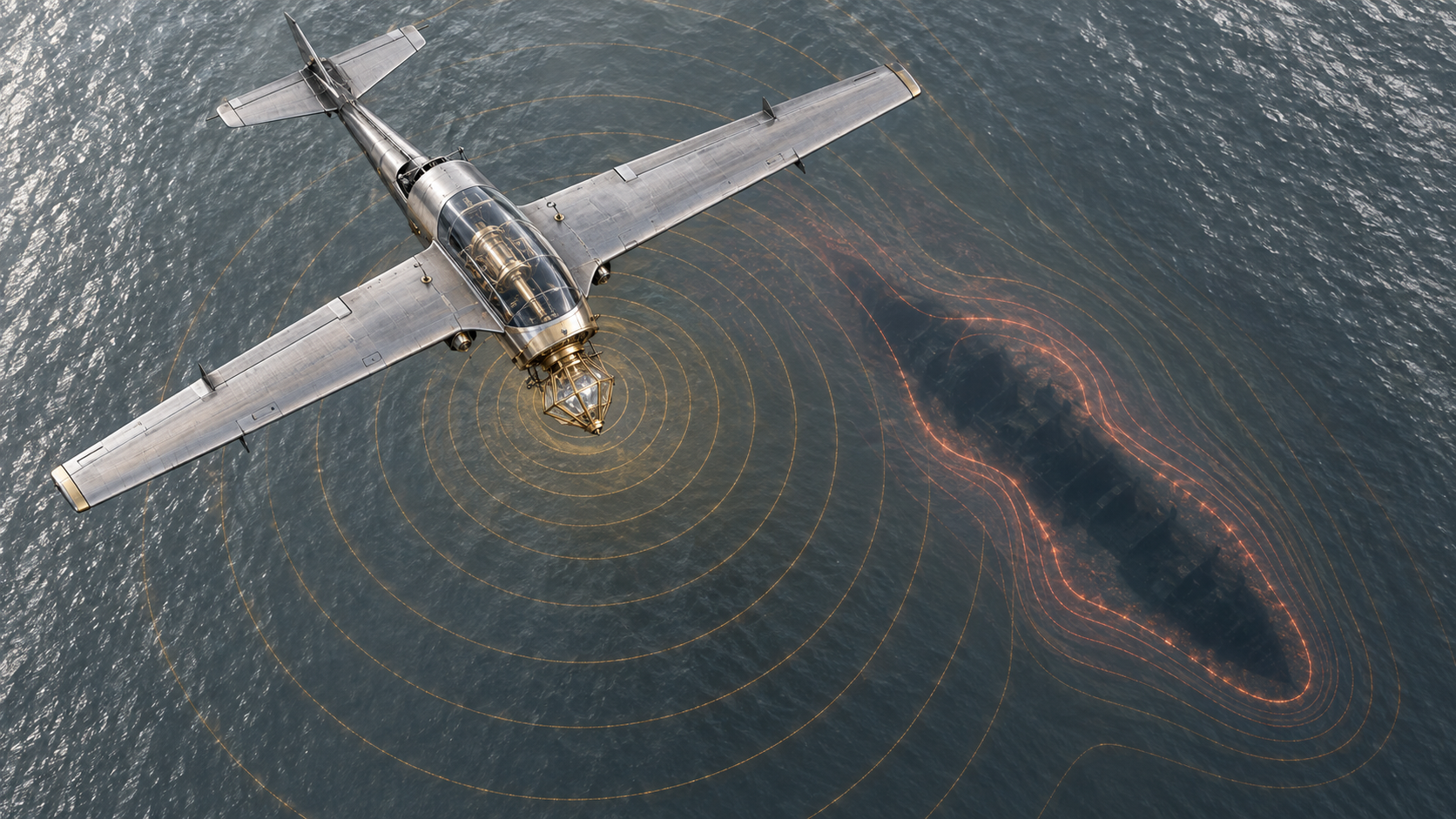
Japan's Defense Ministry Puts Drone-Mounted Quantum Magnetometers for Submarine Detection in Its Fiscal 2027 Budget Request, With Prototypes Planned for 2027 to 2031
Nikkei reports that Japan's Ministry of Defense wrote a quantum magnetometer for small drones into its fiscal 2027 budget request, with prototypes planned from 2027 to 2031 and Chinese submarines as the surveillance target. We read what the filing establishes for submarine detection from cheap, expendable aircraft, set it beside CASC's 2025 drone-mounted magnetometer trial off Weihai, and lay out what separates an item request from the anti-submarine warfare surveillance net a fleet commander can rely on.

SandboxAQ Flies AQNav Magnetic Navigation on Northrop Grumman's Lumberjack, the First Reported MagNav Test on an Attritable One-Way-Attack Drone
On September 9, 2026, SandboxAQ and Northrop Grumman reported the first flight test of magnetic navigation on an attritable one-way-attack drone, with AQNav installed into Lumberjack's existing systems in under an hour. We read what the test establishes for GPS-denied operations, set it beside Q-CTRL's Coral Sea gravimetric trial and Saab's quantum-timed radar network, and lay out what still separates a flight campaign from the alternative PNT capability a program office can rely on.
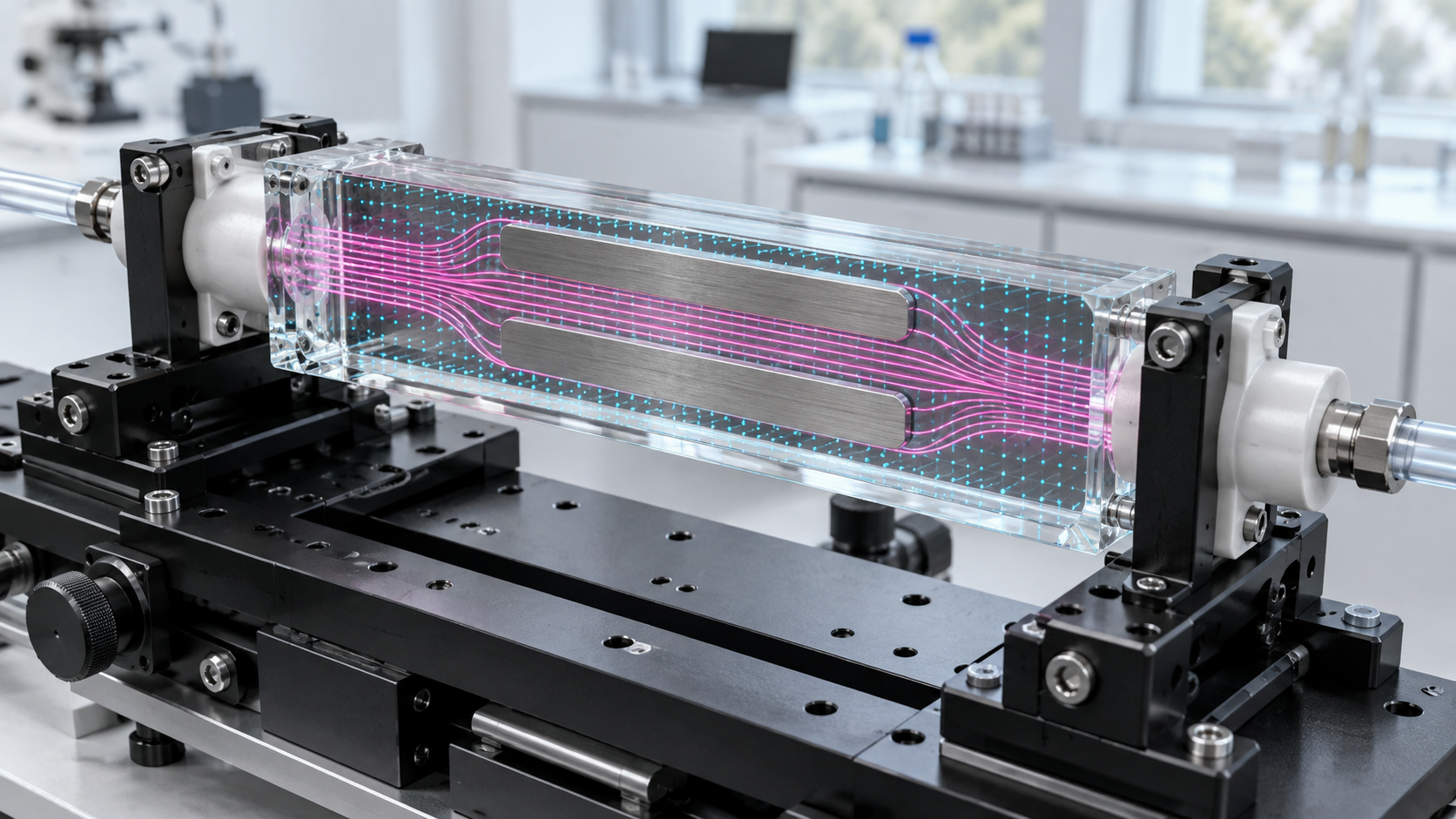
Peking University Puts Solid Walls Into a Quantum Fluid Solver: the Quantum Lattice Boltzmann Paper of 5 September 2026 and Its Emulated Flows at Reynolds 6 to 71
On September 5, 2026, Peking University's turbulence laboratory posted a quantum lattice Boltzmann method that carries solid walls, inlets and outlets inside the quantum computation, the ingredient separating quantum flow demonstrations from real geometry. We read its 23-qubit Poiseuille case at Reynolds 6.37 and its larger emulated flows up to Reynolds 71 as a dual-use step toward computational fluid dynamics on quantum machines, and measure the distance from a noiseless emulator to the turbulent, high-Mach regimes where aerodynamic design actually lives.
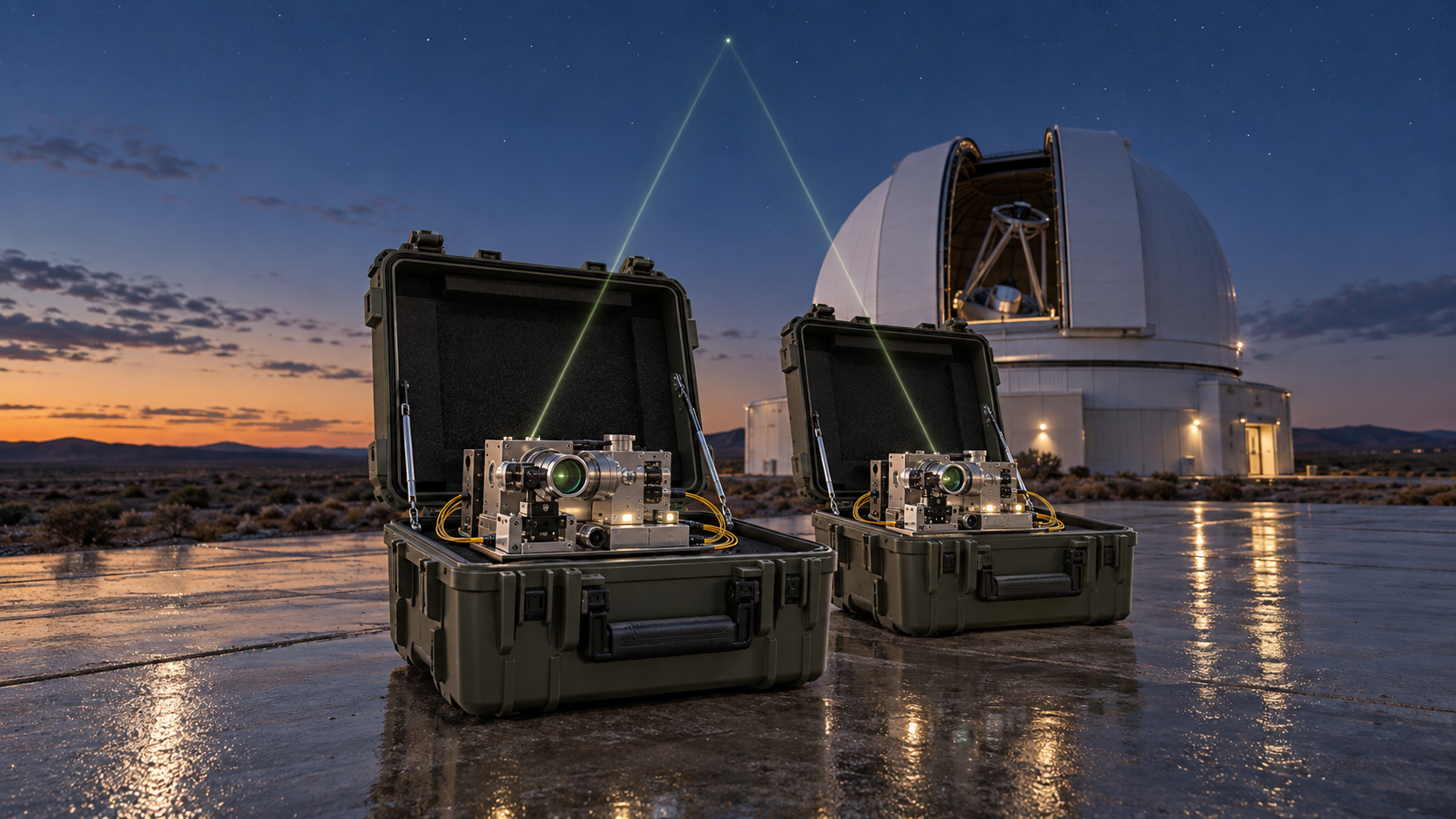
CSIRO Delivers Two Entangled-Photon Quantum Light Sources to Australia's Defence Science and Technology Group for an Intended Tamper-Evident Ground-to-Satellite Timing Link
In July 2026 CSIRO delivered two portable entangled-photon Quantum Light Sources to Australia's Defence Science and Technology Group, source hardware intended for a future quantum time transfer link between ground stations and satellites. We read the delivery beside the holdover clocks and inertial sensors other programs are flying, and set out what still separates two delivered sources from an authenticated timing layer intended to help address GPS jamming and spoofing.

Circle's August 31 Disclosure Reads 813 Logical Qubits Off Eigen Labs' ECDSA.fail Leaderboard: What a Google and Stanford Estimate Says a secp256k1 Attack Actually Costs
Circle's August 31 disclosure tells developers that breaking elliptic curve signatures now takes 813 logical qubits, a figure lifted from one axis of Eigen Labs' ECDSA.fail circuit competition. We put it back beside the March 2026 Google, Stanford, and Ethereum Foundation estimate, under 1,200 logical qubits and 90 million Toffoli gates on fewer than half a million physical qubits, and beside Willow's actual 105 physical qubits, to show how a defense buyer should read quantum cryptanalysis headlines while setting a post-quantum migration schedule.

SEALSQ's QVault TPM Puts ML-DSA and ML-KEM in Silicon and wolfSSL's wolfTPM Now Drives It: What the September 3, 2026 Integration Means for Long-Life Defense Platforms
SEALSQ and wolfSSL announced on September 3, 2026 that the wolfTPM stack now drives the QVault TPM, a chip on track to be the first shipping TPM 2.0 device with ML-DSA and ML-KEM in silicon under the Trusted Computing Group's v1.85 specification. We read the integration as a hardware root of trust story for thirty-year defense platforms, where the soldered TPM is the last chip to change, and set out what still stands between this laboratory integration and a post-quantum TPM a program office could specify: an availability date, independent validation and public side-channel scrutiny.
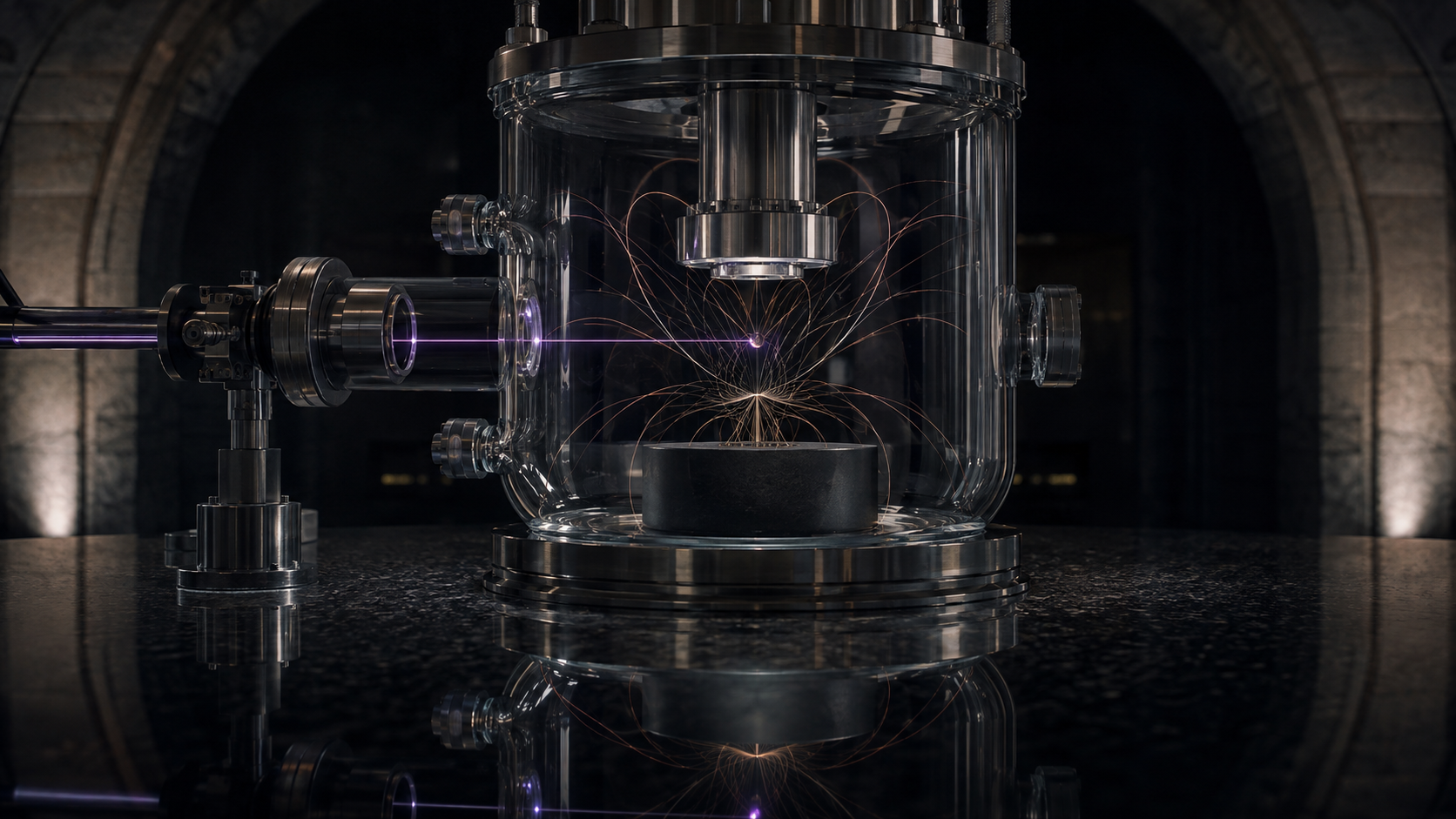
Peking University and Mainz Demonstrate a Levitated Magnet Magnetometer at 32 Femtotesla per √Hz and Room Temperature in Science, the Signal Class of Undersea Magnetic Anomaly Detection
Physicists at Peking University and Johannes Gutenberg University Mainz published a levitated magnet magnetometer in Science whose preprint reports 32 ± 3 femtotesla per root hertz at approximately 305 Hz, at room temperature inside a four-layer cylindrical magnetic enclosure, without cryogenics. Earth-strength background-field tolerance does not establish unshielded sensitivity. The response FWHM is approximately 0.025 Hz, with sensitivity of approximately 1 nT/√Hz below 15 Hz. We read the physics against magnetic anomaly detection of submarines, from the P-3 tail stinger to the Strategic Capabilities Office's throwaway sensor drone, and set out what stands between a quiet optical bench and a sonobuoy-launched sensor, including suitable low-frequency performance or demonstrated signal modulation.

Tampere University and Nokia Bell Labs Adapt MIMO Space-Time Coding to Rydberg Atomic Quantum Receivers in a September 2026 Paper

Cloudflare's 2029 Target, HPE's 24 to 48 Months, Dell's 1.2 Million Old Servers and QuSecure's Vendor-Reported TRL 7: Four Post-Quantum Clocks Against EO 14412's 2030 and 2031 Deadlines
Four companies put dates and numbers on the post-quantum migration in the first week of September 2026, and none of them is a government. Cloudflare's roadmap, restated in the German trade press on 4 September, targets completion in 2029; HPE told enterprises on 4 September to plan on 24 to 48 months; Dell told investors on 1 September that 1.2 million of its installed servers are old enough that customers are refreshing them, with security requirements among the reasons; and QuSecure reported on 2 September that its platform ran under soldier operation at a US Army exercise and, by the company's reading, reached Technology Readiness Level 7. Read against Executive Order 14412's 2030 and 2031 federal deadlines, the four give a program office something the policy documents do not: the pace at which suppliers say they can move, and the size of the installed base that has to be carried along.
The four announcements measure different things. Cloudflare's is a post-quantum roadmap with dated milestones, the first of which it has announced support for. HPE's is a lead-time estimate for a large enterprise. Dell's is a count of hardware that customers are replacing whatever the cryptography does. QuSecure's is a readiness level reported by the company from a field exercise. This Monitor reads each one for what it can support, then sets all four beside the federal calendar and beside what the founder of this site wrote about lead times in War on the Rocks in July.

ASD's LATICE Guidance of 20 July 2026 and the NCSC's Workshop Report of 22 July 2026 Both Start With the Cryptographic Inventory, and the EU's End-2030 Date Leaves Little Time to Build One
Three post-quantum migration documents surfaced together on 4 September 2026: the Australian Signals Directorate's LATICE guidance of 20 July, the UK NCSC's report of 22 July on its first industry migration workshop, and an Italian reading of the EU roadmap that sets the end of 2030 for critical infrastructure. ASD and the NCSC both begin with a cryptographic inventory, which ASD says should be started in partial form and maintained over time. The NCSC gives large organizations two to three years for that discovery phase against its 2028, 2031 and 2035 dates, and its workshop found that supplier readiness decides whether a plan can be kept. This Monitor reads what the documents let a program office refuse, and what an inventory cannot answer.
Forescout Finds Post-Quantum Key Exchange on More Than 19 Million of 160 Million SSH Servers, With OT at 16 Percent and Medical Devices at 6 Percent
Forescout's Vedere Labs measured post-quantum key exchange across more than 160 million internet-facing SSH hosts: support grew 72 percent in a year, to more than 19 million servers, with Forescout attributing most of the growth to OpenSSH upgrades. The same measurement puts operational technology at 16 percent, medical devices at 6 percent, and embedded Dropbear stacks at 3 percent. We read the two-speed migration as a capability question for the long-lived equipment defense estates run on, and what crypto-agility clauses should demand of 2027 contracts.
Canada Awards a Calgary Consortium CAD 20.3 Million for a Two-Year Quantum Defence Innovation Secure Hub, Announced 6 August 2026, With Validated Prototypes for the Armed Forces as Its Stated Goal
On 6 August 2026 Canada's Department of National Defence announced CAD 20.3 million over two years for a University of Calgary-led consortium to establish the country's first Quantum Defence Innovation Secure Hub, a secure facility organized around quantum sensing, communications, algorithms and hardware assurance. The department lists GPS-independent navigation and spoofing detection as priorities, and the university states that the 13-member consortium aims to deliver validated prototypes to the Canadian Armed Forces and the Communications Security Establishment within the funded period. For a defense buyer the question the award raises is which prototype enters the hub and what end-user test it reaches before the two-year period ends.
Korea Put Two Quantum Deliverables Inside a KRW 200 Trillion Research Strategy on 1 September 2026, While KRW 15 Billion of Its 100-Qubit Project Moved to Year Five
Korea confirmed a five-year plan on 1 September 2026 committing more than KRW 200 trillion to national research through 2030, naming two quantum deliverables inside it: two types of domestically produced full-stack quantum computer and a demonstration of a 100 kilometer class quantum network. In the same week Lee Yong-ho, who directs the superconducting quantum computing project at the Korea Research Institute of Standards and Science, told JoongAng that cleanroom and equipment contracts had been delayed beyond a year and that KRW 15 billion of his project's first three years had been rephased into year five. The three funding quantities in circulation, the strategy envelope, the approved project budget and the annual budget profile, measure different commitments.