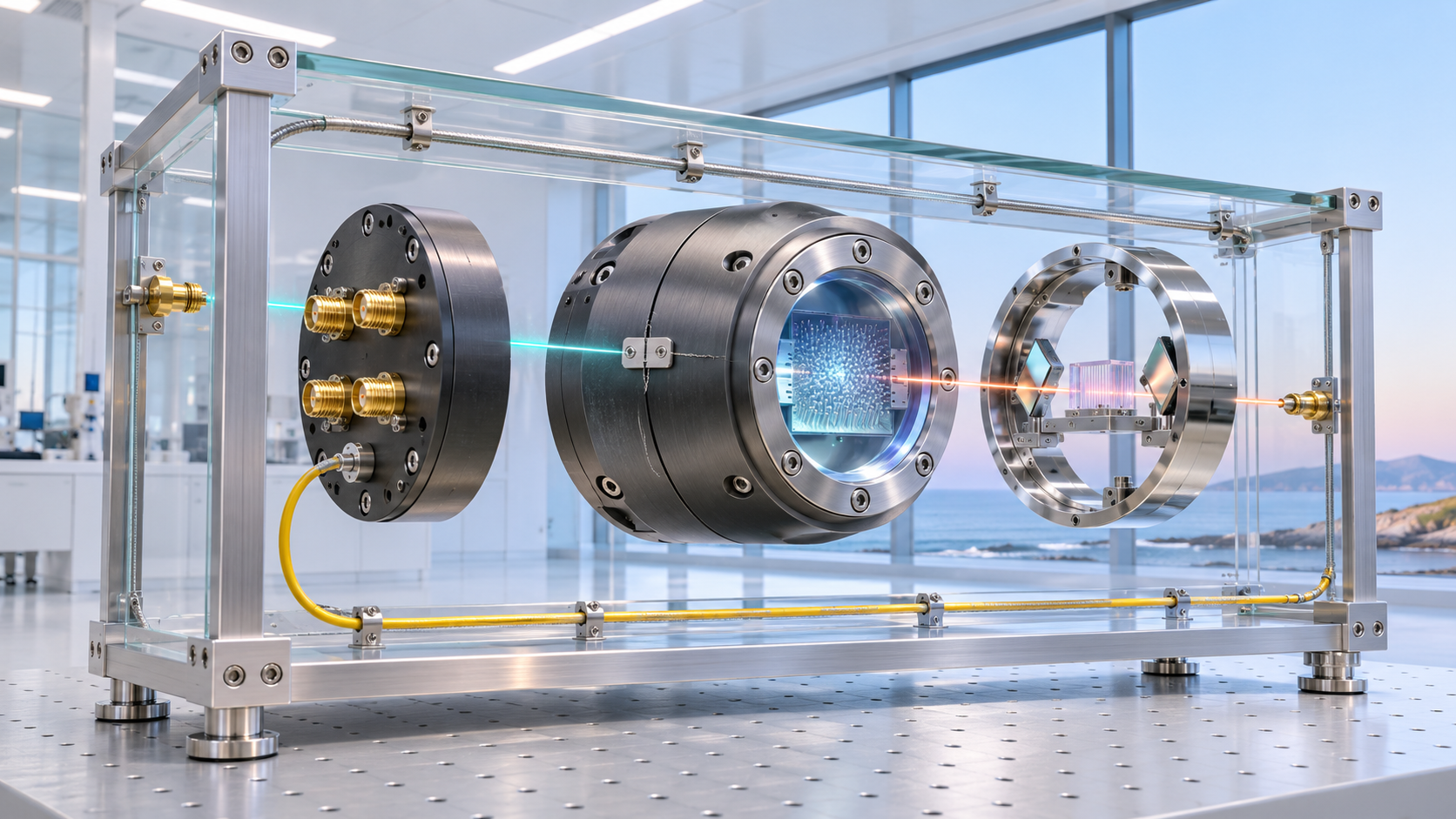
Sorbonne and Edinburgh Authenticate Entanglement-Based QKD With a Hybrid Entangled Physical Unclonable Function and No Pre-Shared Key, Accepted by Physical Review Research, 1 November 2026: TRL 3
Nicolas Laurent-Puig, Mina Doosti, Adriano Innocenzi and Eleni Diamanti published in Physical Review Research on 1 November 2026 the first experimental entanglement-based QKD session authenticated by a hybrid entangled physical unclonable function, with no pre-shared secret between the parties. The Paris bench ran a telecom-wavelength Sagnac source through 50 dB of attenuation at a quantum bit error rate below 0.6 percent, spending 237 authentication bits per session. This post reads the result as defensive quantum key distribution capability in the networking pillar, explains why the emulated PUF and attenuator channel place it at TRL 3, sets it against the NCSC objection that QKD provides no authentication, and lists the sealed physical unclonable function, the device-custody threat model and the outside evaluation a communications office should wait for before relying on hardware-authenticated key distribution.