Creotech Quantum Signs a 2.33 Million Euro ESA Contract to Take Superconducting Nanowire Detectors for Satellite QKD Ground Stations to TRL 5 in 24 Months, Announced 21 September 2026
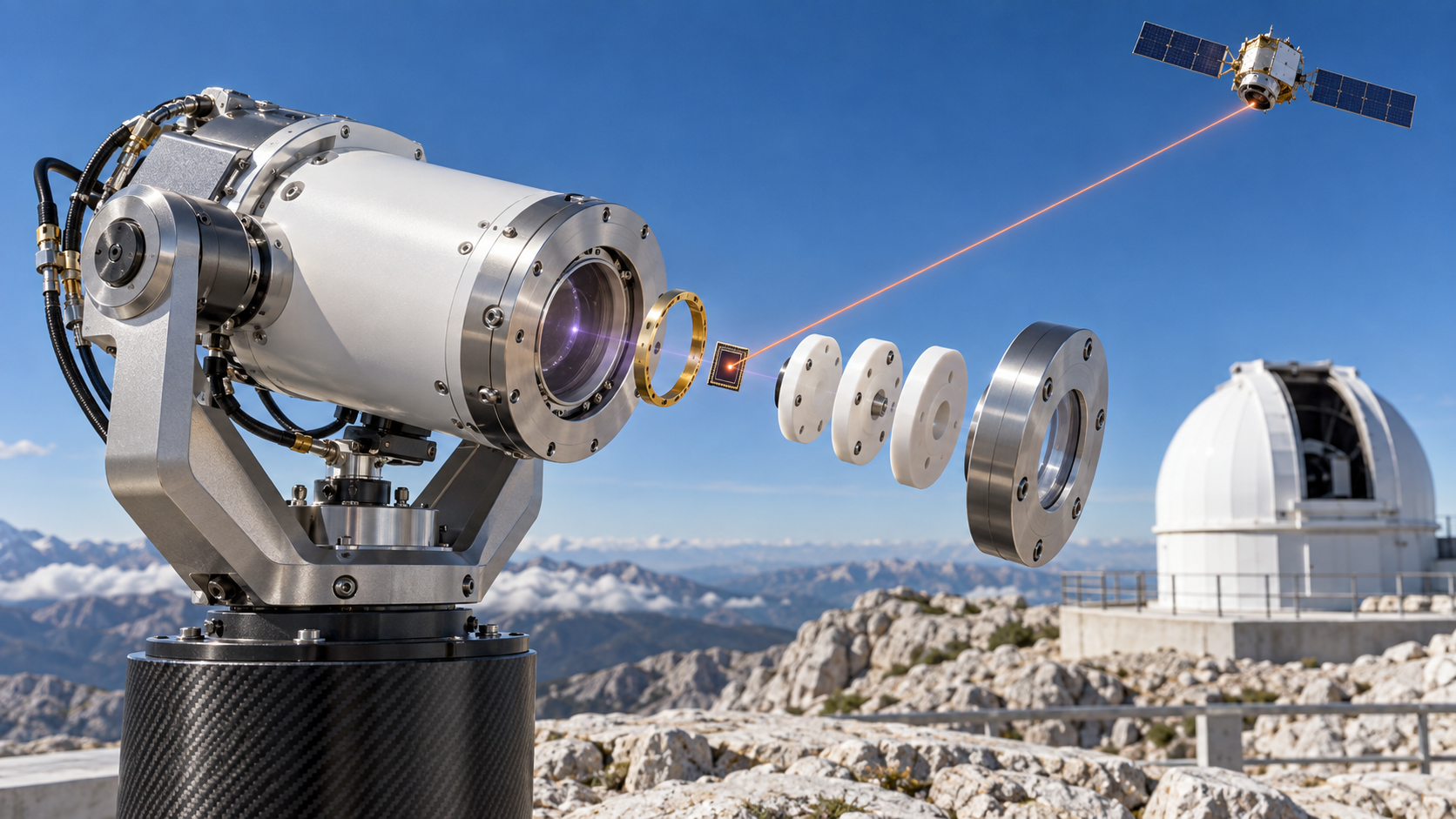
On September 21, 2026, Creotech Quantum announced a 2.33 million euro ESA contract to carry its superconducting nanowire single-photon detector from proof-of-concept prototypes to a TRL 5 demonstrator in 24 months for satellite QKD ground stations, with Eagle-1 as a potential application rather than an established destination for the deliverable. We read what a European receiver could add to the satellite QKD ground segment, why the posture is dual-use across defense, telecommunications and deep-space links, and why the missing performance figures, the unnamed consortium and an unflown satellite are what stand between this contract and a European quantum key distribution capability a program office can rely on.

NIST Widens Superconducting Nanowire Single-Photon Detectors to 0.1 Millimeter and Cuts Dark Counts by Ten Orders of Magnitude, Published in Optica on August 19, 2026 Under DARPA's SynQuaNon Program
A NIST team led by Kristen Parzuchowski and Adam McCaughan placed current-carrying niobium rails beside a tungsten silicide strip and ran superconducting nanowire single-photon detectors up to 0.1 millimeter wide at their intrinsic limit, cutting the dark count rate by ten orders of magnitude and reaching near-unity efficiency at 4 micrometers on a device 20 times wider than before. We read why a wide, quiet, polarization-blind photon counter matters for single-photon lidar, free-space laser links and low-light imaging, who gains, and what separates a sub-kelvin bench result from a receiver a program office can buy.