Quantum X Labs and SciSparc, 6 and 7 October 2026: CliniQuantum's Search of 7.3 Billion Gene Triplets From 11 Patients Ran on IBM's Qiskit Aer Simulator and One NVIDIA GPU
A quantum-simulated gene search, 11 patients and one GPU
Quentir Medicine Monitor
Evidence-based insights for quantum medicine.
Precision oncology and many other parts of personalized medicine depend on finding small groups of genes that move together in a patient's tumor or blood. When a laboratory measures thousands of genes in only a handful of patients, the number of possible gene groups grows into the billions, and computing time becomes a real constraint on the analysis.
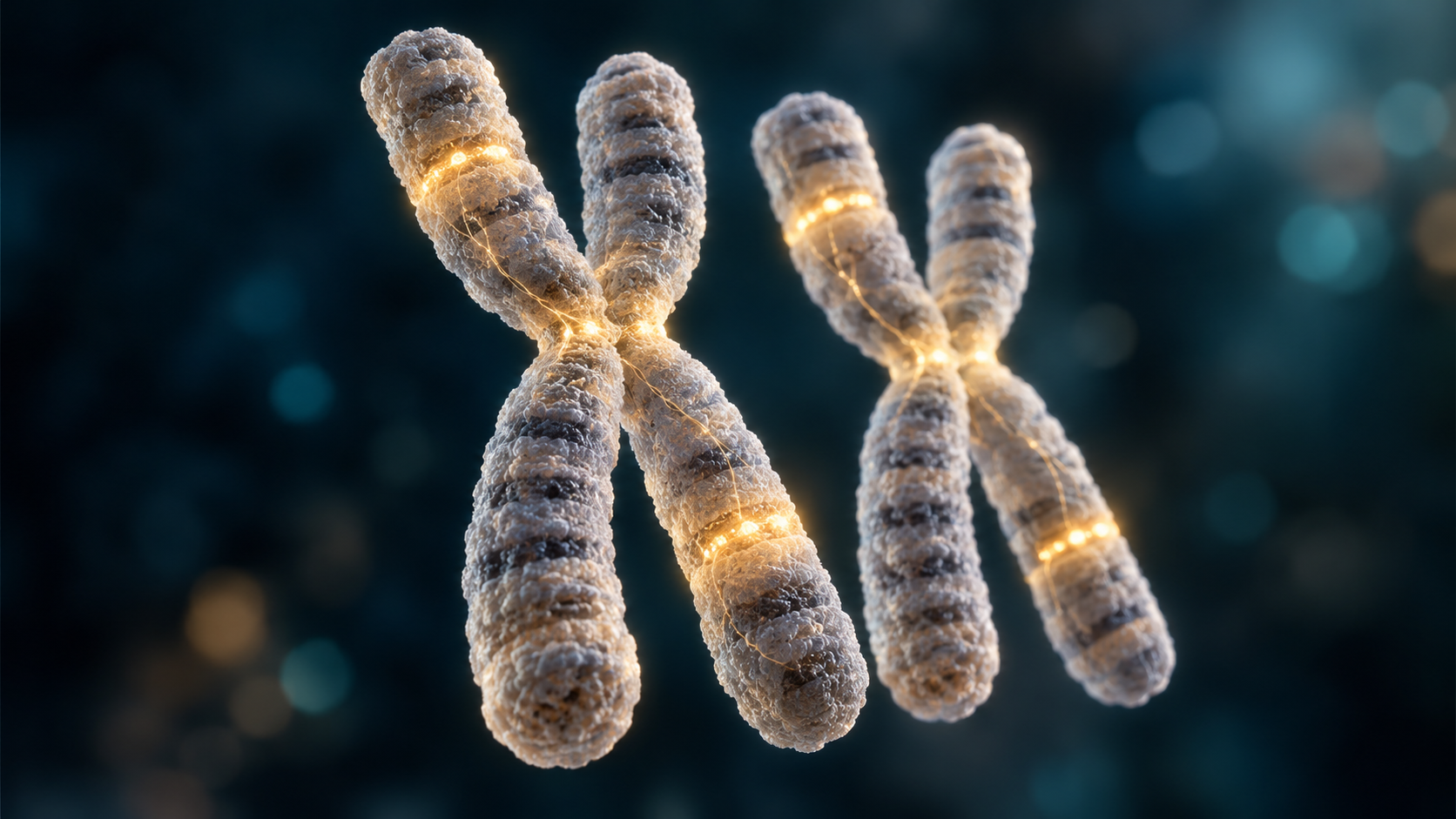
Two Nasdaq-listed companies announced the same benchmark of that kind of search this week. On 6 October 2026 Quantum X Labs said that CliniQuantum, which it describes as its subsidiary, had analyzed a clinical gene-expression dataset of 11 patients and 3,531 genes, testing every possible combination of three genes for correlated behavior. On 7 October SciSparc published nearly the same text, describing CliniQuantum as the majority-owned subsidiary of NeuroThera Labs, which SciSparc in turn controls. Both releases call the work quantum-enabled. The computation itself ran as a quantum simulation on conventional hardware: IBM's open-source Qiskit Aer simulator, accelerated by a single NVIDIA graphics card on a rented Amazon Web Services machine.
For a hospital genomics lead, a clinical research director or an investor reading the headlines, the useful work is to separate three things the releases put side by side: what was computed, how fast it was computed, and what the result means for patients. The releases answer the first two with specific numbers. On the third they are candid: the benchmark, in their own words, did not evaluate or establish the clinical validity, predictive value or potential utility of any gene combination it found.
The Quantum X Labs release of 6 October, distributed by GlobeNewswire, reports an approximately 16.8-fold computational acceleration. The comparison is between one machine using only its 64 virtual processor cores and the same machine using a single NVIDIA T4 graphics processor. The search took about 8.4 hours on the processors alone and about half an hour with the graphics processor, and both runs returned the same set of qualifying gene triplets. Dr. Tidhar Turgeman, quoted in the release as head of clinical trials data analysis, called the result an important development milestone.
RPI and Kipu Quantum Ran Autism Biomarker Selection on IBM's 120-Qubit Nighthawk Processors: What the 24 September 2026 arXiv Preprint Found
Quentir Medicine Monitor
Evidence-based insights for quantum medicine.
A blood sample from a young child can yield hundreds of metabolite measurements, while a typical autism biomarker study enrolls a few dozen children. Choosing which handful of those measurements a diagnostic model should rely on is a hard combinatorial search. A team at Rensselaer Polytechnic Institute in Troy, New York, working with the Berlin company Kipu Quantum, posted a paper on arXiv on 24 September 2026 that runs this search on IBM quantum processors.
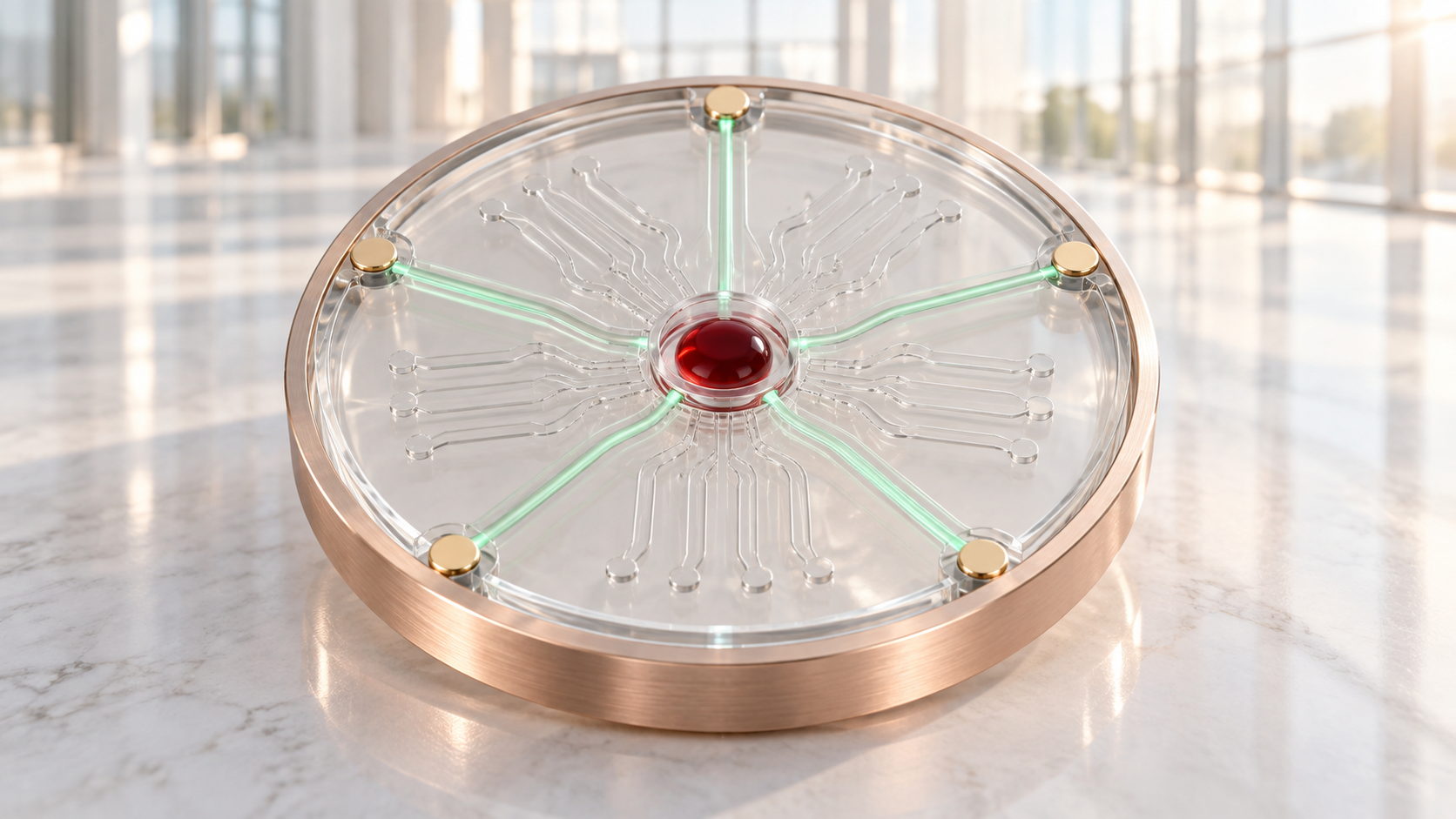
The paper, "Quantum Feature Selection for Biomedical Data Analysis" by Hongbin Liu, Robert Lahmann, Benjamin Campbell, Zhemin Zhang, Zhiding Liang, Siona Bapat and Juergen Hahn, poses metabolomic feature selection as a binary optimization problem and solves it on two IBM Nighthawk processors, ibm_rensselaer and ibm_miami, each with 120 qubits. The test data come from three published studies, two of blood plasma and one of the gut microbiome, in children with autism spectrum disorder and typically developing peers. The quantum solver picked five-feature subsets that classified about as well as several standard classical methods, and the authors state plainly that their results do not claim a quantum advantage.
For clinicians and hospital laboratories the interest lies in the diagnostic problem underneath. Blood-based autism screening has been studied at least since 2012, when the oldest of the three datasets used here was published, and every such test depends on a short, stable list of markers. This preprint tests whether current quantum hardware can help build that list. It does not test a diagnostic, and it enrolled no new patients.
The work is a first hardware feasibility study on retrospective data. It has not yet been peer reviewed, and its datasets are small: the largest group has 83 children with an autism diagnosis and 76 without.