
The Quantum Laboratory Has an Overnight Shift
An agent is taking the overnight shift
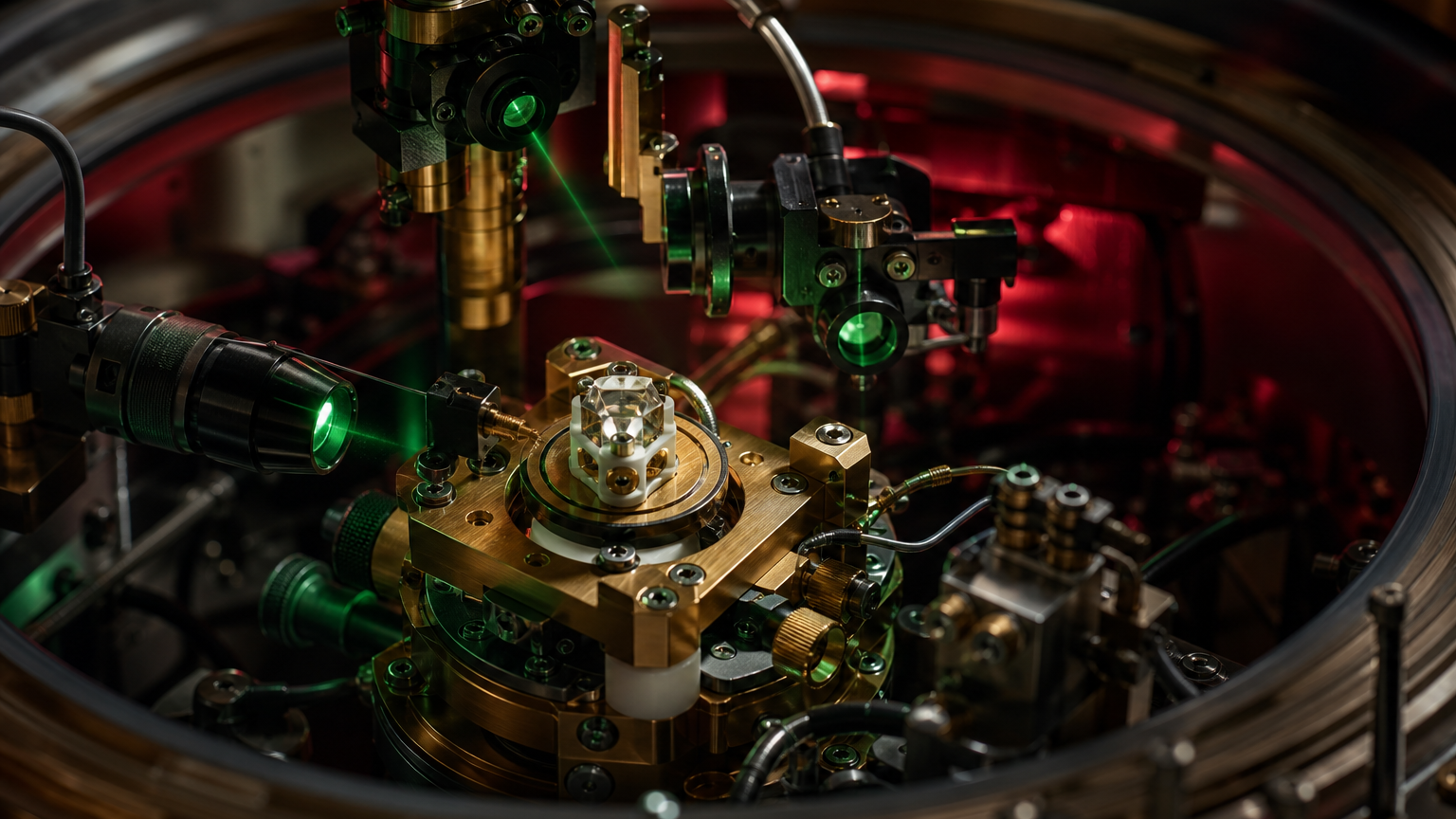
Four preprints posted within two days put AI agents inside quantum sensing, neutral-atom experiments, error-correcting-code discovery and hardware design. In one diamond-sensing run, software selected a nitrogen-vacancy center, calibrated its resonant frequency, measured coherence and added a pulse sequence to investigate a weak feature. A separate workflow moved from a paper or patent to an overnight campaign on two cloud-accessible neutral-atom processors. These are early research reports, yet they show autonomous quantum experiments becoming concrete enough to govern.
The failures are part of the finding
The neutral-atom authors also describe an inadequate observable and a plausible but wrong hardware diagnosis, both caught by domain experts. Another paper, ContractHIL-HLS, translates natural-language requirements into interfaces, constraints, validation checks and rollback rules, then feeds hardware results back into revision. The emerging issue is the chain of delegated judgment: who set the goal, which actions software selected, what the instrument measured and which person accepted the interpretation.
The handoff becomes an institutional object
Quentir reads the cluster as a move toward instrument delegation. Scientific credit, product assurance, intellectual property and procurement meet at the handoff between machine-selected action and an accepted result. Laboratories may gain speed and preserve more failed branches than ordinary notebooks capture. Trust will depend on visible permission, independent validation and named human acceptance, especially when these methods later shape sensors, chips, diagnostics or security systems.