
Quantum Networking Found a Utility Door in Chattanooga
A live network changes the experiment
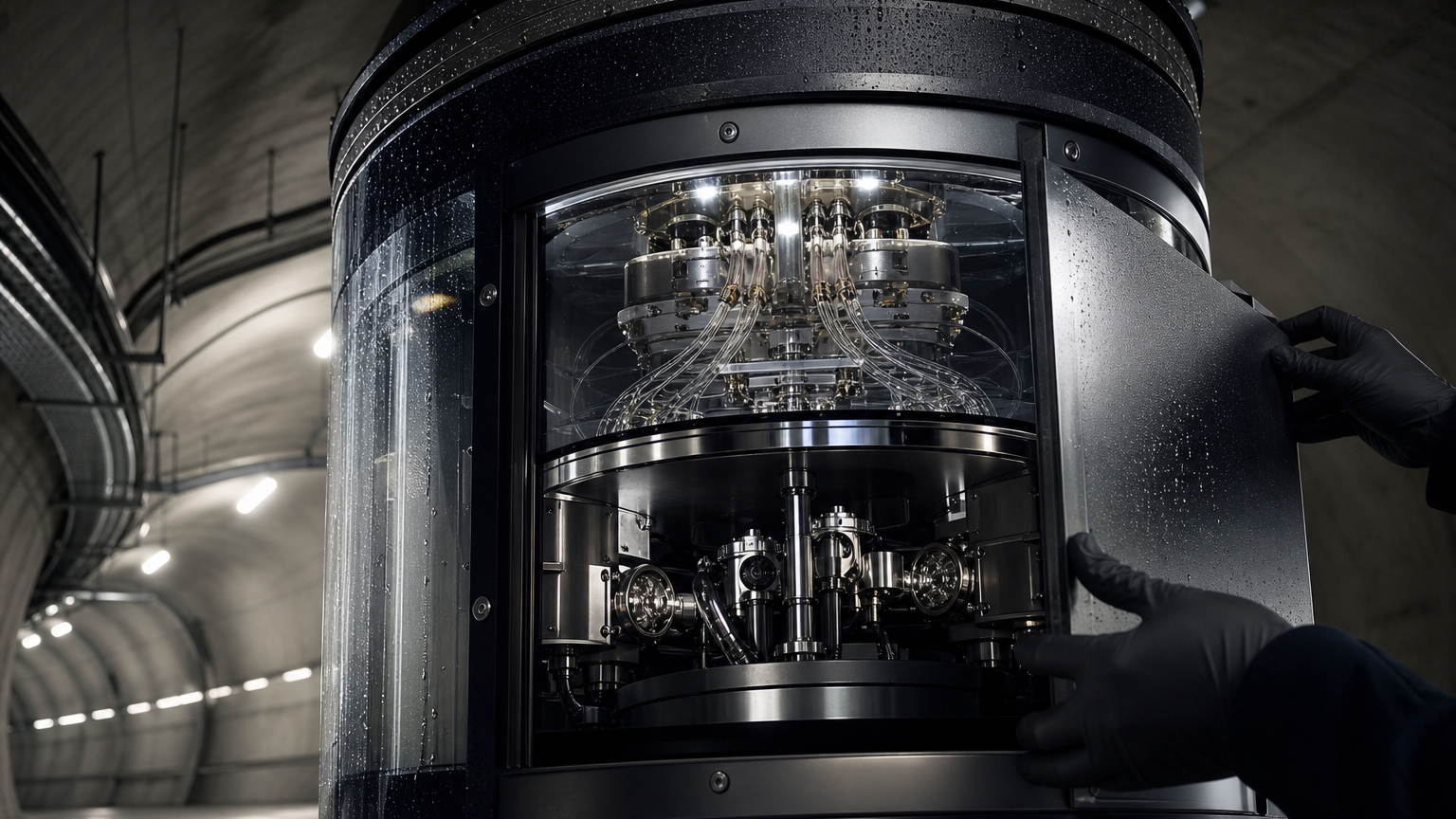
IonQ and Chattanooga utility EPB have announced a $15 million, five-year research center built directly on an operational fiber network. The planned centerpiece is a commercial quantum-memory unit connected to infrastructure that already serves a city. That setting adds maintenance, service obligations and local operating conditions to a field still dominated by carefully controlled demonstrations.
Distance and connection scale moved together
The announcement arrived beside two major research results. A University of Science and Technology of China team entangled atomic memories across 420 kilometers of fiber; measured points at 320 and 420 kilometers exceeded the repeaterless PLOB capacity. A separate preprint used soliton microcombs to demonstrate the core link in an architecture designed to enable a fully connected, measurement-device-independent network for 200 users over 200 kilometers. Together, the results show why quantum network infrastructure needs both long-distance memory and optical systems that can support many relationships without unmanageable laser-locking complexity.
The host may shape the market
EPB contributes more than cable. It brings rights-of-way, maintenance crews, public accountability, customers and a path from test equipment to service. That makes the utility part of the technical architecture. It also raises questions about access, procurement and the power of a small number of network owners to set operating defaults before standards mature. The Chattanooga project is therefore a test of quantum communications commercialization as much as a test of hardware.