
Army Research Laboratory and UC Berkeley Pair Two Diamond Spin Signals to Cut a Clock's Temperature Drift Tenfold
An Army Research Laboratory and UC Berkeley team runs a nitrogen-vacancy diamond clock for ten days at room temperature, reading two spin transitions at once so their shared temperature drift cancels, and holds instability below one part in 100 million. We read what a temperature-hardened solid-state clock means for GPS-denied timing holdover and the numbers still missing before a program office should care.
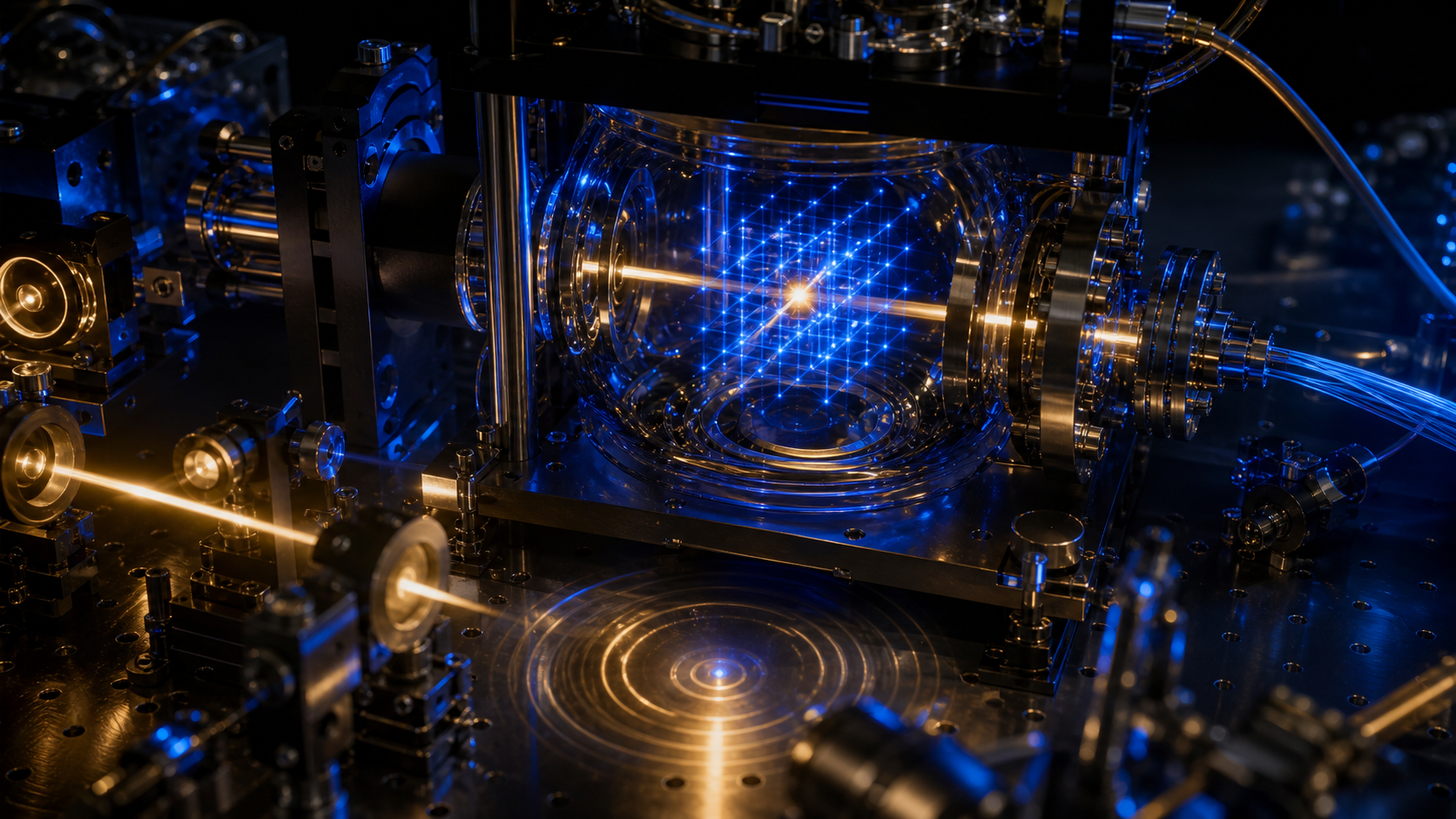
A Zero-Shift Strontium Clock Clarifies the Timing Path
A strontium optical lattice clock canceled a collision-driven frequency shift in the laboratory, clarifying one path toward resilient timing while field qualification remains ahead.