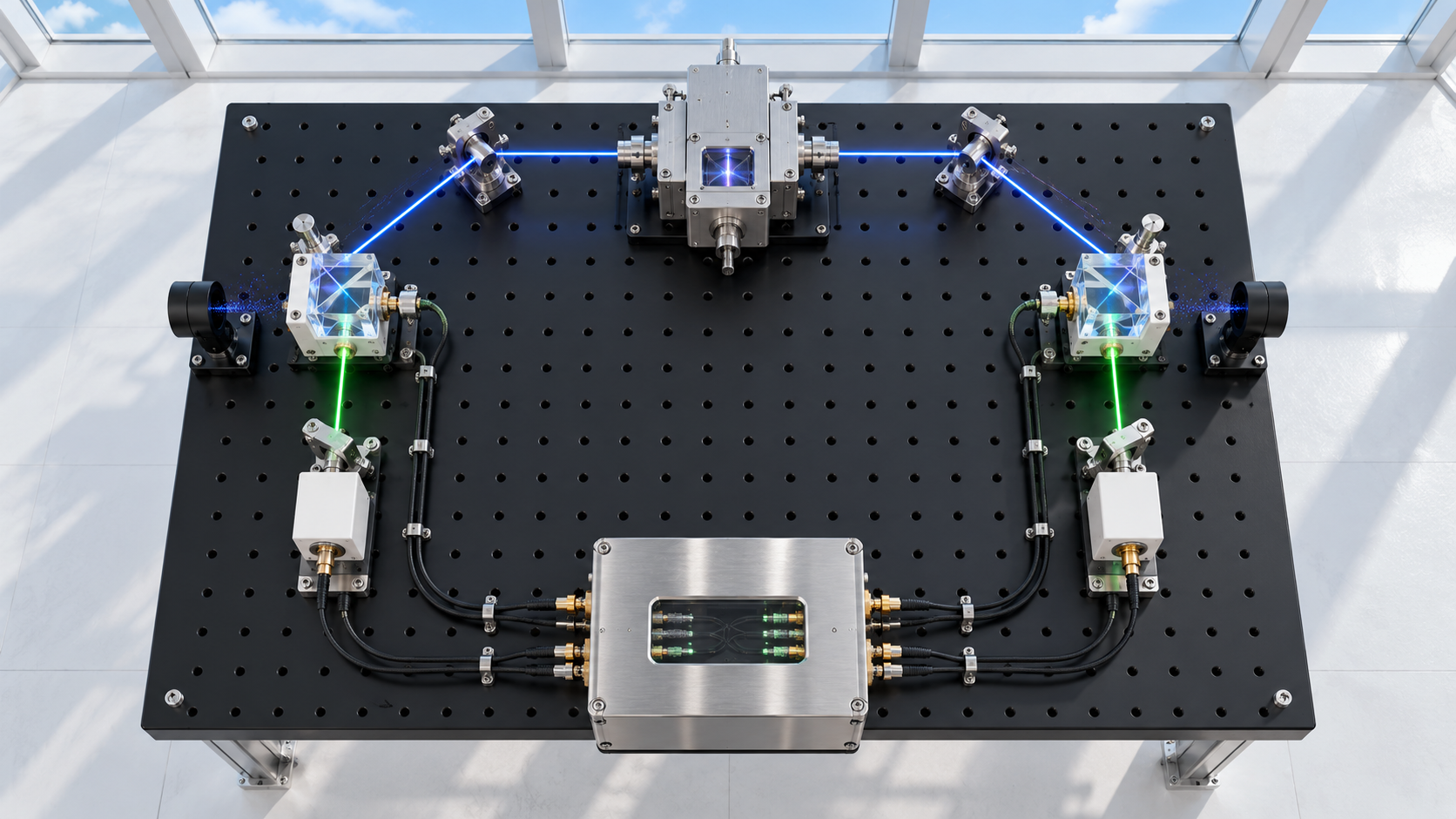
UNSW Bench Test Posted 29 September 2026: Polarization Post-Selection Extends Entangled-Photon Clock Acquisition 2 to 3 dB Into Channel Loss, 30 to 40 Percent More Range for One Downlink
Ravi Singh Adhikari, Aman Gupta, Xiaoyu Ai and Robert Malaney of UNSW posted a bench test on September 29, 2026 in which one receiver-side filter, keeping only photon pairs with matching polarization, extends entangled-photon clock synchronization by 2.1 to 2.8 dB of channel loss, which the authors translate into 30 to 40 percent more satellite range. We read the paper: an 811 nm source, a 1.2 meter bench path, an attenuator standing in for the satellite channel and a second clock emulated in software. Co-funded by Northrop Grumman Australia, the result is a rung-3 component for GNSS-denied timing over entangled downlinks, the same need NATO's Quantum Technology Roadmap of the same day puts on its QUESTOR sea-trial calendar, and it still awaits a real satellite pass.