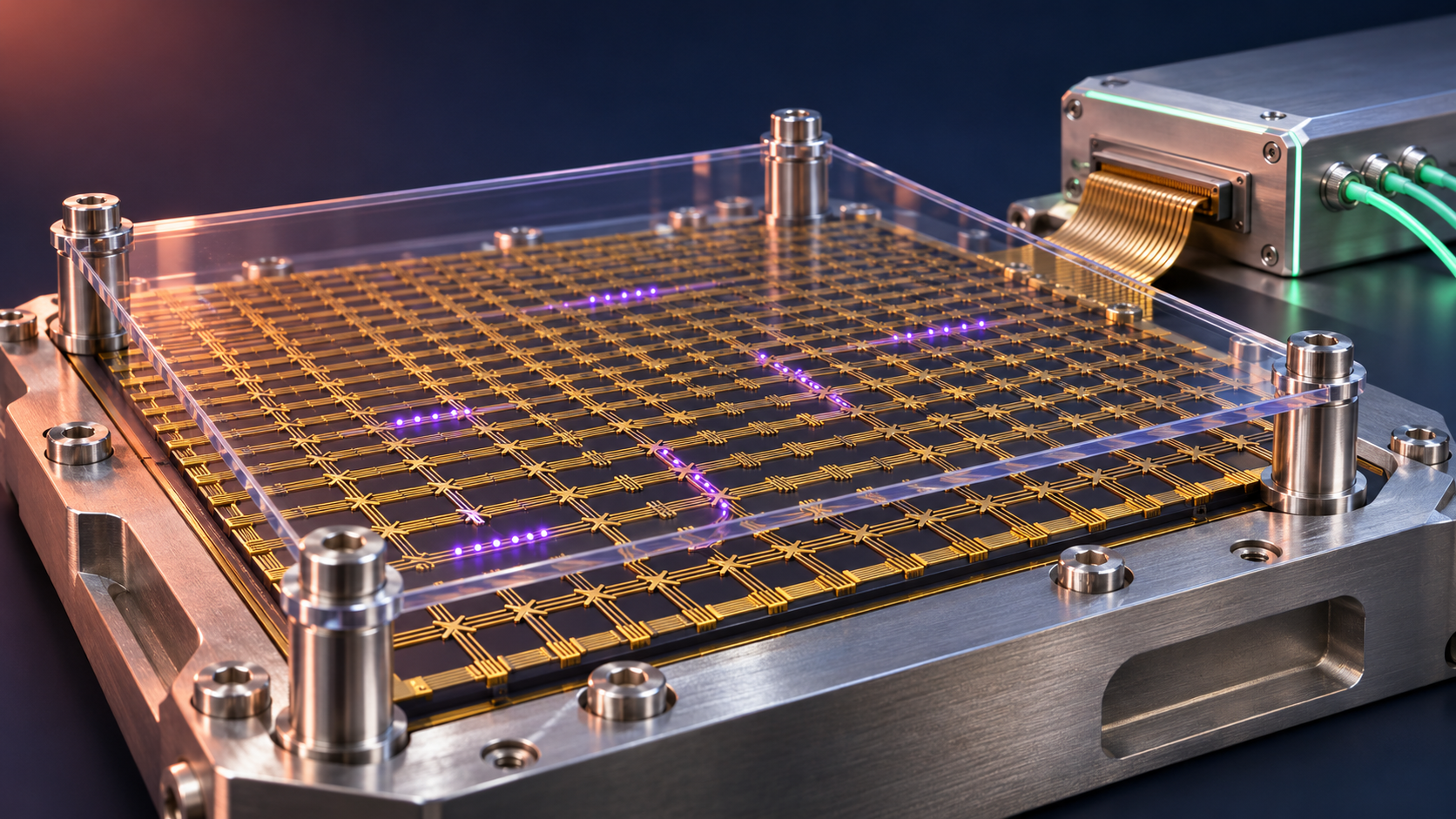
IonQ's Häner and 13 Colleagues Compile Shor's Attack on secp256k1 Onto 19,397 Walking Cat Trapped-Ion Qubits in 25.7 Days, arXiv 2609.05625, 4 September 2026: TRL 2
Fourteen IonQ researchers led by Thomas Häner posted a 70-page paper to arXiv on 4 September 2026 that compiles Shor's algorithm for the 256-bit elliptic curve discrete logarithm problem on secp256k1 down to the error-correction circuits of the company's Walking Cat trapped-ion architecture: 1,457 logical qubits, 39 million Toffoli gates, four magic-state factories and a 25.7-day run on 19,397 physical qubits at a two-qubit error rate of one in ten thousand, with a 63 percent heuristic and 40.7 percent rigorous success bound. This post reads the paper as offensive quantum cryptanalysis capability in the computing pillar, explains why a complete paper compile with no hardware run sits at TRL 2, sets it beside IonQ's 2027 and 2028 roadmap, NIST's final Internal Report 8547 of 27 October 2026 and the outside views in EE Times, and lists the 19,397-qubit scale gap, the model's edge and the independent reproduction a program office should wait for.
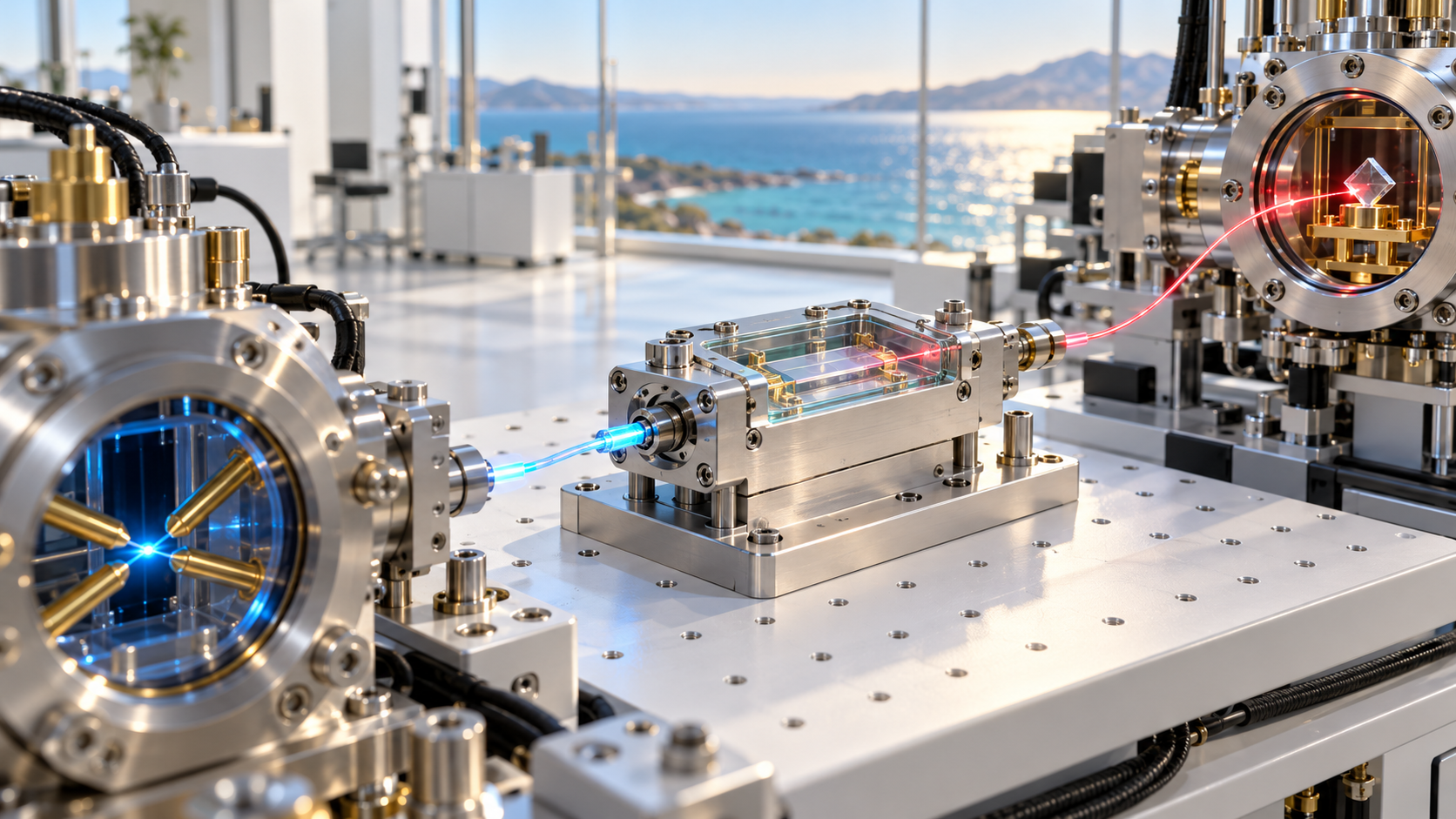
IonQ and Duke Entangle a Trapped Barium Ion With a Diamond Silicon-Vacancy Memory at 1,032 Bell Pairs per Second and 87.9 Percent Fidelity, arXiv 2610.10705, 9 October 2026, TRL 4
IonQ and the Duke Quantum Center report a photonic link between a trapped barium-138 ion and a silicon-vacancy center in a diamond cavity that produces 1,032 Bell pairs per second at 87.9 percent fidelity, four times the earlier best between two trapped ions. The result is the first public measurement of a quantum memory interconnect of the kind DARPA's HARQ program is funding, and it reads as dual-use networking capability for modular processors and future repeaters. The two nodes are interpreted here as sharing one bench, but no distance was reported and no entanglement was stored, which is a TRL 4 laboratory link.