Basque Health Department Funds an Alzheimer's Drug-Target Search on IBM's Quantum System Two in San Sebastián, With Brain-Organoid Validation Planned at BioBizkaia
A first-year report on the Basque quantum computer, 18 October 2026
Quentir Medicine Monitor
Evidence-based insights for quantum medicine.
Alzheimer's disease involves thousands of genes and biological processes acting on one another, and a drug developer has to pick one place to intervene. In the Basque Country, a small team of brain-imaging researchers is now trying to make that choice with help from a quantum computer in San Sebastián.
The machine is the IBM Quantum System Two that IBM and the Basque Government inaugurated on 14 October 2025 at the Ikerbasque building in Donostia-San Sebastián. On its first anniversary, the regional newspaper elDiario.es reported on 18 October 2026 that the system had supported 64 scientific projects, with 444 researchers holding access and average use at about half its capacity. Ten international publications have drawn on it so far.
One of those projects belongs to medicine. The Basque Department of Health is backing a study called Quantum-Enhanced Drug Target Discovery for Alzheimer's Disease, or ADQ, run by the Computational Neuroimaging Group of the BioBizkaia Health Research Institute near Bilbao. According to elDiario.es, the project has €70,000 for 2026 and 2027. It combines reinforcement-learning models with hybrid quantum-classical algorithms to analyze gene-expression networks, and its stated goal is a short list of three to five possible therapeutic targets against the disease.
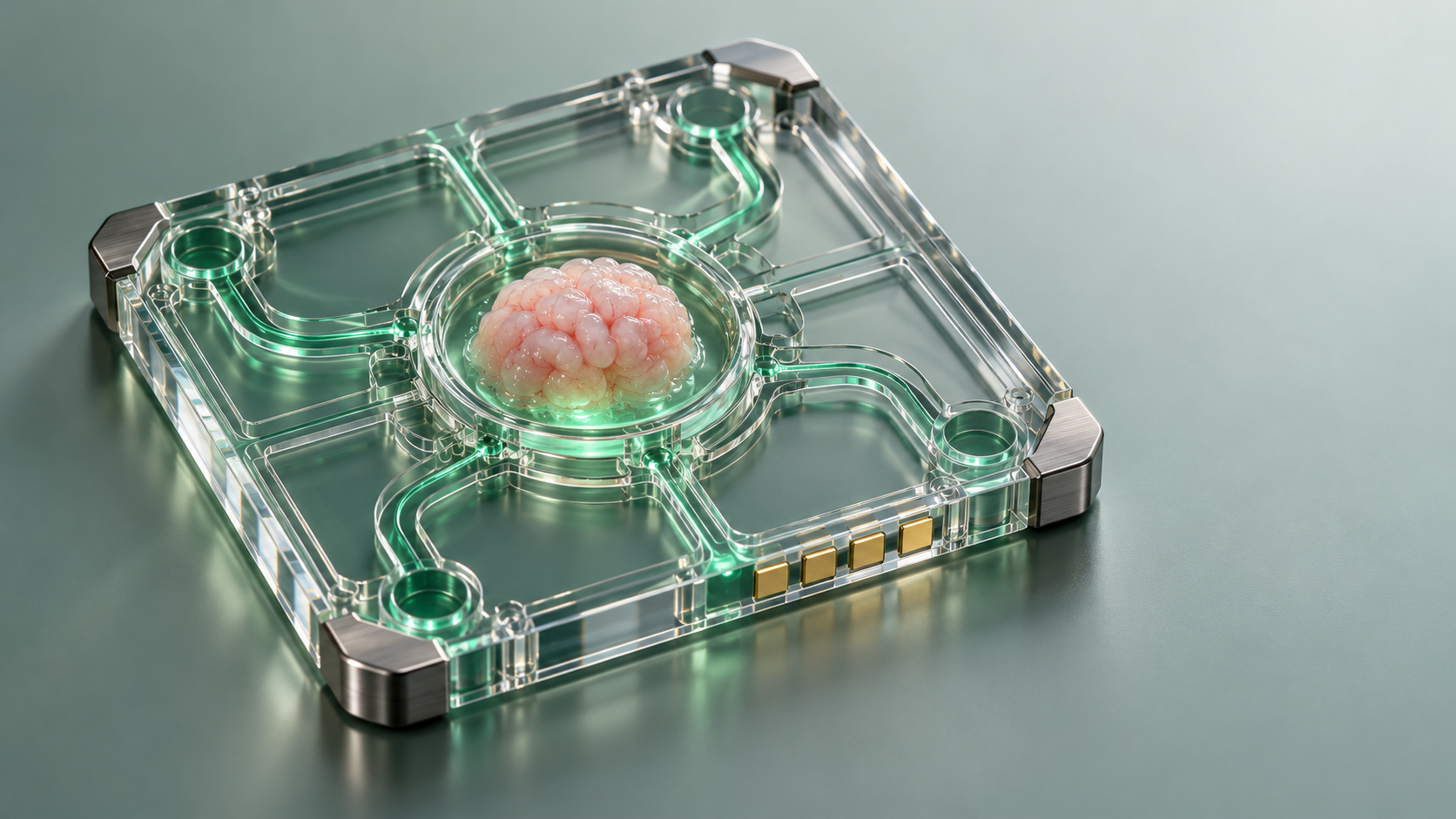
That is a modest budget and a precise aim. A hospital research institute is asking whether a quantum processor can help sort a large biological network into a handful of candidates worth testing, and then checking those candidates in brain organoids grown from patients' own cells.
The project matters to clinicians for a plain reason. Figures cited by the regional broadcaster Onda Vasca put the number of people living with Alzheimer's in the Basque Country at 43,300, and few new Alzheimer's medicines have reached patients in recent decades. Any method that narrows the list before expensive laboratory work begins is worth watching, even at this early stage.