Australia Funds a Quantum Window Into Living Brain Tissue
The project begins before the clinic
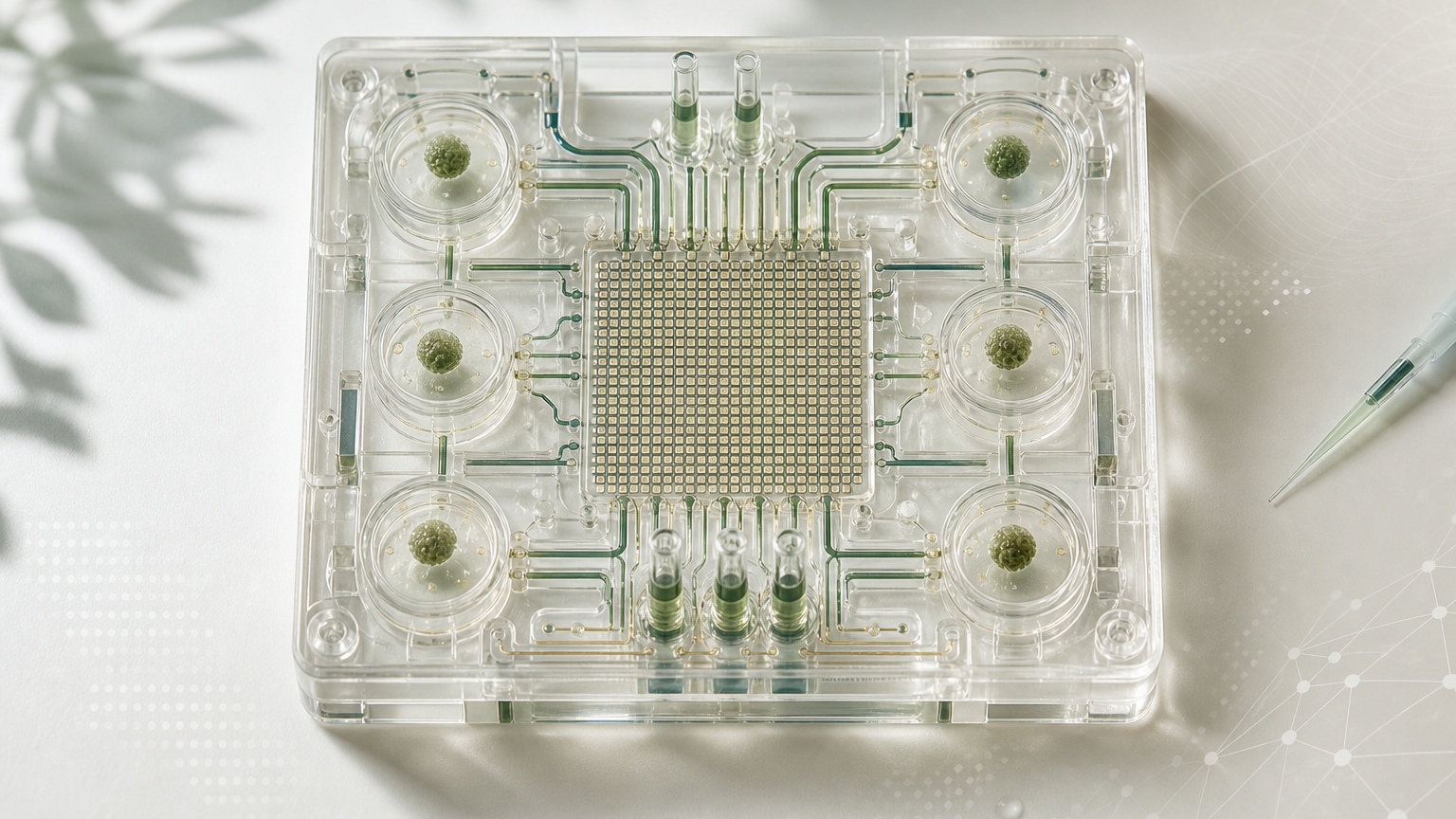
Australia has awarded AUD 2.1 million to a University of Melbourne consortium developing a brain-on-chip platform for neurological drug research. The partners are Chromos Labs, Tessara Therapeutics, Quantum Brilliance, and Axol Biosciences. Their stated plan joins human neural micro-tissue to quantum tools that measure electrical activity in real time. The target is preclinical work: observing how laboratory-grown neural tissue responds to candidate therapies before a claim reaches patients. The University announcement names Alzheimer’s disease, schizophrenia, epilepsy, and anxiety disorders as intended fields of use. A later Team France Export account repeats that list and explicitly credits the University source. The disease names describe ambition, not validation. The public record reports a funded development program and no integrated-system result or clinical study.
Electrical behavior can reveal what a final endpoint misses
Neurons communicate through changing electrical states. Continuous measurement can show when a tissue model responds, how long the response lasts, and whether activity returns to baseline. That makes the platform relevant to preclinical drug discovery, where an earlier rejection of a weak candidate can save years of work and reduce the chance that patients enter a trial built on a fragile signal. The benefit depends on control. Tissue batches vary, microfluidic conditions drift, and sensitive electronics can mistake ordinary noise for a drug effect. A useful platform will need blinded comparisons, repeatable preparation, reference measurements, and a clear path from raw signals to the claimed biological response.
The quantum component still needs a technical record
The project accounts describe quantum technology as part of the real-time measurement layer. They do not disclose the sensor architecture, detection limits, noise floor, calibration method, or comparison instrument. That keeps the readiness answer open. Quentir classifies the function as quantum sensing while withholding a numbered readiness level from a grant announcement with no reported integrated result. The next credible milestone is an assembled laboratory system tested on human neural micro-tissue, with controls that distinguish a drug response from sensor noise, tissue variability, and software choices. If that milestone lands, the project may become a better filter for neurological drug pipelines long before it becomes anything a patient or hospital encounters directly.