QTomo Says Quantum Computing Can Rebuild CT Scans From 10 Percent of the X-Ray Data: What Kyungtaek Jun's Papers From 2023 to 2026 Tested
Quentir Medicine Monitor
Evidence-based insights for quantum medicine.
A Korean start-up called QTomo says its quantum algorithms can rebuild a CT scan from one tenth of the usual X-ray projections, which would cut a patient's radiation dose by 90 percent. The company's founder, Kyungtaek Jun, made those claims in a newspaper interview published on 24 September 2026, and his own peer-reviewed papers show how far the method has actually been tested.
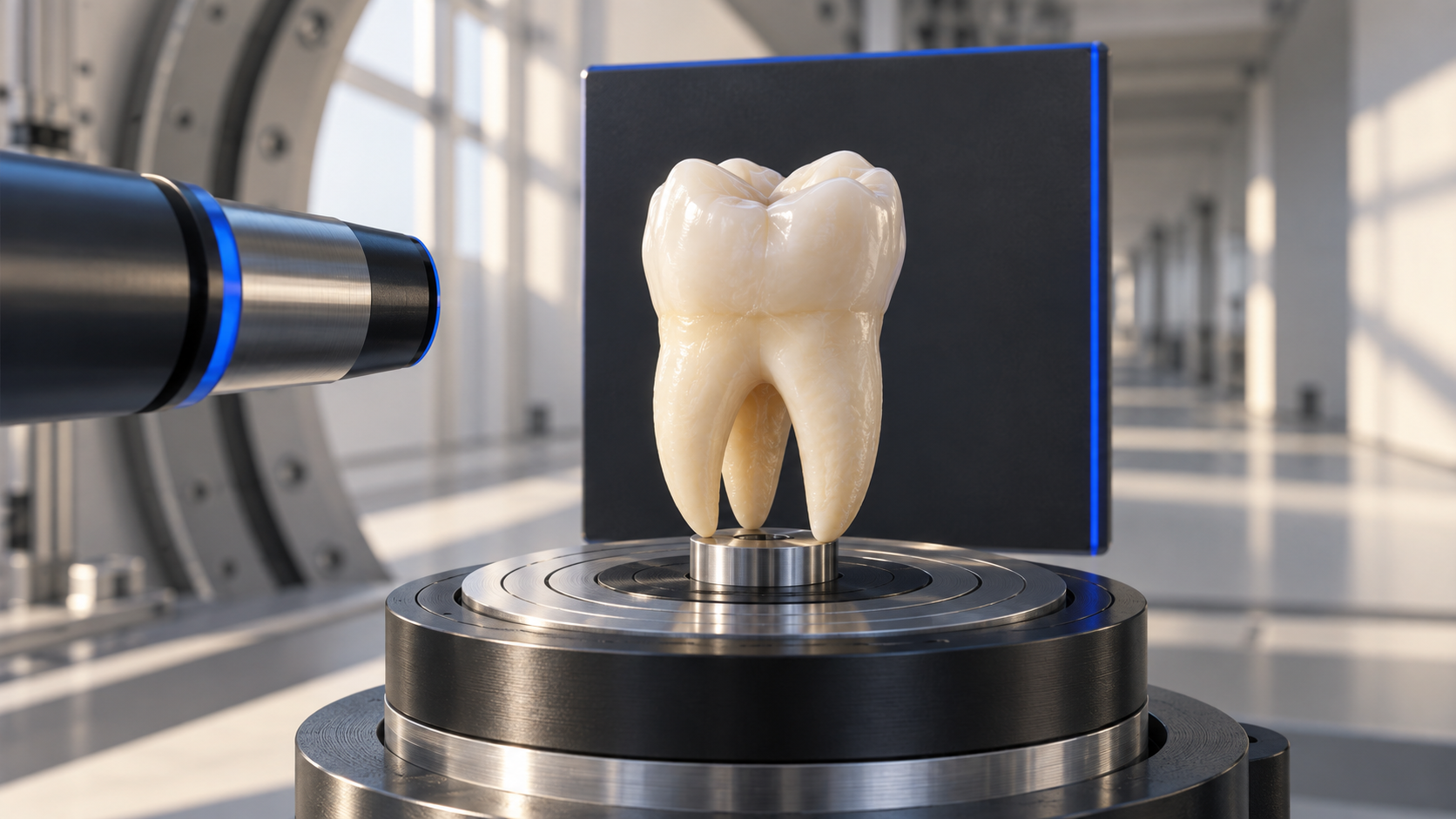
Jun has published the core of QTomo's approach in Scientific Reports in 2023 and 2025, in two arXiv preprints in April and May 2025 and in EPJ Quantum Technology in July 2026. The experiments in those papers perform quantum CT reconstruction on images of at most 100 by 100 pixels, solve the problem on the D-Wave hybrid solver, which combines a quantum annealer with classical computing, and use test objects such as the Shepp-Logan phantom, a standard computer-drawn head outline, a model tooth or a single existing chest CT slice. The 90 percent figure appears as an estimate in the April 2025 preprint, and none of the papers reports a scan acquired from a patient for the study, a dose measurement or a clinical validation.
That gap matters for radiology departments and hospital buyers, because the interview lists early cancer detection, breast and heart imaging and dental work among the technology's proposed clinical applications. The published papers describe a careful and interesting research program at a much earlier stage.
Set side by side, the interview's figures and the papers' measurements separate into three groups: claims with peer-reviewed support on small test images, one estimate from a preprint, and figures that appear in no paper at all. The first group shows steady progress by a small research team. The second would need a scanner study to confirm it, and the third would need data that QTomo has not yet made public.