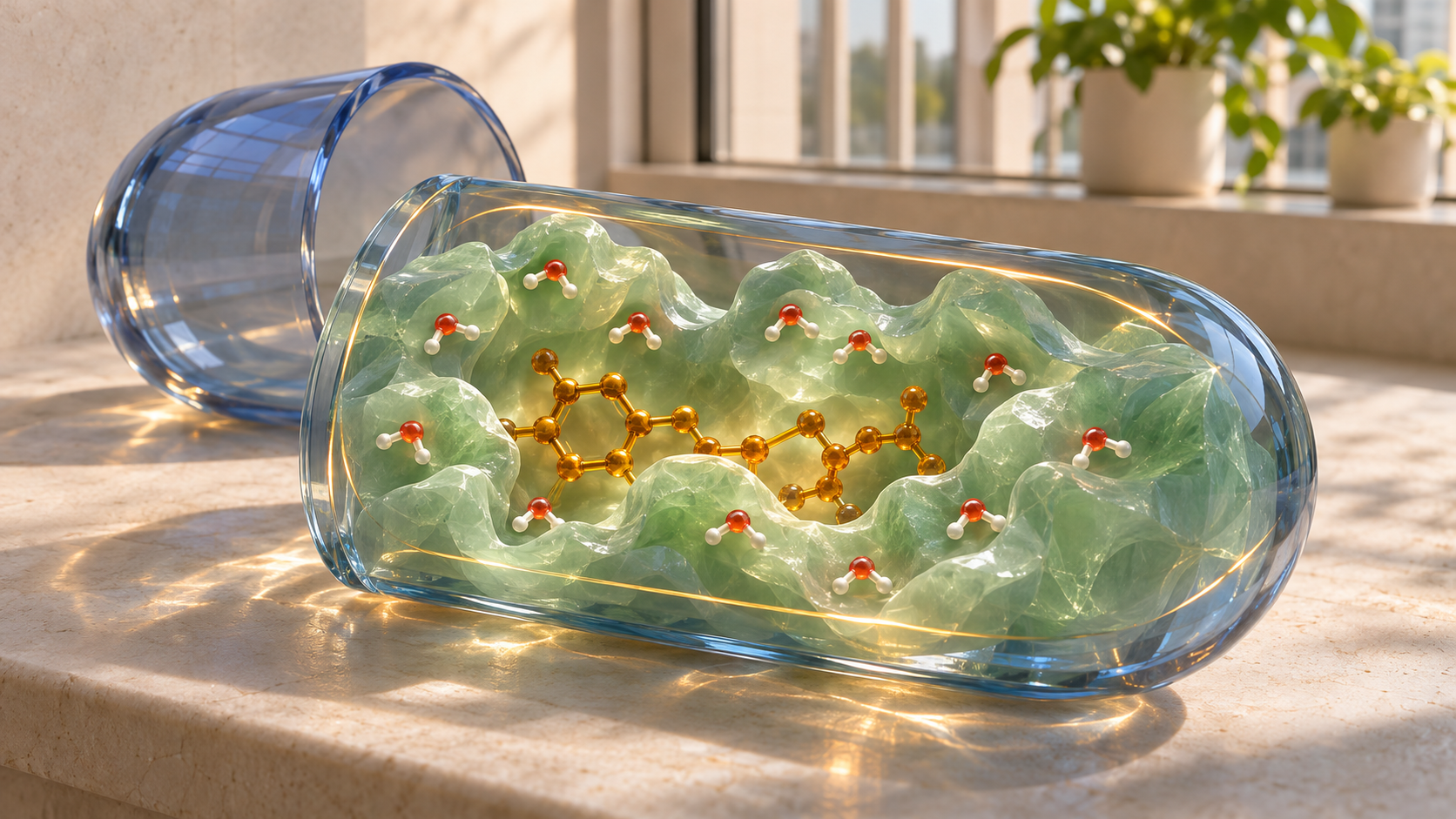
Qubit Pharmaceuticals, Sorbonne Université and Q-CTRL Predict Where Water Sits in Drug-Target Protein Pockets on IBM Heron Processors at up to 123 Qubits: What Physical Review Research Published
How Qubit Pharmaceuticals and Q-CTRL predicted water sites in drug-target protein pockets on IBM Heron
Quentir Medicine Monitor
Evidence-based insights for quantum medicine.
Researchers from the Paris drug-discovery company Qubit Pharmaceuticals, Sorbonne Université and the quantum software company Q-CTRL have used IBM quantum computers to predict where water molecules settle inside the binding protein pockets of drug targets. Daniele Loco, Kisa Barkemeyer, Andre Carvalho and Jean-Philip Piquemal cast hydration-site prediction as an optimization problem and solved instances of up to 123 binary variables on 156-qubit IBM Heron processors, using protein structures linked to diseases for which the U.S. Food and Drug Administration has approved a drug. Their paper appeared in Physical Review Research in September 2026, and Quantum Computing Report summarized it on 21 November 2026.
The study answers a practical question for medicinal chemists. A candidate drug binds to its target inside a cavity that is already filled with water, and some of those water molecules help the drug hold on while others must be pushed out before it can bind. Computer-aided drug design programs therefore need a map of the stable water positions before they can estimate binding or set up a docking calculation. The authors show that a quantum optimizer can produce that map at small scale, and they estimate how large a quantum computer must become before the method could be useful in routine drug design.
The work extends an earlier study by part of the same group that placed water in two-dimensional slices of a protein pocket on an analog quantum device built from Rydberg atoms. The new paper handles the full three-dimensional pocket on digital hardware, which brings the problem closer to the structures that pharmaceutical modelers use every day.