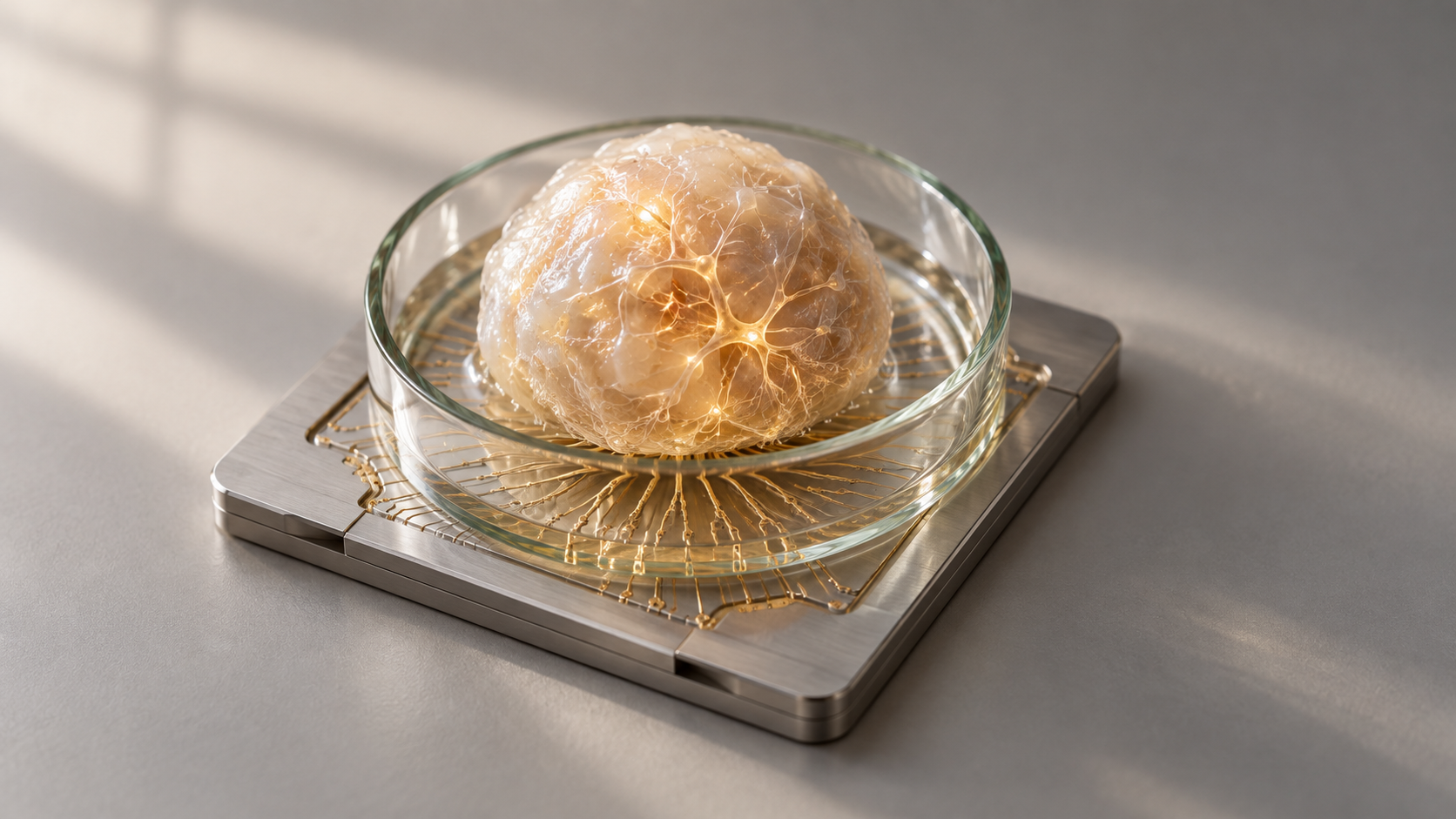
Sagutxoa Grows Neurons From Donated Milk Teeth in Alicante and Plans a Quantum Analysis on IBM's Quantum System Two in San Sebastián (El País, 18 September 2026)
Quentir Medicine Monitor
Evidence-based insights for quantum medicine.
On 18 September 2026 El País reported from the Basque Country on Sagutxoa, a research project that grows human neurons from the milk teeth of children with rare neurological diseases and intends to send the measurements taken on those neurons to a quantum computer. The neuroscience half of the project has produced something concrete: a public biobank of more than 50 frozen neuronal lines. The quantum half is a plan with access to the machine through a public regional program; the reports describe no quantum hardware result.
The project is led by Salvador Martínez, professor at the Universidad Miguel Hernández and researcher at the Instituto de Neurociencias in Alicante, and is financed by the Bilbao foundation The Walk On Project with an initial budget of 120,000 euros. Its raw material is milk teeth donated by children with rare neurodegenerative diseases; the dental pulp contains neural crest progenitors that become neurons without genetic modification. The computing partner is LKS Next of the Mondragón group, which expects to use the IBM Quantum System Two installed in San Sebastián through the Basque Government's Basque Quantum infrastructure.
For a hospital neurologist or a rare-disease foundation the interesting part is the biology, which is further along than the headline suggests, and the honest part is the timeline: the foundation's president says the phase now under way should reach its first conclusions in about a year, and warns against raising false expectations.
Martínez told El País that the first task was to establish whether the pulp of a shed milk tooth contains neural crest progenitors, and that the answer was yes. The stem cells in the pulp turn into neurons naturally, without any genetic reprogramming, which is the point of difference from induced pluripotent stem cell models that rewrite a skin or blood cell's program first. In culture, he says, the neurons behave as neurons do: they form circuits, connect to one another and develop synapses, which produces very large volumes of electrophysiological, proteomic and transcriptomic data.