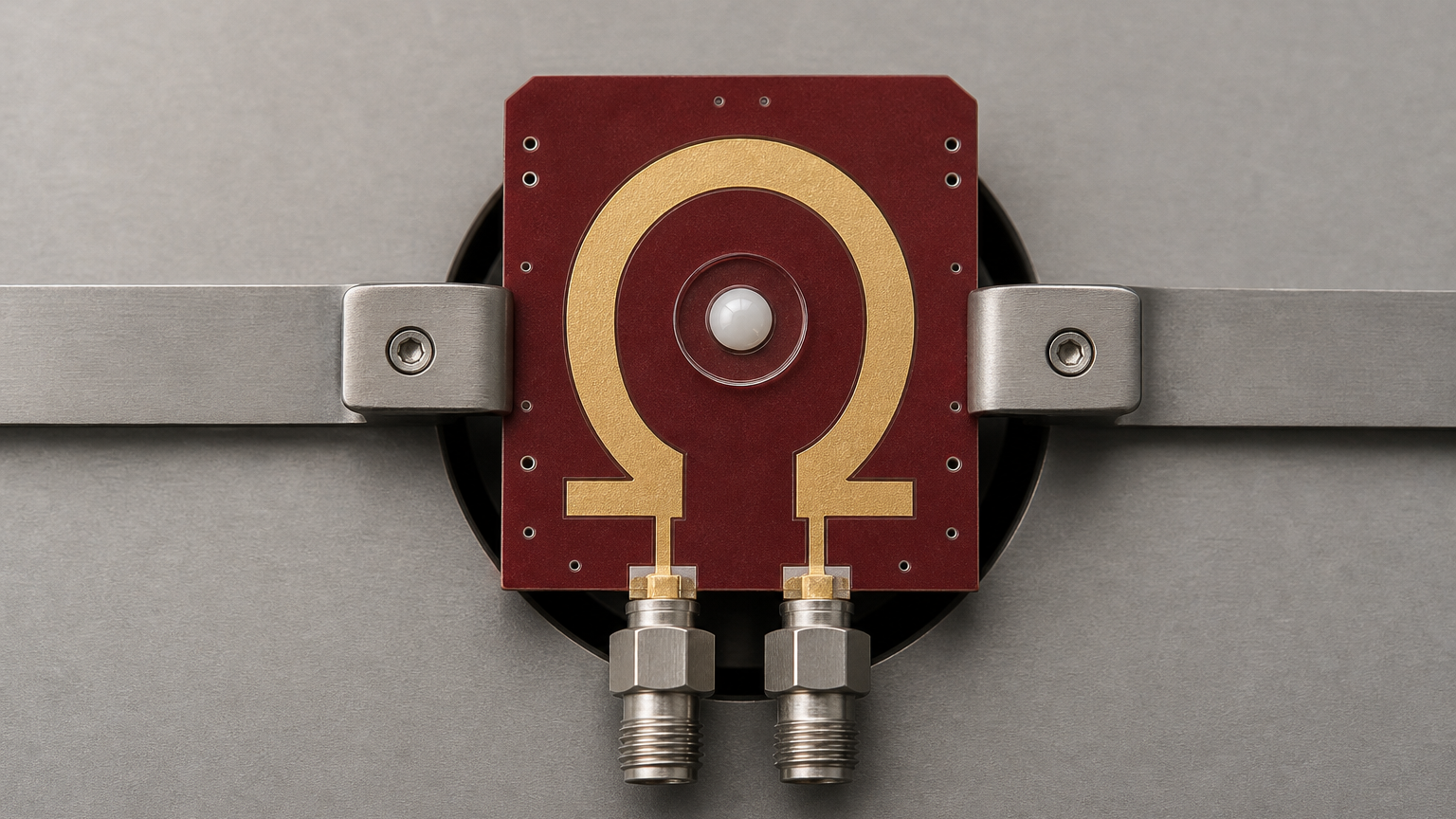
Nanodiamond Charge Drift Reads Macrophage Inflammation: Chicago and Iowa in Advanced Materials, 4 February 2026
Nanodiamond quantum sensors have been read as thermometers inside living cells for more than a decade. One of them, a 70-nanometer crystal sitting inside a mouse macrophage, drifted downward by 0.27 megahertz over 200 seconds of measurement, which on the usual arithmetic means the cell warmed by 3.62 degrees Celsius. A team at the University of Chicago and the University of Iowa has now put a different quantity behind that same number.
Their paper, Probing cellular activity via charge-sensitive quantum nanoprobes, appeared in Advanced Materials on 4 February 2026, with Uri Zvi as first author and Denis R. Candido at Iowa, Aaron Esser-Kahn and Peter C. Maurer at Chicago as corresponding authors. It was received on 15 March 2025 and accepted on 15 January 2026. The University of Iowa publicized it on 26 August 2026, six months after the article went online, which is why it reaches this Monitor now.
What the zero-field splitting actually tracks, and the dipole term that was being dropped
The sensor is a nitrogen-vacancy center, an atomic defect in diamond whose spin can be initialized with green light, driven with microwaves and read out optically. Each 70-nanometer crystal used here carries roughly 100 of them. The measured quantity is the zero-field splitting, the frequency gap between the spin's ground sublevels, which sits near 2.87 gigahertz and moves by about 74 kilohertz for every kelvin. That temperature coefficient is what turned these particles into intracellular thermometers in the first place.
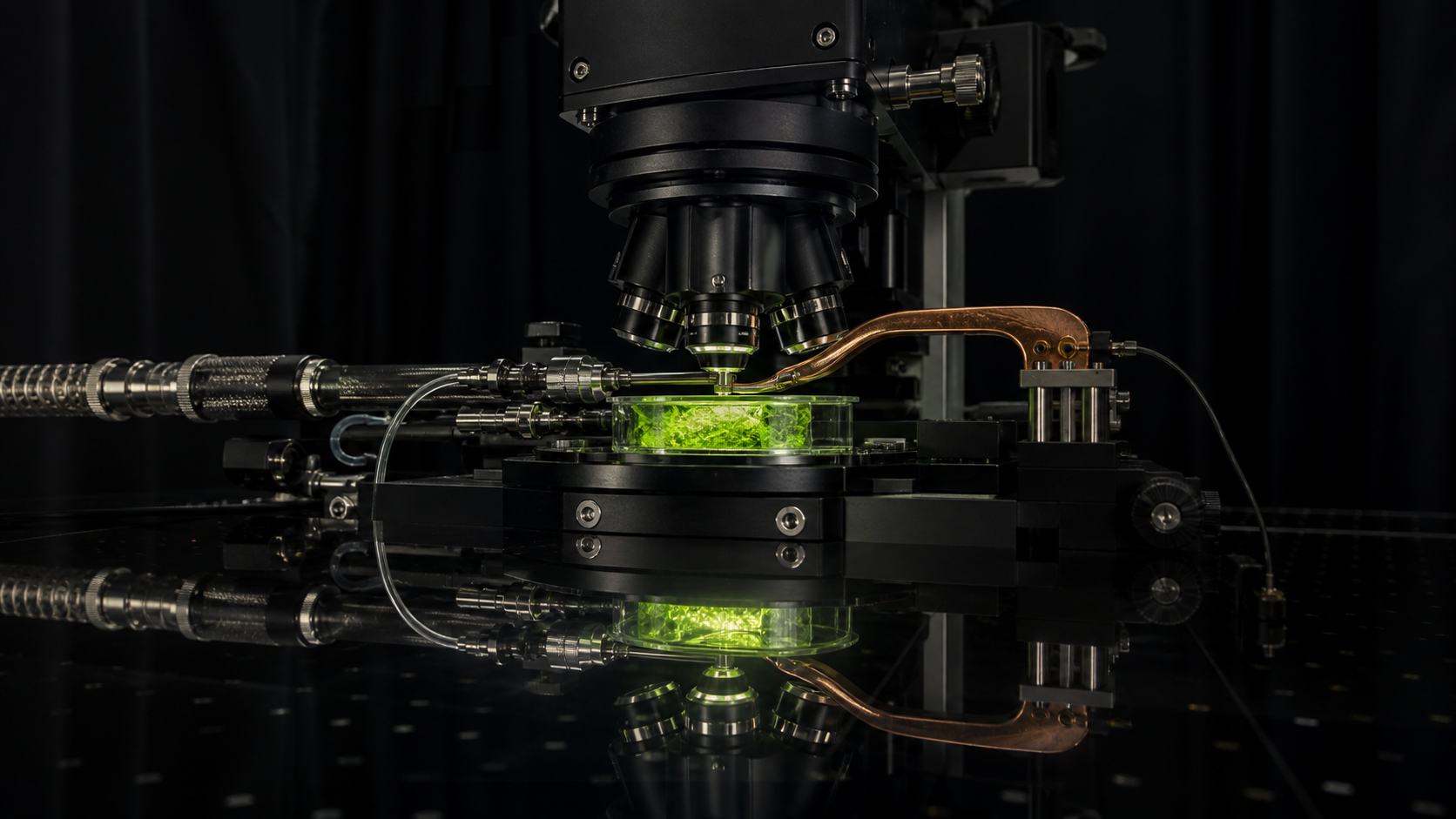
Cells That Grow Their Own Quantum Sensors
A quantum sensor the cell builds for itself
On August 25, 2026 the United States National Science Foundation renewed the University of Chicago-led Quantum Leap Challenge Institute for Quantum Sensing for Biophysics and Bioengineering with a 37.5 million dollar, five-year cooperative agreement running from September 1, 2026 to August 31, 2031, with Chicago State University, the University of Illinois Chicago and Harvard University as partners. The scientific bet underneath the renewal is that a genetically encoded quantum sensor can be written into a cell's DNA and manufactured by the cell itself, rather than fabricated externally and delivered into the cell from outside.
Why genetic encoding matters here
Nanoscale quantum sensing in living systems has until now meant the nitrogen-vacancy center, an atomic defect in diamond that is an exquisite magnetometer and thermometer but arrives wrapped in a lump of diamond that must be introduced into the cell. That is the delivery problem: the particle settles where the cell's machinery leaves it, and steering one to a chosen protein on a chosen membrane is difficult work in its own right. Fluorescent proteins solved the equivalent labeling problem for microscopy thirty years ago without hardware, because they are genetically encodable. Work at Chicago showed that a fluorescent protein can also be operated as an optically addressable spin qubit, roughly ten times smaller than a diamond sensor.
What the record actually shows
The underlying result, published in Nature on August 20, 2025, realized a spin qubit in enhanced yellow fluorescent protein with up to twenty percent spin contrast on near-infrared triggered readout and a sixteen microsecond coherence time under standard decoupling, characterized near eighty kelvin. Three demonstration temperatures have to be kept apart: the full qubit characterization at liquid-nitrogen temperature, coherent control inside human embryonic kidney cells at one hundred and seventy-five kelvin, and optically detected magnetic resonance in living bacteria at room temperature with contrast up to eight percent. No coherent control was shown at human physiological temperature. The authors name photobleaching as the principal limitation and state that sensitivity still falls short of bulk-diamond nitrogen-vacancy sensors, and targeted fusion-protein sensing was not investigated in this study. This Monitor places the work at TRL 3 of 9: real physics, demonstrated in cells, with no clinical measurement and no animal or human study behind it yet.