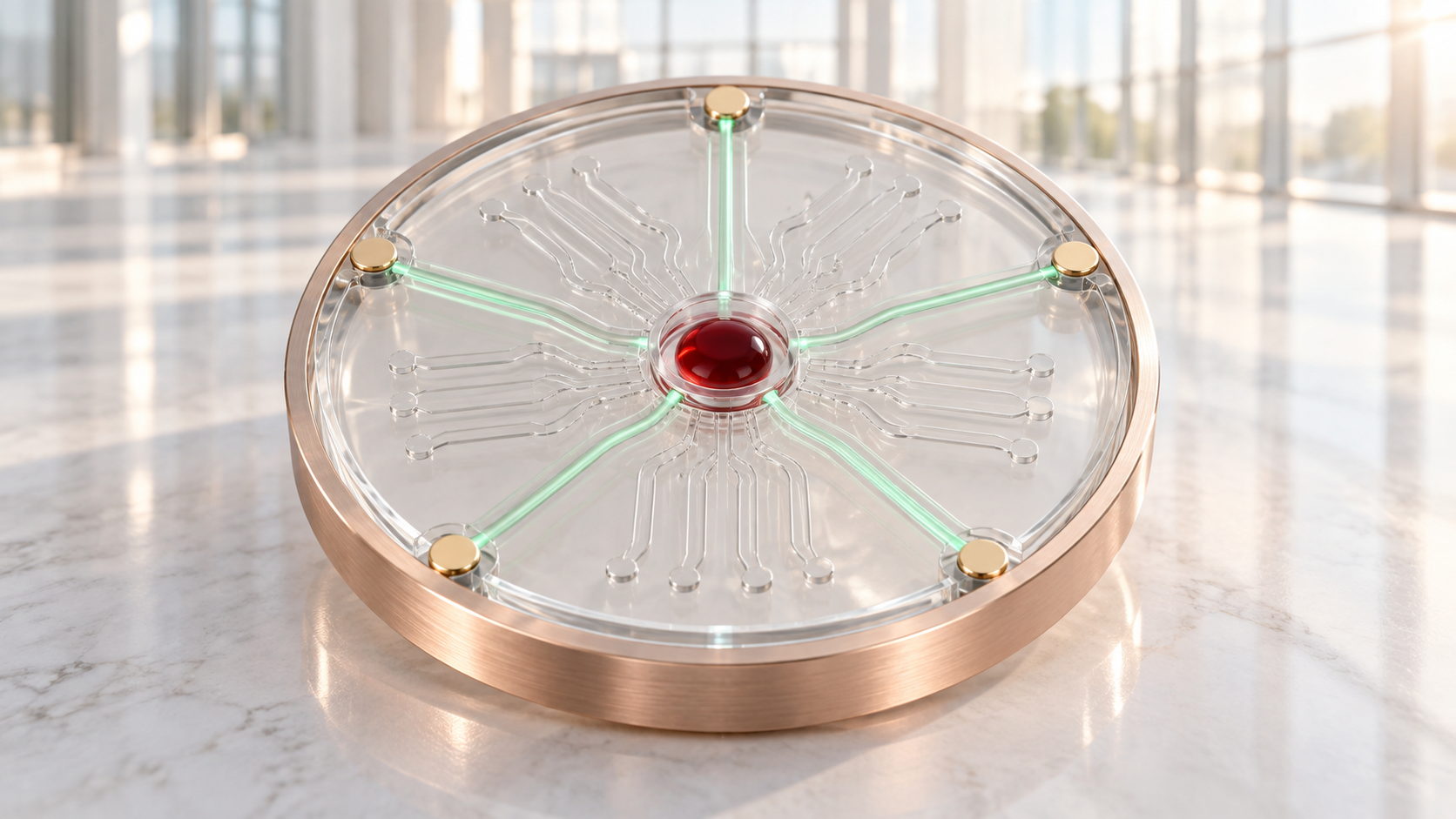
RPI and Kipu Quantum Ran Autism Biomarker Selection on IBM's 120-Qubit Nighthawk Processors: What the 24 September 2026 arXiv Preprint Found
Quentir Medicine Monitor
Evidence-based insights for quantum medicine.
A blood sample from a young child can yield hundreds of metabolite measurements, while a typical autism biomarker study enrolls a few dozen children. Choosing which handful of those measurements a diagnostic model should rely on is a hard combinatorial search. A team at Rensselaer Polytechnic Institute in Troy, New York, working with the Berlin company Kipu Quantum, posted a paper on arXiv on 24 September 2026 that runs this search on IBM quantum processors.
The paper, "Quantum Feature Selection for Biomedical Data Analysis" by Hongbin Liu, Robert Lahmann, Benjamin Campbell, Zhemin Zhang, Zhiding Liang, Siona Bapat and Juergen Hahn, poses metabolomic feature selection as a binary optimization problem and solves it on two IBM Nighthawk processors, ibm_rensselaer and ibm_miami, each with 120 qubits. The test data come from three published studies, two of blood plasma and one of the gut microbiome, in children with autism spectrum disorder and typically developing peers. The quantum solver picked five-feature subsets that classified about as well as several standard classical methods, and the authors state plainly that their results do not claim a quantum advantage.
For clinicians and hospital laboratories the interest lies in the diagnostic problem underneath. Blood-based autism screening has been studied at least since 2012, when the oldest of the three datasets used here was published, and every such test depends on a short, stable list of markers. This preprint tests whether current quantum hardware can help build that list. It does not test a diagnostic, and it enrolled no new patients.
The work is a first hardware feasibility study on retrospective data. It has not yet been peer reviewed, and its datasets are small: the largest group has 83 children with an autism diagnosis and 76 without.
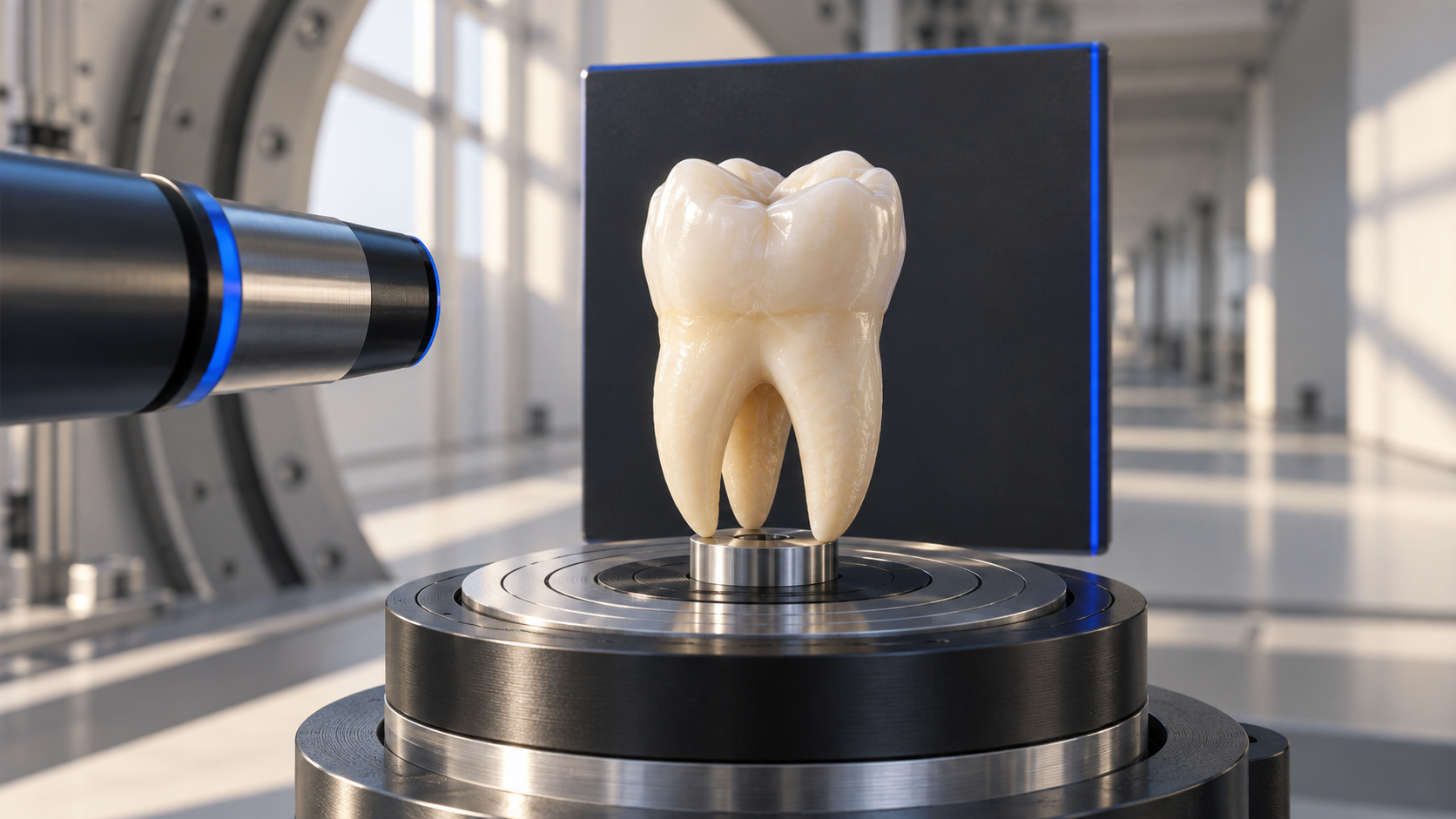
QTomo Says Quantum Computing Can Rebuild CT Scans From 10 Percent of the X-Ray Data: What Kyungtaek Jun's Papers From 2023 to 2026 Tested
Quentir Medicine Monitor
Evidence-based insights for quantum medicine.
A Korean start-up called QTomo says its quantum algorithms can rebuild a CT scan from one tenth of the usual X-ray projections, which would cut a patient's radiation dose by 90 percent. The company's founder, Kyungtaek Jun, made those claims in a newspaper interview published on 24 September 2026, and his own peer-reviewed papers show how far the method has actually been tested.
Jun has published the core of QTomo's approach in Scientific Reports in 2023 and 2025, in two arXiv preprints in April and May 2025 and in EPJ Quantum Technology in July 2026. The experiments in those papers perform quantum CT reconstruction on images of at most 100 by 100 pixels, solve the problem on the D-Wave hybrid solver, which combines a quantum annealer with classical computing, and use test objects such as the Shepp-Logan phantom, a standard computer-drawn head outline, a model tooth or a single existing chest CT slice. The 90 percent figure appears as an estimate in the April 2025 preprint, and none of the papers reports a scan acquired from a patient for the study, a dose measurement or a clinical validation.
That gap matters for radiology departments and hospital buyers, because the interview lists early cancer detection, breast and heart imaging and dental work among the technology's proposed clinical applications. The published papers describe a careful and interesting research program at a much earlier stage.
Set side by side, the interview's figures and the papers' measurements separate into three groups: claims with peer-reviewed support on small test images, one estimate from a preprint, and figures that appear in no paper at all. The first group shows steady progress by a small research team. The second would need a scanner study to confirm it, and the third would need data that QTomo has not yet made public.
Simulated Quantum Annealing Ranked Known Drug Pairs First for Diabetes and Rheumatoid Arthritis: Ramos, Coutinho and Magano in Quantum Machine Intelligence, 23 June 2026
Quentir Medicine Monitor
Evidence-based insights for quantum medicine.
Three researchers from Porto and the German Aerospace Center have written drug-pair selection as an energy problem that a quantum annealer could solve, and tested it on diabetes, rheumatoid arthritis, asthma and brain tumors. In simulation, the lowest-energy answers were dominated by drug combinations that doctors already use, and one of the top new suggestions for rheumatoid arthritis matches a pairing that a 799-patient trial found to roughly double remission rates.
The paper, by Diogo Ramos, Bruno Coutinho and Duarte Magano, appeared open access in Quantum Machine Intelligence on 23 June 2026 as article 70 of volume 8. It builds on the Complementary Exposure idea from network medicine, turns it into an optimization problem, and samples answers with simulated quantum annealing, a classical computer program that imitates how quantum annealing hardware behaves. Its central test is how often validated drug combinations appear among the top-ranked answers when they make up less than a tenth of a percent of the candidates.
Combination therapy is standard across chronic disease and oncology, because two drugs together can allow lower doses and fewer side effects. The search space is the problem. With more than a thousand approved drugs and thousands of diseases, the number of possible pairs grows far faster than any laboratory or trial program can test them.
For a pharmacology team or a hospital formulary committee, the study offers a clear example of what quantum optimization can and cannot yet contribute to that search. The ranking method works in simulation on four diseases. No quantum computer was used, and the authors state plainly that their predictions are hypotheses for experts to examine.