The Sleep Study Still Has More to Say
A whole night becomes a few summary measures
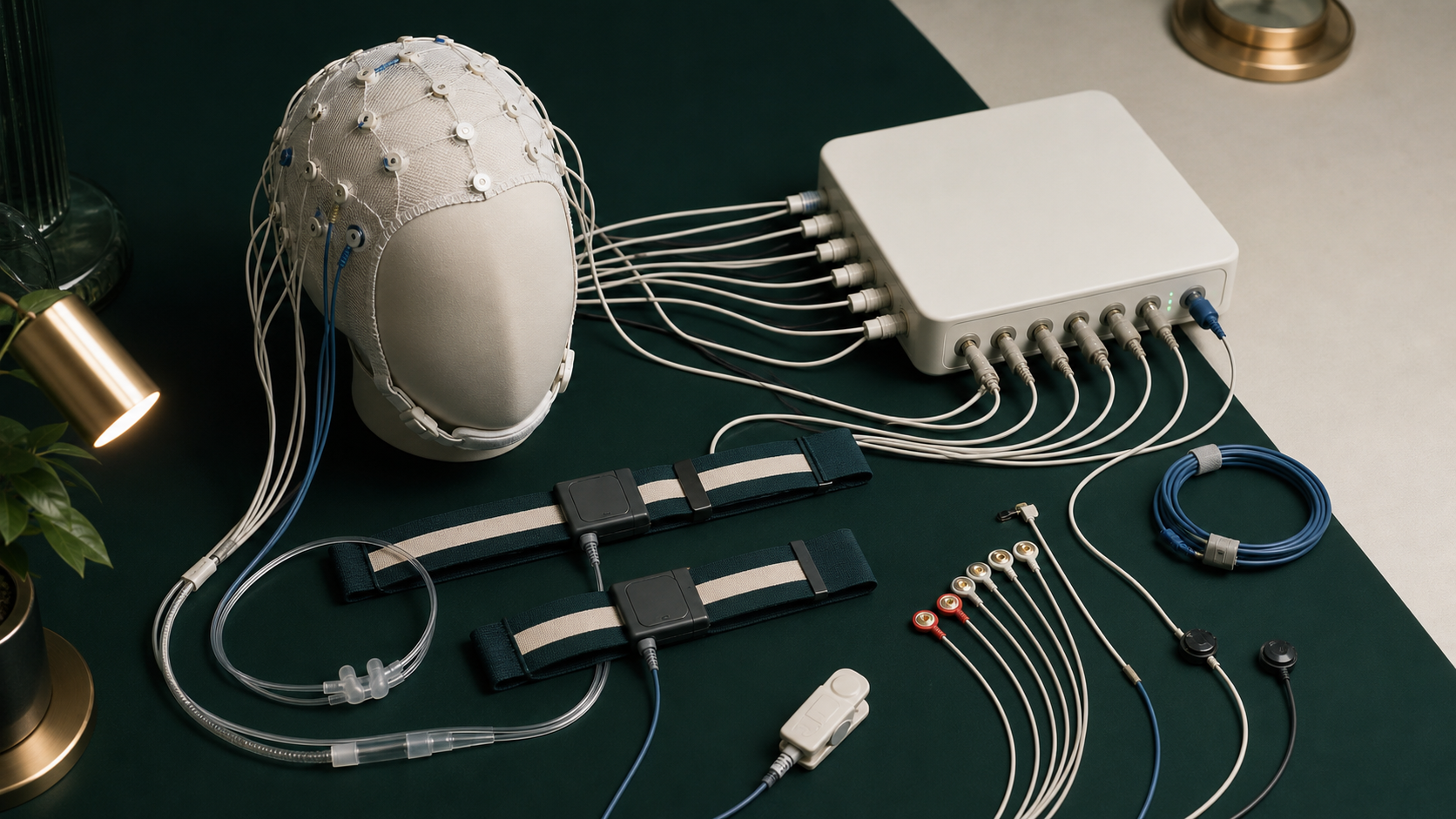
An overnight sleep study records brain waves, eye movements, muscle tone, breathing, oxygen levels, heart rhythm and body position. Clinical interpretation often compresses that dense sleep physiology into familiar measures such as the apnea–hypopnea index. A Cleveland Clinic registry began with 10,000 studies. Preprocessing retained 9,608 for clustering, and 9,203 studies trained the foundation model. It identified five risk groups with different trajectories for mortality, cardiovascular disease and neurological disease. The highest-risk group had more than twice the mortality risk of the lowest group, while conventional apnea severity categories showed limited prognostic value.
The result survived a second cohort
The researchers tested the framework in the independent Sleep Heart Health Study, a population-based cohort collected with lower-resolution data. The model still distinguished higher- and lower-risk patients. That strengthens the result, but the analysis remains retrospective. It links physiological patterns to later outcomes and does not show that giving clinicians a risk group improves referral, monitoring, treatment or survival. The paper calls for replication in additional cohorts and prospective clinical trials before implementation.
The partnership includes quantum; this study does not
The team came together through the Cleveland Clinic–IBM Discovery Accelerator, a ten-year life-sciences partnership covering AI and quantum computing. IBM Research scientists are among the authors, and the Discovery Accelerator and the National Heart, Lung, and Blood Institute supported the research. This paper used classical artificial intelligence. No quantum computer, sensor, simulation or network appears in the method.
The hospital opportunity lies in data already collected. American sleep laboratories perform an estimated one million to four million studies each year. A reliable secondary analysis could extract more value from the same difficult night without adding another test. Adoption would still require cross-hospital validation, interpretable group definitions, clear consent and data-reuse rules, and a defined clinical response. The model has shown that the sleep study contains more prognostic structure than one familiar score preserves. Medicine has not yet shown how that extra message should change care.