A Texas Radiation Registration Draws a Boundary Around One Fusion Test
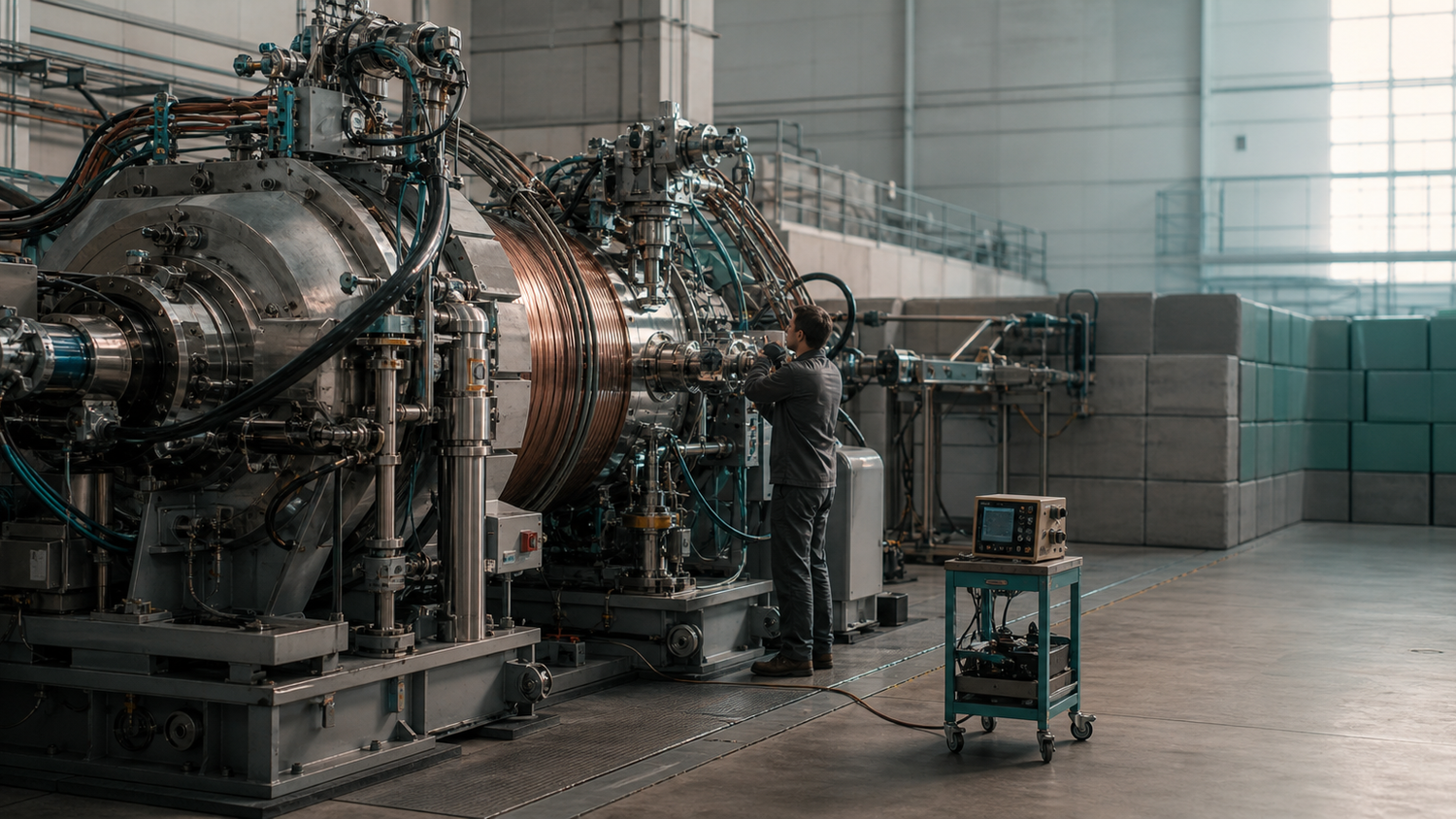
Texas has given one early-stage fusion venture a public compliance boundary. According to an American Fusion Inc. release distributed by GlobeNewswire, the Texas Department of State Health Services issued X-Ray Registration R54726 to the company on July 17, 2026. The release says it covers research involving twelve named Texatron research systems at an approved Texas Tech University location and runs to February 28, 2034.
Those particulars come from American Fusion. Texas’s official industrial x-ray registration page confirms the wider system: industrial radiation machines require registration, an application, fees and a qualified radiation safety officer; the department may inspect registered facilities. Quentir also attempted the state’s public license-number search for R54726. The form accepted the X-Ray Registration category and certificate number, but its CAPTCHA prevented an automated result. The certificate dates and equipment list therefore remain company-supplied facts, clearly separated from the state’s published regulatory requirements.
A certificate creates an operating perimeter
The useful question is what the registration changes inside the company. It does not certify a fusion machine’s performance, validate plasma claims or establish commercial readiness. It defines the radiation-machine activity that may proceed under a named registration and places that activity inside a recordable compliance system.
That perimeter affects ordinary engineering decisions. Equipment has to match the registered scope. Radiation surveys, shielding arrangements, operating procedures, personnel responsibilities and machine changes become inspectable matters. A partner considering a test campaign can ask for the registration, the machine inventory, survey records and the radiation-safety programme. An insurer or landlord can map the same documents to its own risk controls. A technical milestone begins to acquire an administrative shadow.
For frontier hardware, this is often the first moment when a venture becomes legible beyond its laboratory. A company can make an ambitious technical claim with slides and experimental traces. It earns a different kind of confidence when those claims sit beside a regulator-facing description of where the equipment is, who is responsible for it and what happens when the configuration changes. Quentir traced the same institutional pattern in The Machine Behind the Machine: ASML and America’s AI-Quantum Industrial Future: advanced hardware becomes investable when laboratories, suppliers, controls and public authority can be mapped onto one operating system.
The federal framework is moving at the same time
Texas is only one layer. The U.S. Nuclear Regulatory Commission is building the national architecture for commercial fusion machines. On February 26, 2026, the NRC published a proposed technology-neutral rule and draft consolidated licensing guidance. The proposal’s comment period closed on May 27. The agency describes the work as a framework for the safe use and deployment of fusion technology, with materials licensing at its centre.
That federal process gives the Texas registration a more precise context. A state radiation office can regulate particular machines and practices within its authority; the NRC process determines the broader vocabulary that fusion operators and Agreement States will use. The two layers will meet in applications, possession licences, guidance, inspections and the treatment of radioactive material. Their relationship will matter long before a utility-scale plant appears.
Companies should expect the evidence burden to grow in stages. A research machine may begin with registration, site controls and a radiation-safety officer. Later campaigns can introduce activated materials, tritium handling, waste questions or new source terms. Each change creates a reason to revisit the boundary. The durable asset is the chain of decisions linking a machine configuration to a risk assessment, an authorization and an operating record.
Two engineering signals in the same industrial week
It helps to compare the filing with a more mature experimental programme. On July 16, 2026, Lawrence Livermore National Laboratory reported that its partnership with Pacific Fusion had completed more than 3,000 shots on Sirius 1, a pulsed-power platform. The LLNL account is useful because it describes a repeated test cadence, component development and measurement work rather than a single demonstration.
The dates matter. LLNL’s account appeared one day before the registration’s stated issue date and one day before American Fusion’s release. The signals illuminate different stages of the same institutional problem. One makes a laboratory’s permitted operating boundary visible. The other shows how a programme can accumulate thousands of instrumented events. Together they suggest the shape of a credible fusion record: authorization, configuration, measurement, anomaly handling and repeatability.
How Quentir Reads It
Quentir reads the Texas filing as an operational milestone whose value depends on what follows. The immediate signal is modest and concrete: a named facility can organize specified radiation-machine research inside the state’s registration system. The larger opportunity is to turn that obligation into a disciplined evidence architecture.
Three records deserve particular attention. The first is a configuration ledger linking each registered machine to its installed state, shielding, controls and approved use. The second is a decision log for modifications, including the question asked before a change proceeds: does this stay inside the current registration, require an amendment or trigger another authority? The third is an incident-and-survey trail that preserves ordinary measurements as carefully as exceptional events. These records reduce friction when a collaborator, insurer, investor or regulator asks how the laboratory actually operates.
An earlier materials-science crossover points in the same direction. On May 7, 2026, the American Nuclear Society reported on DuctGPT, a tool built from the AtomGPT lineage and specialised literature to identify promising plasma-facing materials. It supplies useful background to the July compliance and testing signals without becoming part of their timeline. Its relevance lies elsewhere. Candidate materials become useful to a fusion programme when their provenance, assumptions, irradiation history and test conditions can be traced. The machine record and the materials record eventually have to meet.
This is the practical bridge between compliance and engineering. Registration data can define which machine produced a result. Materials records can explain what was exposed, how it was prepared and which model informed the choice. Experimental telemetry can show what happened during the shot. When those strands share identifiers and version histories, later due diligence becomes faster and scientific disagreement becomes easier to resolve.
The watchpoint is scope creep. A registration can create false comfort if the programme changes faster than its documentation. New generators, altered shielding, higher energies, different materials or a move into tritium-related work can change the regulatory picture. The responsible habit is to treat authorization as a living boundary reviewed alongside the design.
This public post identifies the crossing. A paid Signature Brief carries the chronology, source hierarchy, watchpoints and decision implications in a format a leadership team can use. This case belongs in that wider record because it shows how an experimental machine starts becoming an inspectable institution.
By Hendrik Heyns
Sources: Texas DSHS industrial x-ray registration guidance; NRC Fusion Machine Rulemaking Status; American Fusion Inc. company release distributed by GlobeNewswire; LLNL on the Pacific Fusion partnership; American Nuclear Society on DuctGPT.
Published intelligence, built to inform your own decisions. Published: July 21, 2026.