Canada Awards a Calgary Consortium CAD 20.3 Million for a Two-Year Quantum Defence Innovation Secure Hub, Announced 6 August 2026, With Validated Prototypes for the Armed Forces as Its Stated Goal
Quentir Defense Monitor
Evidence-based insights for quantum defense and security. Published by Quentir Systems LLC · September 3, 2026.
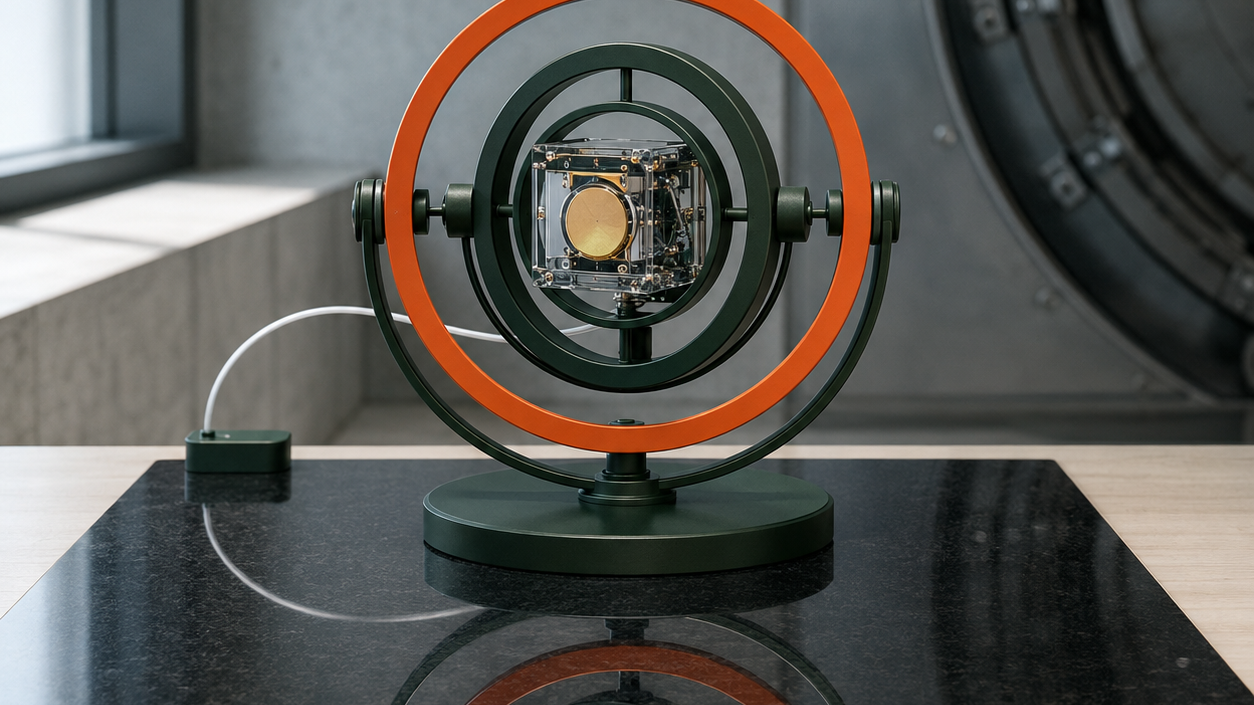
On 6 August 2026 Canada's Minister of National Defence, David J. McGuinty, announced in Calgary that a consortium led by the University of Calgary will receive CAD 20.3 million over two years to establish and operate the country's first Quantum Defence Innovation Secure Hub. The Department of National Defence describes the hub as a secure environment where government, industry, academia and innovators develop quantum technologies for defense applications, and it lists GPS-independent navigation and spoofing detection among the capabilities the work is meant to serve.
The University of Calgary states that the consortium's goal is to deliver validated prototypes to the Canadian Armed Forces and the Communications Security Establishment within two years. The evaluative question for a defense buyer is whether a prototype enters the hub and reaches an end-user test during the funded period, and what evidence of that test becomes public.
The Department of National Defence Funded a Secure Facility Under BOREALIS, Chosen in a Competition That Closed on 2 April 2026
The hub sits under BOREALIS, the Bureau of Research, Engineering and Advanced Leadership in Innovation and Science, which the department calls its innovation accelerator. The 6 August release organizes the work in four packages, quantum sensing, quantum communications, quantum algorithms and quantum hardware assurance, and describes the hub as a collaborative space for developing, testing, validating and transitioning quantum technologies into operational use. The release identifies quantum as one of the sovereign capability priorities under Canada's Defence Industrial Strategy. It gives an announcement date and a two-year funding term; it gives no start or end date for the term.
The money comes through a competition the department opened on 18 February 2026 and closed on 2 April. That call for proposals offered up to CAD 50 million in non-repayable contributions over two years for two hubs, one in quantum technologies and one in uncrewed systems, and required each proposal to come from a consortium of at least two eligible organizations. The department's program page for the hubs puts the same envelope at approximately CAD 50 million across the two streams, provided through the Innovation for Defence Excellence and Security program as non-repayable contributions, and lists the two awards: CAD 29.6 million to an Espace Aéro-led consortium for the uncrewed systems hub in Mirabel, Quebec, and CAD 20.3 million to the University of Calgary for quantum.
The quantum hub therefore took the smaller of the two shares. The same program page states the problem the hubs address: Canada has few existing testing environments suitable for work involving sensitive military applications, so frontier technologies lack trusted conditions for development, integration and demonstration. The award funds a facility and a program of collaboration, and the disclosed documents describe no particular device that it will start from.
The department's description of the model gives the hub a readiness scope. In the 14 July release for the uncrewed systems hub, the department states that the secure hubs support technology maturation across Technology Readiness Levels 4 to 9. On the Canadian government's own TRL scale, level 4 is product or process validation in a laboratory environment and level 9 is the actual product proven successful in its final form or function, so the department's scope runs from a laboratory-validated product to one in actual use.
The University of Calgary Leads a 13-Member Consortium Operated Through Quantum City
The University of Calgary operates the hub through Quantum City, its quantum initiative, whose managing director is Megan Lee. The university's announcement lists a consortium of 13 organizations. The industry members it identifies are Lockheed Martin Canada, General Dynamics Mission Systems Canada, CAE, Dell Canada and Calian. The academic partners are the University of Saskatchewan, the University of Alberta and the University of Lethbridge.
The University of Saskatchewan's account adds what it brings. Its release points to quanTA, the Centre for Quantum Topology and Its Applications, whose director Steven Rayan called the hub a large boost for quantum work in the province, and to the Sylvia Fedoruk Canadian Centre for Nuclear Innovation and the Canadian Light Source as facilities the partnership connects. The university also states that in March 2026 it acquired a quantum computer it describes as the first of its kind in Canada, and it describes Calian, one of the industry members, as Saskatoon-based.
Quantum pillar: sensing (inertial navigation and PNT). Use posture: defensive. Technology readiness: not applicable. A funded hub is a program action and sits on no rung of the readiness ladder, and the hub itself spans four work packages; the pillar and posture above classify the GPS-independent navigation and spoofing detection priority that the department leads with and this post examines, filed under the capability map's entry for position, navigation and timing without satellite signals, while the department scopes the hub model to maturation between TRL 4 and TRL 9 and the sources give no readiness level for any component that will pass through it.
The consequential sentence in the university's announcement is the delivery goal. The consortium states that it aims to deliver validated prototypes to the Canadian Armed Forces and the Communications Security Establishment within two years, which is the length of the funding period. Erika Janitz of the Schulich School of Engineering described the value of the hub as taking research out of the laboratory and into direct contact with end users.
The phrase validated prototype carries no readiness level on its own. The university does not say in what environment the validation will occur, whether the prototype will be integrated into a platform, or whether the armed forces will operate it, and each of those conditions corresponds to a different rung on the Canadian scale. The university's text identifies work areas and end users; it identifies no sensor, no communications link and no algorithm as a starting point.
The Hub's Lead Priority Is GNSS-Independent Navigation and Spoofing Detection, Which Serve a Force's Own Position and Clock
The department's list of priority work, as quoted from the announcement by Inside GNSS on 10 August, runs to five items: GNSS-independent navigation technologies, spoofing detection capabilities, quantum-secure communications and timing, decision-support tools, and testing and validation of quantum devices and systems. The department does not assign the items to work packages; this Monitor files the first two under quantum sensing, and they are the reason the readiness panel above classifies this post's subject under position, navigation and timing.
A force that can hold its position and its clock without satellite signals keeps aircraft, ships and ground units on course when GPS is jammed or spoofed, and a force that can detect a spoofed signal knows when to stop trusting its receivers. The department frames the priority around navigation resilience and spoofing detection, which is why the posture reads as defensive for this use case. The department's release says nothing about which physical sensing method the hub will pursue. GNSS-independent navigation can rest on inertial, gravimetric, magnetic or hybrid approaches, and the Canadian sources identify none of them.
The department's program page describes the gap the hub is intended to close: few existing testing environments in Canada are suitable for work involving sensitive military applications. The award is therefore intended to expand access to a secure environment in Calgary where industry, academic and armed-forces participants can work on the same devices. Whether that access operates as intended will depend on accreditation, staffing and scheduling that the announcement does not describe.
The hub is intended to support maturation between TRL 4 and TRL 9, and that support has a precondition the announcement leaves open: a prototype has to enter it. No disclosed source identifies which Canadian quantum navigation device will enter, or at what readiness level. The two-year goal is therefore a claim about the hub's process, and the sources give no allocation of the award by member, work package or device.
The fourth work package, quantum hardware assurance, is the one a procurement office can use before any sensor is fielded. The department describes it as testing and validation of quantum devices and systems ahead of deployment. In this Monitor's procurement reading, a facility that can characterize how a quantum device behaves under operating conditions would give a buyer a hardware assurance capability for components sourced from a domestic or allied supply base. Which devices it will test, by what methods and under what accreditation, the sources do not say.
Three Hubs Exist, the Two 2026 Awards Share One Envelope, and the Delivery Goal Is the Test
Canada's secure-hub model now has three instances. The Maritime hub began as a pilot in November 2025 at the Centre for Ocean Ventures and Entrepreneurship in Halifax, focused on undersea domain awareness, autonomous marine systems and AI-enabled maritime analytics, according to the February call. The uncrewed systems hub in Mirabel followed in July with CAD 29.6 million and the Canadian Joint Forces Command as its sponsor. The quantum hub in Calgary completes the pair the February call put out to competition; the approximately CAD 50 million envelope covers those two awards and not the earlier Maritime pilot.
Three program measures describe the quantum hub, and they measure different things. The envelope is the approximately CAD 50 million the department set aside for the two 2026 hubs. The award is CAD 20.3 million to the Calgary consortium across two years. The deliverable is the validated prototypes the consortium says it aims to hand to the armed forces and the Communications Security Establishment within that period.
The sources establish a funded facility with its operator, its consortium, a two-year term, four work packages, a readiness scope stated by the department and a delivery goal stated by the university. Evidence that the goal was met would consist of four things: the identity of the device, the environment in which it was tested, the participation of the armed forces or the Communications Security Establishment in that test, and a published outcome. A published method for qualifying quantum devices from the hardware assurance package would be a further benchmark, which this Monitor proposes and no source promises, and it would give allied buyers something to use.
Sources
Primary source: the Department of National Defence news release of 6 August 2026, Calgary, in which Minister of National Defence David J. McGuinty announced the Quantum Defence Innovation Secure Hub under BOREALIS, the University of Calgary-led consortium, the CAD 20.3 million over two years, the four work packages and the GPS-independent navigation and spoofing detection priorities. The competition, the CAD 50 million envelope, the consortium requirement, the 18 February to 2 April 2026 window and the Maritime hub pilot at the Centre for Ocean Ventures and Entrepreneurship come from the department's call-for-proposals release of 18 February 2026; the two awards, the funding route through the Innovation for Defence Excellence and Security program and the department's statement on the shortage of suitable testing environments come from its Defence Innovation Secure Hubs program page; the TRL 4 to 9 scope and the Canadian Joint Forces Command sponsorship come from its 14 July 2026 release on the uncrewed systems hub in Mirabel. The definitions of levels 4 and 9 come from the Technology Readiness Level scale published by Innovation, Science and Economic Development Canada. The consortium membership, Quantum City, Megan Lee, the two-year validated-prototype goal and the quotation from Erika Janitz come from the University of Calgary announcement of 6 August 2026 by Ali Abel. The University of Saskatchewan's contributions, Steven Rayan's quotation, the March 2026 quantum computer and the description of Calian come from that university's release of 6 August 2026. The department's five-item priority list is quoted from Inside GNSS, 10 August 2026. The judgments are this Monitor's own: the classification of the pillar, sub-branch and posture for the navigation priority, the filing of the first two priorities under the sensing work package, the distinction between the funded access and the undisclosed starting device, the procurement reading of hardware assurance, the three program measures and the four items of evidence.