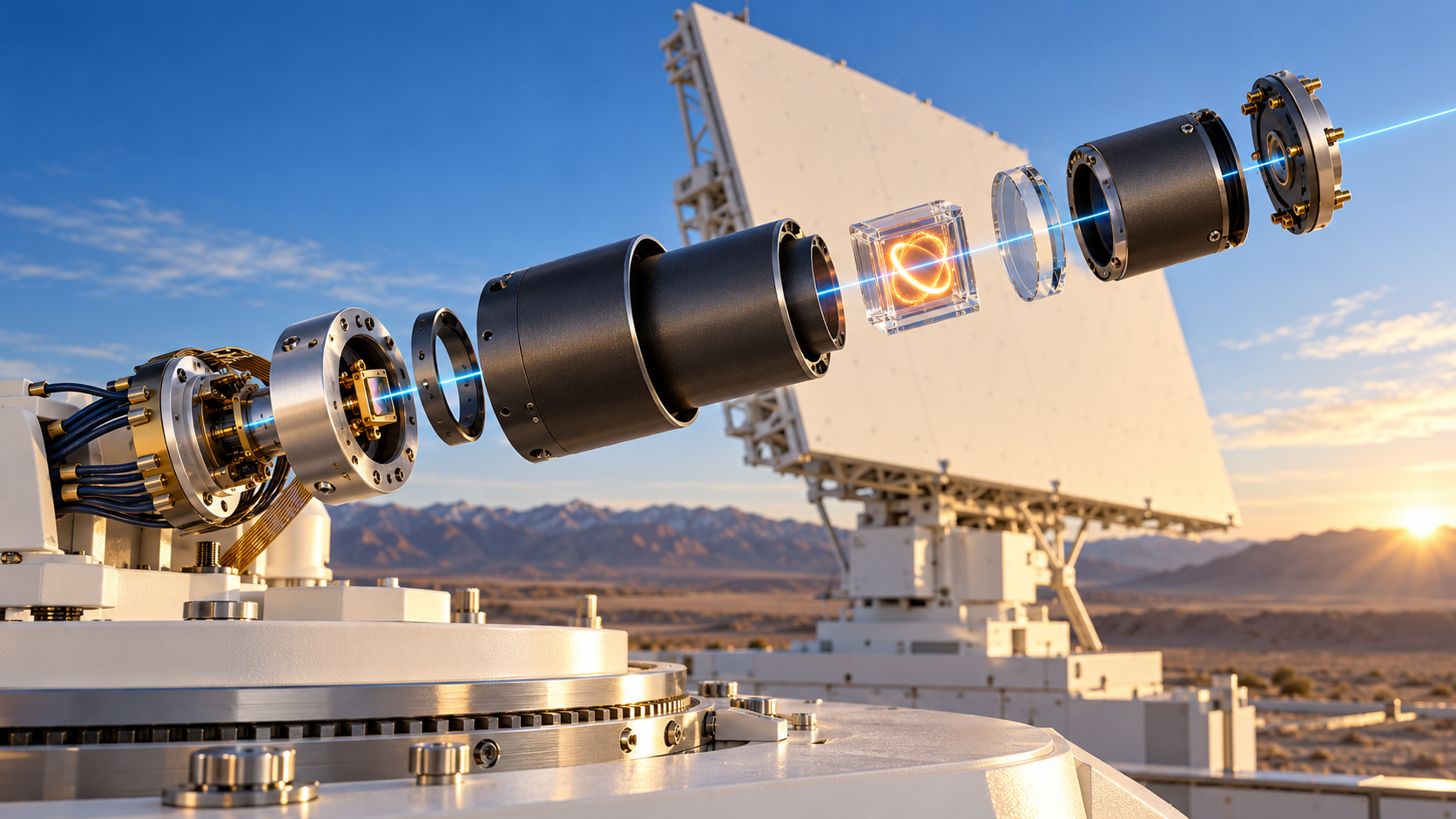
Arda Atomics Builds a Nuclear Magnetic Resonance Gyroscope to Find North for Radars Without GPS, Announced 15 October 2026 Under SPRIND's Quantum-Driven Intelligence Funke With HENSOLDT, TRL 4
Arda Atomics, TRUMPF's quantum sensing subsidiary, announced on 15 October 2026 that it is developing a nuclear magnetic resonance gyroscope intended to enable radar alignment without GPS, with HENSOLDT setting the requirements inside SPRIND's Quantum-Driven Intelligence Funke. What the laboratory and QYRO CubeSat trail establishes, the gyrocompassing arithmetic that decides whether it works, and the projected US strategic-grade NMRG figures a buyer will hold it against.
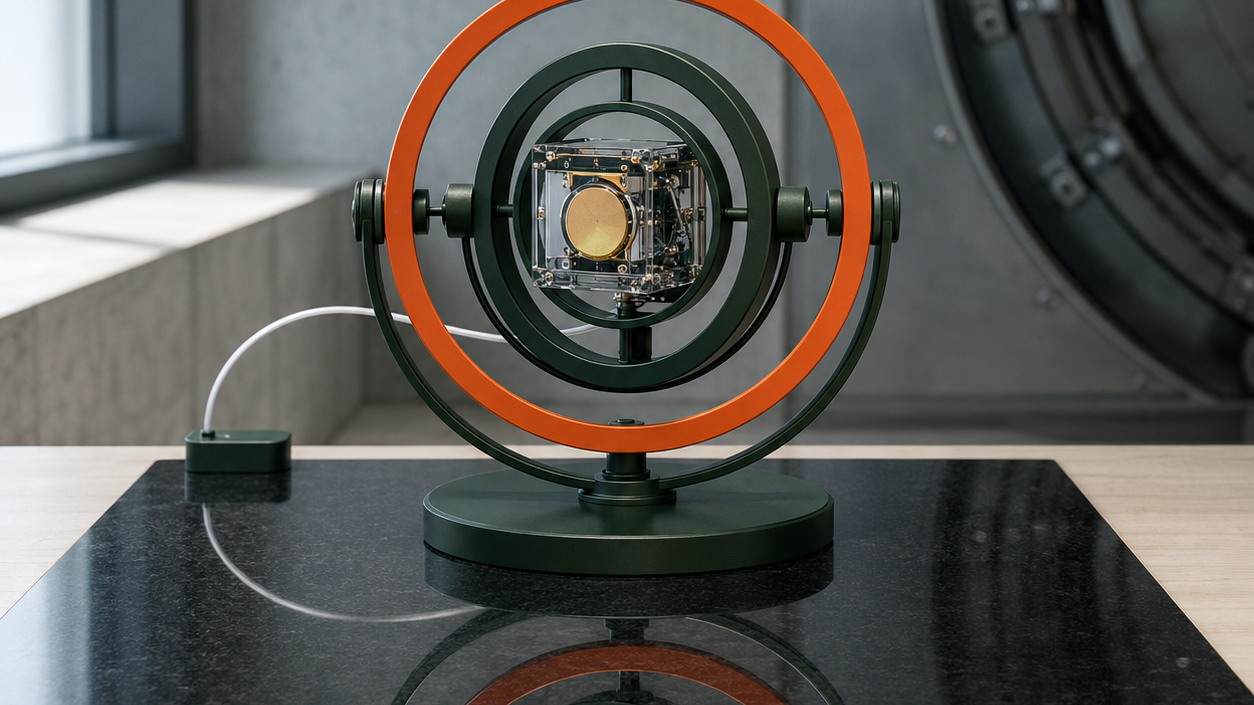
Canada Awards a Calgary Consortium CAD 20.3 Million for a Two-Year Quantum Defence Innovation Secure Hub, Announced 6 August 2026, With Validated Prototypes for the Armed Forces as Its Stated Goal
On 6 August 2026 Canada's Department of National Defence announced CAD 20.3 million over two years for a University of Calgary-led consortium to establish the country's first Quantum Defence Innovation Secure Hub, a secure facility organized around quantum sensing, communications, algorithms and hardware assurance. The department lists GPS-independent navigation and spoofing detection as priorities, and the university states that the 13-member consortium aims to deliver validated prototypes to the Canadian Armed Forces and the Communications Security Establishment within the funded period. For a defense buyer the question the award raises is which prototype enters the hub and what end-user test it reaches before the two-year period ends.
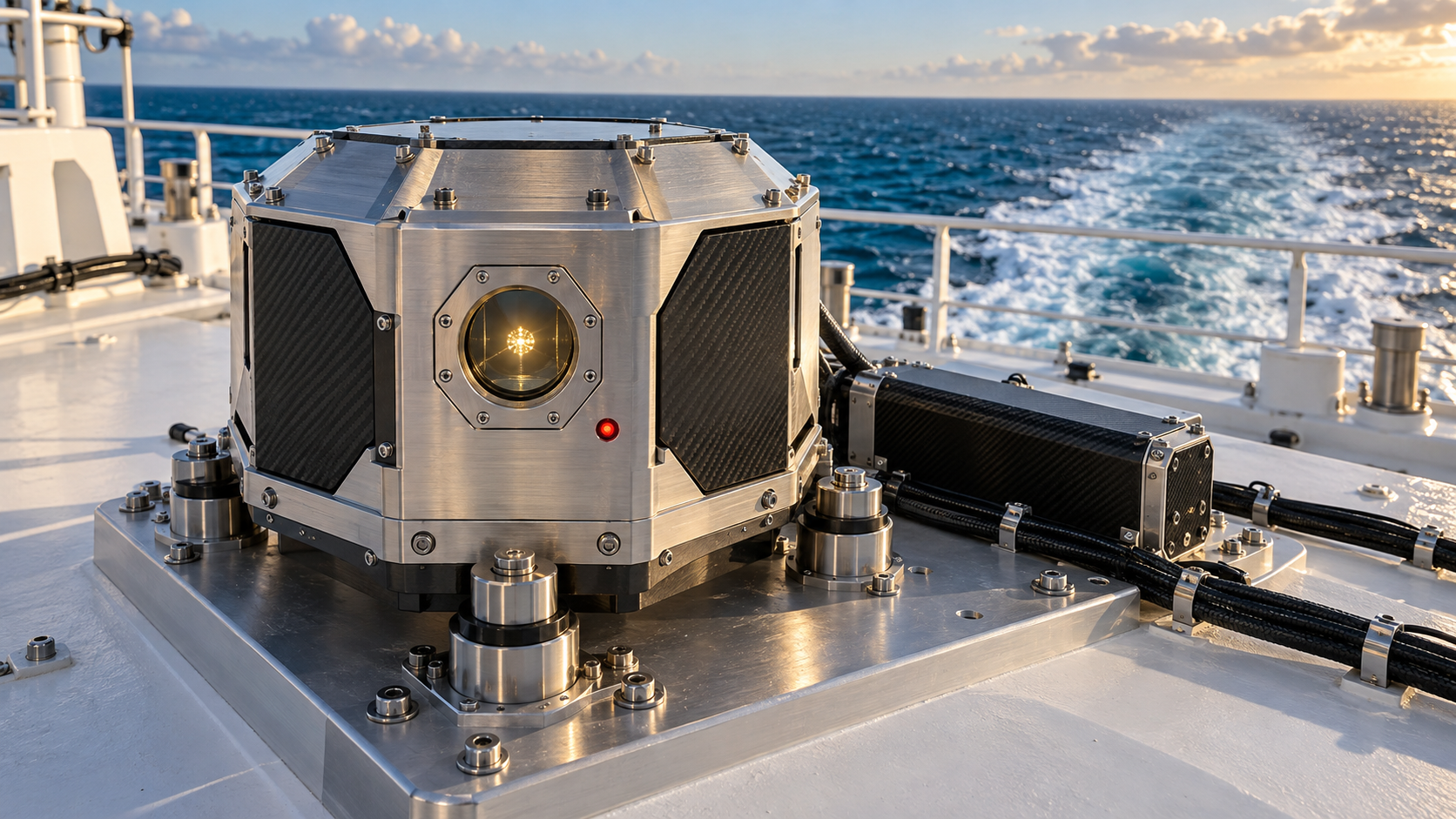
Q-CTRL Navigates 83 Kilometers of the Coral Sea Without GNSS Fixes: Near One Nautical Mile for 70 Kilometers, 2.2 at the Finish