
NIST Widens Superconducting Nanowire Single-Photon Detectors to 0.1 Millimeter and Cuts Dark Counts by Ten Orders of Magnitude, Published in Optica on August 19, 2026 Under DARPA's SynQuaNon Program
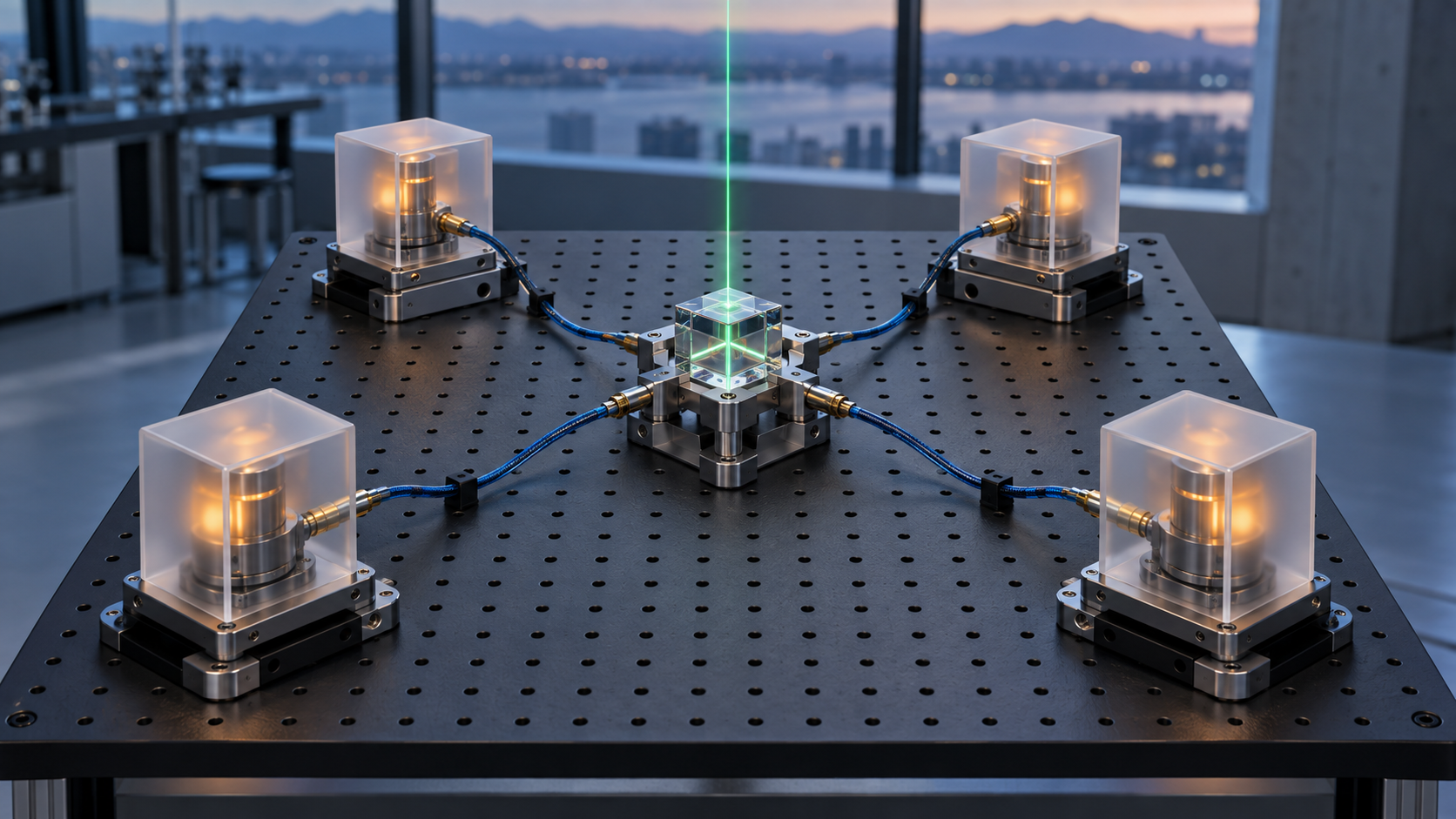
Sorbonne, Welinq and Leiden Demonstrate Private Quantum Networked Sensing With a Four-Photon GHZ State at 96.9 Percent Fidelity, arXiv 15 September 2026

The 27.4 Million Euro ADEQUADE Project Closed in June 2026: Thales, Indra, Leonardo and Diehl Hand Europe Roadmaps for GNSS-Denied Navigation, Rydberg RF Detection and Single-Photon Imaging
Indra's September 14 announcement announces ADEQUADE's June conclusion, the 27.4 million euro European Defence Fund project in which Thales, Indra, Leonardo, Diehl and 27 other partners spent three and a half years deciding which quantum sensing technologies Europe should carry toward its platforms. We read what the project establishes across GNSS-denied navigation, Rydberg RF detection and single-photon imaging, and what still separates a concluded research action from a system a program office can rely on.

USTC Demonstrates Quantum Position Verification With 75-Meter Accuracy Over 2 Kilometers of Fiber, Published in Nature Physics on September 3, 2026

Japan's Defense Ministry Puts Drone-Mounted Quantum Magnetometers for Submarine Detection in Its Fiscal 2027 Budget Request, With Prototypes Planned for 2027 to 2031
Nikkei reports that Japan's Ministry of Defense wrote a quantum magnetometer for small drones into its fiscal 2027 budget request, with prototypes planned from 2027 to 2031 and Chinese submarines as the surveillance target. We read what the filing establishes for submarine detection from cheap, expendable aircraft, set it beside CASC's 2025 drone-mounted magnetometer trial off Weihai, and lay out what separates an item request from the anti-submarine warfare surveillance net a fleet commander can rely on.

SandboxAQ Flies AQNav Magnetic Navigation on Northrop Grumman's Lumberjack, the First Reported MagNav Test on an Attritable One-Way-Attack Drone
On September 9, 2026, SandboxAQ and Northrop Grumman reported the first flight test of magnetic navigation on an attritable one-way-attack drone, with AQNav installed into Lumberjack's existing systems in under an hour. We read what the test establishes for GPS-denied operations, set it beside Q-CTRL's Coral Sea gravimetric trial and Saab's quantum-timed radar network, and lay out what still separates a flight campaign from the alternative PNT capability a program office can rely on.
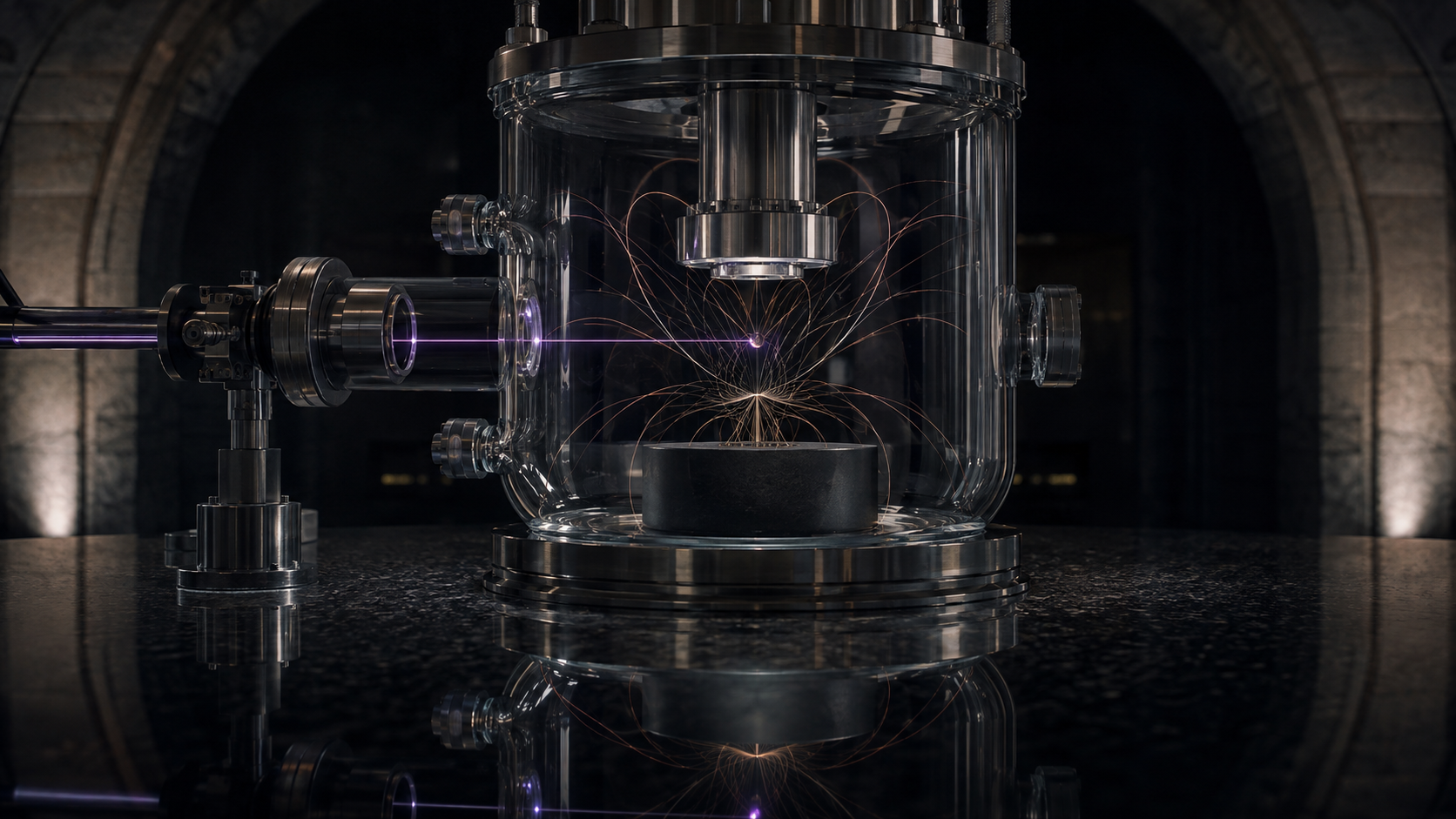
Peking University and Mainz Demonstrate a Levitated Magnet Magnetometer at 32 Femtotesla per √Hz and Room Temperature in Science, the Signal Class of Undersea Magnetic Anomaly Detection
Physicists at Peking University and Johannes Gutenberg University Mainz published a levitated magnet magnetometer in Science whose preprint reports 32 ± 3 femtotesla per root hertz at approximately 305 Hz, at room temperature inside a four-layer cylindrical magnetic enclosure, without cryogenics. Earth-strength background-field tolerance does not establish unshielded sensitivity. The response FWHM is approximately 0.025 Hz, with sensitivity of approximately 1 nT/√Hz below 15 Hz. We read the physics against magnetic anomaly detection of submarines, from the P-3 tail stinger to the Strategic Capabilities Office's throwaway sensor drone, and set out what stands between a quiet optical bench and a sonobuoy-launched sensor, including suitable low-frequency performance or demonstrated signal modulation.

Tampere University and Nokia Bell Labs Adapt MIMO Space-Time Coding to Rydberg Atomic Quantum Receivers in a September 2026 Paper
Canada Awards a Calgary Consortium CAD 20.3 Million for a Two-Year Quantum Defence Innovation Secure Hub, Announced 6 August 2026, With Validated Prototypes for the Armed Forces as Its Stated Goal
On 6 August 2026 Canada's Department of National Defence announced CAD 20.3 million over two years for a University of Calgary-led consortium to establish the country's first Quantum Defence Innovation Secure Hub, a secure facility organized around quantum sensing, communications, algorithms and hardware assurance. The department lists GPS-independent navigation and spoofing detection as priorities, and the university states that the 13-member consortium aims to deliver validated prototypes to the Canadian Armed Forces and the Communications Security Establishment within the funded period. For a defense buyer the question the award raises is which prototype enters the hub and what end-user test it reaches before the two-year period ends.
Q-CTRL Navigates 83 Kilometers of the Coral Sea Without GNSS Fixes: Near One Nautical Mile for 70 Kilometers, 2.2 at the Finish

Army Research Laboratory and UC Berkeley Pair Two Diamond Spin Signals to Cut a Clock's Temperature Drift Tenfold
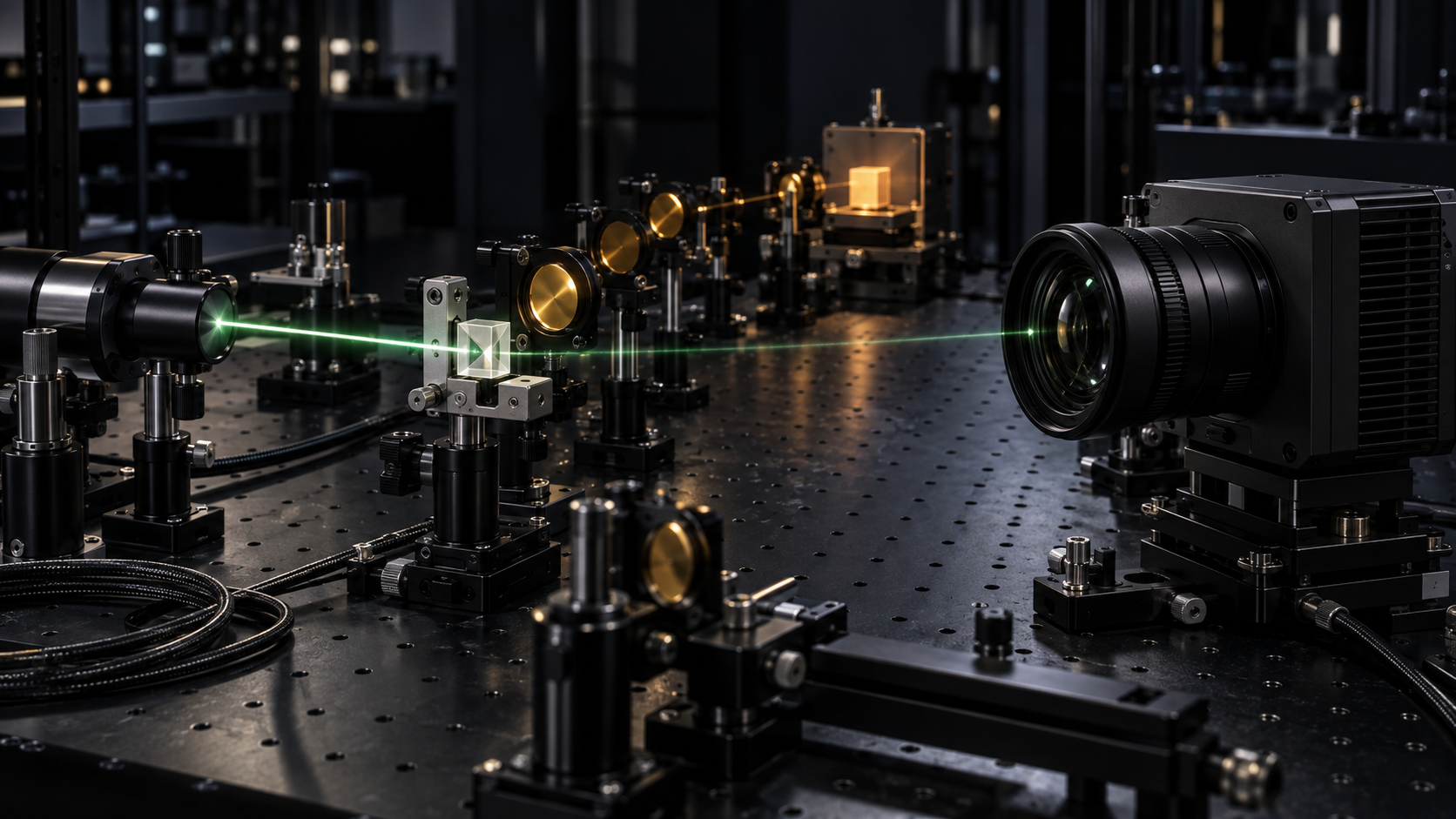
A Silicon Camera Reads an Infrared Band It Cannot See
Imperial College London physicists demonstrate wide-field thermal infrared imaging with a specialized Peltier-cooled silicon scientific camera, using quantum imaging with undetected photons to reach 100 times past the background limit at room temperature, and putting a published exception under the assumption that serious infrared performance requires a cryogenically cooled infrared focal-plane detector.
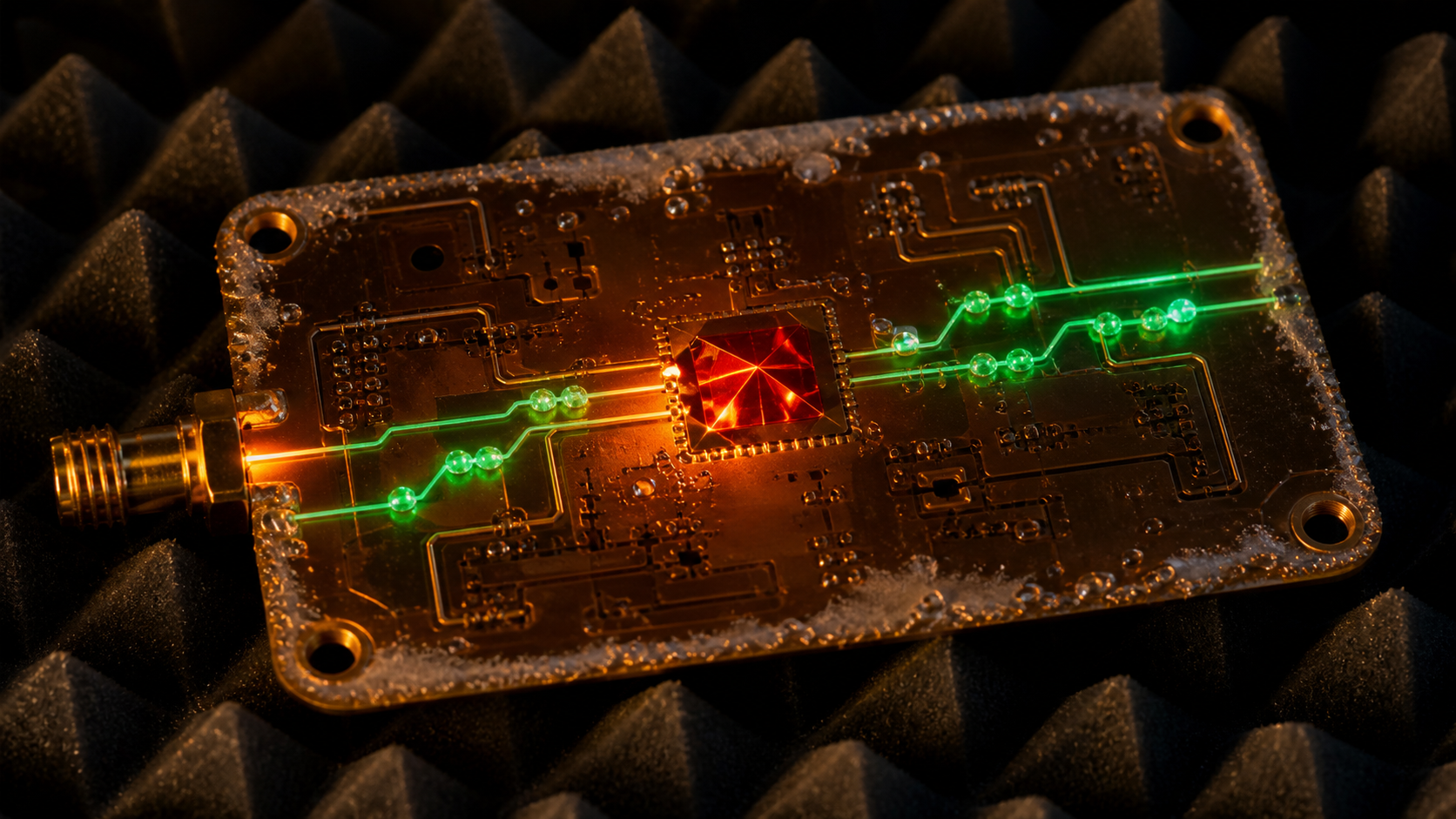
The Raw Material of Quantum Radar Arrives at Room Temperature
MIT researchers report in Nature Electronics a cavity-magnonic device that generates paired correlated microwave signals at room temperature: a yttrium iron garnet film on a printed circuit board splits one pump photon into two outputs at distinct frequencies with a strongly correlated phase relationship. A close look at why the dilution refrigerator has kept quantum illumination radar and correlation-assisted links confined to laboratories, what a warm pair source changes for whom, and the honest distance between strong correlations on a bench and the entangled, target-ranging quantum radar a program office could rely on.
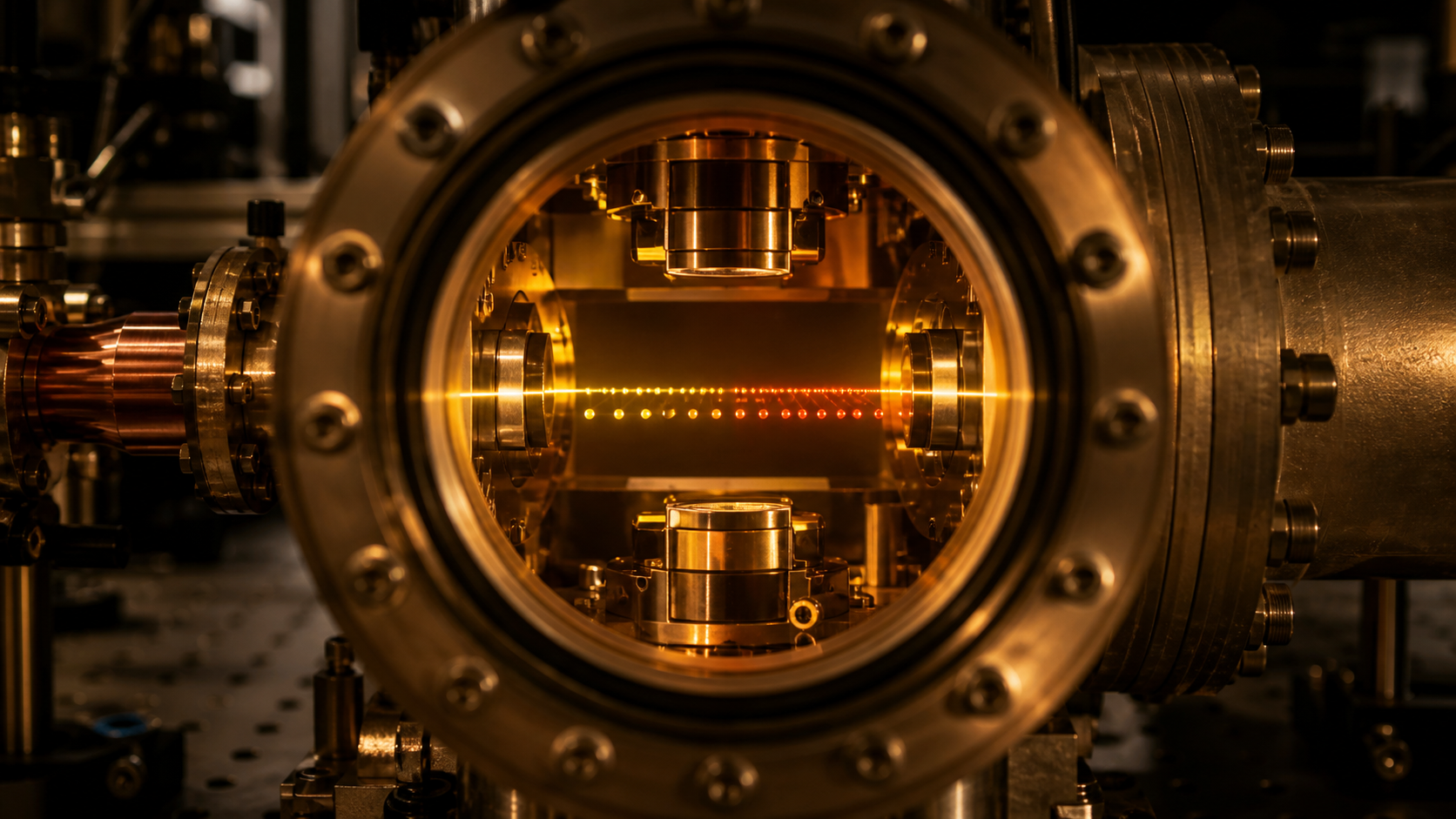
A Cold-Atom Comagnetometer Reaches a Fitted 60-Second Spin-Coherence Time
A new experiment traps the nuclear spins of two ytterbium isotopes in one optical lattice and reports a fitted 60-second spin-coherence time, posting a magnetic noise suppression factor above thirty thousand. Comagnetometry broadly sits at the root of nuclear-spin gyroscopes, the inertial instruments behind navigation without GPS, although this cold-atom comagnetometer demonstration does not measure rotation. Quentir places the demonstration at TRL 4 of 9: a validated laboratory instrument with minute-long spin coherence, several rungs below anything a program office could field; an eventual rotation measurement would provide important readiness evidence but would not by itself validate field deployment.

A Quantum Lidar Reads Multiple Directions at Once
A POSTECH team funded by South Korea's Agency for Defense Development demonstrated a quantum lidar that resolves multiple targets across a finite fan of directions in one measurement—not omnidirectional coverage—through background light a thousand times stronger than the signal. An early-stage low-light sensing result that establishes no field or fog performance.

Farseer Puts Quantum Sensors on a Fielding Clock
The Defense Innovation Unit's Farseer program offers up to 200 million dollars to move quantum magnetometers, gravimeters and portable atomic clocks onto operational ISR platforms, with prototypes due at government test facilities within nine months of award. Behind it stands an executive order requiring fielded quantum sensors by September 2028, the firmest schedule quantum sensing has ever been given.

A Zero-Shift Strontium Clock Clarifies the Timing Path
A strontium optical lattice clock canceled a collision-driven frequency shift in the laboratory, clarifying one path toward resilient timing while field qualification remains ahead.

Atomionics Opens an Underwater Path for Quantum Gravimetry
Atomionics is adapting quantum gravimetry for underwater work, opening a path toward GPS-independent awareness while measured sea-trial evidence remains ahead.

NRL Puts Cold-Atom Navigation on a Maritime Path
NRL has put cold-atom interferometry on a path toward shipboard testing, aiming to reduce inertial navigation drift when satellite PNT is degraded.
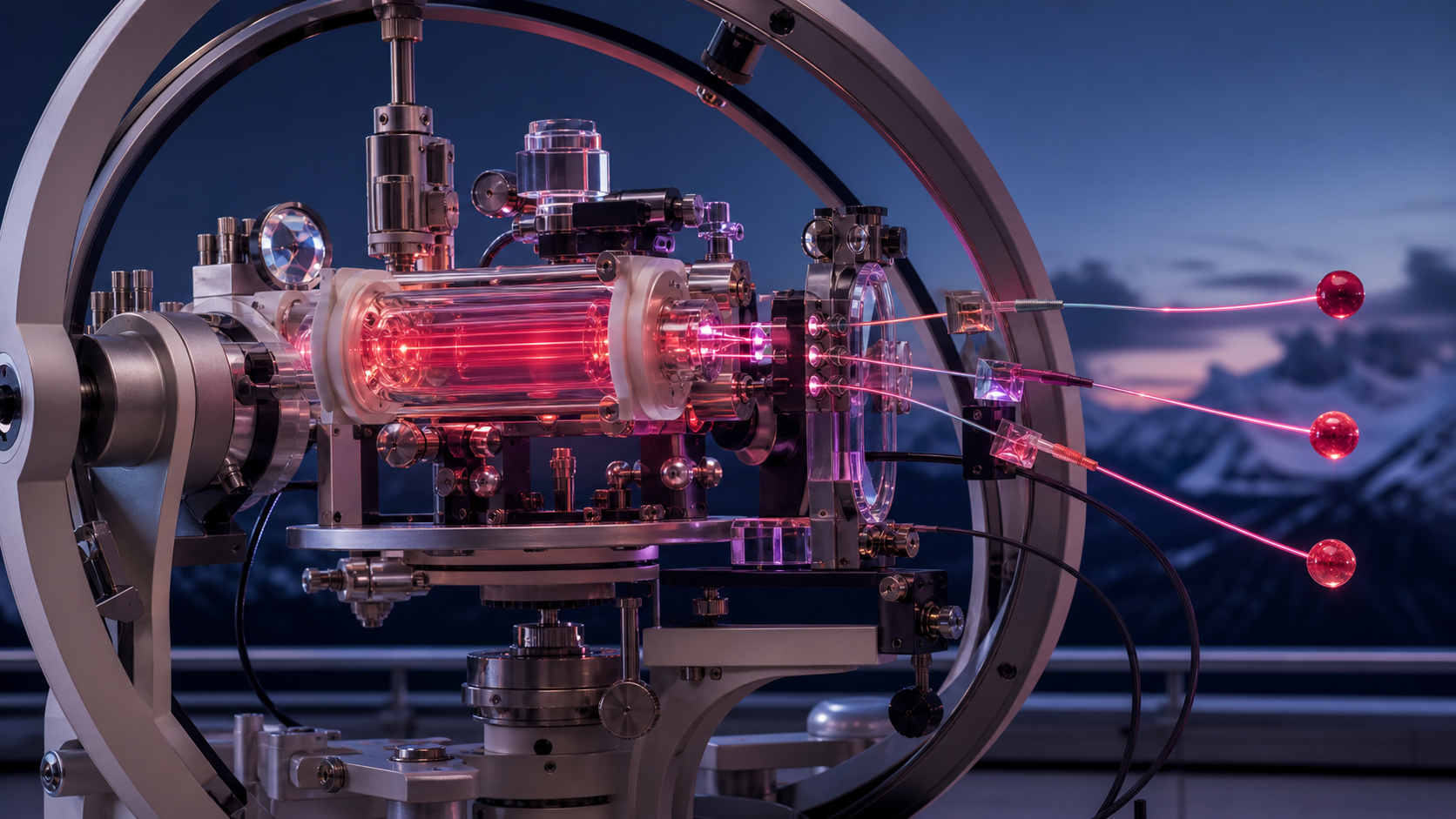
Multi-Chirp Waveforms Give Rydberg Receivers a Moving-Target Test
A new multi-chirp waveform addresses ambiguous delay-Doppler estimation in modeled Rydberg atomic receivers, opening a measurable path toward quantum RF spectrum sensing.