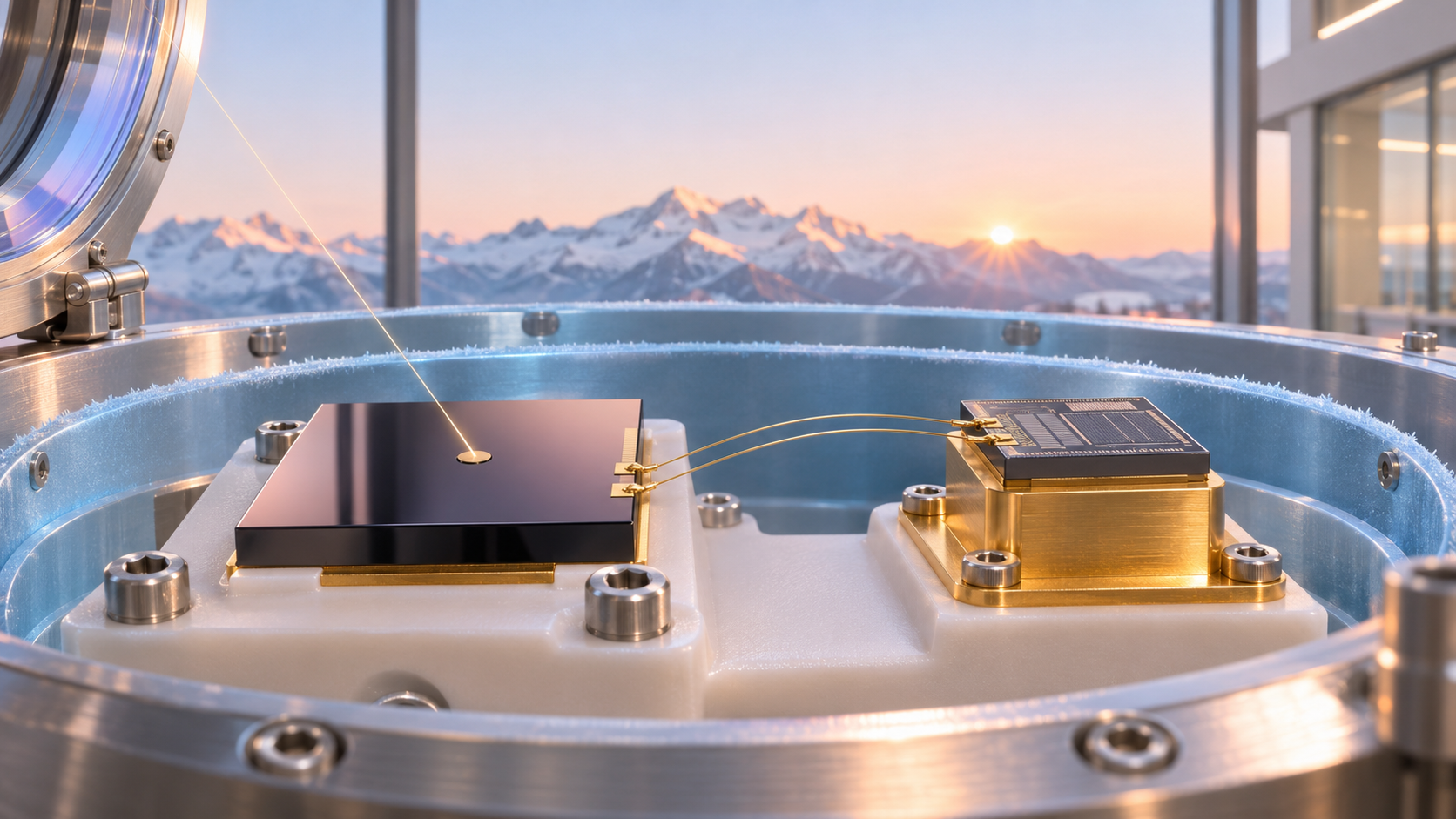
CEA-Leti Reports 42 to 55 Percent Single-Photon Detection Efficiency and a 150 Hz Intrinsic Dark Count Rate in HgCdTe Avalanche Photodiodes at 80 K, arXiv 2611.24461, 18 November 2026: TRL 4
On 18 November 2026 CEA-Leti and FEMTO-ST posted a characterization of mercury cadmium telluride avalanche photodiodes operated as single-photon counters at 80 kelvin: a diode bonded to its CMOS amplifier detected 1.55 micrometer photons with 42 to 55 percent external efficiency at 2.6 to 17 MHz of dark counts, while a sister diode read by an amplifier 0.7 centimeters away showed a gain-normalized dark current of 10.9 femtoamperes, about 150 dark counts per second. The post reads the gap as amplifier glow in the hybridized assembly, places the work in the sensing pillar's imaging-in-low-light sub-branch as dual-use capability for lidar, laser links and QKD receivers, sets it at TRL 4, and lists the array, coating, jitter and qualification results a program office should ask for.
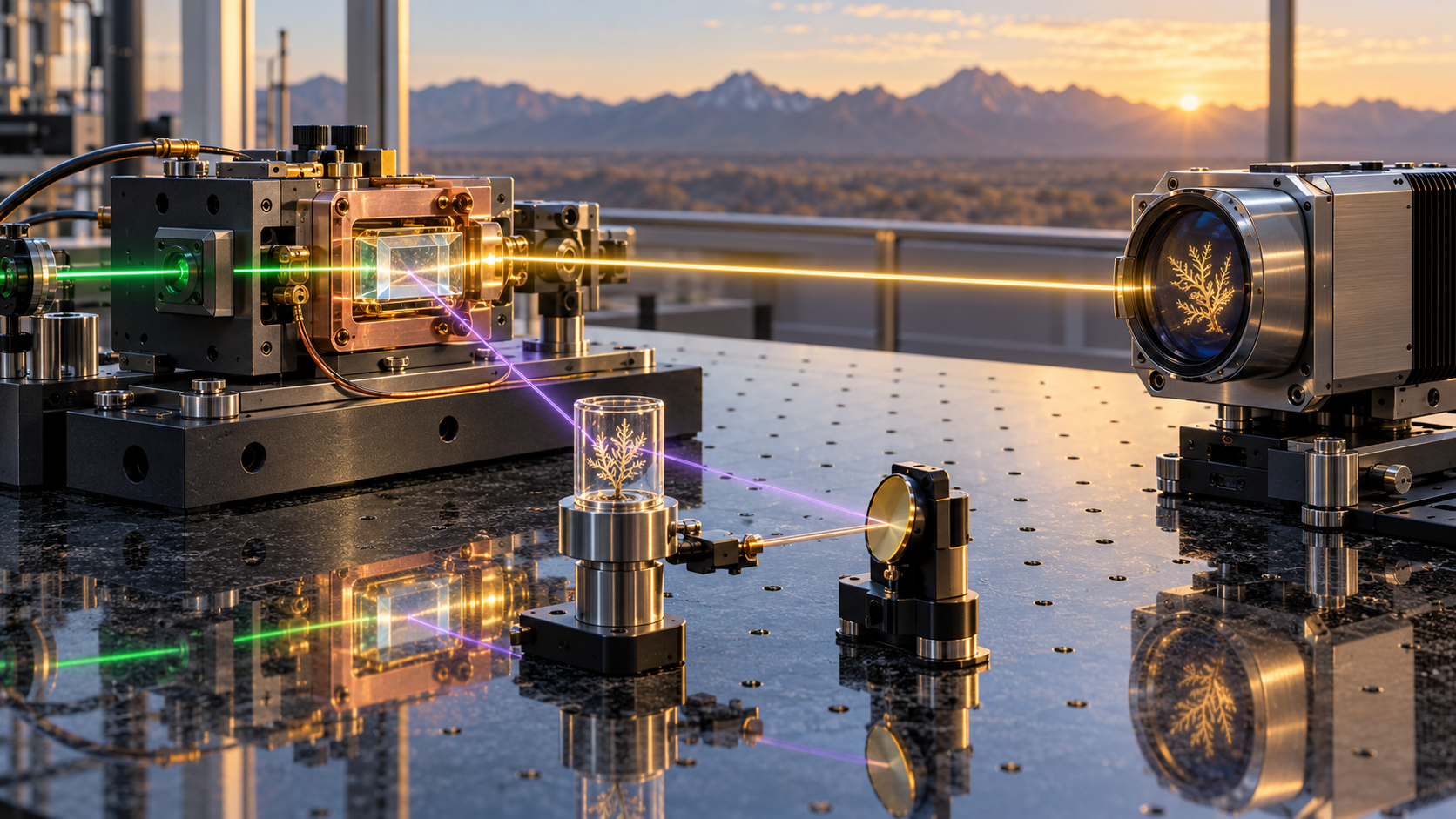
IIT Bombay and Raman Research Institute Image at 1550 Nanometers With Photons a Camera Never Sees, arXiv 2610.32292, 23 October 2026: What It Offers Low-Light Infrared Sensing, TRL 3
IIT Bombay and the Raman Research Institute imaged a zebrafish larva at 1550 nanometers with no infrared detector in the apparatus: the probe photons were never measured, and a silicon spectrometer at 810 nanometers read the picture through their entangled twins. The arXiv preprint of 23 October 2026 reports a spectral resolving power of about 1460, the finest yet for imaging with undetected photons. This post reads the result as a dual-use sensing capability at TRL 3: what short-wave infrared hyperspectral imaging on silicon would let a force identify, where the work stands against the Vienna and Berlin experiments and DARPA's passive-sensing program, and what still separates an eight-hour bench image from a program office.
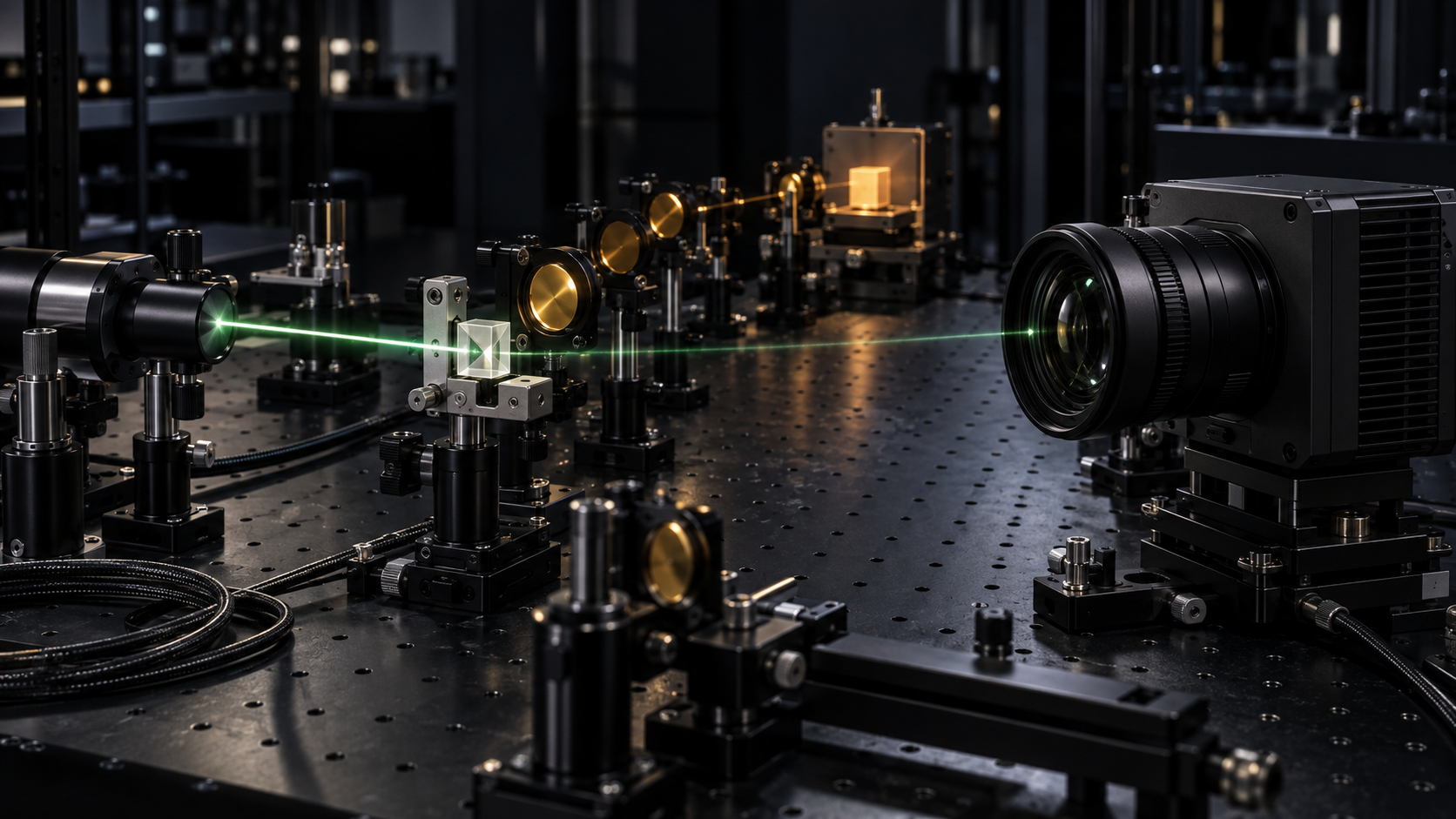
A Silicon Camera Reads an Infrared Band It Cannot See
Imperial College London physicists demonstrate wide-field thermal infrared imaging with a specialized Peltier-cooled silicon scientific camera, using quantum imaging with undetected photons to reach 100 times past the background limit at room temperature, and putting a published exception under the assumption that serious infrared performance requires a cryogenically cooled infrared focal-plane detector.