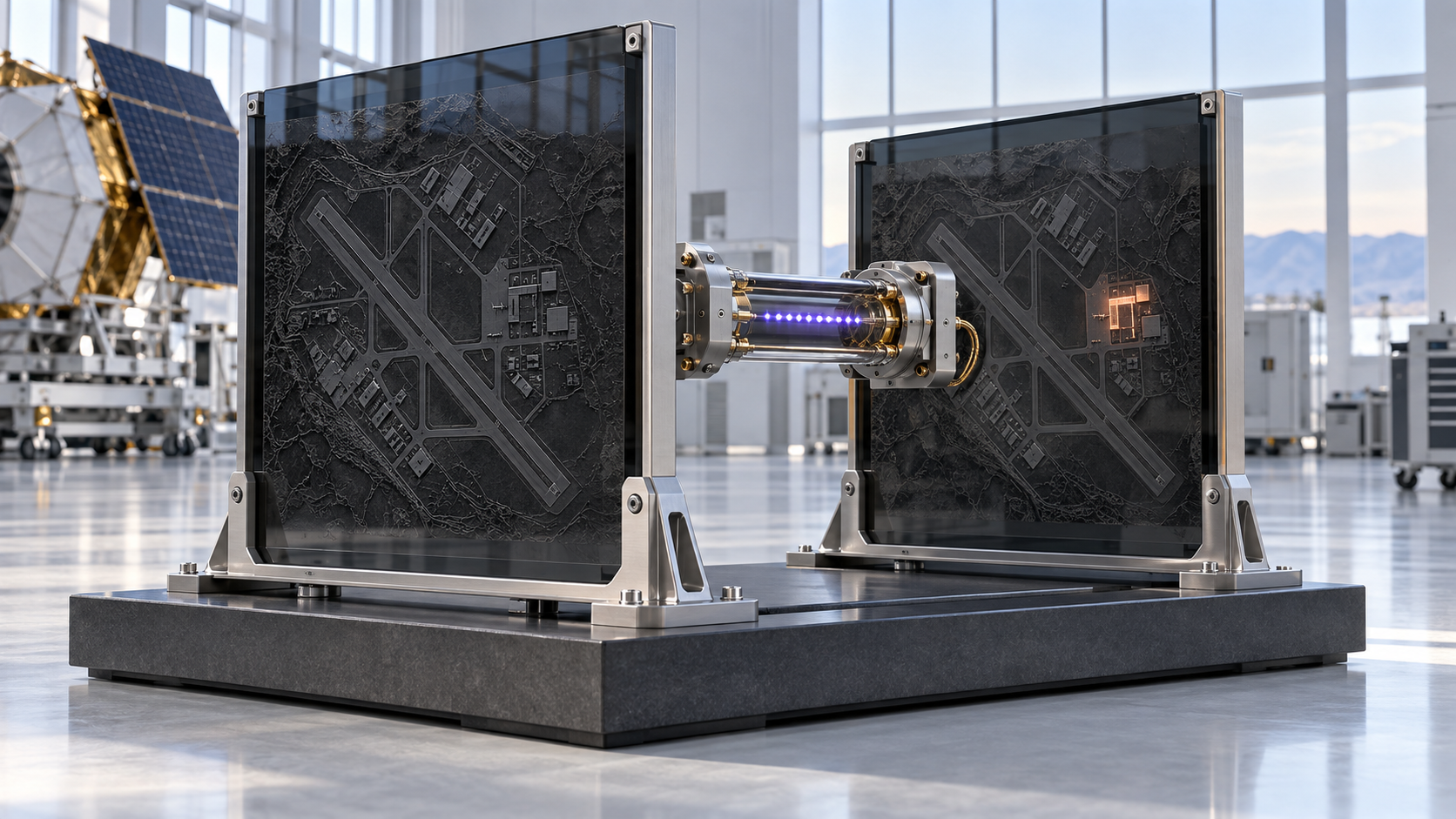
IonQ and Capella Run a 20-Qubit Quantum Circuit Born Machine for SAR Change Detection on Forte Hardware: Filtered F1 0.32 Against 0.24 and 0.16 at MCAS Miramar, arXiv 2609.05313, 4 September 2026
Defense Henry Quentir Defense Henry Quentir

IonQ and Capella Run a 20-Qubit Quantum Circuit Born Machine for SAR Change Detection on Forte Hardware: Filtered F1 0.32 Against 0.24 and 0.16 at MCAS Miramar, arXiv 2609.05313, 4 September 2026

On September 4, 2026, Samwel K. Sekwao, Shaunak De and colleagues at IonQ and Capella Space posted a paper training a 20-qubit quantum circuit Born machine to find what changed between two Capella radar images of Marine Corps Air Station Miramar, and on September 24 IonQ announced it. On IonQ's Forte hardware the model reached a filtered F1 of 0.32 against 0.24 and 0.16 for two classical baselines, while a Gaussianizing transform erased the gap. We read the SAR change detection result as dual-use machine learning for intelligence, surveillance and reconnaissance, weigh who gains from it given Capella's NRO Radar Commercial Augmentation award, and set out the per-scene retraining, the two-scene evidence base and the missing learned classical baseline that stand between this quantum machine learning for ISR proof of concept and an analytic a program office would rely on.
Read More
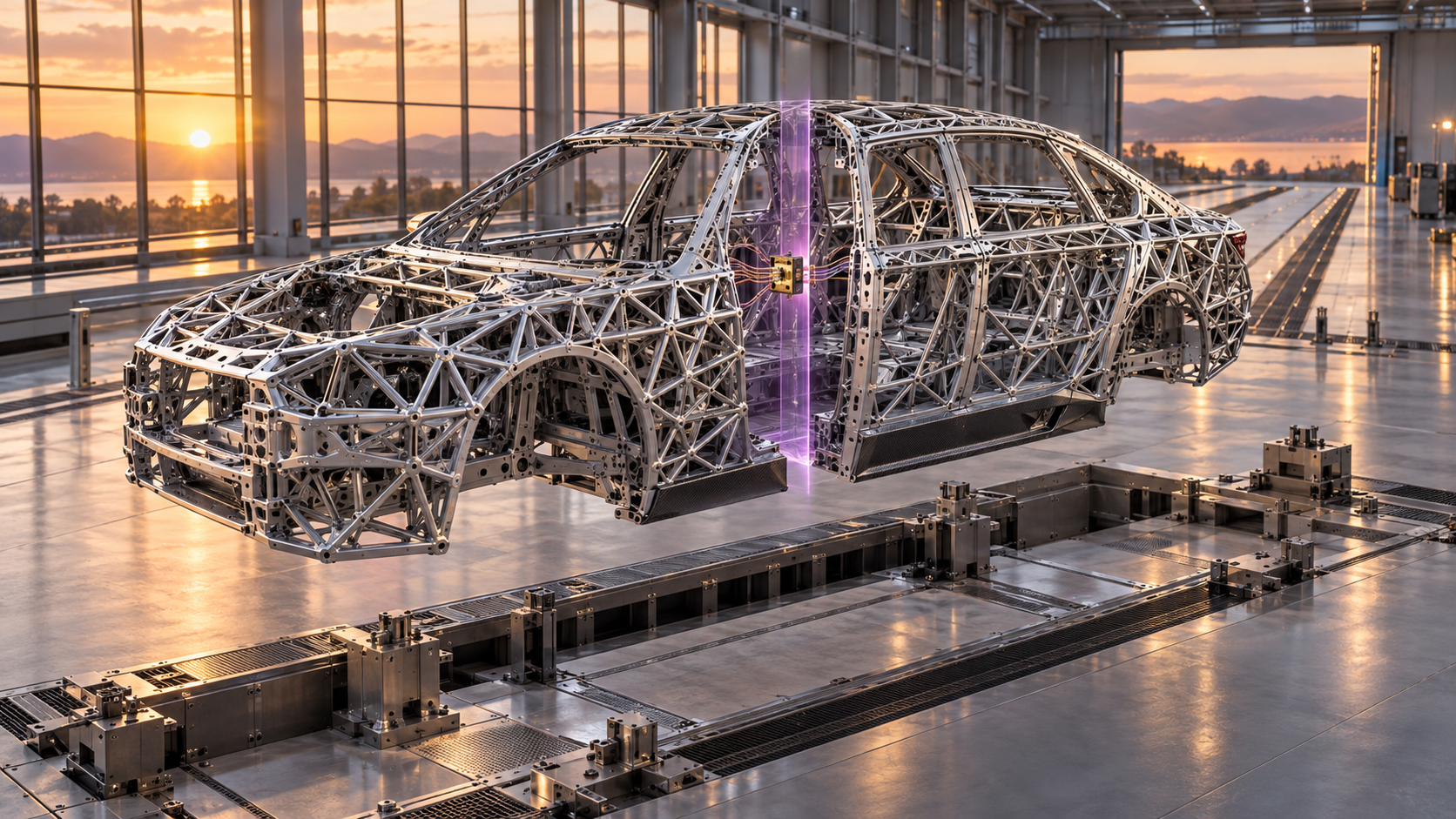
IonQ and Synopsys Put a 36-Qubit Forte Run Inside Ansys LS-DYNA, Cutting Wall-Clock Time by About 12 Percent on Hardware and Up to 14.6 Percent in Simulation, First Place at IEEE Quantum Week 2026
Defense Henry Quentir Defense Henry Quentir

IonQ and Synopsys Put a 36-Qubit Forte Run Inside Ansys LS-DYNA, Cutting Wall-Clock Time by About 12 Percent on Hardware and Up to 14.6 Percent in Simulation, First Place at IEEE Quantum Week 2026

Eight authors from IonQ and Synopsys wired a non-variational quantum optimization routine into Ansys LS-DYNA, ran the first nested-dissection cut on the 36-qubit Forte trapped-ion system, and measured finite element analysis wall-clock time falling by about 12 percent on hardware and up to 14.6 percent for the drill in a simulated 80-qubit experiment, while simulated experiments overall reached 150 qubits only for the jet engine. We read what a faster crash and vibration solver means for survivability and airworthiness work, why the hybrid quantum-classical workflow is dual-use by construction, and what a missing classical ablation and best-case timings leave between an IEEE Quantum Week first-place paper and a program office relying on quantum-accelerated graph partitioning.

Read More