PsiQuantum's Jennings, Korzekwa, Lostaglio and Vaszary Map Where Quantum Elastic-Media Simulation Keeps a Quartic Speedup, arXiv 2611.06975, 4 November 2026: TRL 2
Defense Henry Quentir Defense Henry Quentir

PsiQuantum's Jennings, Korzekwa, Lostaglio and Vaszary Map Where Quantum Elastic-Media Simulation Keeps a Quartic Speedup, arXiv 2611.06975, 4 November 2026: TRL 2

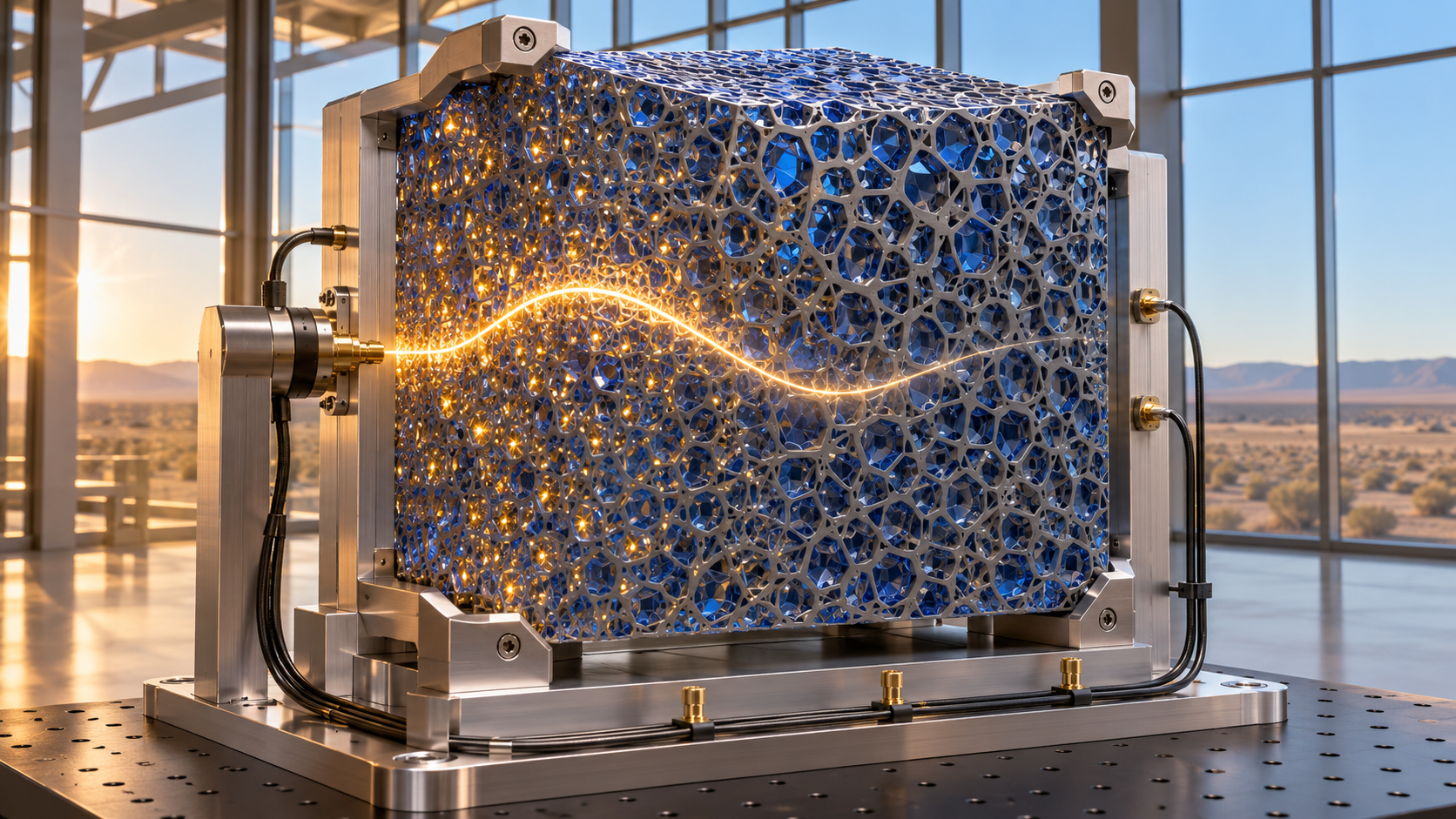
David Jennings, Kamil Korzekwa, Matteo Lostaglio and Tamás Vaszary of PsiQuantum posted to arXiv on 4 November 2026 a 46-page end-to-end complexity analysis of quantum simulation of elastic waves in heterogeneous solids. For a continuum model at fixed volume the speedup is (m+4)/(m+1) in simulation time and 4/(m+1) in accuracy for convergence order m, so smooth materials leave little room and fourth-order convergence loses on accuracy. The quartic quantum advantage survives only for lattice-scale materials, bulk observables that depend on microscopic structure, and geometries loadable through a compact quantum cheese encoding. This post reads the paper as dual-use materials and energetics simulation at TRL 2, sets it beside Livermore's 60,000-simulation explosion-monitoring model, the SW4 seismic code and the 2021 PRX Quantum argument that quartic speedups are the first worth building for, and lists the resource estimate, the classical competitor and the measured-microstructure encoding a program office should wait for.
Read More
Quantum Brilliance and Oak Ridge Ran Fragment-Based Quantum Chemistry Across Three Room-Temperature Diamond QPUs, arXiv 6 October 2026: 93.6 Percent Parallel Efficiency on Helium Clusters, TRL 3
Defense Henry Quentir Defense Henry Quentir

Quantum Brilliance and Oak Ridge Ran Fragment-Based Quantum Chemistry Across Three Room-Temperature Diamond QPUs, arXiv 6 October 2026: 93.6 Percent Parallel Efficiency on Helium Clusters, TRL 3

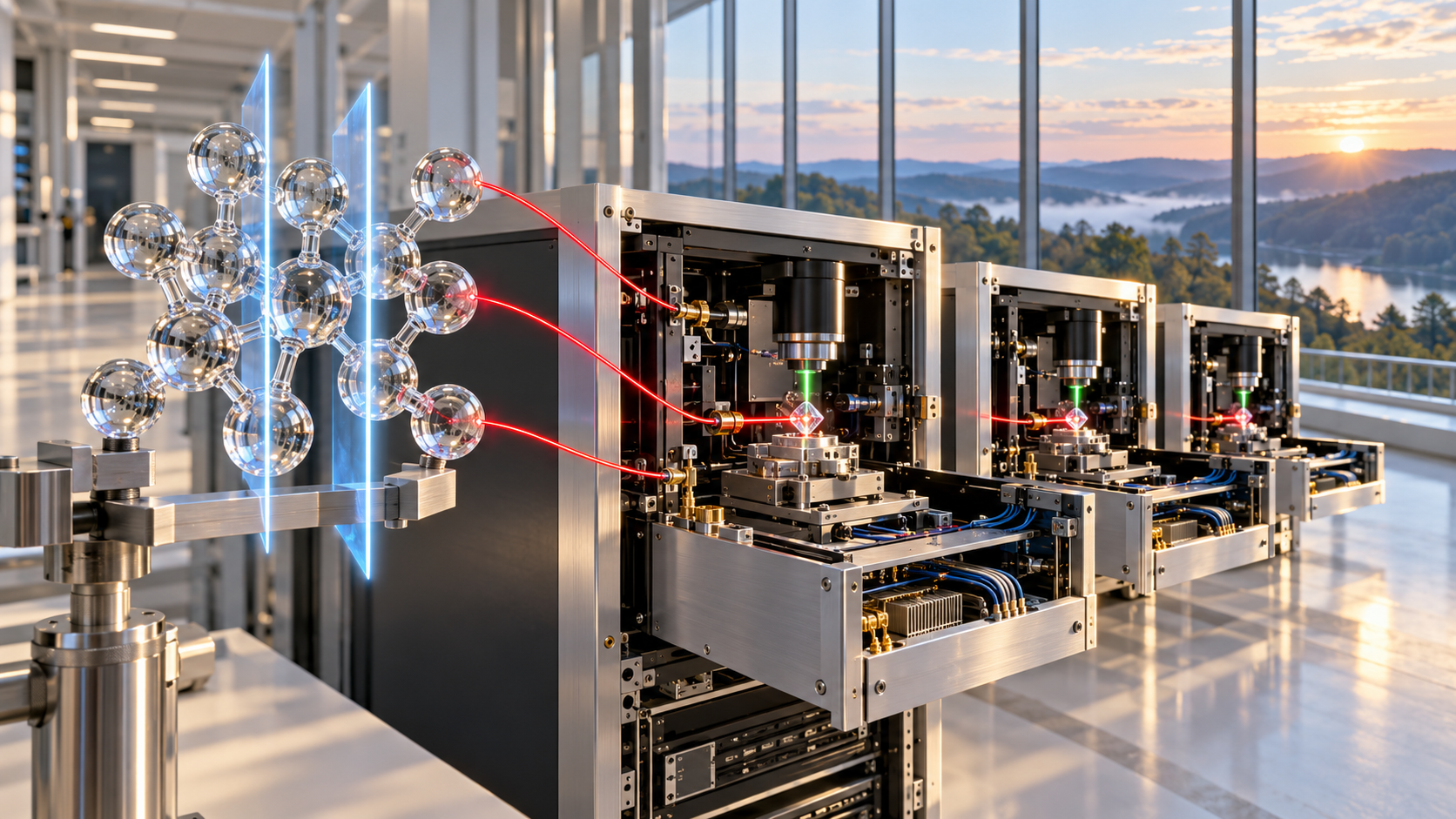
On October 6, 2026 Quantum Brilliance and Oak Ridge National Laboratory posted a paper that splits a molecular energy calculation into fragments and runs them in parallel on the three room-temperature diamond quantum processors of the Quoll cluster at the Oak Ridge Leadership Computing Facility. On helium clusters of up to fourteen atoms, shared-shot sampling across all three processors reached 93.6 percent parallel efficiency with every energy inside chemical accuracy, while independent fragment execution reached 75 percent, rising to 95 percent once scheduler idle time is removed. We read it as a dual-use materials and energetics simulation capability at TRL 3: the 98-kilogram, 400-watt rack-mounted form factor is the defense-relevant part, and two qubits per processor, shot rates of three to ten per second and a helium testbed still stand between the paper and a propellant molecule.
Read More