
Who Pays for AI’s Electricity?
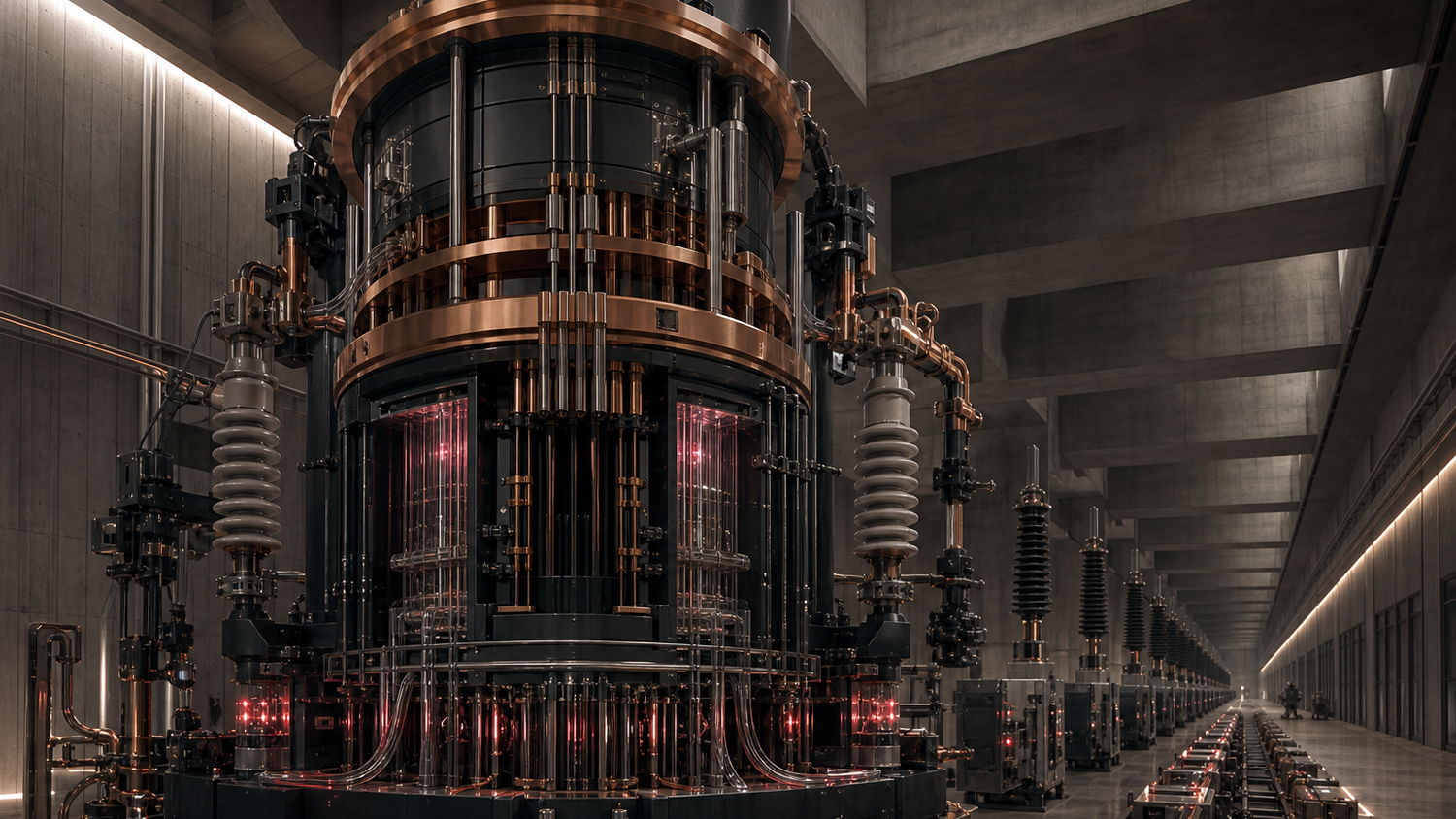
The next AI policy dispute may arrive as a line item on an electricity bill. A new data center appears outside town, its servers drawing power day and night. Utilities order transformers, transmission upgrades and generation capacity. A household several miles away sees only the monthly total. The model inside the building may never touch that family’s life directly, yet the infrastructure supporting it already has.
Public utilities grew around an old institutional bargain: private capital could build essential networks, while public rules decided whose costs were reasonable and who had to pay them. AI has entered that bargain at industrial scale. In the space of two days, the U.S. Department of Energy placed artificial intelligence inside hundreds of energy and science projects, and the White House expanded a pledge meant to keep data-center costs off ordinary ratepayers. Electricity allocation is becoming part of AI governance.
Practical takeaway. Claims about responsible AI infrastructure now depend on power contracts, tariff treatment and the operating rules of physical research facilities. Model policy alone cannot answer who carries the cost or the risk.
The answer begins with the meter
“Who pays?” sounds like a finance question. In the power system it is also a legal and civic one. A utility can spread the cost of a new substation across many customers, assign it to the project that caused the upgrade, or negotiate a special rate. Each choice changes the relationship among households, industrial users, investors and public authorities.
The White House made that allocation question explicit on July 23, 2026. Its Ratepayer Protection Pledge release said more than 200 additional utilities, data-center developers, cooperatives and states had joined the initiative. The administration said the pledge covered 80 percent of power delivered to U.S. homes and businesses and “protects 263 million Americans” when a data center is built nearby. Those are White House claims about a voluntary political initiative, not findings from an independent rate audit.
The operating principle is clear enough: large data-center operators should fund the generation and infrastructure their projects require. The release points to utility arrangements involving Google, Oracle, Amazon, Alphabet, Meta and other developers as examples of customer savings, connection-cost coverage or rate freezes. The useful signal is the venue. AI policy has moved into utility agreements, customer-rate commitments and infrastructure cost recovery.
July 22: AI enters the national energy portfolio
One day earlier, the Department of Energy announced 278 Genesis Mission projects. DOE’s count included 87 projects led by national laboratories, 168 by universities, 19 by companies and four by nonprofit organizations, with 342 participating institutions in total. The portfolio covers nuclear energy, critical-mineral extraction, intelligent chip design and commercial fusion.
The largest selection is described as a three-year, $60 million nuclear-energy investment. DOE says it would use AI to help deliver nuclear facilities faster and more safely while reducing operating costs. The agency’s accompanying award list states that selections remain subject to award negotiations and do not commit DOE to issue an award or provide funding. If finalized, selected teams would gain access to AI agent frameworks, advanced models, software from industry partners and high-performance computing across the national-laboratory system. The 278-project portfolio treats AI as scientific infrastructure. It couples software capability to reactors, accelerators, mineral processing and chip design.
That coupling changes the governance problem. A text-generating model can be evaluated through outputs, access controls and incident reports. An AI system that tunes a machine, schedules an experiment or influences an energy facility also sits inside engineering limits, safety procedures and public spending. Its failures have a physical address. Its claimed savings may eventually appear in a project budget or a customer rate.
The machine under AI control is physical
Fermilab’s own July 22 project announcement makes the shift tangible. The laboratory will lead one AI and machine-learning project and collaborate on eight others. Its lead project will develop resonance-control algorithms for superconducting radio-frequency cavities used in particle accelerators.
These cavities are highly efficient electromagnetic resonators. Small vibrations and pressure changes can disturb their frequency. The planned control work touches Fermilab’s PIP-II accelerator, SLAC’s LCLS-SC, Brookhaven’s Electron-Ion Collider and other facilities. Fermilab expects better stability, longer radio-frequency amplifier life and lower operating costs. The record is still a selection announcement; award negotiations and measured performance will come later.
Even at this early stage, the institutional crossover is striking. AI assurance meets accelerator physics, occupational safety, procurement and the stewardship of publicly funded instruments. Autonomy inside a laboratory is an operating condition, with tolerances, maintenance histories and named human responsibility. A benchmark score cannot carry that burden by itself.
July 23: cost allocation becomes public policy
The DOE program and the ratepayer pledge solve different problems. One aims to increase scientific productivity. The other assigns the infrastructure costs created by rapid data-center growth. Together they expose a common dependency: AI ambitions draw on shared physical systems whose capacity, reliability and price are governed elsewhere.
This is where the humane stake becomes concrete. Families care about reliable power and an affordable bill. Researchers need access to scarce machines and compute. Communities hosting transmission lines, data centers or generation assets live with land use, noise, water demand and construction. Investors need contracts that explain who pays when load forecasts change. Cost allocation is policy expressed through the meter.
A pledge can create political accountability, but its legal effect depends on the agreements and regulatory processes beneath it. A promise that a developer will cover “100 percent” of specified costs still leaves questions about the definition of those costs, later network upgrades, stranded assets and enforcement. The public record will mature through tariffs, contracts, commission orders and realized customer bills.
How Quentir Reads It
Quentir reads this week’s sequence as a venue shift. AI governance is often discussed through model rules, privacy, safety testing and intellectual property. The Genesis selections and the ratepayer pledge move part of that work into energy institutions. Utility regulators, national laboratories, engineering teams and public-finance officials now hold pieces of the AI-governance file.
That reading extends our recent analysis of how a Texas radiation registration placed one fusion test inside an existing state system. Emerging technology often meets government through an older doorway. Fusion entered through radiation control. AI infrastructure is entering through electricity cost recovery and the operating rules of national facilities.
The All-access membership carries this archive argument across AI infrastructure, quantum systems and energy governance in one subscription, with dated analysis as the relevant instruments and commercial arrangements develop. The public post stays with the institutional connection visible in this week’s records; the subscription supplies continuity across the wider body of coverage.
The next AI hearing may sound like an energy case
The durable question is no longer whether AI uses a great deal of power. The July records show institutions assigning that demand to programs, facilities and payers. DOE has selected projects. Fermilab has named a physical control problem. The White House has attached household electricity costs to data-center expansion.
The next phase will be less photogenic. It will appear in rate designs, interconnection agreements, facility operating limits and customer bills. That is where broad promises meet numbers another institution can contest. AI’s social license will increasingly be negotiated through the power system, one project and one tariff at a time.
Update, September 4, 2026. The interconnection agreements this post pointed to have started to take written form. On June 18, 2026 FERC ordered the six regional grid operators it regulates to justify or reform their tariffs for loads above 50 MW that interconnect above 69 kV, with substantive responses due August 17, and cost allocation that keeps upgrades for new large loads off existing customers was one of the reform areas it listed. On August 28 MISO asked FERC to approve a set of reliability requirements for such loads, with a separate class of computational loads carrying at least 25 MW of information technology equipment: visibility and forecast reporting, phasor-measurement monitoring, ramp-rate limits and ride-through performance during voltage and frequency disturbances, with December 4, 2026 as the requested effective date and further filings due by November 16 (Utility Dive, August 28, 2026). The MISO filing governs how a data center behaves on the grid; who pays for the upgrades a new large load requires still sits in the tariff dockets and in the voluntary pledge described above. The shift this post described has held, and the question of who pays is now being written into tariff language, docket by docket. The federal science engine behind the Genesis projects is read in the White House report on a new golden age of science, and the paper trail that now follows AI compute through its supply chain in the AI compute chain paper trail.
Sources: U.S. Department of Energy, “Secretary of Energy Chris Wright Announces First Genesis Mission Projects Selected to Accelerate AI-Driven Scientific Discovery” and Genesis Mission RFA awards list (July 22, 2026); Fermi National Accelerator Laboratory, “U.S. Department of Energy invests in Fermilab projects to accelerate AI-enabled scientific discovery” (July 22, 2026); The White House, “President Trump’s Ratepayer Protection Pledge Secures American AI Dominance, Protects Consumers” (July 23, 2026). Public-source snapshot: July 26, 2026. Update sources (September 4, 2026): Utility Dive, “Large loads face reliability requirements under MISO proposal” (August 28, 2026); FERC, Interconnection of Large Loads to the Interstate Transmission System, Docket No. RM26-4-000, and the June 18, 2026 show cause orders as summarized by Climate Solutions Legal Digest (July 27, 2026). Update sources checked September 4, 2026.
Published intelligence, built to inform your own decisions. Published: July 26, 2026. Last updated: September 4, 2026.