
Who Pays for AI’s Electricity?
A household bill enters the AI debate
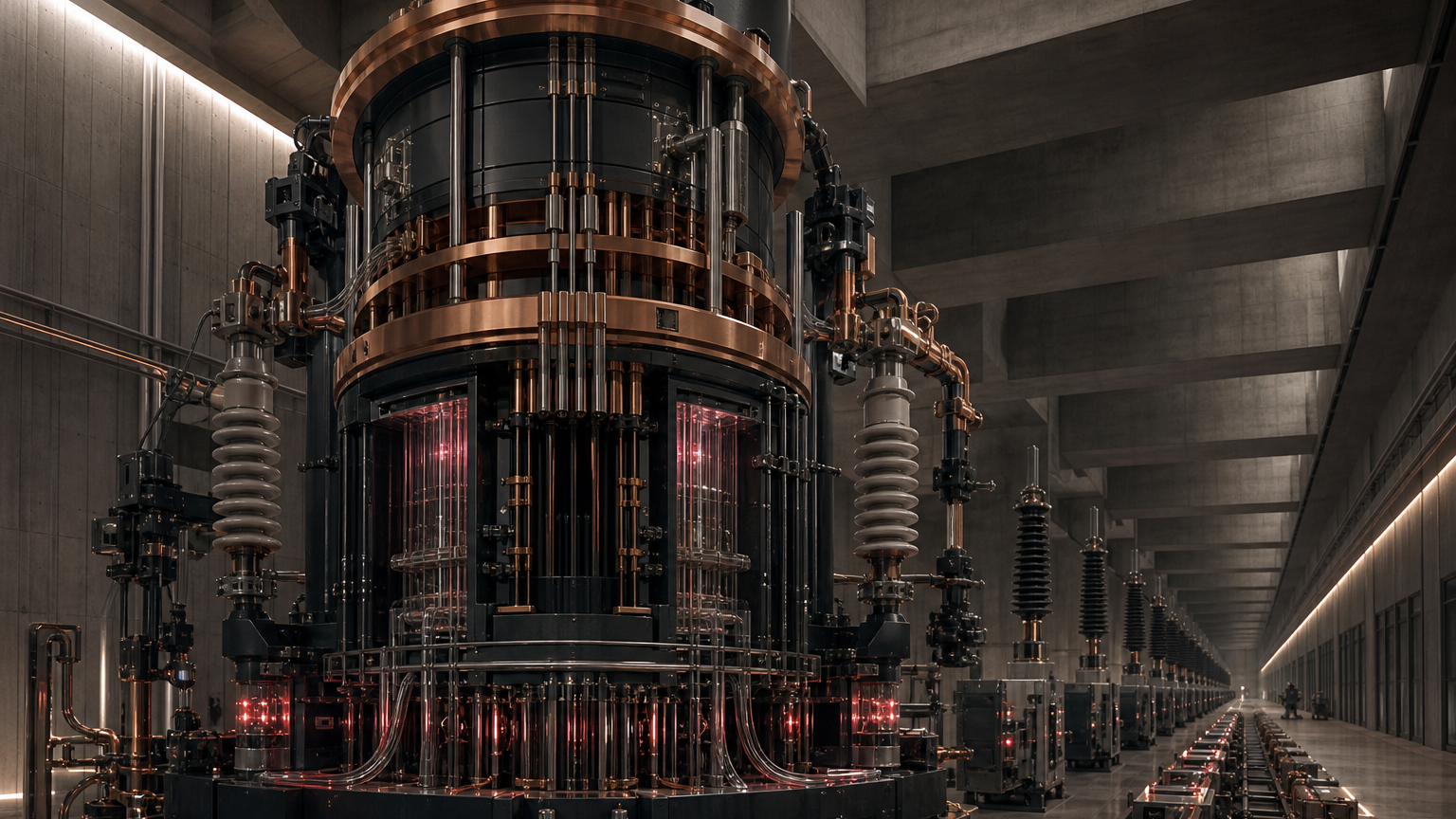
The next AI policy dispute may arrive through an electricity charge. Data centers need generation, substations and transmission capacity, and the cost of that infrastructure can reach households far from the servers. A July 23 White House release expanded a ratepayer pledge under which large data-center operators are expected to fund the power assets their projects require. The administration says the initiative now includes more than 200 additional utilities, developers, cooperatives and states. Those are government claims about a voluntary initiative, but they place AI energy governance squarely inside utility agreements and public cost allocation.
AI enters physical science
On July 22, the Department of Energy selected 278 Genesis Mission projects across national laboratories, universities, companies and nonprofit organizations. The selections remain subject to award negotiations and do not commit DOE to issue awards or funding. The portfolio covers nuclear energy, critical minerals, chip design and commercial fusion. Its largest selection is described as a three-year, $60 million nuclear-energy investment. Fermilab is selected to lead an AI and machine-learning project for resonance control in superconducting radio-frequency cavities and collaborate on eight others. These systems operate machines whose tolerances, maintenance and safety have physical consequences.
Who pays is now a governance question
The two announcements expose one dependency. AI ambitions rely on shared power systems and public research infrastructure. Families care about affordable, reliable electricity; laboratories need stable facilities; investors need contracts that assign upgrade costs. Electricity cost allocation now carries part of AI’s public legitimacy. Quentir reads the week as a venue shift from model policy into rate design, facility operations and the older institutions that govern essential networks.
The Machine Behind the Machine: ASML and America’s AI-Quantum Industrial Future
The chokepoint inside the chip race
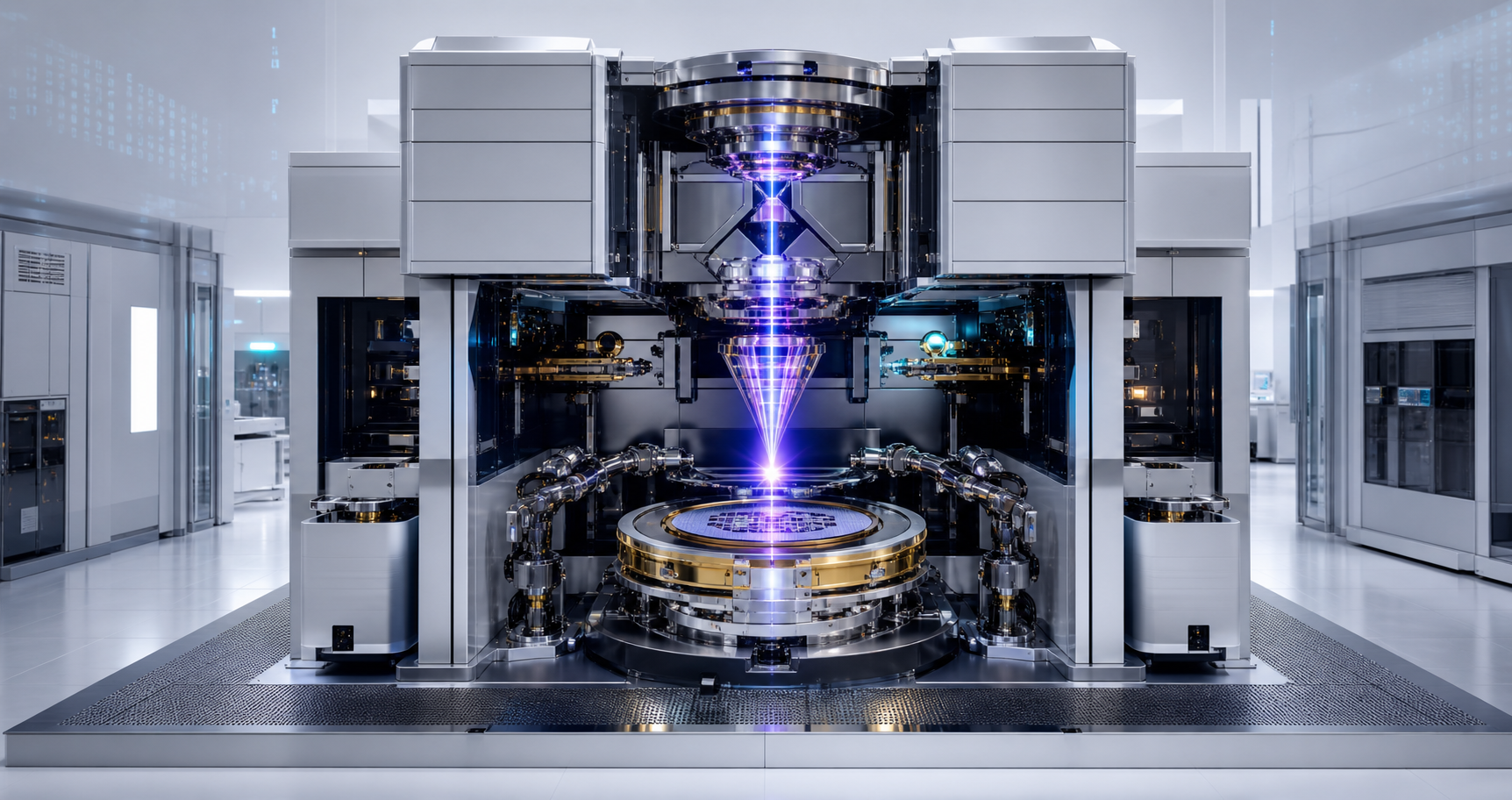
ASML sits at the point where AI ambition, semiconductor capacity, quantum hardware, export controls and supply-chain diplomacy converge. Its EUV and High-NA EUV systems are not ordinary factory equipment. They are the physical instruments that make the most advanced logic and memory roadmaps manufacturable, and they depend on a dense international supplier base that cannot be rebuilt quickly by statute or slogan.
Why America should read ASML operationally
For the United States, the practical question is broader than whether new fabs are announced in Arizona, Ohio, Texas or New York. The harder question is whether the American semiconductor revival has enough lithography capacity, service depth, trained operators, metrology discipline, export-control coordination and upstream component resilience to turn capital expenditure into durable yield. ASML’s current record shows both the promise and the fragility: first High-NA installation in 2024, Q1 2026 net sales of €8.8 billion, and a 2025 supplier base of about 5,100 companies.
The strategic outlook
This special edition treats ASML as a strategic instrument. Control of advanced lithography shapes the pace of AI accelerators, high-bandwidth memory, advanced packaging roadmaps, silicon photonics, cryogenic control electronics and eventually scalable quantum devices. The United States does not need to own ASML to benefit from it. It does need a mature policy for the semiconductor supply chain in which tools, talent, export licenses, allies and service logistics are treated as one system.