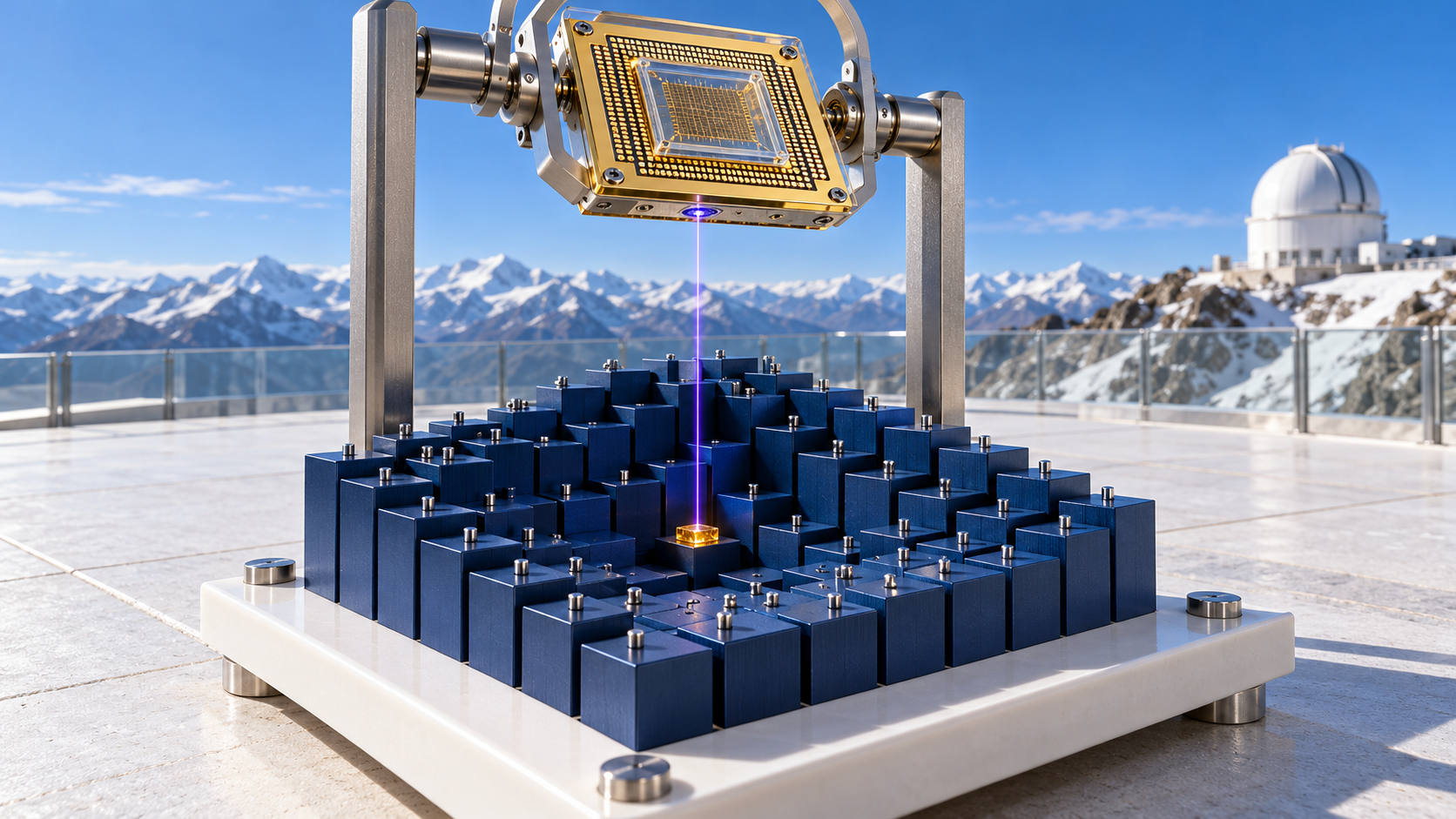
INAF Recasts AGILE Gamma-Ray Source Detection as a QUBO for Quantum Annealing, arXiv 2610.37040, 27 October 2026: 97 Percent Correct Positions on 500 Simulated Maps With an Emulated Solver, TRL 2
Fifteen INAF researchers posted arXiv 2610.37040 on 27 October 2026, rewriting gamma-ray source detection and localization on AGILE sky maps as a Quadratic Unconstrained Binary Optimization and solving it with an emulated annealer: the right grid node in 97 percent of 500 synthetic maps and a flux bias of minus 1.9 percent, with a 20 percent background offset and an instance too large for today's hardware. This post reads the paper as a dual-use quantum annealing for source localization capability under the computing pillar's ISR detection branch, draws the public analog to space-based detonation detection sensors, and sets out what a hardware run, a faint-source study and a timing comparison would have to show before a program office could rely on gamma-ray source localization on an annealer.
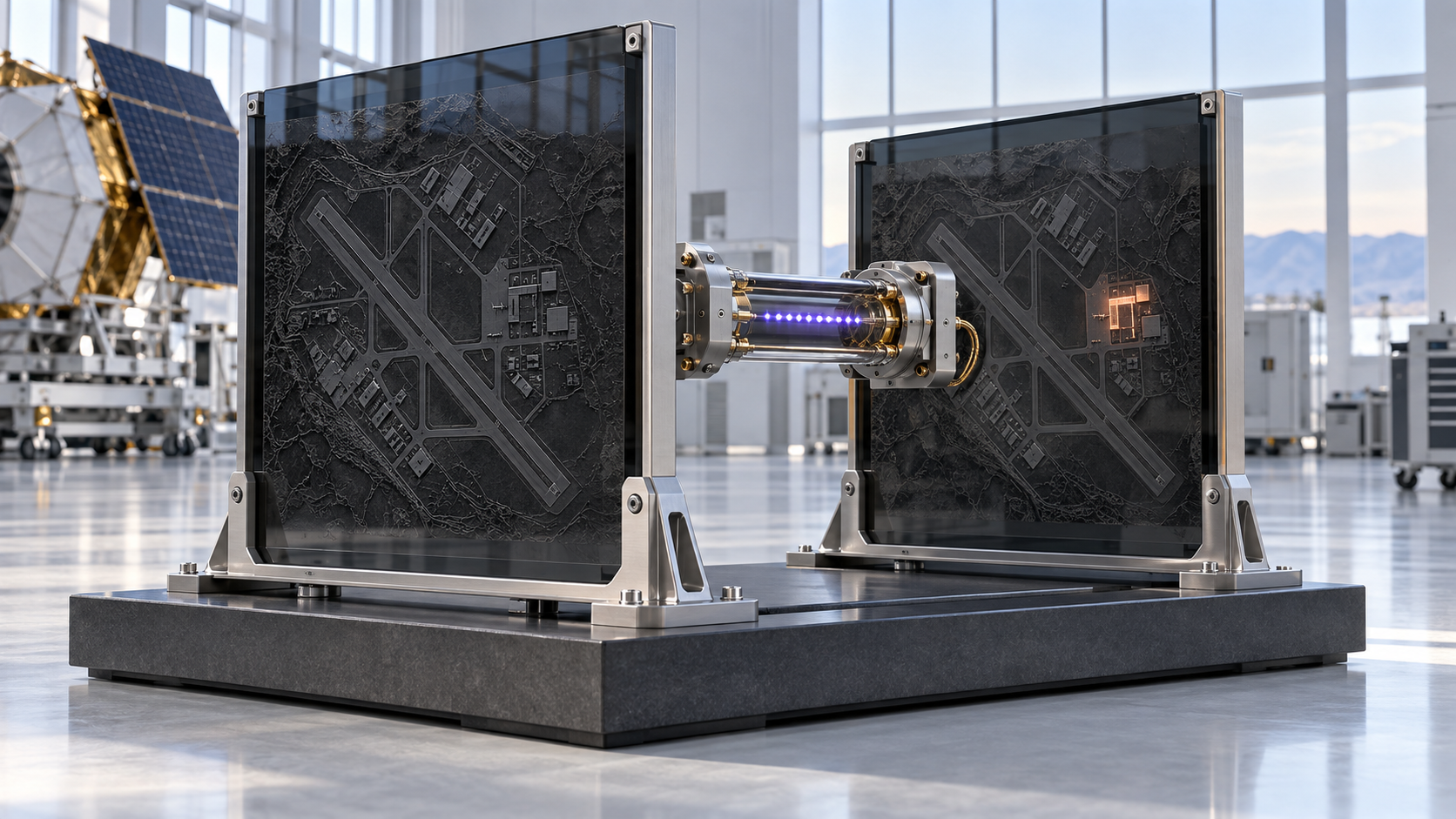
IonQ and Capella Run a 20-Qubit Quantum Circuit Born Machine for SAR Change Detection on Forte Hardware: Filtered F1 0.32 Against 0.24 and 0.16 at MCAS Miramar, arXiv 2609.05313, 4 September 2026

A 24 August Proof Shows an Unbounded Quantum Memory Advantage in Online Sequence Classification
A new proof by Ng, Li, Gu and Thompson shows that for constructed stream-classification tasks, quantum memory stays bounded where any exact classical watcher needs memory that grows without limit, and that for each classical agent below the threshold there exists a suitable input distribution under which its performance approaches guessing. We read the result as the mathematical skeleton of machine learning for ISR, weigh what it would let an edge platform notice on a fixed power budget, and walk the honest distance between a first proof and anything a program office could field.
A Silicon Camera Reads an Infrared Band It Cannot See
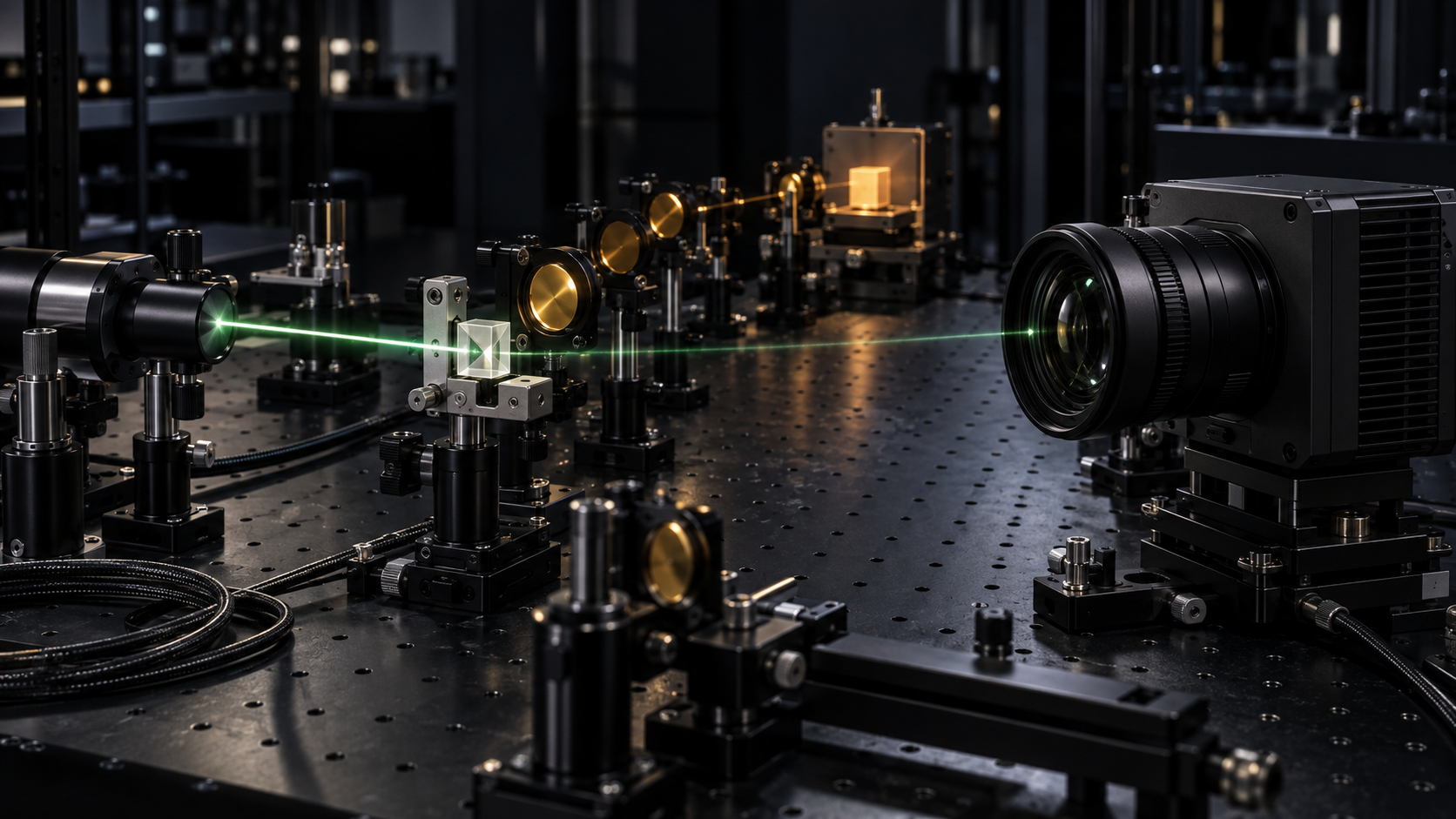
Imperial College London physicists demonstrate wide-field thermal infrared imaging with a specialized Peltier-cooled silicon scientific camera, using quantum imaging with undetected photons to reach 100 times past the background limit at room temperature, and putting a published exception under the assumption that serious infrared performance requires a cryogenically cooled infrared focal-plane detector.

Farseer Puts Quantum Sensors on a Fielding Clock
The Defense Innovation Unit's Farseer program offers up to 200 million dollars to move quantum magnetometers, gravimeters and portable atomic clocks onto operational ISR platforms, with prototypes due at government test facilities within nine months of award. Behind it stands an executive order requiring fielded quantum sensors by September 2028, the firmest schedule quantum sensing has ever been given.