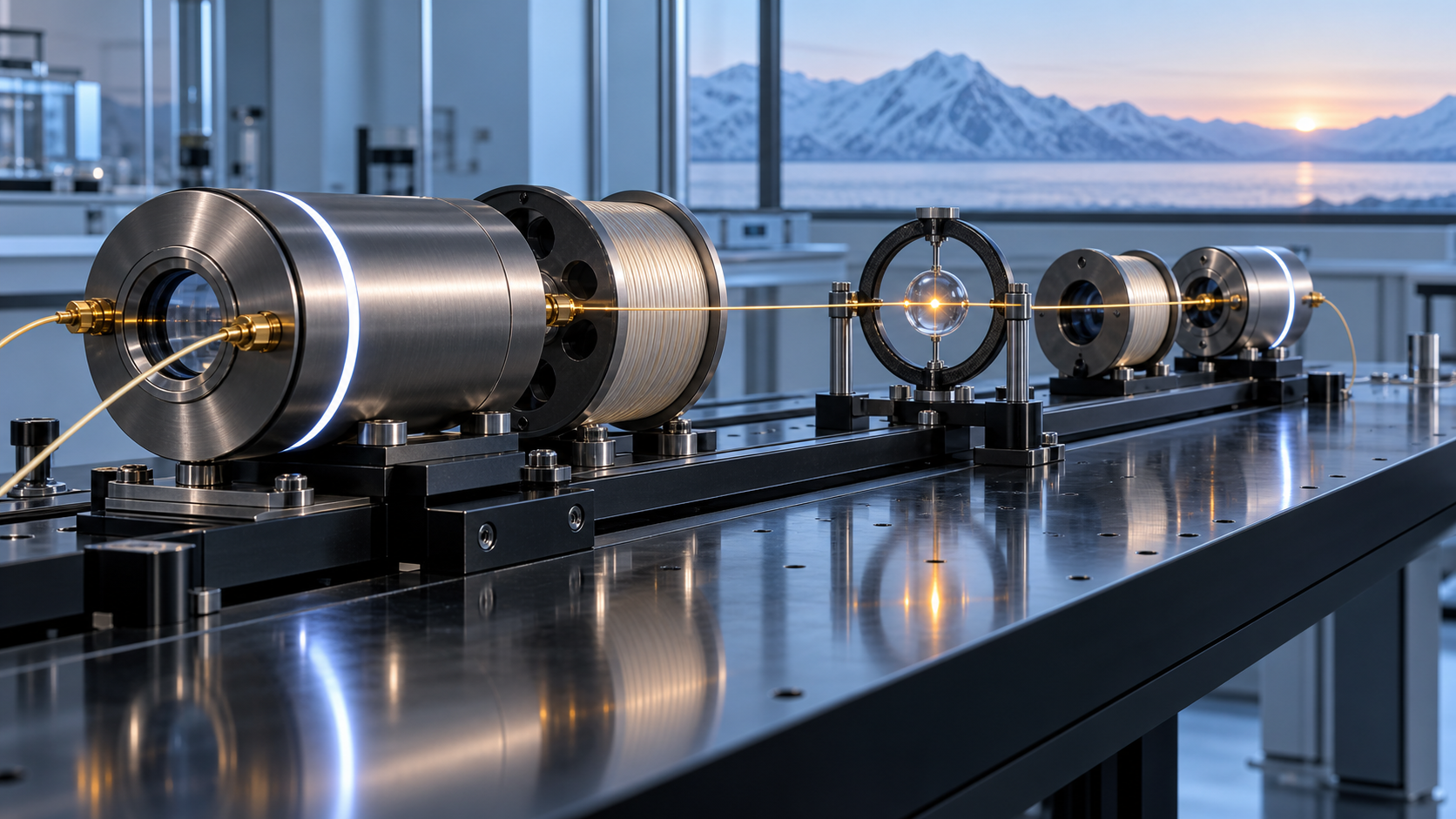
USTC Demonstrates Quantum Position Verification With 75-Meter Accuracy Over 2 Kilometers of Fiber, Published in Nature Physics on September 3, 2026
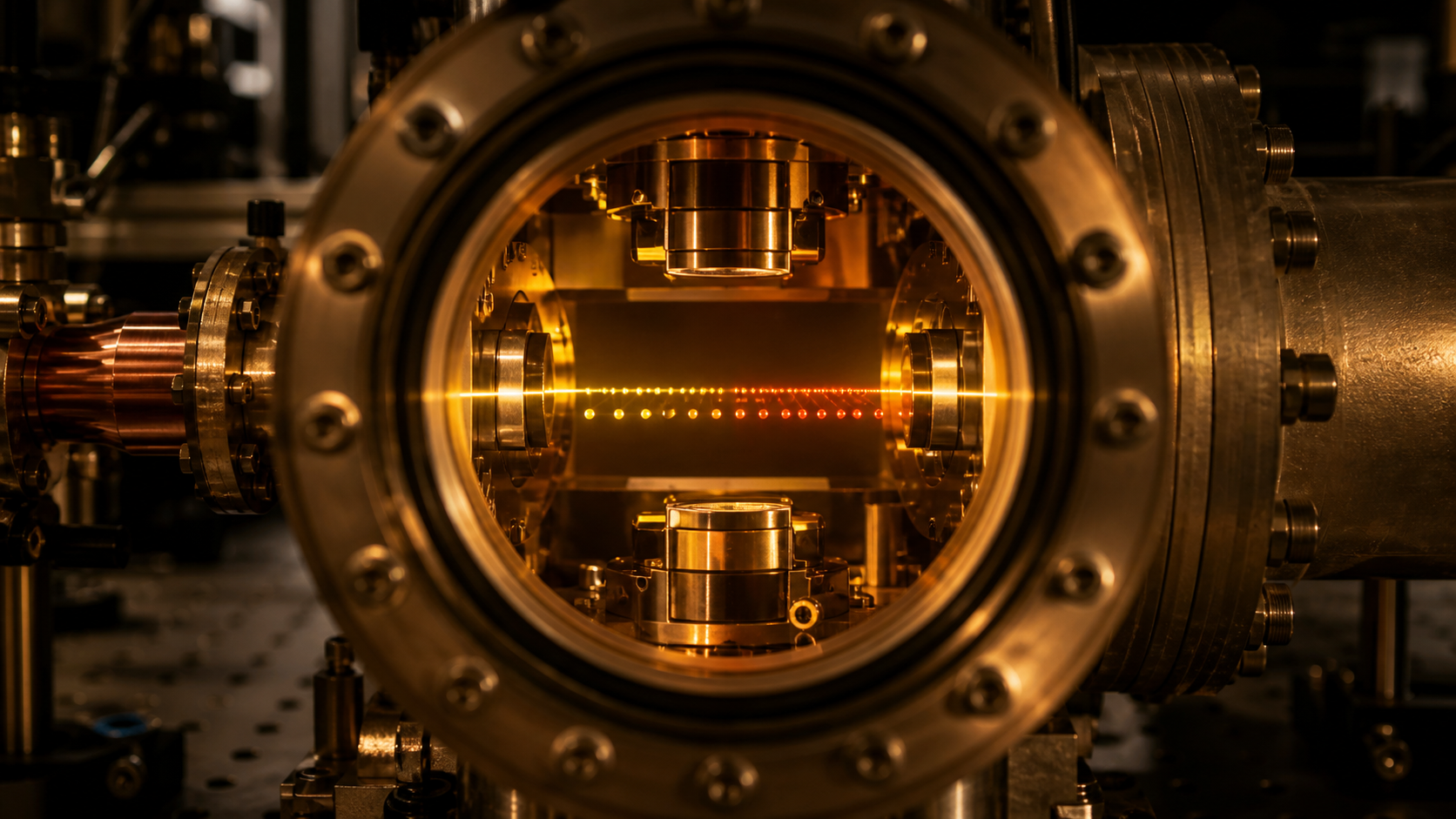
A Cold-Atom Comagnetometer Reaches a Fitted 60-Second Spin-Coherence Time
A new experiment traps the nuclear spins of two ytterbium isotopes in one optical lattice and reports a fitted 60-second spin-coherence time, posting a magnetic noise suppression factor above thirty thousand. Comagnetometry broadly sits at the root of nuclear-spin gyroscopes, the inertial instruments behind navigation without GPS, although this cold-atom comagnetometer demonstration does not measure rotation. Quentir places the demonstration at TRL 4 of 9: a validated laboratory instrument with minute-long spin coherence, several rungs below anything a program office could field; an eventual rotation measurement would provide important readiness evidence but would not by itself validate field deployment.
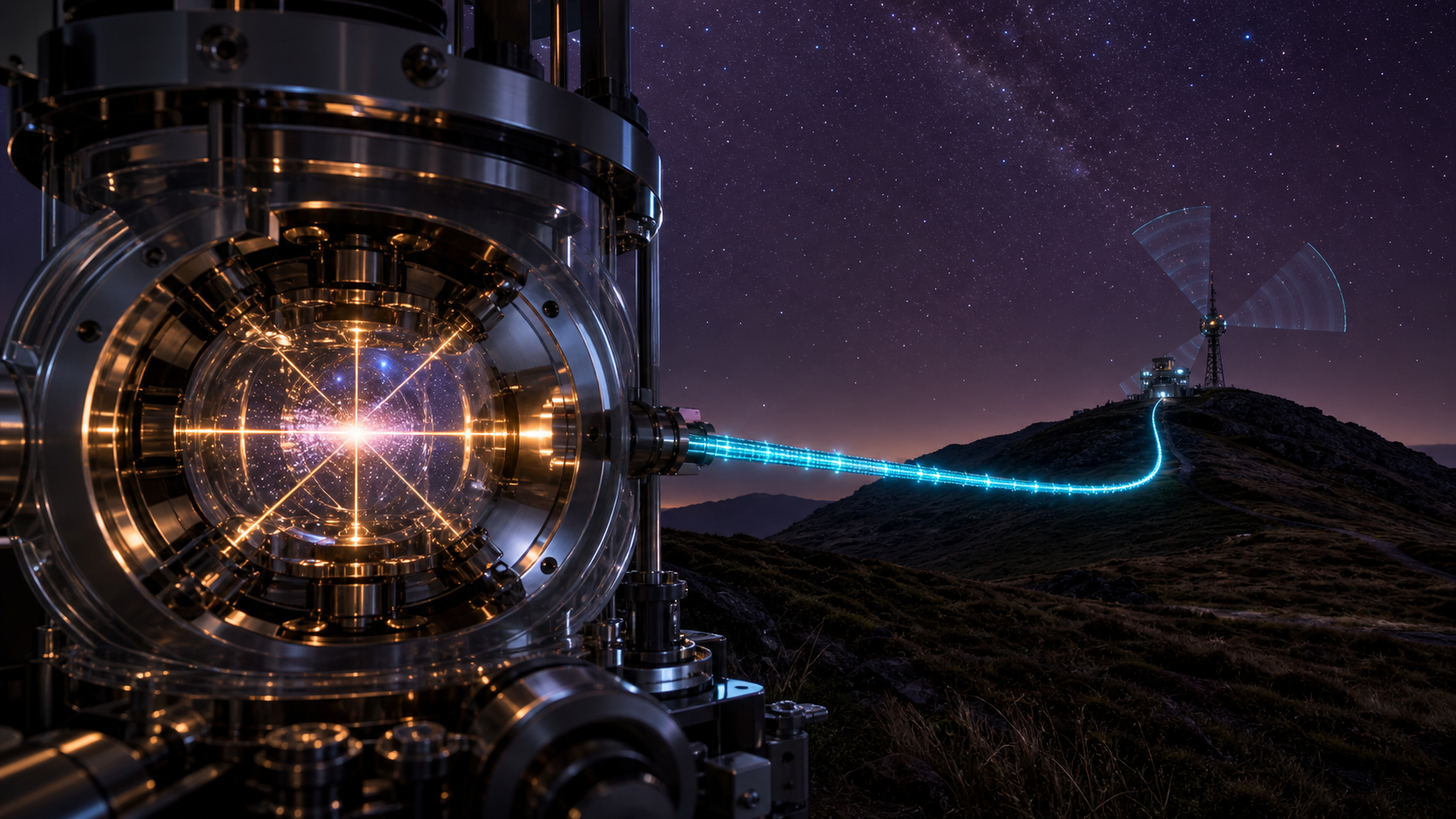
Two Cold-Atom Clocks Hold a Radar Network Together Without Satellites
In a June 2026 UK trial, two prototype cold-atom clocks kept two networked Saab Giraffe 1X radars fused into one coherent air picture with no satellite timing at all, degrading predictably under disruption and recovering fast. It is the first known demonstration of network time synchronization holding a military radar network together in GNSS-denied conditions.