Hefei Mandi's Magnetocardiograph, 4 and 5 August 2026: Two Unresolved Deployment Descriptions in Chinanews and Xinhua
Quentir Medicine Monitor
Evidence-based insights for quantum medicine. Published by Quentir Systems LLC · September 8, 2026.
On 4 August 2026 a state press tour called Vibrant China Field Study visited the Institute of Health and Medicine at the Hefei Comprehensive National Science Center and watched a magnetocardiograph acquire signal in the laboratory of Hefei Mandi Medical Technology. Two reports came out of that visit on consecutive days, both from official Chinese outlets, both describing the same machine, and they describe its stage of deployment in different words that no public source resolves.
The company builds a magnetocardiograph around a superconducting quantum interference device, the detector class that reads magnetic fields at the femtotesla scale, and a 2022 industry profile says it obtained an NMPA registration in 2019. The 4 August report describes the machine as working with ten key hospitals in scientific research collaboration and entering a pre-mass-production stage. The 5 August report describes it as installed and in use at more than ten key hospitals in deployed application, with the company's production lines running at full load. A hospital deciding whether to buy one needs to know which of those two sentences is the current state of the product.
What Chinanews Published on 4 August and What Xinhua Published on 5 August 2026
The earlier account is the more cautious one. Reporting from the visit, Chinanews on 4 August 2026 quoted Wang Yi, deputy general manager of Hefei Mandi, describing what the device is for. Conventional computed tomography and coronary angiography inspect the large vessels of the heart; the magnetocardiograph, on his account, picks up abnormality associated with the cardiac microvasculature and so supports very early risk warning for coronary heart disease. The same report describes the examination itself: the subject lies still, the sensor is brought close to the chest with no incision, no contrast agent is injected, there is no ionizing radiation, and a map of the heart's magnetic signal is produced within a few minutes. On deployment it says the device has entered scientific research cooperation with ten key hospitals nationwide, among them the First Affiliated Hospital of Anhui Medical University, and has moved smoothly into a pre-mass-production stage. Wang Yi also put the hardest part of the project at the last mile into a clinical setting, ahead of the technical work itself.
One day later the state news agency published a broader piece on the same campus. Xinhua on 5 August 2026, under the bylines of Gao Kang and Zhang Ziyun, carried a company line that orders are strong and that several of the firm's production lines are running at full capacity. Its deployment sentence is stronger than the previous day's: the device, it says, has already been put into application at more than ten key hospitals nationwide, and it names two of them, Shanghai Sixth People's Hospital and the General Hospital of the People's Liberation Army. A third account of the same visit republished through Sina, which reached this Monitor's evidence pool on 7 September 2026, adds that orders have come from the Beijing Armed Police General Hospital and from several health-screening organizations, while keeping the pre-mass-production wording.
The two descriptions can coexist, and that is the difficulty. Scientific research cooperation at ten sites and application at more than ten sites are compatible if the machines placed for research are the same machines being counted as in use, and they diverge if some of the later sites paid for their units. Neither report carries a device count, an installation date, a purchase order, or any distinction between a research placement and a purchase, so the deployment stage stays unresolved on the public evidence. Both sentences came from outlets with the same access to the same executives within twenty-four hours.
What a Magnetocardiograph Measures: Tens of Picotesla From Cardiac Electrical Activity
Precision about the physics prevents a procurement mistake here. A magnetocardiograph measures the magnetic field generated by the electrical activity of the heart muscle, sampled over the chest wall as a time-varying magnetic field map. It produces no image of any blood vessel. Statements about coronary disease or microvascular dysfunction are inferences drawn from features of that field map by a statistical model, validated against an independent reference standard such as coronary angiography, so the diagnostic claim belongs to the model rather than to the sensor.
The signal is very small. The field produced by the heart is on the order of tens of picotesla, roughly one millionth of the Earth's own magnetic field, and an ordinary hospital environment carries magnetic noise larger still. A superconducting quantum interference device is the most sensitive magnetic detector in routine biomagnetic use, working at the femtotesla scale, three orders of magnitude finer than the signal it is asked to find. It reaches that sensitivity by exploiting flux quantization and the Josephson effect in a superconducting loop, which is why the word quantum is doing real work in the description of this instrument rather than serving as a label. That distinction matters commercially, and this Monitor has separated the two uses of the word on hospital equipment before.
Quantum pillar: sensing. Technology readiness: TRL 7 of 9. Hefei Mandi's own machine is reported working inside tertiary hospitals on real patients, which is a complete system operating in its intended clinical setting and matches rung seven on the shared ladder both Evidence Registers use. This Monitor holds it below rung eight because a qualified product needs a current, checkable registration with a stated indication, and the only regulatory evidence in public is a secondhand mention of a 2019 certificate with no number, no indication and no confirmation that it remains in force. There is also no installed-base figure, no throughput figure and no reimbursement pathway, and no published accuracy study of this manufacturer's device. The rung is this Monitor's own reading of the disclosed evidence and moves when the certificate, an installation count and a study of this device appear in a source other than the manufacturer.
The One Peer-Reviewed Study of 513 Patients Tested a Different Company's Machine, the MD-U092001 From Shanghai MEDI Instruments
The clinical figures the company circulates are high. A 2022 profile of the firm in the industry outlet VBData reports more than three thousand accumulated clinical cases with Shanghai Sixth People's Hospital, a sensitivity for myocardial ischemia of ninety-four percent or better with a specificity of ninety-two percent, and a separate coronary microvascular dysfunction model at 89.57 percent sensitivity and 84.81 percent specificity. Those numbers appeared in a company profile with no journal citation, no study registration number and no independent adjudication of the reference standard, and this Monitor weights them as manufacturer claims.
A peer-reviewed measurement of the same technology reads lower, against a different question. Jian-Guo Cui, Feng Tian, Yu-Hao Miao, Qin-Hua Jin, Ya-Jun Shi, Li Li, Meng-Jun Shen, Xiao-Ming Xie, Shu-Lin Zhang and Yun-Dai Chen published a prospective cross-sectional analysis of 513 patients with angina symptoms in the Journal of Geriatric Cardiology on 28 April 2024, comparing resting magnetocardiography against coronary angiography at the Sixth Medical Center of the Chinese PLA General Hospital. The instrument in that study is the MD-U092001 system made by Shanghai MEDI Instruments, a different company from Hefei Mandi, so the paper is adjacent evidence about resting magnetocardiography of the same detector class rather than a validation of the machine shown on the August press tour. Both trace back to the same institute, and the paper's author list includes a joint laboratory named for SIMIT and MEDI. A model built from seven magnetic field map parameters reached an area under the curve of 0.810, with sensitivity of 71.7 percent, specificity of 80.4 percent, positive predictive value of 93.3 percent, negative predictive value of 42.8 percent and accuracy of 73.5 percent for stenosis of seventy percent or more. Adding clinical indicators raised the area under the curve to 0.845, sensitivity to 84.3 percent and dropped specificity to 73.8 percent.
Those two sets of figures answer different questions on different machines and should never be read as a head-to-head result. The company's ninety-four percent is quoted for myocardial ischemia, an aggregate claim with no stated population, reference standard or adjudication, for Hefei Mandi's device. The paper's 71.7 percent is for angiographic stenosis of seventy percent or more in patients who presented with angina symptoms, measured on the MD-U092001. Different manufacturer, different endpoint, different population, different evidentiary standing. What the paper does supply is one publicly checkable estimate for resting magnetocardiography in a selected symptomatic single-center cohort, and within that cohort its negative predictive value of 42.8 percent says plainly that a normal result from the sensor alone did not rule severe stenosis out.
The paper is peer reviewed and it is also close to the manufacturers in this field. Xiao-Ming Xie and Shu-Lin Zhang are at the Shanghai Institute of Microsystem and Information Technology, the institute Hefei Mandi's technology came from, and the VBData profile identifies a Zhang Shulin from that institute as the company's general manager. Li Li and Meng-Jun Shen are at the Joint Laboratory of Bioimaging Technology and Applications, SAS-SIMIT and MEDI. The remaining six authors are at the Senior Department of Cardiology of the Sixth Medical Center of the Chinese PLA General Hospital and the School of Medicine at Nankai University. A buyer should read the result as peer-reviewed evidence about the detector class, produced with the technology's originators in the author list, rather than as an arm's-length evaluation of any one product.
Why a 2019 Registration and a 2026 Pre-Production Stage Can Both Be True
Hefei Mandi is not a young company. The same VBData profile reports that it was founded in 2009 by a scientific team from the Shanghai Institute of Microsystem and Information Technology together with returning scientists, working out of a magnetocardiography project under the national 863 program, and that it was among the first domestic magnetocardiography manufacturers to obtain an NMPA registration, in 2019. It reports that general manager Zhang Shulin holds a doctorate from that institute with sixteen years in biomagnetic system development and more than forty patents filed or granted, and it puts a Series A round of over one hundred million yuan in September 2021, with an A-plus round of close to the same size following.
Set that history beside the August 2026 wording and the reconciliation is straightforward. A registration certificate authorizes a manufacturer to sell a device for a stated indication. It says nothing about how many units have been built, how many hospitals have paid for one, or whether a payer will reimburse the examination. A company can obtain a certificate and seven years later still describe itself as approaching volume manufacture, which is the most likely reading here: the regulatory step was taken in 2019, and the commercial step of building enough machines to supply a national market is the one now in progress. Wang Yi's own comment about the last mile into clinical practice says the same thing from the inside. What no public source establishes is whether that 2019 certificate is still in force, what device name and indication it covers, or whether the machine demonstrated in August 2026 is the registered model.
The Cryogenics Are the Running Cost, and Room-Temperature Magnetometers Are Closing In
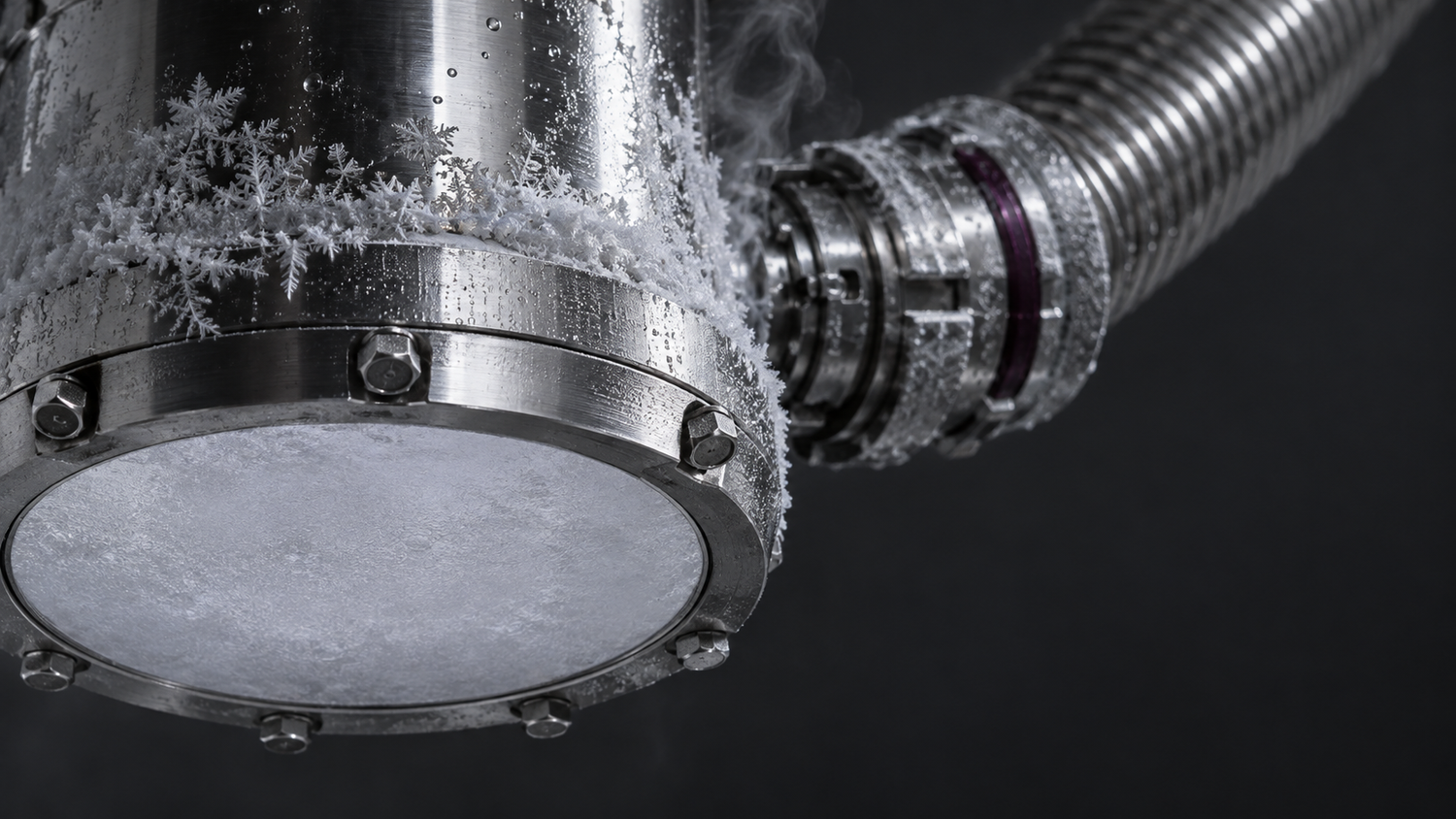
The VBData profile describes a low-temperature SQUID detector, and a low-temperature SQUID has to be held cold, which puts a cryostat and a recurring cooling arrangement into the total cost of ownership for as long as the machine is in service. What no public source gives for this product is the coolant, whether it is refilled or held on a closed-cycle cooler, the refill interval, the supply contract or the service schedule, and a buyer should ask for all five in writing. The cooling requirement is also the reason the company's claim of operation without a magnetically shielded room matters so much: shielding and cryogenics together are what historically kept magnetocardiography out of ordinary hospitals, and removing one of the two changes the economics of siting the machine. This Monitor has seen no independent confirmation of unshielded operation.
Meanwhile the sensor underneath is under competitive pressure. Magnetometry that works at room temperature would remove the cryogenics entirely, and the sensitivity gap is narrowing: this Monitor covered a result in which a levitated magnet magnetometer reached 32 femtotesla per root hertz at room temperature. Optically pumped magnetometers are on the same trajectory in commercial biomagnetic systems. A hospital signing a ten-year capital commitment to a cryogenic instrument should price in the possibility that the detector class changes inside that window.
Seven Questions a Hospital Should Ask Before Buying a Magnetocardiograph
How many units of this device have been manufactured and installed, and how many of those installations are purchases rather than research placements? What is the registration number and the approved indication on the current NMPA certificate, does that indication cover screening in an asymptomatic population or diagnosis in symptomatic patients, and does it name the model being offered? Have the ninety-four percent sensitivity and ninety-two percent specificity figures been published anywhere with a stated endpoint, a stated population, a reference standard and blinded adjudication, and against which endpoint, since the peer-reviewed figures near 71.7 percent and 80.4 percent were measured against angiographic stenosis of seventy percent or more rather than against myocardial ischemia? What is the negative predictive value in the population the hospital intends to scan, since a value near 42.8 percent limits how the result can be used? Does the shielding-free claim hold in the buyer's own building, with its own steel, lifts and electrical plant, and will the vendor demonstrate it on site before contract? What exactly cools the detector in the model on offer, is the coolant refilled or recirculated, and what are the annual cooling and service costs and the consequence of a supply interruption? And is the examination reimbursed anywhere, under what code, at what tariff?
How Quentir Reads It
The underlying technology is real, the institutional lineage runs to a named research institute, and there is one peer-reviewed prospective study of 513 patients using coronary angiography as the reference standard, written with authors from that institute, on a different company's machine. Magnetocardiography also addresses a genuine clinical gap, because a passive measurement with no contrast agent and no radiation would be worth having in the workup of chest pain if it performs well enough to change a decision.
The public evidence still falls short of what a purchase needs. Two official reports published a day apart leave the deployment stage unresolved, the accuracy figures the company circulates carry no endpoint, population or reference standard and so cannot be compared with the published ones, the one peer-reviewed study tested another company's system and is itself vendor-proximate, and the regulatory status rests on a secondhand mention of a 2019 certificate. This Monitor places the device at rung seven, treats the sensitivity and specificity figures from the manufacturer as unverified, and will move the entry when a current certificate, an installation count or an accuracy study of this manufacturer's own device appears from a source other than the company.
Sources
Primary source: Han Suyuan, reporting for Chinanews on 4 August 2026 from the Vibrant China Field Study visit to the Institute of Health and Medicine at the Hefei Comprehensive National Science Center, for the demonstration of a Hefei Mandi magnetocardiograph acquiring signal, deputy general manager Wang Yi's account of the device detecting abnormality associated with the cardiac microvasculature where computed tomography and coronary angiography inspect the large vessels, the description of the examination as non-invasive with the sensor brought close to the chest, no contrast agent, no radiation and a magnetic signal map within a few minutes, the statement that the device has entered scientific research cooperation with ten key hospitals nationwide including the First Affiliated Hospital of Anhui Medical University and has moved into a pre-mass-production stage, and Wang Yi's comment placing the last mile into clinical practice ahead of the technical work as the hardest part. Gao Kang and Zhang Ziyun, reporting for Xinhua on 5 August 2026 from the same campus, supply the conflicting deployment sentence, that the device has been put into application at more than ten key hospitals nationwide including Shanghai Sixth People's Hospital and the General Hospital of the People's Liberation Army, together with the company statements that orders are strong and that several production lines are running at full load. A Sina republication of the same press tour, which reached this Monitor's evidence pool on 7 September 2026, adds the orders from the Beijing Armed Police General Hospital and several health-screening organizations and attributes the technology transfer to the Shanghai Institute of Microsystem and Information Technology of the Chinese Academy of Sciences. Jian-Guo Cui, Feng Tian, Yu-Hao Miao, Qin-Hua Jin, Ya-Jun Shi, Li Li, Meng-Jun Shen, Xiao-Ming Xie, Shu-Lin Zhang and Yun-Dai Chen, "Accurate diagnosis of severe coronary stenosis based on resting magnetocardiography: a prospective, single-center, cross-sectional analysis," Journal of Geriatric Cardiology volume 21 issue 4 pages 407 to 420, 28 April 2024, supply the peer-reviewed accuracy figures, measured on the MD-U092001 system made by Shanghai MEDI Instruments rather than on Hefei Mandi's device: 513 patients with angina symptoms at the Sixth Medical Center of the Chinese PLA General Hospital, coronary angiography as the reference standard with severe stenosis set at seventy percent or more, a seven-parameter magnetic field map model with an area under the curve of 0.810 and sensitivity, specificity, positive predictive value, negative predictive value and accuracy of 71.7, 80.4, 93.3, 42.8 and 73.5 percent, and a combined model with clinical indicators reaching an area under the curve of 0.845, sensitivity 84.3 percent and specificity 73.8 percent; the paper is adjacent evidence about the detector class rather than a validation of the machine shown on the August press tour, and it is vendor-proximate rather than arm's length: Xiao-Ming Xie and Shu-Lin Zhang are at the Shanghai Institute of Microsystem and Information Technology, the institute the company's technology came from, Li Li and Meng-Jun Shen are at the Joint Laboratory of Bioimaging Technology and Applications, SAS-SIMIT and MEDI, and the remaining six authors are at the Senior Department of Cardiology of the Sixth Medical Center of the Chinese PLA General Hospital and the School of Medicine at Nankai University; the endpoint is angiographic stenosis of seventy percent or more, which differs from the manufacturer's myocardial-ischemia claim and is not comparable with it. A 2022 company profile in the industry outlet VBData supplies the 2009 founding by a team from that institute with returning scientists under the national 863 program, the 2019 NMPA registration, general manager Zhang Shulin's doctorate, sixteen years in biomagnetic systems and forty-plus patents, the September 2021 Series A of over one hundred million yuan, the SQUID detector operating at the femtotesla scale, the shielding-free operation and five to ten minute scan claims, the more than three thousand clinical cases accumulated with Shanghai Sixth People's Hospital, and the sensitivity and specificity figures of ninety-four percent and ninety-two percent for myocardial ischemia and 89.57 percent and 84.81 percent for the coronary microvascular dysfunction model; all of those clinical figures are manufacturer-sourced and carry no journal citation, and this Monitor did not verify the 2019 certificate against the NMPA database. The judgments are this Monitor's own: the TRL 7 placement, the reconciliation of a 2019 registration with a 2026 pre-production description, the weighting of every manufacturer figure as an unverified claim, the refusal to read the ninety-four percent and 71.7 percent figures as a head-to-head comparison given the different manufacturers, endpoints and populations, the treatment of the 71.7 percent figure as one estimate in a selected symptomatic single-center cohort rather than a lower bound, the note that this product's coolant, refill arrangement and service interval are not public, the insistence that a magnetocardiograph measures cardiac electrical activity and images no vessel, the cryogenic obsolescence risk against room-temperature magnetometry, and the seven procurement questions.
- Chinanews on 4 August 2026 quoted Wang Yi, deputy general manager of Hefei Mandi
- Xinhua on 5 August 2026, under the bylines of Gao Kang and Zhang Ziyun
- third account of the same visit republished through Sina
- 2022 profile of the firm in the industry outlet VBData
- a prospective cross-sectional analysis of 513 patients with angina symptoms in the Journal of Geriatric Cardiology on 28 April 2024