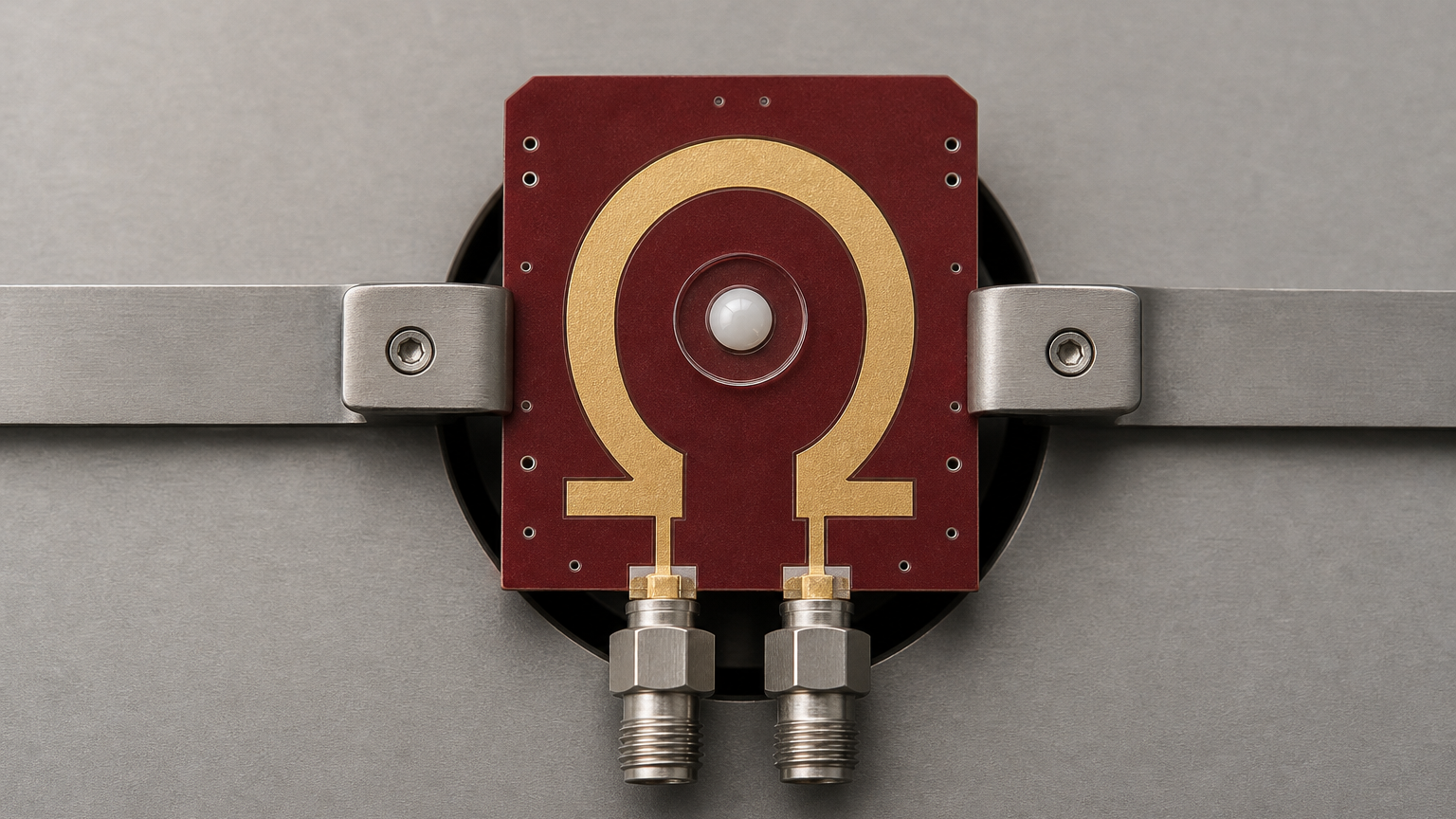
Nanodiamond Charge Drift Reads Macrophage Inflammation: Chicago and Iowa in Advanced Materials, 4 February 2026
Nanodiamond quantum sensors have been read as thermometers inside living cells for more than a decade. One of them, a 70-nanometer crystal sitting inside a mouse macrophage, drifted downward by 0.27 megahertz over 200 seconds of measurement, which on the usual arithmetic means the cell warmed by 3.62 degrees Celsius. A team at the University of Chicago and the University of Iowa has now put a different quantity behind that same number.
Their paper, Probing cellular activity via charge-sensitive quantum nanoprobes, appeared in Advanced Materials on 4 February 2026, with Uri Zvi as first author and Denis R. Candido at Iowa, Aaron Esser-Kahn and Peter C. Maurer at Chicago as corresponding authors. It was received on 15 March 2025 and accepted on 15 January 2026. The University of Iowa publicized it on 26 August 2026, six months after the article went online, which is why it reaches this Monitor now.
What the zero-field splitting actually tracks, and the dipole term that was being dropped
The sensor is a nitrogen-vacancy center, an atomic defect in diamond whose spin can be initialized with green light, driven with microwaves and read out optically. Each 70-nanometer crystal used here carries roughly 100 of them. The measured quantity is the zero-field splitting, the frequency gap between the spin's ground sublevels, which sits near 2.87 gigahertz and moves by about 74 kilohertz for every kelvin. That temperature coefficient is what turned these particles into intracellular thermometers in the first place.
A*STAR Put an 18-Variable Drug-Docking Problem on Six Qubits of IBM's ibm_kingston
Six qubits for an eighteen-variable docking problem
On August 20, 2026 six researchers at institutes of Singapore's Agency for Science, Technology and Research, the National University of Singapore and Nanyang Technological University posted a preprint describing a hybrid quantum-classical method for molecular docking, and executed its circuits on IBM's ibm_kingston processor. Molecular docking is the everyday question of early drug research: given a candidate molecule and a target protein, how does the molecule seat itself in the pocket, and how well. The team recast that question as a graph problem, where each plausible contact between ligand and protein is a weighted vertex and the winning binding pose is the heaviest set of contacts that can all coexist.
An encoding that carries three variables on one qubit
The contribution is an encoding the authors call full-basis encoding, which uses all three orthogonal directions of a qubit's Bloch sphere to carry information instead of one. That put an 18-variable problem on six qubits for the streptavidin-biotin complex 1STP, and a 14-variable problem on five qubits for trypsin with benzamidine, entry 9AW2. The paper also proves that a global minimizer of its objective can always be chosen to be a pure product state, so the optimum requires no entanglement between qubits and the circuits can stay shallow enough for current hardware. What changed for a reader tracking this field is the qubit cost of a docking problem, since the number of good qubits a problem consumes is the binding constraint on machines available today.
What the hardware runs did and did not settle
On both instances the runs on ibm_kingston recovered the same vertex selections as the classical simulation and matched the known clique structure under realistic gate noise and readout error. The authors state plainly that this is evidence of feasibility and that quantum advantage is not demonstrated, since both test problems were deliberately kept small enough for classical verification. Streptavidin with biotin and benzamidine in the trypsin pocket are textbook complexes, though their records differ in age: entry 1STP has been public since 1992, while entry 9AW2 is a 2025 redetermination of a complex first characterized in the mid-1970s. Either way the correct answer was known before the circuits ran, which is what made the check against ground truth possible and also what limits the claim. The open question the authors name themselves is whether the compression ratio survives realistic docking graphs with hundreds of vertices, alongside better ansatz design and hardware-aware circuit compilation.
Cells That Grow Their Own Quantum Sensors
A quantum sensor the cell builds for itself
On August 25, 2026 the United States National Science Foundation renewed the University of Chicago-led Quantum Leap Challenge Institute for Quantum Sensing for Biophysics and Bioengineering with a 37.5 million dollar, five-year cooperative agreement running from September 1, 2026 to August 31, 2031, with Chicago State University, the University of Illinois Chicago and Harvard University as partners. The scientific bet underneath the renewal is that a genetically encoded quantum sensor can be written into a cell's DNA and manufactured by the cell itself, rather than fabricated externally and delivered into the cell from outside.
Why genetic encoding matters here
Nanoscale quantum sensing in living systems has until now meant the nitrogen-vacancy center, an atomic defect in diamond that is an exquisite magnetometer and thermometer but arrives wrapped in a lump of diamond that must be introduced into the cell. That is the delivery problem: the particle settles where the cell's machinery leaves it, and steering one to a chosen protein on a chosen membrane is difficult work in its own right. Fluorescent proteins solved the equivalent labeling problem for microscopy thirty years ago without hardware, because they are genetically encodable. Work at Chicago showed that a fluorescent protein can also be operated as an optically addressable spin qubit, roughly ten times smaller than a diamond sensor.
What the record actually shows
The underlying result, published in Nature on August 20, 2025, realized a spin qubit in enhanced yellow fluorescent protein with up to twenty percent spin contrast on near-infrared triggered readout and a sixteen microsecond coherence time under standard decoupling, characterized near eighty kelvin. Three demonstration temperatures have to be kept apart: the full qubit characterization at liquid-nitrogen temperature, coherent control inside human embryonic kidney cells at one hundred and seventy-five kelvin, and optically detected magnetic resonance in living bacteria at room temperature with contrast up to eight percent. No coherent control was shown at human physiological temperature. The authors name photobleaching as the principal limitation and state that sensitivity still falls short of bulk-diamond nitrogen-vacancy sensors, and targeted fusion-protein sensing was not investigated in this study. This Monitor places the work at TRL 3 of 9: real physics, demonstrated in cells, with no clinical measurement and no animal or human study behind it yet.
Atrial Fibrillation Is Where Seoul Will Look for Quantum Advantage
A grant to find out whether quantum computing helps
On August 25, 2026 a Korean consortium was given two and a half years and 2.5 billion won to find out whether a quantum computer can compute cardiovascular blood flow on a schedule a clinic could live with. Seoul St. Mary's Hospital of the Catholic University of Korea, the University of Seoul and the medical software company Flownics were selected for a new 2026 challenge program run by Korea's Ministry of Science and ICT with the National Research Foundation. What the grant buys is a measurement rather than a product: the team has been funded to establish the conditions for quantum gain on one clinical calculation and to report those conditions as numbers, including how many circuits and how many measurements the answer cost.
What a hospital can already see, and what it cannot
A cardiologist reading a CT scan of a narrowed artery can measure the narrowing and cannot measure the flow. Velocity, pressure and wall shear stress are quantities that inform the risk of a clot forming or a muscle being starved, and none of them is in the picture. Computational fluid dynamics recovers them from the anatomy, and cardiology has begun buying it: pressure ratios computed from coronary CT are an established adjunct in stable chest pain assessment and have cleared a national payer's technology assessment in England. The trouble is what happens when a clinician asks for more. A finer mesh, honest nonlinear terms and patient-specific boundary conditions each multiply the arithmetic, and past a certain point the answer arrives too late to be part of a decision.
Atrial fibrillation first, adjudicated by imaging
The first target is atrial fibrillation, the most common sustained arrhythmia, present in roughly two to three percent of the population. In a fibrillating heart the left atrium stops emptying cleanly, blood stagnates in its appendage, and stagnation is where thrombus begins. Whatever the solver computes will be checked against real patients imaged with 4D Flow MRI, which records the speed and direction of the blood itself alongside the geometry of the vessels carrying it. The plan starts on classical hardware with a three-dimensional deep learning model that segments the heart, the left atrium and the aorta from CT, and a quantum hemodynamic model is built on top of that, stacking a variational algorithm, a Krylov subspace method, classical shadow measurement and non-Markovian error mitigation.
Ninety-five percent is a parity target
The headline figure deserves a careful reading. The stated aim is for quantum-based computational fluid dynamics to reach at least ninety-five percent of the precision of the classical method, which is a target to match the incumbent rather than to beat it. Any advantage the project finds will have to appear somewhere other than accuracy: in time to answer, in cost, or in problem sizes the classical solver cannot reach inside a clinical window. Stating it that way is unusually disciplined. The project fixes the accuracy at parity, names the baseline, names the disease, names the imaging modality that will adjudicate, and puts the burden of proof on resources. A hospital procurement officer has something to hold the team to in 2028, and a negative result in that year will be as informative as a positive one.
A Tenth of a Cent per Guess, and No Qubits in the Loop
A tenth of a cent per ranked pair
On August 19, 2026, SandboxAQ made a virtual screening model called AQPotency generally available. The company's release says it scores how strongly a candidate molecule is likely to act on a disease target, ranks molecule and target pairs in seconds, runs on ordinary computing hardware, and costs as little as one dollar per thousand comparisons. At the advertised minimum, a million pairwise rankings come to about a thousand dollars. Screening at that price stops being a budgeted event a team plans around and becomes something a chemist can run while thinking.
Screening without a solved protein structure
The claim that will interest a hospital pharmacologist sits one line further down. AQPotency is described as working without a solved protein structure, which makes it structure-free potency prediction: the model does not need a crystallographic or cryo-electron map of the target before it will score anything. A great many disease targets have no such map, and programs aimed at them have historically stopped at that wall. Cheap ranking only helps if the ranking is right, and the release publishes no accuracy figures. What it offers instead is eight customer programs with what the company calls experimentally validated impact, plus named academic collaborations. No independent evaluation, no prospective blinded benchmark and no head to head against an established free-energy method appears in the launch material.
The Parkinson's campaign has its own preprint
The launch quotes Gary Miller of Columbia University's Mailman School of Public Health on selective binders for SV2C, a synaptic vesicle protein implicated in Parkinson's disease. That campaign was posted to bioRxiv the same day, with a SandboxAQ corresponding author and Miller as final author. Its methods matter: because no full-length SV2C structure existed, the team built a homology model from SV2A cryo-electron microscopy templates, ran molecular dynamics, and applied a convolutional neural network scoring function inside a funnel that narrowed 5.96 million commercial compounds to 3.19 million before docking. Of 94 prioritized candidates, 71 were profiled and 22 were active. It is a genuine result on a target with no selective probes, and it is neither an AQPotency run nor a structure-free one.
The pillar field reads not applicable
Nothing in this announcement runs on a quantum computer. The most operationally ready development in today's quantum medicine pool comes from a company the quantum trade press covers closely, and the tool is classical software on conventional machines. One day later, a separate group posted a preprint on loading a molecule's wavefunction onto qubits at all, which is the step before any quantum chemistry happens. Both belong in the pool, and they sit at opposite ends of the readiness ladder.
When the Error Check Happens Decides What It Buys
A 54 percent error cut, and what it was measured on
Simulating a molecule on a quantum computer means chopping its time evolution into many short slices, a technique called Trotterization. Accuracy improves as the slices get finer, and finer slices make a deeper circuit, and every additional gate in that circuit is another chance for a physical fault. Depth is what the chemistry asks for and depth is what today's hardware punishes, which is the bottleneck the field calls the deep Trotter dilemma.
A preprint from IonQ, qBraid and NVIDIA, posted in May 2026 by James Brown, Jason Iaconis, Yuri Alexeev and colleagues, reports that a combination of the Generalized Superfast Encoding, Clifford Noise Reduction and Shor-style stabilizer verification lowered the logical error rate by up to 54 percent on a trapped-ion machine. The encoding itself carries no such requirement, and Clifford Noise Reduction can be run with its stabilizer readout deferred; what the paper establishes is that the advantage over the unprotected baseline depended on mid-circuit measurement, the ability to read some qubits partway through a run, learn from them and continue with the rest.
What the number does and does not cover
The unprotected baseline is a six-qubit encoded Clifford Trotter step; the protected implementation that produced the 54 percent figure is wider, at 26 qubits and 580 gates, the extra width being the verification machinery itself. Both ran on a Barium development system similar to IonQ's forthcoming Tempo line. Clifford circuits are the well-behaved subset of quantum operations an ordinary laptop can simulate exactly, which is what makes them useful test articles: the correct answer is known in advance, so any deviation is measurable error. No molecule, binding energy or reaction barrier appears anywhere in the result, while IonQ's own account presents the same figure alongside the prospect of lower research costs and shorter time to market.
The control arm is the transferable finding
Keep the verification structure but move the stabilizer readout to the end of the circuit and it still beats having no error detection at all. What it stops doing is beating the unprotected baseline by a statistically significant margin for a single stabilizer round. Only the mid-circuit version clears that bar, which points at the timing of fault detection as the operative ingredient. For scale, published resource estimates for computing spin gaps in models of the cytochrome P450 catalytic cycle, a methodology benchmark and not a dosing or interaction predictor, run near 1,434 logical qubits and roughly 4.6 million physical qubits over 73 hours, on stated and assumption-dependent compilation figures. This Monitor records the work at TRL 3 on the simulation pillar.
The Fingerprint Band, Read by a Camera That Never Sees It
A chemical map without a dye
Infrared light between roughly 6 and 10 micrometres is absorbed by the specific chemical bonds that hold proteins, lipids and nucleic acids together, which makes the mid-infrared fingerprint band the part of the spectrum where biological material is most distinguishable without stains, antibodies or fluorescent labels. The reference protocol for the method describes it as a non-perturbative, label-free way to extract biochemical information aimed at diagnosis and at assessing how cells are functioning, and the sample survives the measurement. It has never become routine hospital equipment, and one important barrier is the detector rather than the chemistry.
The camera problem, answered sideways
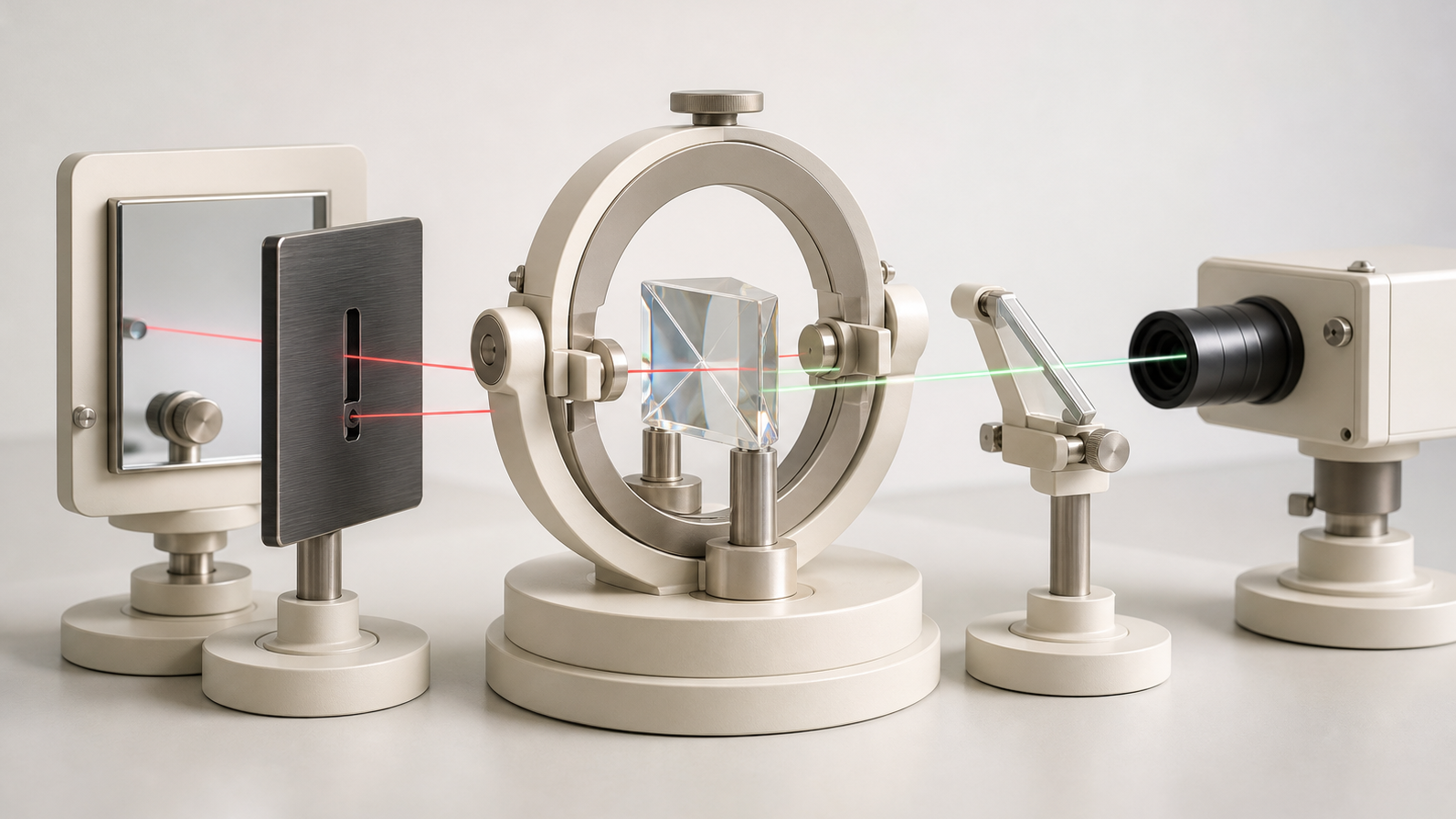
Detectors for that band are cooled, costly, and limited by the thermal glow of the room and of the instrument itself, because everything at ordinary temperature radiates in exactly the wavelengths being measured. A group at Imperial College London has now reported wide-field imaging across the full 6 to 10 micrometre range in which the infrared light is never measured at all. Correlated photon pairs are produced in a single silver thiogallate crystal used twice in a folded geometry, one partner passes through the sample, and the picture is reconstructed from the visible partners of those undetected photons on a commercial scientific silicon camera. Because the measurement happens in the visible, where the room's thermal background is effectively absent, the system detects infrared signals about a hundred times below the usual background-limited photodetection ceiling, at room temperature.
What the numbers actually allow
At 8 micrometres the images hold more than 8,000 resolvable elements at a resolution of 297 plus or minus 5 micrometres, over a circular field about 30 millimetres across, in a 10 second acquisition. The field is generous enough for a tissue section, a tablet or a culture well. The resolution is the constraint that matters: a human cell measures 10 to 20 micrometres, so that resolution is equivalent to roughly fifteen to thirty cell widths rather than to a camera pixel of that size, and the test objects were shadow masks cut from metal foil rather than biological material. This edition reads the result as a supply-chain and noise-floor contribution to an established clinical method, places it on the readiness ladder, and sets out the three specific demonstrations that would tell a hospital buyer the distance to a pathology bench is closing.
Which Blood Signal Rewards a Quantum Kernel
A screening gap a blood draw might close
Annual low-dose CT screening lowers lung cancer mortality, and most of the people who qualify for it are not up to date with it. The American Cancer Society reported in June 2024 that 18.1 percent of screening-eligible US adults were up to date in 2022 survey data, which leaves the larger share of a proven survival benefit unclaimed. Blood-based tests are attractive because collection is easier to distribute and to repeat than a CT appointment. The study compares two molecular readouts, drawn from a wider field that also includes mutation panels, circulating proteins and cell-free RNA: cell-free DNA fragmentomics, which reads the length and position of circulating fragments, and methylation, which reads chemical marks at defined genomic targets. Both produce high-dimensional, nonlinear data, and both are degraded by the heterogeneity of lung cancer.
What the Cleveland Clinic and IBM Quantum preprint reports
A team from Cleveland Clinic Research and IBM Quantum posted a preprint on August 19, 2026 asking whether a quantum kernel classifies those signals better than a conventional support vector machine. The methylation cohort covered 813 individuals with 188 cancers across 56 methylation targets; the fragmentomics cohort covered 718 individuals with 172 cancers across 473 genomic regions. Features were encoded with angle and dense-angle feature maps across circuits of 10 to 20 qubits, using three entanglement patterns, and the resulting fidelity kernels fed a precomputed-kernel support vector machine and a kernel-PCA logistic regression.
A split verdict, measured in simulation
On fragmentomics the quantum-kernel models reached held-out AUC values around 81 to 82 percent against a classical baseline near 78 to 79 percent. On methylation the ordering reversed, with the classical model centered around 83 to 84 percent and the quantum models between 80 and 82.5 percent. Widening from 20 to 40 features did not reliably help. Every kernel was computed by exact statevector simulation on ordinary computers, so no quantum processor was involved, and the authors list hardware execution under finite sampling and device noise as future work. Quentir places the work at TRL 3 of 9 on the quantum computing pillar and reads the split, rather than either half of it, as the finding.
A Village Health Kiosk, 70 Kilometers of Fiber, and 12.7 Bits a Second
Two links, two very different sets of numbers
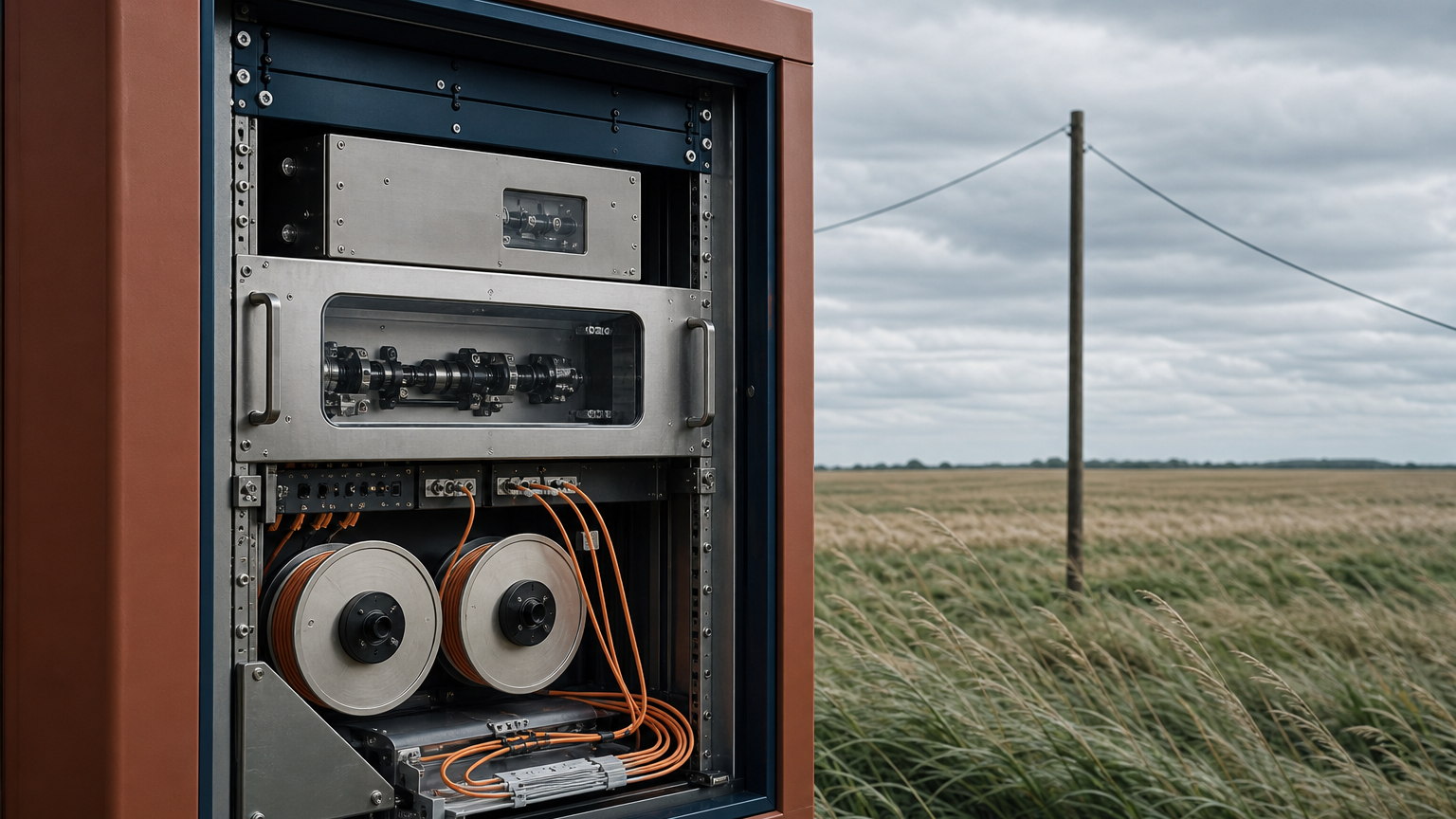
In a health kiosk in the Thuringian village of Sundhausen, a participant sat down for a fifteen-minute simulated consultation with a physician at the university hospital in Jena, and audio and video ran without interruption. The keys protecting that traffic came from polarization-entangled photon pairs sent down installed telecommunications fiber. A German research team has now published its field report, pairing entanglement-based quantum key distribution on the BBM92 protocol with end-to-end post-quantum cryptography running sntrup761 and ML-KEM-768. The network spans about 140 kilometers in total, arranged as two links through a trusted node at Erfurt: 70 kilometers from Sundhausen with 51 of them aerial, and 69 kilometers from Jena that are almost entirely buried.
The fiber construction shows up in the measurements
On the aerial-heavy village link the secure key rate averaged 12.7 bits per second with a standard deviation of 10.3, at a quantum bit error rate of 13.3 percent. On the mostly buried Jena link the same system produced 22.2 bits per second with a deviation of 4.7, at an error rate of 6.1 percent. Nearly twice the key rate on the buried link, less than half the error rate, and an error-rate spread of 0.8 points against 9.6. The authors report that error-rate variation on the aerial link correlated most strongly with wind speed. The two links were operated separately, for 22 days and 2 days respectively, so the 22-day endurance figure belongs to the village link alone, and the final hop into the hospital used previously generated keys from a local keystore.
What a hospital would actually be buying
The quantum keys were pushed straight into standard Linux VPN tunnels between adjacent nodes, with no dedicated key management system and no modification to the existing medical systems, which is the commercially load-bearing choice for buyers who cannot re-platform. Trusted nodes remain the structural caveat: four European cybersecurity agencies hold that end-to-end security cannot be achieved over long distances using fibre-based quantum key distribution, and place the clear priority on post-quantum cryptography. Set against a breach record in which vulnerability exploitation accounts for 20 percent of healthcare intrusions, a hardened regional link answers one threat model and leaves the other untouched.
Quantum entropy without the fiber
The debate usually settles into quantum key distribution versus post-quantum cryptography, and both depend on the randomness the keys are made from. Chip-scale quantum random number generators, such as Quantum eMotion's electron-tunneling design reported at 1.8 gigabits per second and already running with Becton Dickinson and GreyBox Solutions in remote patient monitoring, deliver that entropy at the endpoint itself, with no dedicated fiber, no weather exposure and no intermediate node to trust. Quantum-grade keys and quantum key distribution are separable purchases, and for most clinical endpoints the chip fits the installed base.
The CT Map Moves During Robotic Bronchoscopy
Why the CT map moves
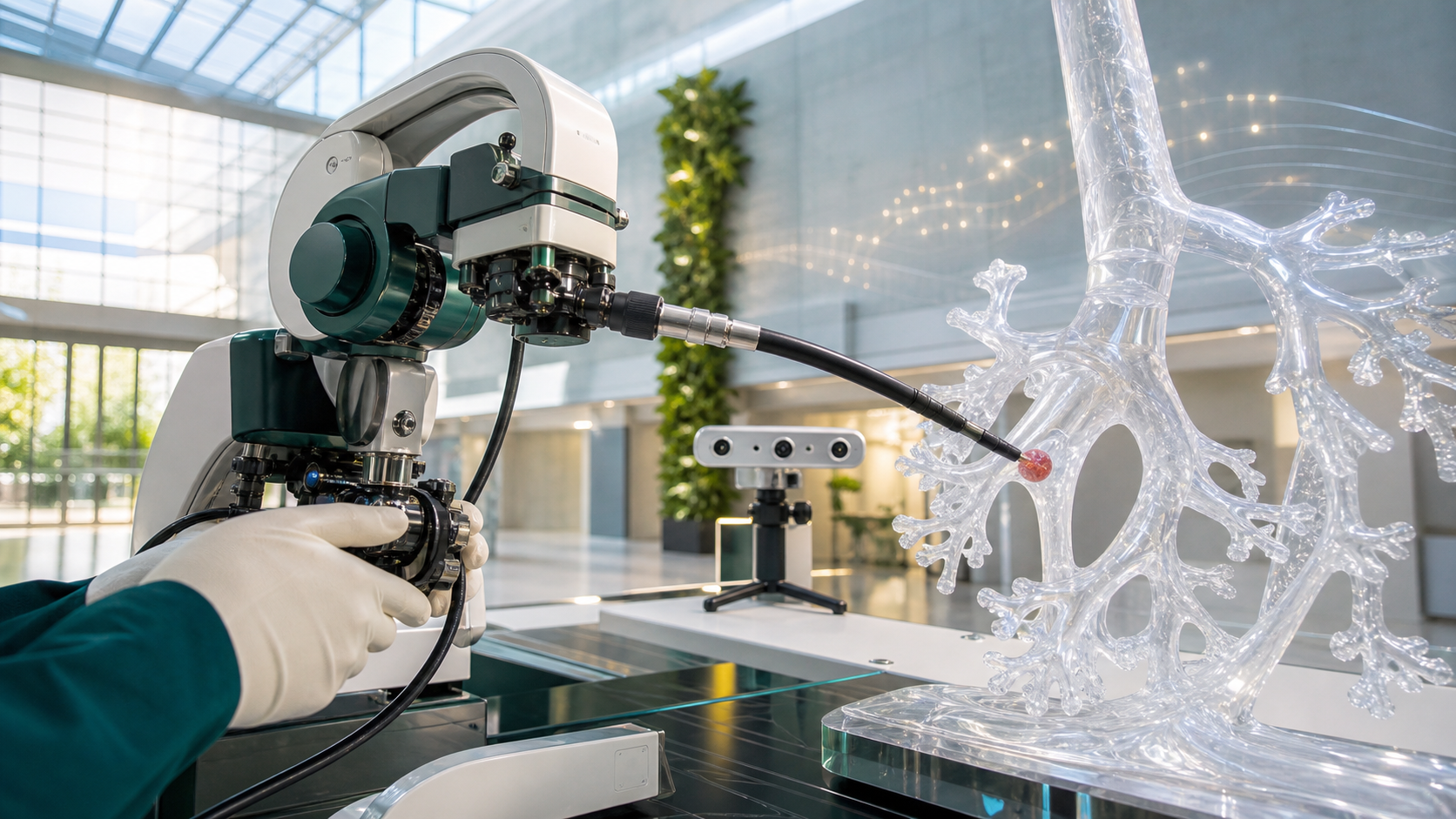
A bronchoscopy route begins as a CT map of the lungs. By the time a clinician advances a scope, the patient is positioned, sedated and ventilated under different conditions. Airways can deform or partially collapse, leaving a small peripheral lesion in different coordinates relative to the planning image. This CT-to-body divergence is the engineering problem behind Johnson & Johnson's MONARCH QUEST 3 software update. The August 17 announcement describes changes to registration and navigation, a three-dimensional compass overlay, wider compatibility with cone-beam CT systems and one-click segmentation of lung nodules.
What the clearance establishes
The FDA public record lists K260382 for the MONARCH Platform, with a substantial-equivalence decision dated July 25, 2026. That places the finished update at TRL 8 of 9 under Quentir's shared readiness ladder: qualified for commercial release, with the final rung reserved for documented operational use of this exact version. The regulatory decision does not establish that the new features improve diagnostic yield or reduce complications. Johnson & Johnson's announcement relies on internal technical reviews for segmentation, registration and scope-tip estimation, without publishing a patient-level performance dataset for QUEST 3.
The clinical question remains open
A 2026 retrospective study of 331 MONARCH procedures provides an independent reference point. Adding mobile cone-beam CT did not significantly change diagnostic yield or complication rates in that single-center comparison, although procedure time fell and radiation exposure increased. The study predates QUEST 3 and cannot answer whether its AI nodule segmentation changes outcomes. It does show why a clear map is only one part of the pathway. Imaging, registration, navigation, tissue sampling and pathology all shape the result a patient ultimately receives. The version-specific outcome record will determine whether this update reduces uncertainty at the point where the scope, the lesion and the biopsy tool finally meet. Quentir reads the launch as a mature medical-device update with a valid market pathway and an unresolved question about incremental clinical benefit.
A Diamond Magnetometer Closes the Distance to Biomagnetism
A smaller gap between sensor and signal
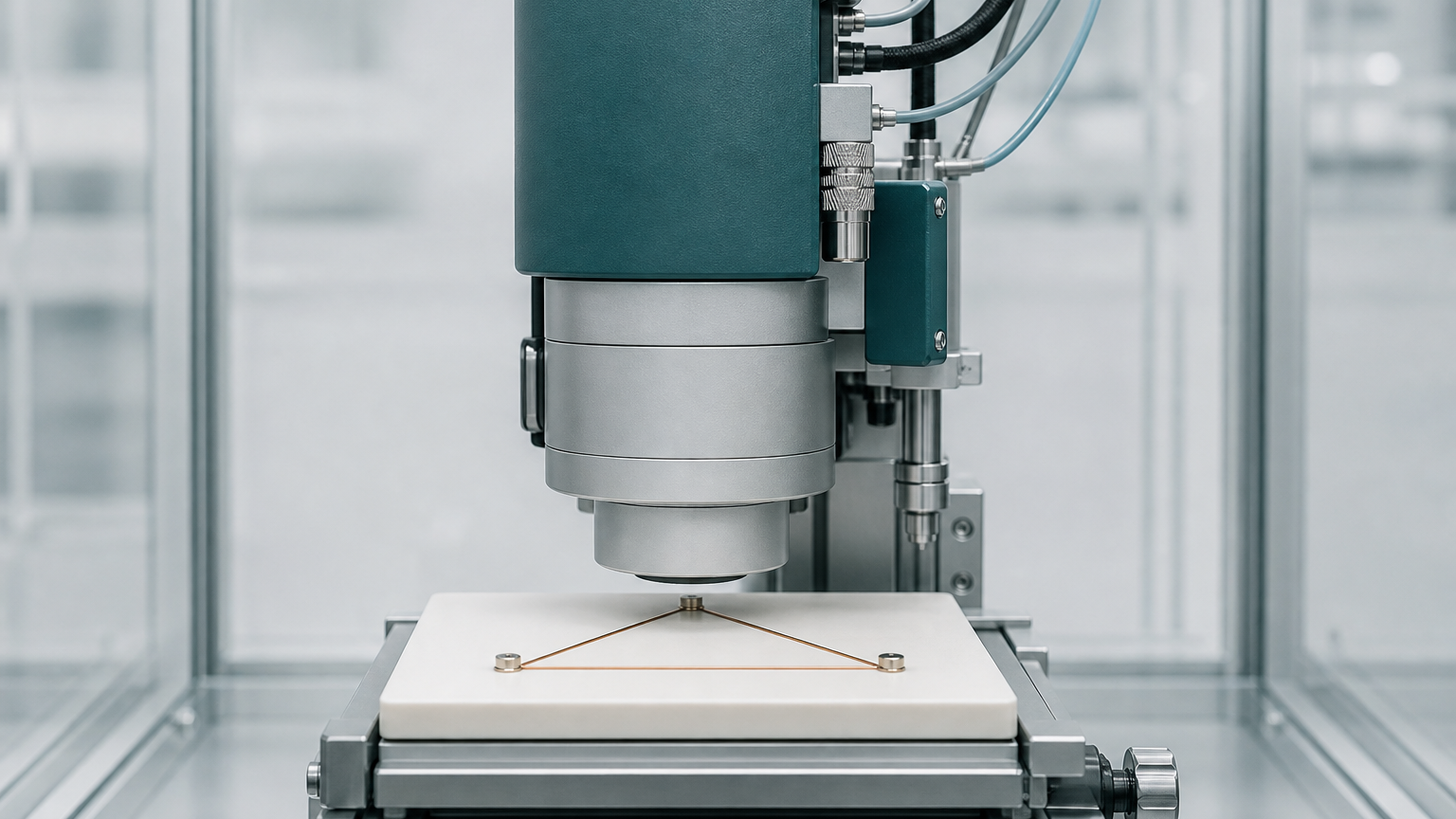
Biomagnetic fields weaken sharply with distance, so the physical gap between a detector and the body is part of the sensitivity budget. Yuta Araki and colleagues have built a diamond NV magnetometer whose sensing head can sit about 2.0 millimeters from a sample. A compact microwave antenna helps set that geometry, while a light-trapping diamond waveguide makes more efficient use of the green laser that initializes and reads the sensor's nitrogen-vacancy centers. The integrated device addresses the heat and bulk that have limited high-sensitivity Ramsey measurements near biological samples.
What the laboratory result establishes
The peer-reviewed paper reports 2.93 picotesla per square-root hertz sensitivity across 100 to 400 hertz at 210 milliwatts of laser power. The measured temperature increase was approximately 13 kelvin. In a controlled test, the sensor detected a 77.7-picotesla field from a dry brain-field phantom at a 2.5-millimeter standoff, without signal averaging and with a signal-to-noise ratio of approximately 4.3. Quentir assesses the assembled system at TRL 4 of 9: a quantum sensing device validated in the laboratory on a phantom that imitates a brain-field pattern.
The clinical distance remains
The phantom does not reproduce movement, anatomy, variable spacing or the environmental interference of a living-subject recording. The authors also state that sub-picotesla brain signals will require further accumulation and improved sensitivity. A future magnetoencephalography or magnetocardiography instrument would need stable arrays, calibration and clinical comparisons as well. The current paper supplies no human dataset, workflow study, regulatory record or manufacturing claim. Those absences keep the result at the laboratory-instrument stage even though its geometry addresses a genuine near-body constraint. Quentir reads the paper as a bounded hardware advance. It joins optical efficiency to a short sensor-to-sample distance, reports each operating constraint quantitatively, and makes the next test easy to name: a living-subject measurement with a defined physiological signal and an established comparator.
What Quantum-Inspired Buys a Federated ECG Classifier
A compact model for hospitals that cannot pool their ECGs
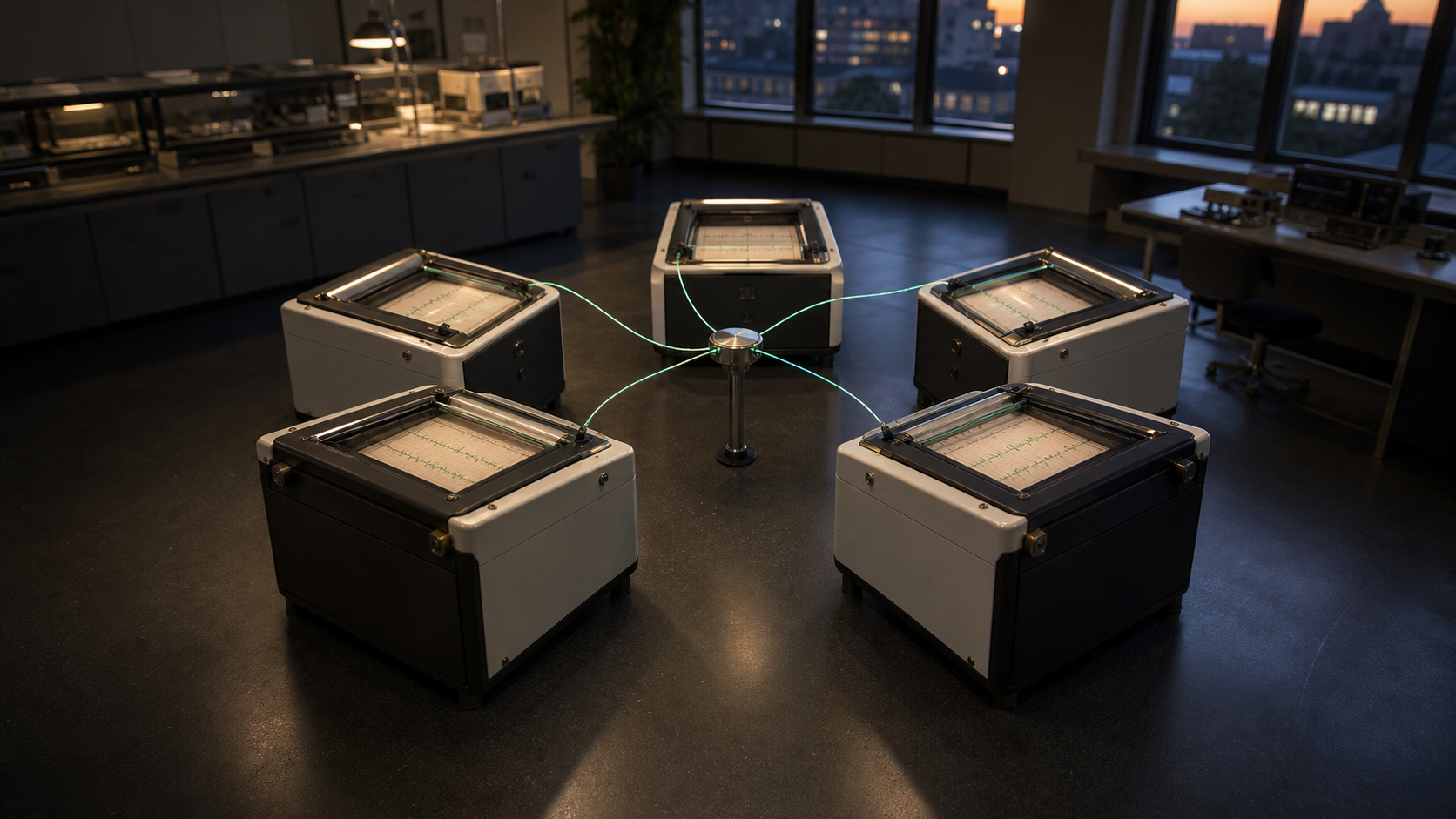
Hospitals, clinics and wearable makers each hold electrocardiograms they cannot simply pool, so collaborative model training moves the model instead of the data. A new preprint evaluates a hybrid quantum-inspired Kolmogorov-Arnold network for arrhythmia classification under federated averaging, where every site trains locally and transmits only model updates. Because each round's cost scales with model size, a smaller network makes the whole federation cheaper to run for every participant.
Measured savings, with clearly stated edges
On the public MIT-BIH benchmark the network used 37.35 percent fewer trainable parameters and cut communication cost by 24.89 percent; on the INCART dataset the reductions reached 44.81 and 36.41 percent, while most aggregate and minority-class metrics matched or improved on the baseline. The comparison runs against a plain multilayer perceptron on retrospective public datasets, and the federation is simulated, so the result marks a design direction rather than a clinical capability.
What the quantum label does and does not mean
The architecture borrows its learnable functions from quantum machine learning, in the form of single-qubit data re-uploading circuits, yet every calculation runs on classical computers. Quentir places this work at TRL 3 of 9 with the quantum pillar explicitly not applicable: functioning software on recorded data, no quantum processor anywhere in the loop. The honest summary is that federated ECG learning gained a smaller, cheaper collaborative classifier from quantum-derived mathematics, and the evidence record should carry it under exactly that description.
What Yonsei's Metabolic MRI Installation Has to Prove
A university project gets a deployment window
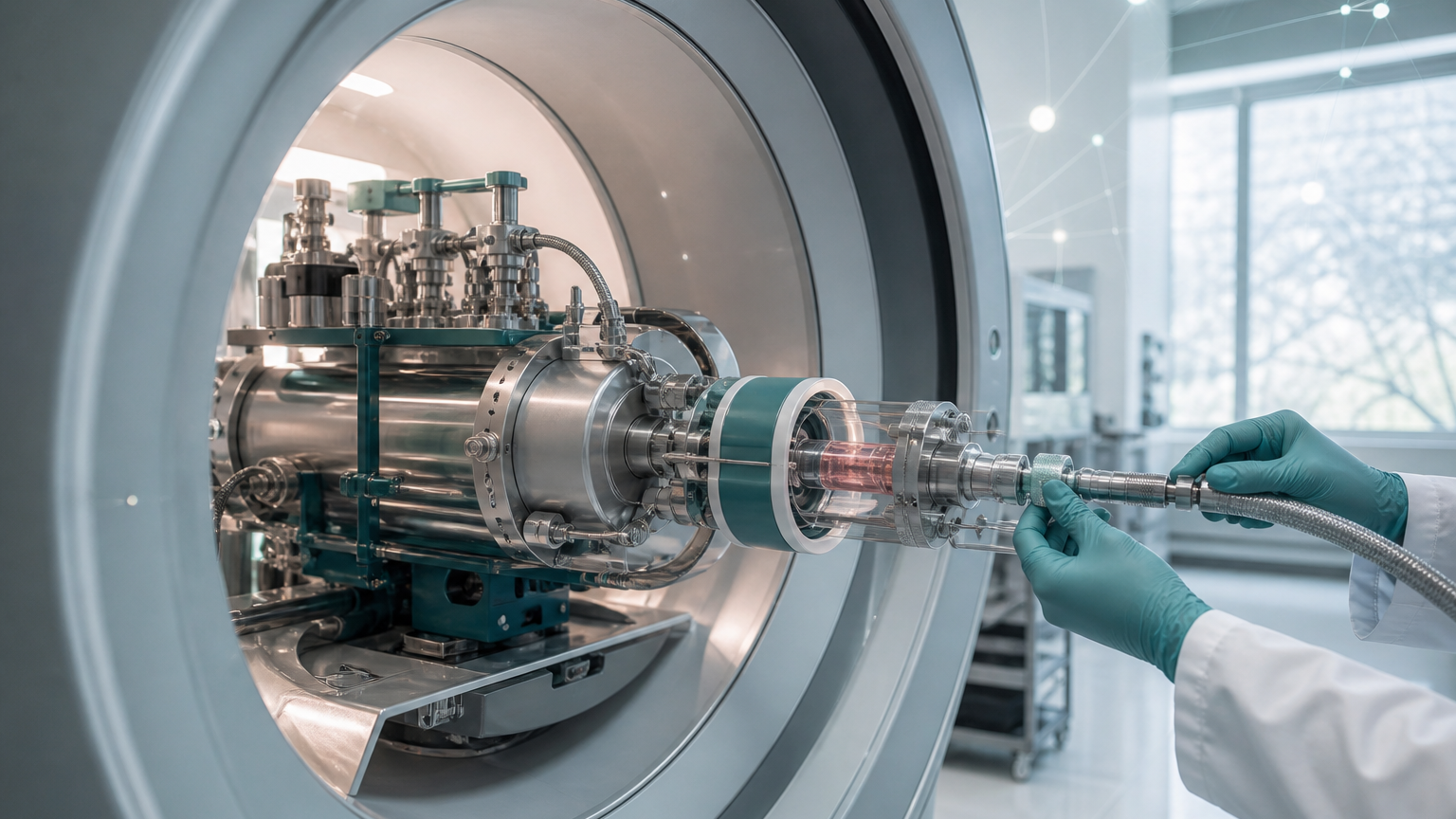
The RESQ consortium plans to install NVision's POLARIS platform at Yonsei University in early 2027. Backed by €2,572,500 in Horizon Europe funding, the three-year program joins NVision, Yonsei University, Ulm University, and Tesla Dynamic Coils. Together they are building a metabolic MRI installation for higher-resolution research on brain metastases. The public project record assigns concrete work: reproducible parahydrogen generation and storage, tailored radiofrequency pulses, compressed sensing, machine learning, and dedicated dual-tuned brain coils. These details turn a broad quantum-health ambition into a dated engineering program with named owners.
The scanner is only one part of the workflow
Hyperpolarization can strengthen the MRI signal from selected metabolic agents for a limited period, allowing researchers to study what tissue is doing alongside its anatomy. That advantage can disappear if gas preparation, sample transfer, coil performance, pulse design, or image reconstruction varies. RESQ therefore has to integrate chemistry, hardware, software, scanner time, and operating procedure. Its stated goal of doubling spatial resolution is a consortium target. The current public record does not report a completed Yonsei installation, a disease-model result, a patient study, diagnostic accuracy, or a change in treatment.
Preclinical work is the next meaningful test
Yonsei is expected to validate the workflow using preclinical brain metastasis models. That stage can show whether the complete system produces stable metabolic maps in biologically relevant models and whether smaller lesions become more visible. It cannot yet establish performance in patients. Quentir reads RESQ as a quantum-sensing implementation program at TRL 4 of 9: the underlying hyperpolarization platform operates in research settings, while the new disease-specific workflow still awaits installation and integrated preclinical validation. The decisive question for the project period ending in April 2029 is whether preparation, acquisition, coil behavior, and reconstructed images can be reproduced beyond one expert site. A portable workflow would move quantum sensing closer to useful medical infrastructure; a result dependent on one installation would leave clinical translation much farther away.
The MRI Implication of a Single Copper-Oxide Plane
The result is one atomic plane
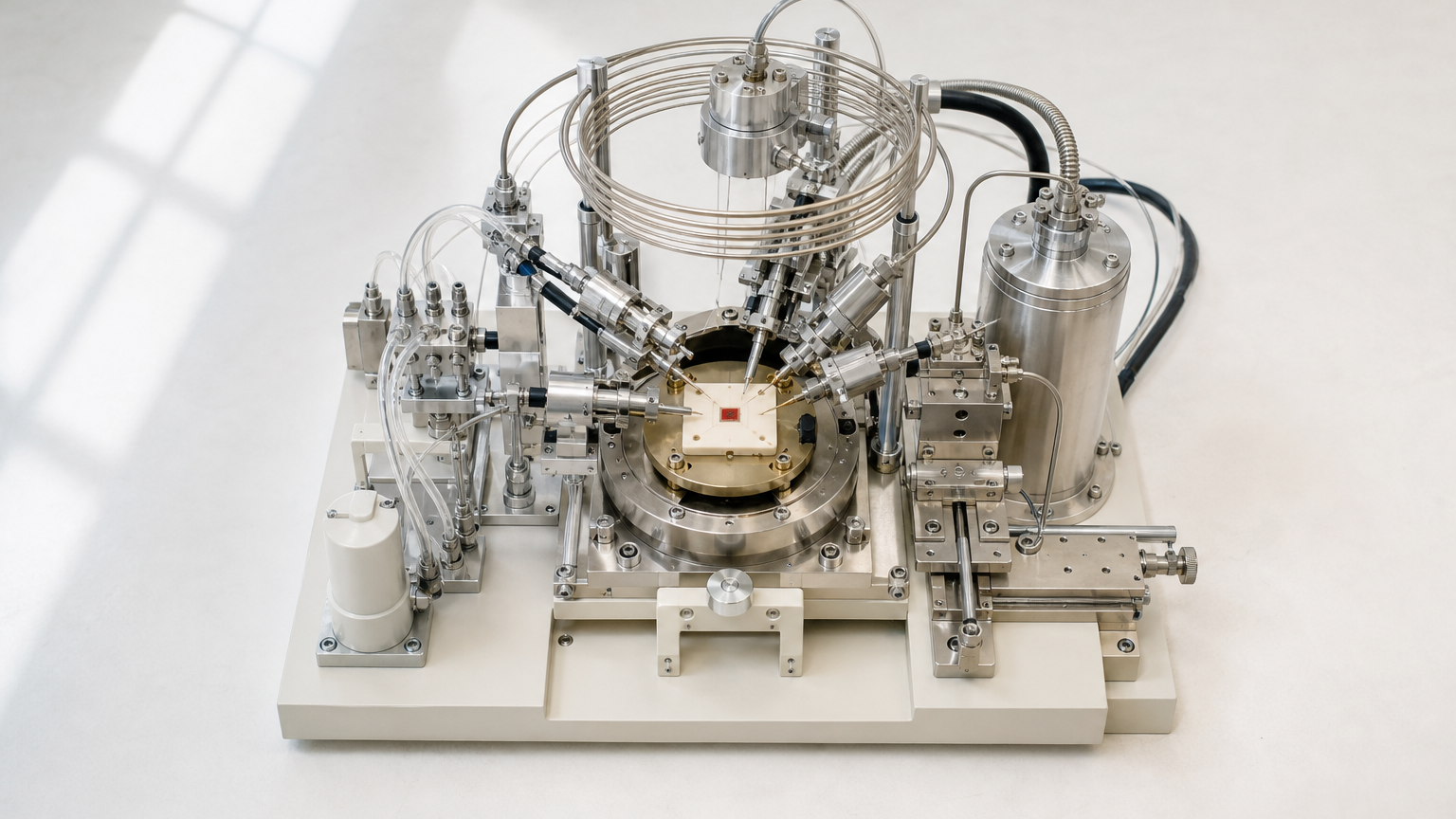
A team led by researchers at Fudan University and the University of Science and Technology of China has fabricated a single-layer cuprate containing one superconducting copper-oxide plane. Published in Nature on August 12, the experiment reduces Bi-2201 to its ultimate two-dimensional limit. The monolayer retained superconductivity, although its optimal transition temperature was about ten percent lower than in thicker material. Fine control of oxygen content then let the researchers follow the sample from an insulating state, through an anomalous metallic regime, and into superconductivity. This is a basic-physics achievement built on delicate fabrication and a laboratory instrument designed for precise in-situ tuning.
The medical relevance begins with the magnet
MRI depends on a strong, stable magnetic field to align protons in the body before radiofrequency pulses and sensors turn their response into anatomical images. That creates an MRI materials pathway for this research, but the connection sits far upstream. The paper reports no magnet winding, imaging coil, scanner prototype, patient study, or medical-device test. Its contribution is a cleaner experimental platform for understanding how high-temperature superconductivity changes when the active material is reduced to one copper-oxide plane.
The distance to care remains useful to measure
A hospital magnet requires far more than a superconducting transition. Engineers need scalable conductors, high current under strong fields, reliable joints, mechanical strength, controlled cooling, quench protection, field homogeneity, and compatibility with a complete scanner. The new monolayer does not answer those engineering questions. It helps make the earlier materials questions more exact. Quentir reads the result as a sensing story at the laboratory-materials stage: credible MRI relevance through superconducting magnet science, paired with a clear boundary around present readiness. The next meaningful step would connect the one-plane physics to a thicker, manufacturable material with measured current or field performance.
Does a Quantum Layer Change What a Medical AI Sees?
One layer makes the comparison unusually clean
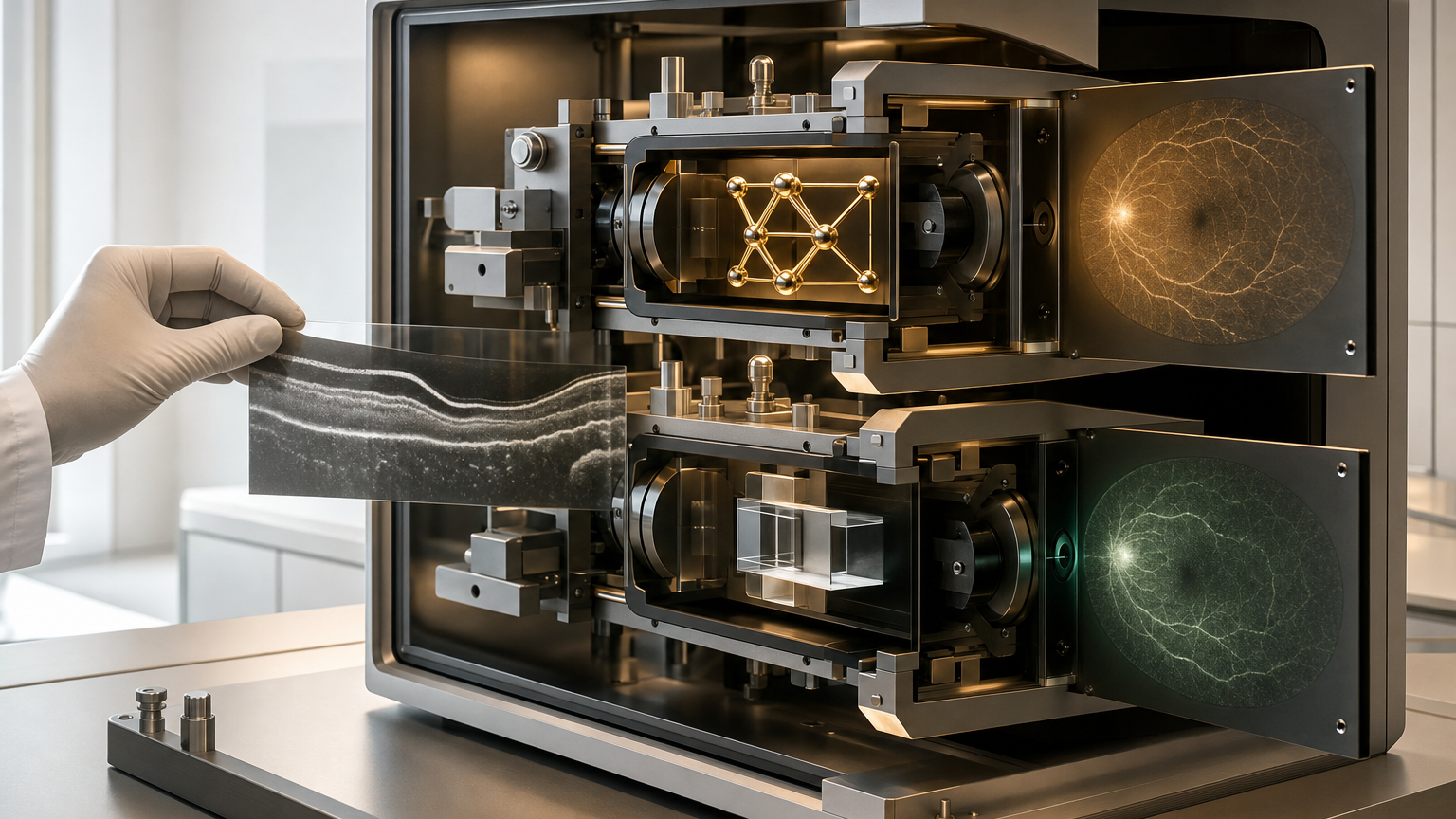
A July 2026 preprint compares two medical-image classifiers that share the same convolutional backbone and a comparable number of trainable parameters. They differ in one intermediate layer. One branch uses a dense classical layer; the other uses a four-qubit circuit emulated on a conventional computer. This parameter-matched comparison helps isolate the contribution of the circuit-shaped representation without changing the rest of the network.
The relative gain appeared between small and large datasets
The models classified retinal optical coherence tomography images, with training sets ranging from 200 to 30,000 examples. The hybrid model performed best relative to the classical comparator around 800 and 2,000 training images, an intermediate-data regime. At the largest sizes, the classical CNN moved ahead and reached the study's highest retinal test accuracy, 93.7 percent. A robustness check using two-dimensional slices from an OASIS-1 dementia MRI dataset followed the same broad pattern: the hybrid advantage narrowed with more data, then reversed slightly.
The attention maps changed with sample size
The researchers also compared SHAP attention maps, which estimate where image pixels influence a model's output. With 1,000 retinal images, the hybrid maps appeared more concentrated around retinal layers and disease-related structures, while the classical maps were more fragmented in the examples shown. At 30,000 images, the models' highlighted regions overlapped much more. These maps do not establish clinically validated biomarkers. The study includes no physical quantum-hardware run, prospective clinical test, external hospital validation, clinician reader study, or patient outcome. Its contribution is narrower and useful: a controlled account of when a small classically simulated circuit changed model performance and apparent visual focus, and when additional data favored the matched classical layer.
When Cancer Starves an Immune Cell, Quantum Sensors May Hear the Chemistry
Cell chemistry changes under pressure
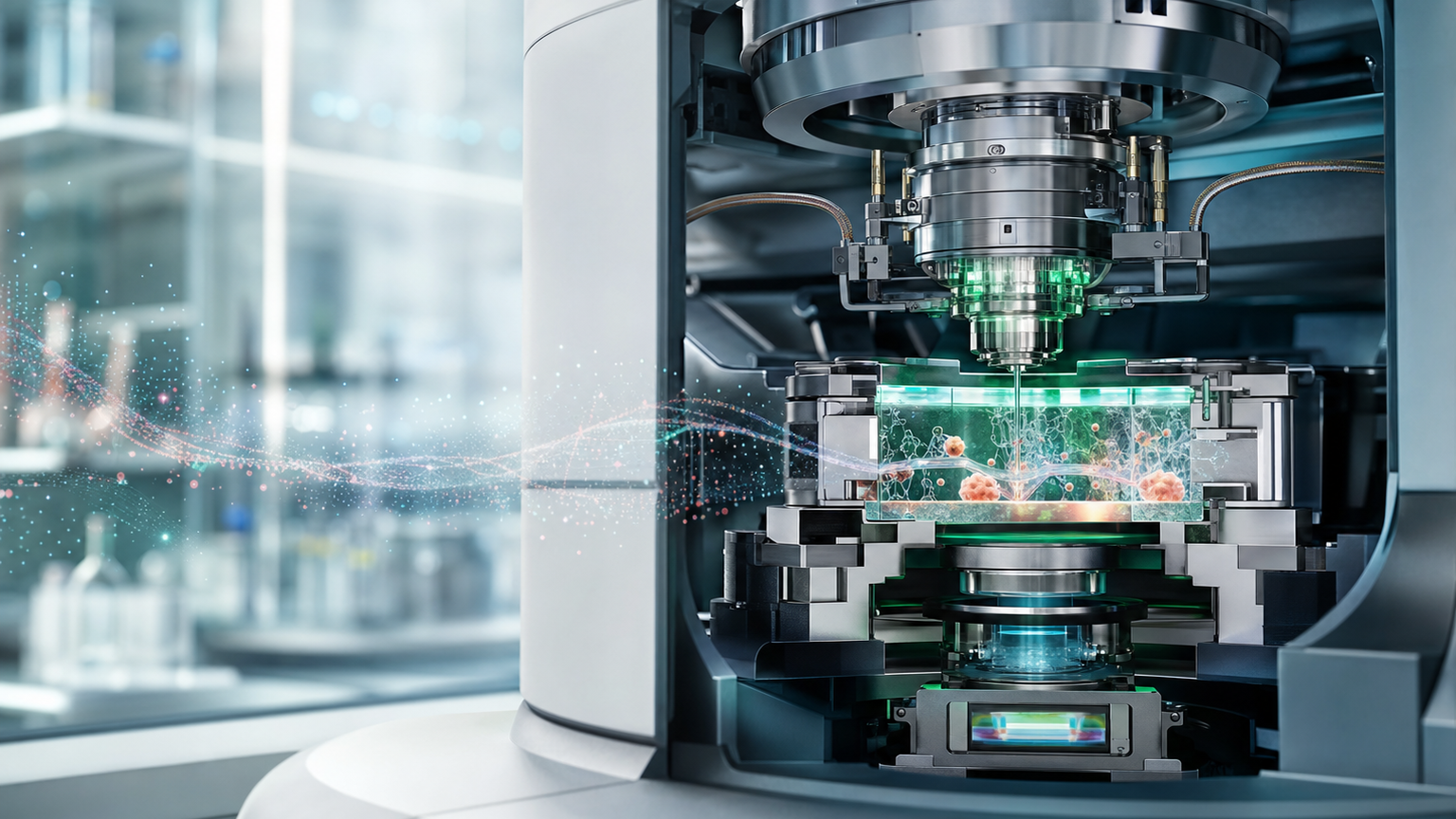
In a solid tumor, an engineered immune cell may carry the right receptor and still lose function as nutrients disappear and suppressive metabolites accumulate. A proposed four-year project at Heriot-Watt University aims to watch that chemistry in real time. The planned platform combines single-electron sensors, optical spectroscopy, and microfluidics to follow radical activity across many cells. Its medical premise is specific: the local chemical environment may help explain why cellular immunotherapies that have changed treatment for several blood cancers remain much harder to use against solid tumors.
A diamond spin can report a local signal
The program has an experimental starting point. In a 2024 Carbon paper, Claudia Reyes-San-Martin and colleagues, including fellowship leader Aldona Mzyk, used diamond-based quantum sensing to detect free-radical signals in migrating human breast cancer cells with subcellular resolution. They observed radical formation after defined periods of starvation and low-serum migration, then changed NOX2 activity and found that the radical measurement, broader reactive-oxygen readings, and cell migration did not move together. That result makes the sensing method interesting as a mechanistic probe. It does not establish a cancer biomarker or a patient-facing diagnostic.
The next experiment moves to immune-cell failure
Heriot-Watt's December 15, 2025 announcement says the funded work will study how the tumor microenvironment disrupts immune-cell metabolism. The National Cancer Institute describes that suppressive environment as one of several barriers facing CAR T-cell therapy in solid tumors, alongside target selection and tumor variation. The proposed system could give researchers a closer view of when individual cells begin to fail and how differently cells respond under the same conditions. Important questions remain open: whether the signal is stable across instruments, whether thousands-of-cells throughput can preserve nanoscale sensitivity, and whether a radical pattern predicts later immune function. The project is best understood as a laboratory measurement program with a credible route into cancer immunology and a long clinical distance still ahead.
A Drug-Design Race With Two Different Finish Lines
Two systems pursue different molecular virtues
A 2026 Artificial Intelligence Chemistry paper compares a quantum-aided molecular generator with BInD, a diffusion model for structure-based drug design. QuADD treats molecular design as constraint-driven optimization: it searches for candidates that fit a defined binding pocket while satisfying several selected properties. BInD uses reverse diffusion to explore possible molecular structures and their interactions with the target. Both generated novel candidates for a thrombin binding site. The reported split matters. QuADD more consistently met the study's criteria for predicted binding affinity, drug-likeness, and preservation of key protein-ligand interactions. BInD produced greater structural diversity. That result describes two search philosophies as much as two software systems.
The clock measures a complete workflow
A company-supplied account reports that QuADD generated 3,000 molecules in roughly 30 minutes, while BInD required about 40 hours on a node with one NVIDIA GPU. The researchers selected the top 100 candidates from each set using predicted binding affinity. The timing is useful as a workflow observation. A broader quantum-advantage claim would need matched objectives, declared compute resources, complete timing boundaries, repeated runs, and a strong classical optimizer aimed at the same constraint set. The comparison article was written by researchers affiliated with Polaris Quantum Biotech, the company behind QuADD, so independent reproduction would add weight.
The medical threshold remains physical
The candidates in this study were ranked by computational proxies. The public record reports no synthesis campaign, measured binding assay, cellular result, toxicology study, or clinical outcome. Those later tests decide whether a promising structure can become a useful lead. This analysis follows the line from objective function to patient relevance: broad exploration can reveal unfamiliar scaffolds, while constrained search can reduce the number of weak or impractical candidates sent to the laboratory. A productive discovery pipeline may combine both. The immediate result is narrower and still worthwhile. In one thrombin task, the quantum-aided system prioritized the selected properties more consistently, while the diffusion model searched more widely. The next consequential step is a transparent, independently repeated benchmark joined to physical molecules and measured biology.
The Patient Record Outlives Its Encryption
Medical data has a longer clock
Long-lived medical data creates a timing problem that ordinary security planning can miss. A genome, a childhood record, a psychiatric history, or a diagnostic image can remain sensitive for decades. The public-key encryption and identity systems around those records will change much sooner. A July 2026 Frontiers in Health Services review connects that mismatch to harvest-now-decrypt-later risk: encrypted health traffic can be collected while current protection still holds and revisited if future quantum computers can break the algorithms that protected it. The exposure reaches across electronic health records, imaging archives, genomic repositories, telemedicine, research networks, and connected devices.
The standards are ready; the estate is mixed
Post-quantum cryptography now has deployable standards, including NIST's FIPS 203 for ML-KEM. It runs on classical computers and can enter many healthcare systems through software, protocols, certificates, or gateways. The clinical estate remains uneven. A hospital can operate modern cloud services beside imaging equipment with long service lives, laboratory instruments with vendor-controlled updates, old identity systems, and low-power devices that cannot absorb larger keys or signatures without measurement. The transition therefore depends on cryptographic identity, ownership, service life, memory, bandwidth, and the vendor's ability to update a product already in use.
Why integrity belongs beside privacy
Confidentiality is only half of the medical stake. Digital signatures help establish that firmware, certificates, audit records, and clinician identity assertions came from an authorized source. The Frontiers review identifies software update signatures as part of the integrity target for healthcare. A future weakness in that trust chain would not automatically alter a dose or disable an implant, but it would weaken confidence in the code and credentials around clinical action. Quentir reads the paper as a three-clock problem: the lifetime of the information, the replacement cycle of the system, and the arrival of a capable adversary. A credible migration preserves care while the mathematics underneath privacy and trust changes.

How a Light-Sensing Protein Became a Quantum Sensor
A protein engineered through selection
Researchers led by the University of Oxford used directed evolution to turn a fluorescent protein into a more sensitive magnetic-field probe. The resulting protein, MagLOV, changes its fluorescence when light, magnetic fields, and radio frequencies act on a radical-pair process involving the protein backbone and a flavin cofactor. The January 2026 Nature paper reports optically detected magnetic resonance at room temperature in living bacterial cells, with enough signal-to-noise for single-cell detection. The result connects evolutionary search with quantum spin physics in a material that a cell can produce for itself.
What the experiment adds to imaging
The team used magnetic-field gradients to localize fluorescence, describing an imaging method built around a genetically encoded probe. It also explored sensing of the molecular microenvironment, radio-frequency addressing, multiplexed bio-imaging, and lock-in detection for difficult fluorescent backgrounds. These are platform capabilities in engineered biological systems. The paper does not report a human scan, diagnostic accuracy, therapeutic benefit, or a clinical device. Its demonstrated single-cell setting is bacterial, and later work would have to address delivery, expression control, toxicity, tissue depth, spatial resolution, stability, and reproducibility.
Why the mechanism deserves attention
The study gives quantum medicine an unusual engineering route. Some sensors are fabricated as external hardware; this one is encoded in biology and improved by repeated mutation and selection. Its quantum response still depends on optical collection, radio-frequency control, calibration, and the chemistry around the protein. That mixed identity is the point. The work shows that a biological component can be shaped into a readable spin sensor while remaining inside a living cell. Medical value will depend on comparisons with established probes and on whether the extra magnetic-resonance channel reveals information that changes a research or clinical decision. For now, the result is best read as a research instrument whose performance must be tested against established biological probes.

Why a 12,635-Atom Protein Simulation Still Needs Supercomputers
A protein-scale calculation divided across machines
A May 2026 arXiv preprint joins quantum processors with the Fugaku and Miyabi-G supercomputers to model trypsin and T4 lysozyme with ligands and surrounding water. The larger system is a 12,635-atom protein-ligand complex. That total describes the biological scene, not one enormous quantum circuit. The researchers used embedding to divide each molecule into electronic fragments, assigning selected difficult fragments to quantum hardware while classical systems prepared and assembled the wider calculation. This heterogeneous quantum-classical workflow is the central result: current quantum processors can participate in a large biomolecular simulation when their task is bounded carefully and supported by substantial classical computation.
What the resource record establishes
The team used two IBM Heron r2 processors and up to 94 qubits in individual calculations. It ran 9,200 circuits for more than 100 hours, collected 1.3 billion measurement outcomes, and processed the sampled data on two supercomputers. The paper reports a system more than 40 times larger than an earlier 303-atom demonstration and up to 210 times better accuracy than a previous quantum-centric approach in one workflow step. Selected fragment energies matched a respected coupled-cluster classical reference. IBM also states that the complete method still trails leading classical approaches.
Why drug discovery still has another threshold
The study establishes enabling infrastructure for biomolecular simulation. It does not report a prospective compound-selection campaign, blinded prediction, wet-lab confirmation, or a medicine advanced because of the calculation. Drug discovery needs reliable differences between candidate molecules, not an atom total alone. A later benchmark could show whether this method ranks a difficult ligand series more accurately or predicts an experimental energy difference that practical classical approximations miss. That is the bridge from a large computing experiment to a laboratory decision. Quentir reads the current work as a serious architecture milestone whose most useful feature is its transparent account of quantum execution, classical support, comparison limits, and remaining medical distance.