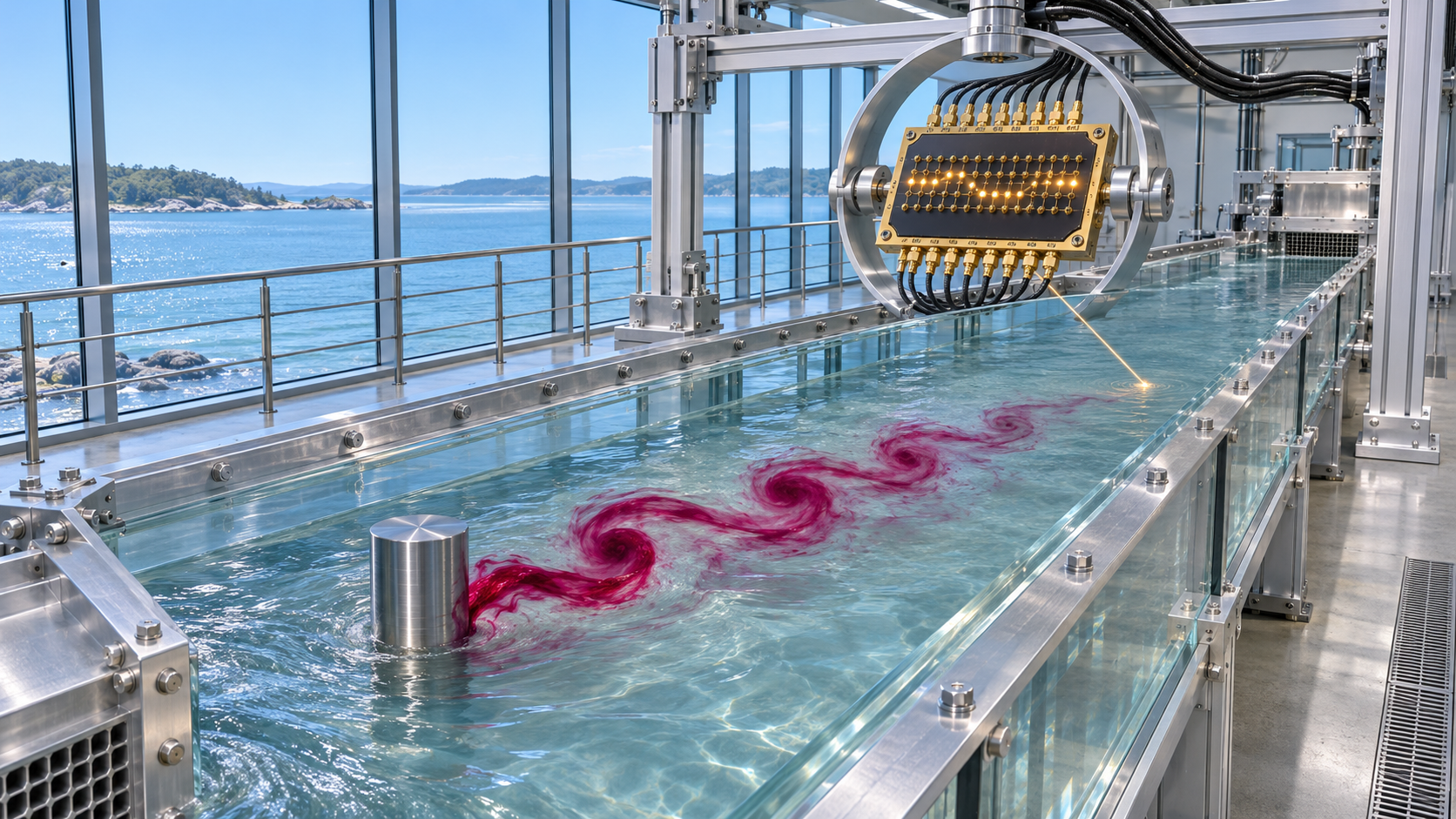
QodeX Quantum, NSWC Panama City, NVIDIA and RTX BBN Forecast a 33,824-Cell Cylinder Flow on 26 Qubits and Gray-Scott on 52 Qubits, arXiv 2611.10351, 7 November 2026: TRL 3
Erik Connerty, Jonathan Eastridge, Taylor Patti, Gerasimos Angelatos and Ethan N. Evans of QodeX Quantum, Naval Surface Warfare Center Panama City Division, NVIDIA and RTX BBN posted to arXiv on 7 November 2026 a quantum reservoir network run on up to 52 qubits of IBM's ibm_boston that forecasts a 33,824-cell cylinder wake at Reynolds number 1000 and a Gray-Scott reaction-diffusion system. Measure-and-reset keeps the circuits running about 24 times longer than the qubits' coherence, and the quantum features cut one-step error by 21 to 43 percent against a linear readout. This post reads the paper as dual-use quantum fluid-dynamics forecasting at TRL 3, explains why the authors themselves claim no speedup over classical solvers, and lists the matched classical baseline, the longer rollout and the 3D flow forecast a program office should wait for.
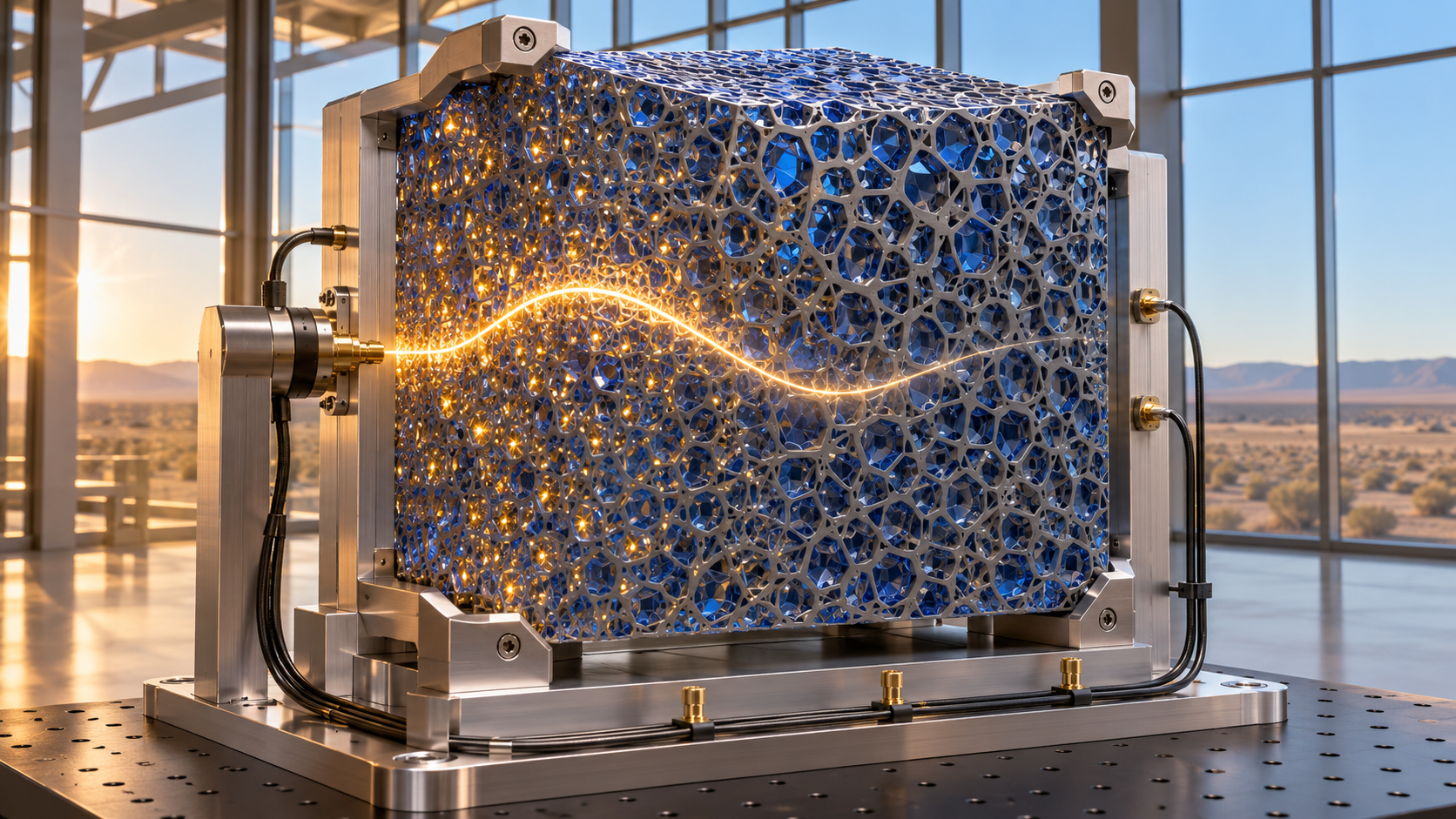
PsiQuantum's Jennings, Korzekwa, Lostaglio and Vaszary Map Where Quantum Elastic-Media Simulation Keeps a Quartic Speedup, arXiv 2611.06975, 4 November 2026: TRL 2
David Jennings, Kamil Korzekwa, Matteo Lostaglio and Tamás Vaszary of PsiQuantum posted to arXiv on 4 November 2026 a 46-page end-to-end complexity analysis of quantum simulation of elastic waves in heterogeneous solids. For a continuum model at fixed volume the speedup is (m+4)/(m+1) in simulation time and 4/(m+1) in accuracy for convergence order m, so smooth materials leave little room and fourth-order convergence loses on accuracy. The quartic quantum advantage survives only for lattice-scale materials, bulk observables that depend on microscopic structure, and geometries loadable through a compact quantum cheese encoding. This post reads the paper as dual-use materials and energetics simulation at TRL 2, sets it beside Livermore's 60,000-simulation explosion-monitoring model, the SW4 seismic code and the 2021 PRX Quantum argument that quartic speedups are the first worth building for, and lists the resource estimate, the classical competitor and the measured-microstructure encoding a program office should wait for.
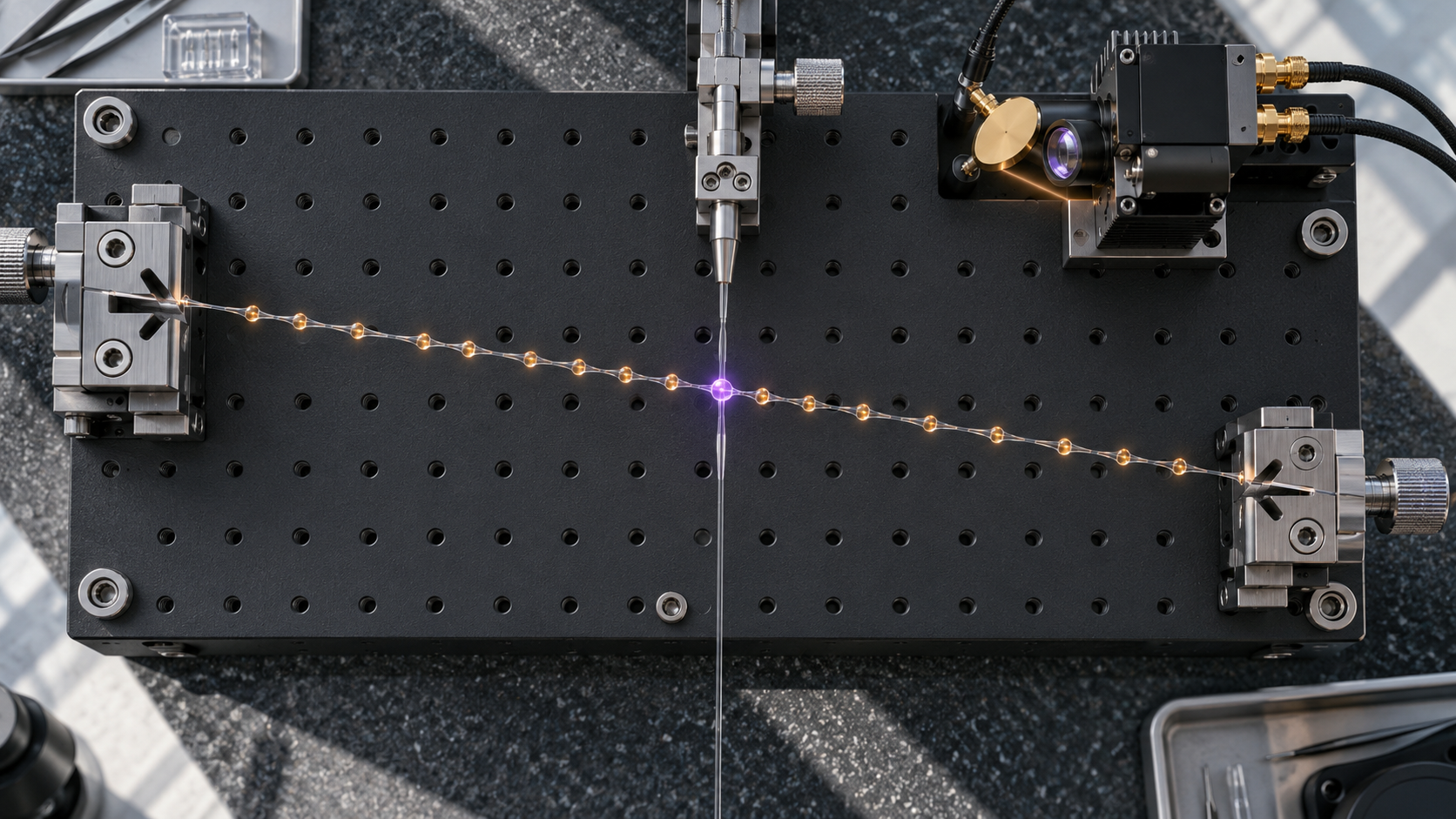
Army Research Laboratory and University of Maryland Chain 21 Laser-Written Microresonators on One Glass Fiber Into a Topological Photonic Simulator, Nature Communications, 29 September 2026, TRL 3
Nathaniel Fried, Dashiell Vitullo and Avik Dutt of the DEVCOM Army Research Laboratory and the University of Maryland wrote 21 microresonators onto one glass fiber with a carbon dioxide laser and used the chain as a topological photonic simulator of Su-Schrieffer-Heeger lattices. In a separate ten-site SSH2 device, localized defects consistent with scattering, possibly from surface impurities, caused no notable edge-mode changes. The Army release adds resilient networks and GPS-free quantum navigation as future uses, which the paper does not test. The result is an open, dual-use TRL 3 bench proof of concept in the simulation pillar.
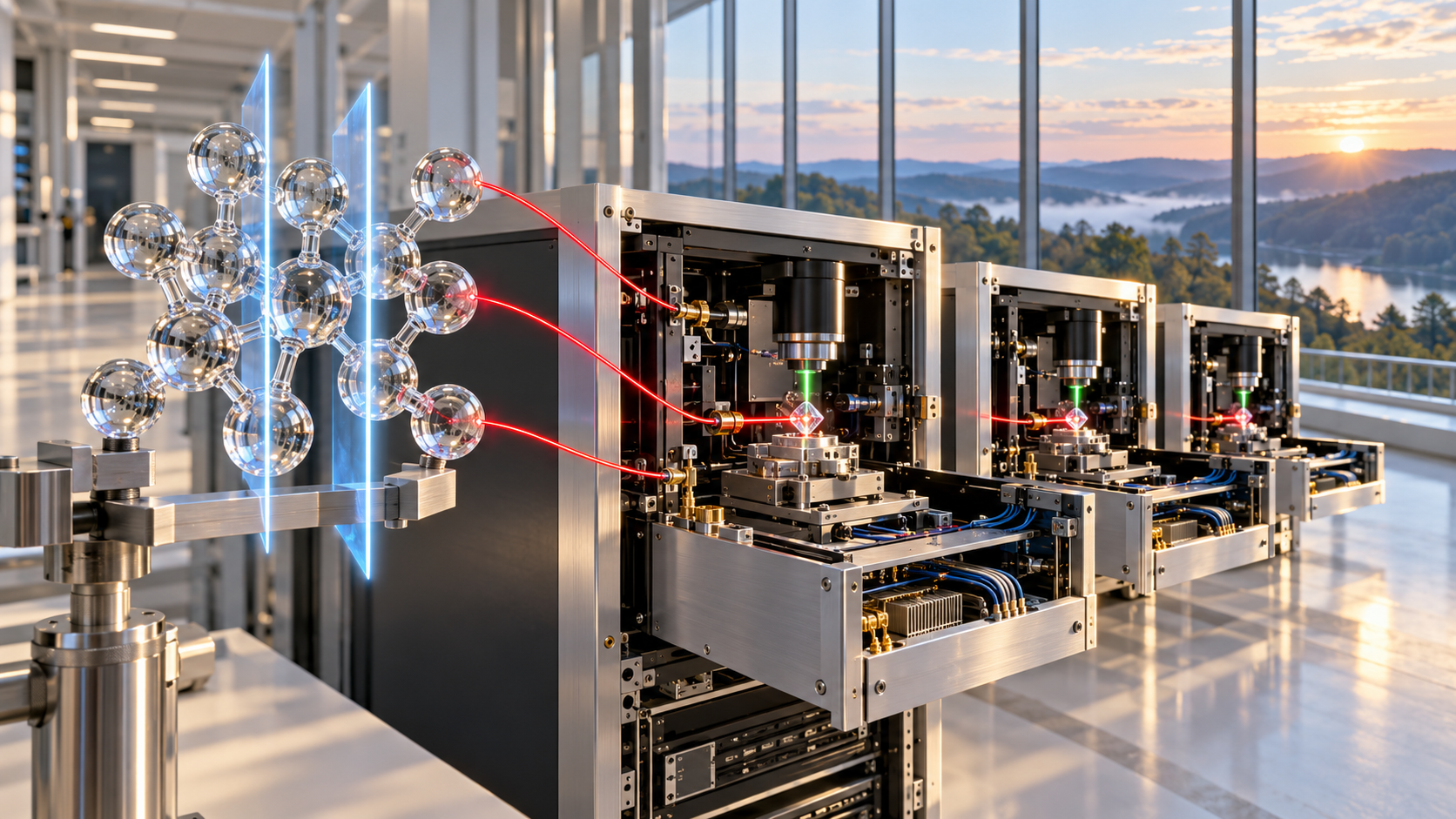
Quantum Brilliance and Oak Ridge Ran Fragment-Based Quantum Chemistry Across Three Room-Temperature Diamond QPUs, arXiv 6 October 2026: 93.6 Percent Parallel Efficiency on Helium Clusters, TRL 3

Lockheed Martin's F-35A Offset With armasuisse Pays for Switzerland's First IBM Quantum System Two at CSCS Lugano, With Alloy Simulation and Quantum Navigation as the Defense Research Slate
IBM and Lockheed Martin turned part of a 3 billion dollar F-35A offset obligation to armasuisse into Switzerland's first IBM Quantum System Two, to be installed at CSCS in Lugano under an ETH Zurich hub announced September 10, 2026 and expected to be operational by the end of 2026. We read the two reserved research projects, quantum navigation and printed-alloy metallurgy, against the one checkable result behind them: a sample-based quantum diagonalization study of methylene on 52 qubits, and we lay out what separates this defense industrial offset hub from a materials pipeline a program office can rely on.
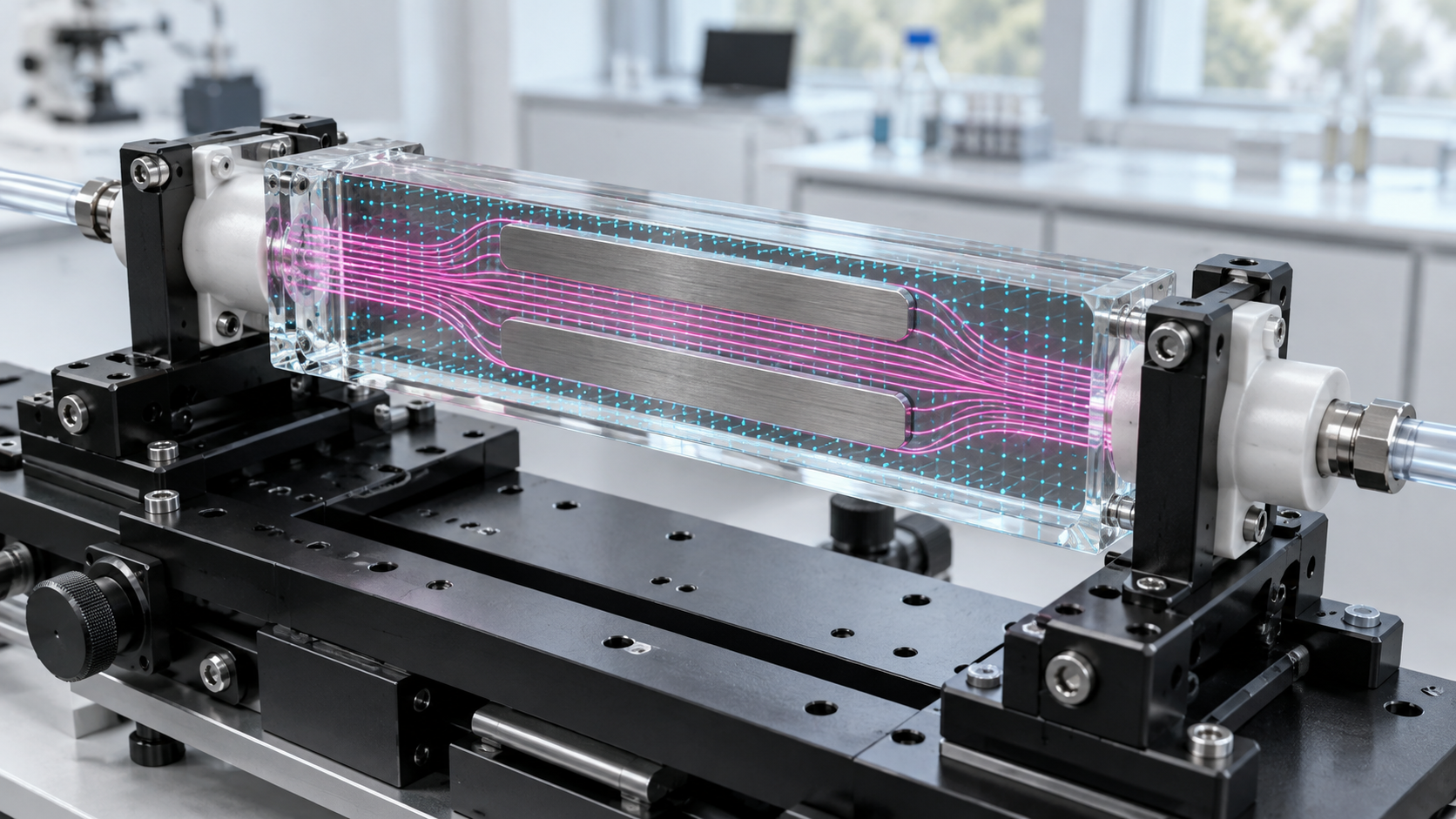
Peking University Puts Solid Walls Into a Quantum Fluid Solver: the Quantum Lattice Boltzmann Paper of 5 September 2026 and Its Emulated Flows at Reynolds 6 to 71
On September 5, 2026, Peking University's turbulence laboratory posted a quantum lattice Boltzmann method that carries solid walls, inlets and outlets inside the quantum computation, the ingredient separating quantum flow demonstrations from real geometry. We read its 23-qubit Poiseuille case at Reynolds 6.37 and its larger emulated flows up to Reynolds 71 as a dual-use step toward computational fluid dynamics on quantum machines, and measure the distance from a noiseless emulator to the turbulent, high-Mach regimes where aerodynamic design actually lives.
Quantum Sampling Reaches a Nucleus Beyond a 768-GB Node's Memory
An IIT Roorkee team produced an unconverged approximate ground-state energy for the exotic nucleus magnesium-32 by sampling configurations from IBM quantum processors after their 768-gigabyte supercomputer node ran out of memory, the first use of sample-based quantum diagonalization on the nuclear shell model. A close look at why nuclear structure is a defense workload, how it feeds stockpile stewardship simulation and evaluated nuclear data, and the accuracy gap still separating a rented quantum sampler from a production weapons code.
A Quantum Fluid Solver Gets an Exascale Reality Check
An Oak Ridge team ran a variational quantum linear solver for fluid dynamics end to end on the Frontier exascale machine and published the honest bill: memory costs cut over a thousandfold, circuit design rules that fail to predict convergence, and every qubit still emulated. For the discipline behind hypersonic flow simulation, it is the first production-scale accounting of what a quantum CFD pipeline actually costs.