
Peptide Space Has a Population Problem
The blind spot begins in immune genetics
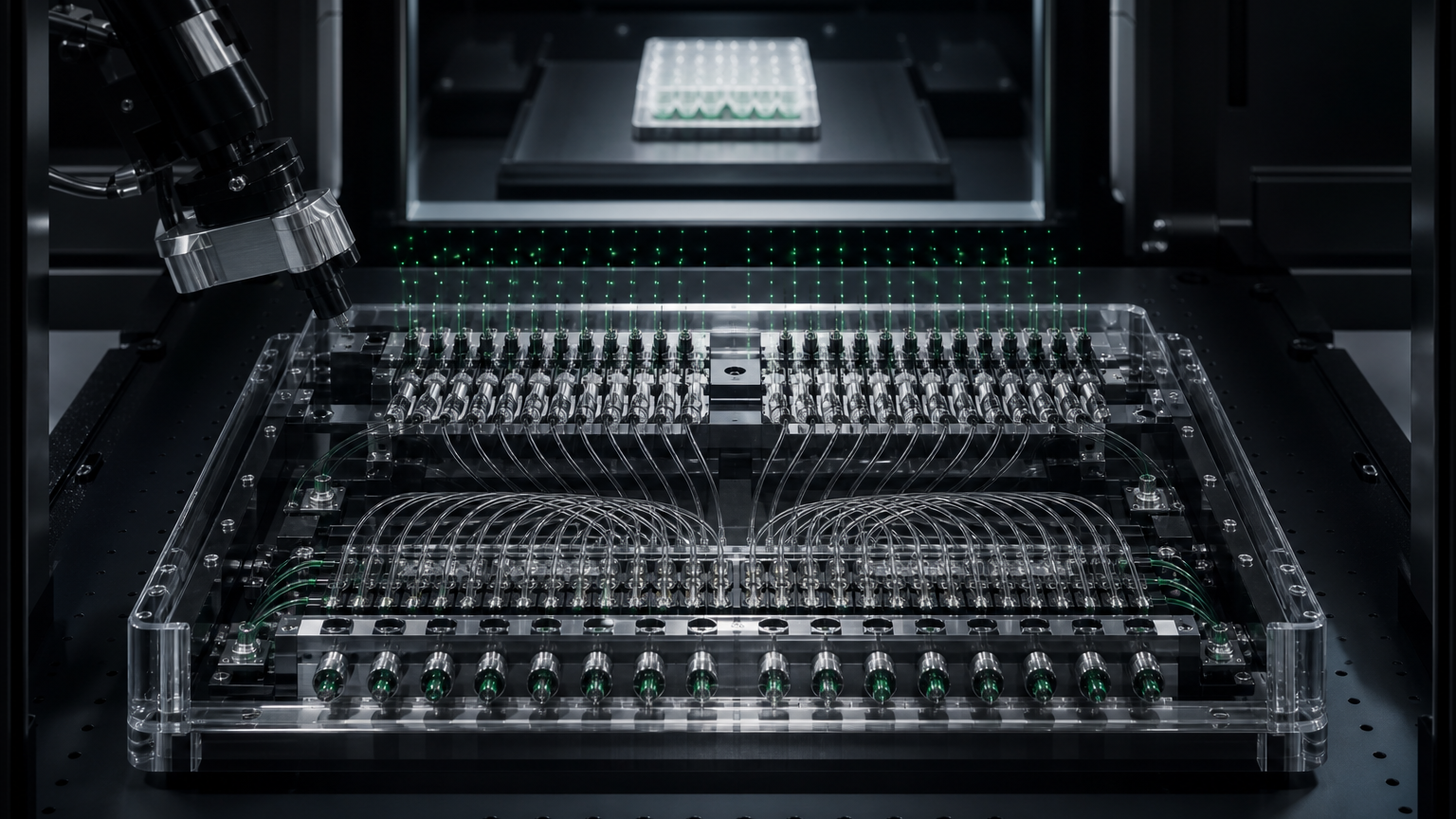
Human leukocyte antigen genes vary sharply across populations, while the datasets used to train peptide-design models are much richer for some HLA alleles than for others. A July 2026 bioRxiv preprint from a DTU-led team asks whether a different source of randomness can help a generative model search the sparse parts of peptide space. The group trained on 105,970 peptide-HLA pairs and compared conventional priors with samples from a 32-mode photonic processor.
Quantum sampling changes the search
The model using a quantum-derived prior produced modestly more predicted strong binders overall, with its clearest gains among alleles where the classical baseline performed poorly. The researchers then synthesized candidates for three understudied alleles and tested whether the peptides stabilized MHC class I complexes in the laboratory. Many did, although one difficult allele also produced failures. The result is biologically interesting because it reaches beyond a simulation while remaining far from a therapeutic claim.
The claim stays narrower than quantum advantage
The authors state that their system remains classically simulable and does not demonstrate quantum advantage. Peptide-MHC binding also does not prove immune activation. The governance significance lies elsewhere: a hardware choice may influence which populations a biomedical model serves well. That connects biomedical AI governance with procurement, data representativeness and the terms under which a supplier’s technical claim enters a future product file.
Six Qubits Meet a Planet’s Worth of Data
A small machine enters a planetary data system
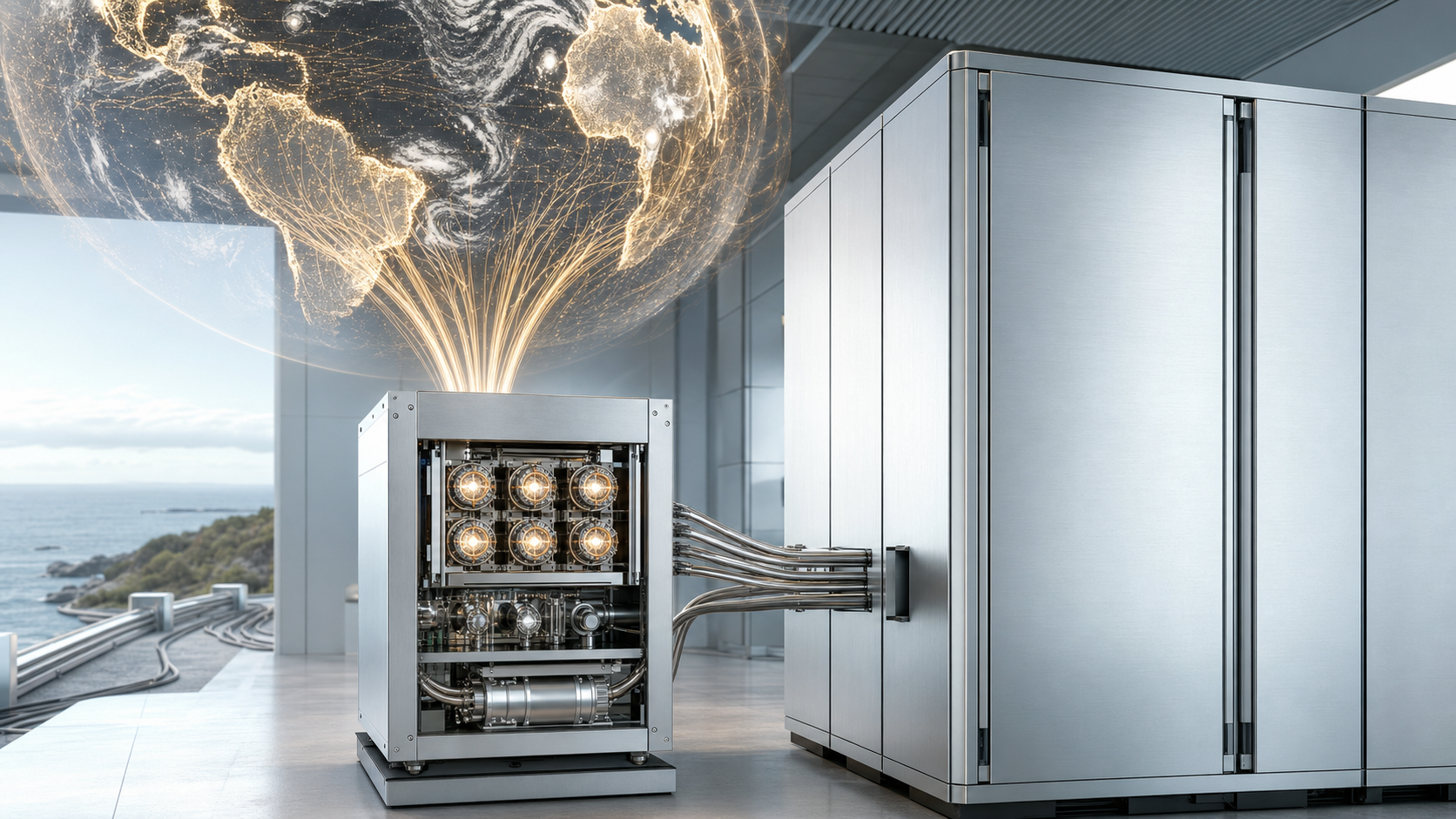
ESA has begun installing Equal1’s Bell-1 at its Earth-observation center in Frascati. The machine has six silicon spin qubits, operates at about 0.3 kelvin and draws 1.6 kW, close to the power demand of one high-end enterprise server. Its scale is modest beside ESA’s data holdings. That mismatch is the point. The agency is testing whether a compact, on-premises quantum computer can become a useful part of a hybrid stack built around classical high-performance computing.
The work begins with bounded use cases
The one-year internal research period is expected to include hybrid quantum neural networks for land-use and land-cover classification and work on satellite mission planning. ESA plans a pilot demonstration by the end of 2026, followed by a workshop with Equal1 after the pilot. The program creates a public test of hybrid quantum computing under real institutional conditions: noisy geospatial data, existing infrastructure, small hardware and applications that matter to climate science and disaster response.
The outcome depends on comparison
Installation alone says little about advantage. Useful results will separate quantum contribution from classical preprocessing, compare the same task against strong classical baselines and disclose error, runtime, energy use and data-movement costs. That is how a six-qubit experiment can improve Earth observation governance even if no dramatic speedup appears. A carefully bounded negative result may save public institutions from scaling the wrong architecture, while a reproducible gain could show where compact quantum hardware belongs inside ordinary data centers.

Which Part of a Network Is Actually Quantum-Resilient?
The label covers several systems
AT&T and Palo Alto Networks announced a Quantum-Resilient SASE Fabric on July 16, 2026. Their account reaches across management traffic, data tunnels, telemetry, branch hardware, multiple underlays and automated policy distribution. That breadth is useful because a network does not become quantum-safe in one place. It also makes the phrase quantum-resilient network harder to interpret. A product name can describe an architecture while leaving deployment state, algorithm choice, fallback behavior and covered traffic to the customer’s configuration.
The cited protocols have defined jobs
The announcement points to IETF RFC 9370, RFC 9242 and RFC 8784. These standards describe mechanisms within IKEv2: multiple key exchanges, an intermediate exchange before IKE authentication that can carry larger payloads, and the mixing of preshared keys for post-quantum security. The intermediate exchange permits IKE-level fragmentation, which can avoid problematic IP fragmentation. These mechanisms support important migration designs. They do not, by themselves, show which algorithms were negotiated on a particular circuit or prove that every control, data and telemetry path received the same protection. TLS 1.3 is also a protocol framework; calling traffic TLS 1.3 does not identify a post-quantum key exchange.
Operations decide what the label means
The useful unit is a live path from endpoint to endpoint, including the branch device, tunnel negotiation, classical fallback, management plane, software version and supplier handoff. Post-quantum network migration therefore connects engineering, procurement, regulated outsourcing and public trust. Hospitals, payment systems and public services depend on networks whose security claims must survive failover, upgrades and mixed infrastructure. The strongest reading of the launch is architectural: major connectivity vendors are preparing PQC controls for ordinary network operations. The unresolved part is observational: what each deployed path negotiates under normal and degraded conditions.

FINMA Writes Mid-2027 Into the Quantum-Safe Finance Calendar
A supervisory date appears
FINMA Guidance 05/2026 recommends that supervised Swiss financial institutions draw up a post-quantum cryptography roadmap by mid-2027. The guidance follows a survey of 60 banks, insurers, asset managers and financial-market infrastructures conducted between November 2025 and January 2026. Only 8 percent reported having a specific roadmap, while 72 percent said they had not planned or implemented measures. The date gives quantum-safe finance a concrete planning horizon without pretending that a cryptographically relevant quantum computer already exists.
The roadmap reaches beyond cryptography teams
FINMA connects the transition to board-approved strategy, institution-specific risk analysis and a continuously updated cryptographic inventory. That inventory reaches encryption in transit and at rest, digital signatures, key management and authentication across internal systems, outsourced functions and services. Long-lived data receives priority because information stolen today may remain sensitive when stronger quantum machines arrive. Hybrid cryptography may help during migration, although the regulator also notes its added implementation complexity.
Outsourcing terms enter the calendar
The guidance makes crypto-agility in outsourcing a commercial issue. FINMA recommends it as a requirement for new software and data arrangements and asks institutions to incorporate it into existing requirements at the earliest opportunity. Responsibility for an outsourced function remains with the supervised institution. The mid-2027 date therefore measures more than the existence of a document: it exposes whether architecture, supplier dependencies and accountability have entered one credible timetable.
A Brain Implant Entered the Insurance System
Four institutions crossed the line
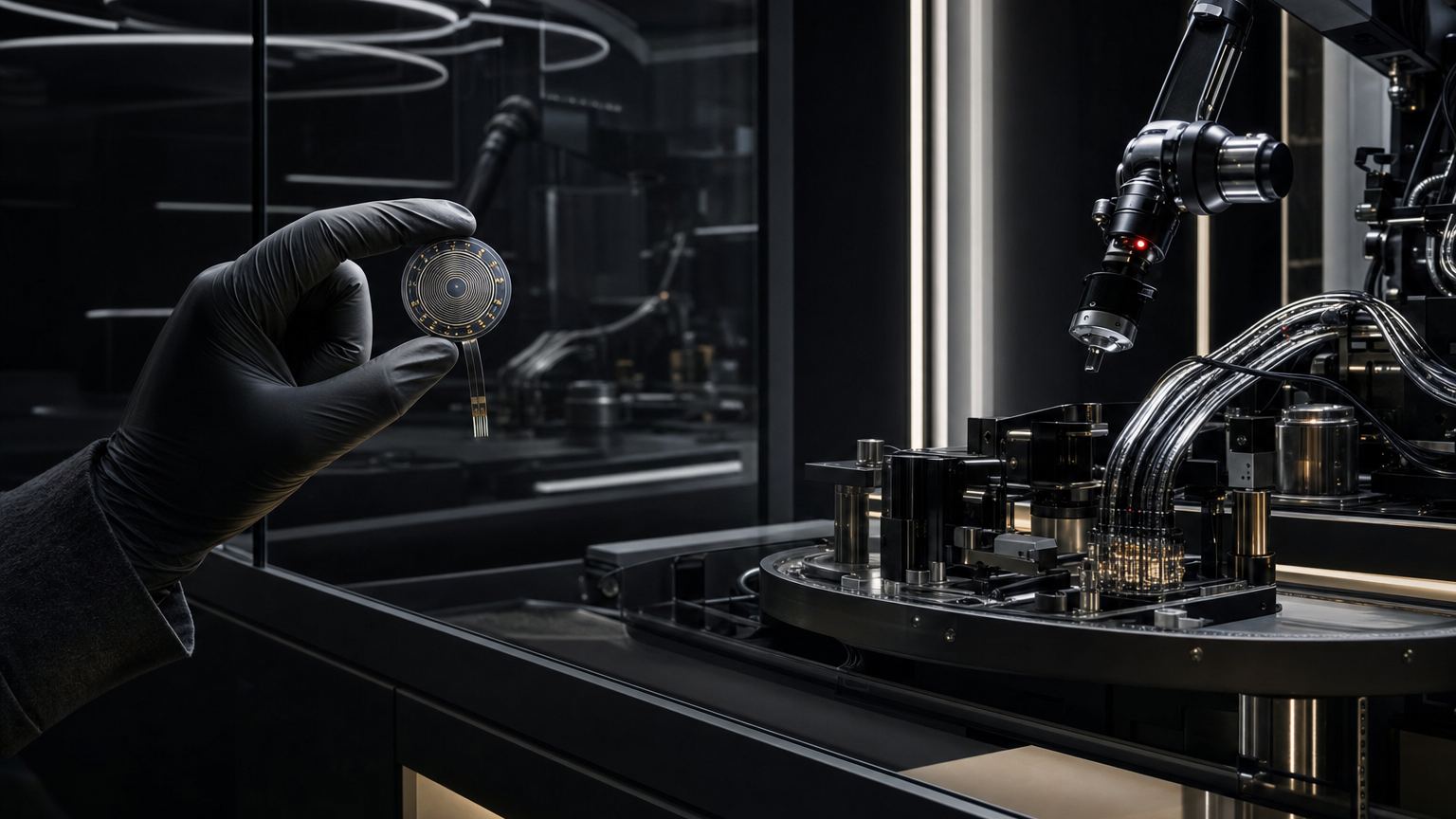
On July 13, 2026, surgeons at Huashan Hospital in Shanghai implanted Neuracle Medical Technology’s NEO device in the patient who underwent the first reported commercial procedure, according to reporting based on a statement from Shanghai’s science and technology commission. China’s National Medical Products Administration had approved the epidural brain-computer interface on March 13. Within four months, the device moved through production, hospital introduction, patient screening and reported inclusion in local commercial health insurance. That sequence makes brain-computer interface governance visible as a chain of institutional decisions, not a single laboratory milestone.
Reimbursement changes the stakes
Once an implant can be prescribed and financed, questions about safety, eligibility, clinical benefit, neural-data control and long-term support become part of ordinary administration. The patient’s ability to reach, grasp and drink independently is the humane stake. The system around the implant decides who can receive that opportunity, which outcomes count, and who remains responsible when hardware, software or clinical circumstances change.
The next competition is institutional
China has linked clearance, surgery and reported insurance access faster than its best-known foreign competitors. That does not settle comparative safety or effectiveness. It does show that the contest now concerns neurotechnology reimbursement, hospital capability, post-market learning and public trust alongside electrode design. UNESCO’s 2025 Recommendation on the Ethics of Neurotechnology adds a global rights framework, while Shanghai supplies a concrete case of technology entering care.
NVIDIA’s 347-Fold Quantum Decoder Result Has a Hardware Footnote
The multiplier has coordinates
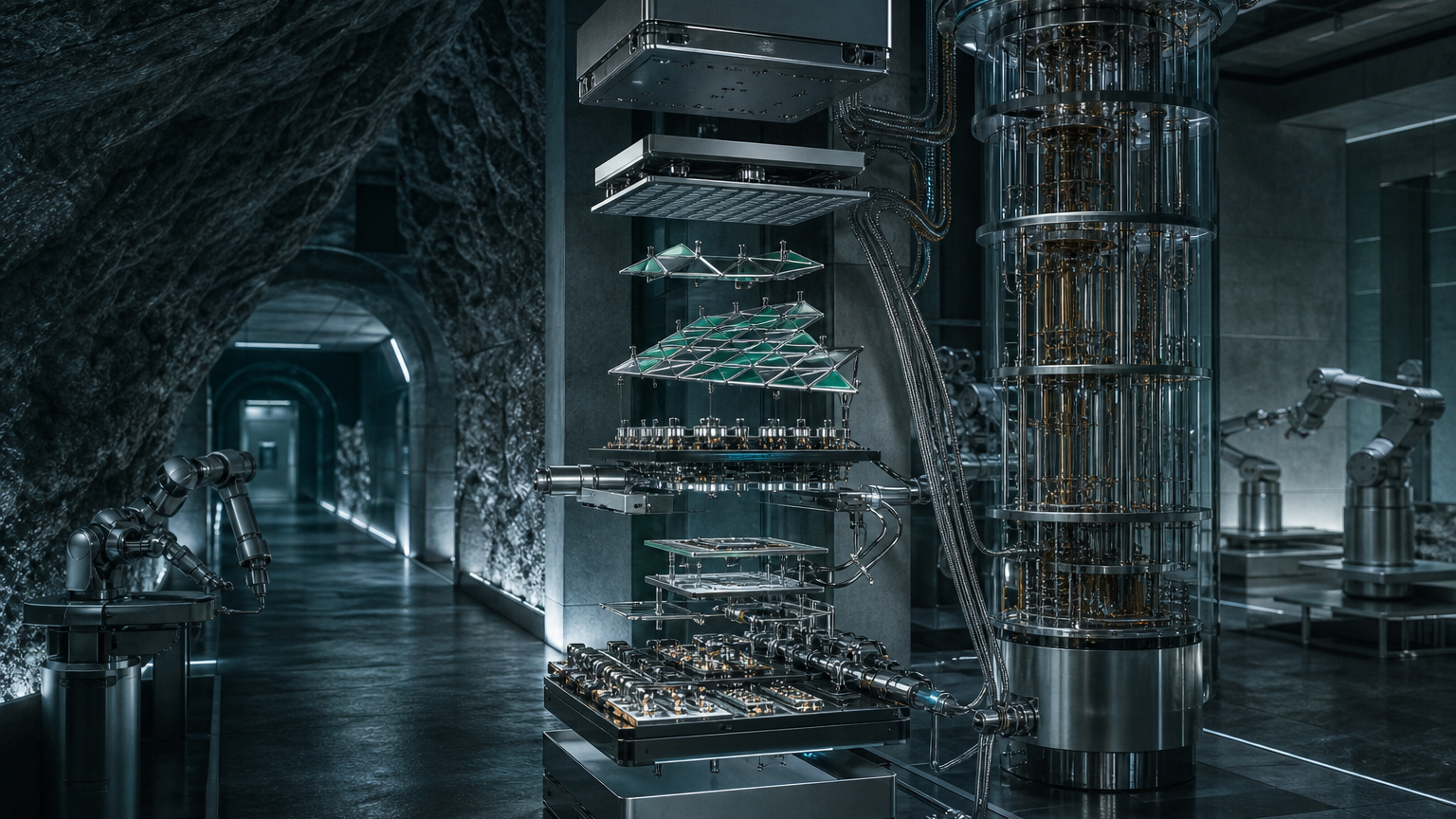
NVIDIA reports that its Ising Decoder ColorCode 1 Fast produced a 347.7-fold improvement in logical error rate and a 7.3-fold runtime improvement over raw Chromobius decoding in one stated benchmark: a distance-31 triangular color code at a physical error rate of 0.3%. The speed comparison also has a hardware split. The pre-decoder ran at FP8 precision on one NVIDIA GB300 GPU, while Chromobius ran on one Grace Neoverse-V2 CPU, using single-shot X-basis measurements. The result gives quantum error correction a striking new performance number with unusually visible conditions.
AI is proposed for the correction loop
The system uses a small three-dimensional convolutional neural network as a pre-decoder. In simulation, it handles many local error syndromes, then passes the remaining problem to Chromobius. NVIDIA presents that architecture as a path toward real-time decoding; the cited work does not report integration with a quantum processor or a live feedback system. Model depth, synthetic training data and hardware-specific noise assumptions shape the reported result.
Governance moves down the stack
NVIDIA has released the model, training recipes and supporting tools as open resources. That helps scrutiny and adaptation, while leaving independent validation and hardware transfer open. For procurement, security and capability forecasting, the proposed AI pre-decoder belongs inside the assessed configuration. A headline multiplier cannot stand alone; its benchmark coordinates and operating conditions determine what the claim can support.

How One Export-Control Table Opened a New AI Compute Route
A legal table changed the route
On July 10, 2026, the U.S. Bureau of Industry and Security moved the United Arab Emirates out of Export Administration Regulations Country Groups D:3 and D:4 and into A:5. The final rule, published July 14, expands access to License Exception Strategic Trade Authorization for the UAE government and approved commercial entities. It also creates license-free access to specified advanced computing items for named government, commercial and U.S.-headquartered AI entities. The change makes AI compute access depend on a country classification and an approved-entity list, not on geography alone.
The entity list carries the control
A:5 status does not create an open channel for every buyer. For STA and the rule's specified license-free advanced-computing treatment, the ultimate consignee and all end users must appear in Supplement No. 8, and the ordinary conditions and restrictions of the EAR still apply. That structure matters commercially. A cloud operator, chip supplier, data-center investor or customer can face a different licensing path when the destination, end user or approved status changes, even if the hardware and service contract stay in place.
Compute now sits beside physical infrastructure
The same rule addresses military items, commercial satellites and spacecraft, and dual-use systems used in oil and gas, desalination and civil nuclear power. Export-control country groups are becoming part of the industrial architecture for AI. They influence who can build capacity, which counterparties can receive controlled technology and how quickly a bilateral political framework becomes a commercial route.

The Certificate Arrives Before the AI Rulebook
Identity is becoming infrastructure
At a border checkpoint, identity and permission are separate decisions. A passport identifies the traveler; another authority decides whether that person may enter. AI agents are approaching the same institutional split. HID Global’s 2026 survey of 300 IT and security leaders in the United States and Europe found that 16% of respondents already use certificates for AI agents, while 34% ranked agent certificates among the three leading PKI trends. That makes AI agent identity an operational layer while legal systems are still working out how existing attribution rules apply to autonomous action and what machine credentials prove.
The weak point is revocation
A certificate can bind a cryptographic key to an identity. It does not define which payment, database, model or patient record the holder may touch. NIST’s zero-trust architecture treats authentication and authorization as distinct controls, and the distinction matters most when an agent changes role, is compromised or exceeds its mandate. HID’s survey found that certificate renewal is much more automated than discovery or revocation. The practical kill switch therefore depends on the least mature part of many certificate estates.
Two migrations meet in one control plane
Public certificate lifetimes are shrinking as major infrastructure providers also accelerate post-quantum migration. The same systems will have to issue short-lived credentials at machine speed and replace the cryptography beneath them. Post-quantum identity governance now connects cybersecurity, AI accountability, procurement and contract attribution. The certificate is becoming part of the answer to who acted, under whose authority, and with which technical protection.
When a Quantum Computer Misses the Temperature
A thermometer for simulation
Gibbs states describe how a physical system distributes itself across energy levels at a given temperature. They sit beneath work in chemistry, materials science, thermodynamics and some forms of machine learning. A newly published experiment on IonQ trapped-ion hardware prepared these states with a hybrid quantum-classical method and then measured how closely the machine matched the target. The result gives quantum simulation fidelity an unusually intuitive test: did the computer reproduce the temperature it was asked to model?
The machine returned a warmer answer
The researchers found that fidelity fell as the target became colder and as the simulated system grew. More strikingly, a state prepared for one inverse temperature often resembled a warmer state more closely. Hardware noise had a thermodynamic signature. That matters because a small temperature mismatch can change which molecular configurations or material phases appear probable, even when the circuit ran as designed.
Why the mismatch travels
The paper is a compact study, not a claim of scientific advantage. Its institutional importance lies in how clearly it connects physics to assurance. A useful quantum model validation regime will need to report the distance between requested and realized conditions, the architecture used, and how error grows with scale. The same discipline belongs in scientific procurement, pharmaceutical research governance and public claims about useful quantum machines.
The Quantum Contest Moves Upstream
The contest before the computer
Two July funding calls reveal where the quantum race is moving. Google Research is asking universities for algorithms that can work within the severe limits of early fault-tolerant machines. Germany’s Fraunhofer INQUBATOR is asking companies to bring real problems in medicine, cybersecurity, insurance and automotive logistics into a ten-month testing program. Together, the calls turn early fault-tolerant quantum computing into a contest over which questions deserve scarce research time.
Why use-case selection matters
A grant call looks administrative, yet its categories can shape laboratories, patents, skills and public investment. The winning proposals will help define what counts as a plausible quantum application before the hardware is mature enough to settle the argument. That gives program design an unusual form of market power: it can direct scientists toward particular social needs while giving firms an early view of technical limits.
The public bargain inside the funding
The strongest proposals will connect resource estimates to human consequences. A medical optimization claim carries different duties from a materials or logistics claim because errors, access and accountability fall on different people. Quentir reads the two calls as a test of quantum industrial policy: whether public and corporate sponsors can reward intellectual ambition without allowing speculative use cases to harden into procurement assumptions.

America Begins Counting AI in Hours
A new federal measurement question
On 10 July 2026, the U.S. Bureau of Labor Statistics opened public comment on proposed artificial-intelligence questions for the American Time Use Survey. The notice is modest: a Paperwork Reduction Act consultation, open through 8 September, on a new information collection. Its importance lies in the object being measured. The survey may begin recording how AI enters paid work and daily life, bringing AI labor measurement into a national time diary that policymakers, economists and researchers already use to study work, care, leisure and inequality.
Why a time diary can change policy
AI adoption figures often count licenses, firms or self-reported use. Time-use data can reveal a different layer: where the technology changes minutes and hours, who gains them, which tasks absorb new checking work, and whether productivity claims survive contact with daily routines. Those distinctions affect labor policy, privacy, economic statistics and the credibility of claims made by employers and vendors.
Quentir’s reading
The proposal also creates a design test. A survey question can miss informal use, unpaid correction, hidden monitoring or the difference between assistance and substitution. This analysis places the BLS notice in the longer history of national time diaries and connects it with AI productivity governance. Good policy will depend on definitions that remain legible as tools, jobs and workplace practices change.

Can a quantum computer stay calibrated long enough to matter?
Why calibration now matters
An 8 July 2026 Nature paper on reinforcement-learning control of quantum error correction makes a quiet but important point: useful quantum computers cannot keep stopping to tune themselves. They need physical control that can adapt during computation, because the relevant workloads may run for days or months. That turns quantum error correction from a laboratory threshold story into a runtime governance question, with practical consequences for anyone tracking how fast cryptographically relevant capability is moving.
The security connection
The same runtime issue matters for post-quantum planning. If powerful quantum computers arrive through better control, memory and classical-control hardware rather than through a sudden headline qubit count, migration timelines will look different. The article reads the Nature result alongside ETH Zurich’s mechanical-memory architecture, HiSEP-Q 2 control hardware and an ETSI GS QKD 014 VPN prototype, all pointing to the hidden machinery beneath public roadmaps.
Quentir’s read
The practical signal is that post-quantum readiness should watch the control layer, not only algorithm standards or vendor roadmaps. Calibration, drift, memory and standards integration now sit close to the civic problem: whether encrypted medical, financial, identity and public records can remain trustworthy while quantum capability improves beneath the policy surface. This is a technical story, but it is also a public-trust story.
What Quantum Technologies Mean for American Values
Quantum technology as a values test
Quantum technologies will reshape medicine, energy, security, and the economy within our lifetimes. This post reads quantum computing, sensing, networking, post-quantum cryptography, and quantum-AI as a test of American values: privacy, verifiability, open knowledge, shared prosperity, and democratic leadership. The question is whether free societies build those values into the systems early enough, while standards, procurements, research programs, and security migrations are still taking shape.
Preparing for Q-Day
Q-Day is the moment when a cryptographically relevant quantum computer can break the public-key encryption that protects hospitals, banks, grids, government systems, lawyers, journalists, dissidents, and ordinary private life. The point is not panic. The point is preparation before the deadline arrives, through post-quantum migration, cryptographic inventory, and public institutions that make the record visible.
The Genesis Mission and the public record
The piece connects the Genesis Mission, NSF Project Triad, Executive Orders 14412 and 14413, OMB M-26-15, Korea’s finance-sector PQC pilot, and the ASML supply-chain question into one civic argument: the free world needs truth-grounded intelligence before quantum capability hardens into infrastructure. The conclusion points both boards and citizens toward preparation, open briefings, and support for keeping Quentir’s public intelligence work accessible, in plain language and with sources readers can check.

Korea turns post-quantum migration into a finance-sector rehearsal
Why the Korean pilot matters
South Korea’s Ministry of Science and ICT and KISA have moved a 2026 finance-sector PQC pilot into execution with named delivery roles, a defined end date and a consortium tied to Hana Card. That makes the Korean file useful beyond Korea: it shows how post-quantum migration starts to look once a government treats the transition as an operational conversion project, with the standards discussion already in the background.
The practical signal
The important detail is the hybrid conversion model. The project is described as a step-by-step transition intended to avoid service interruption, with key-management, cryptographic modules, diagnostics and financial authentication all in scope. For banks, payment firms, fintech platforms and long-lived data holders, this is a rehearsal for the contract questions now arriving behind the technical work: who owns the migration duty, what counts as adequate crypto-agility, and how a supplier proves that a service can move without breaking customer operations.
Quentir’s read
This post connects the Korean finance pilot with recent U.S. federal PQC deadlines, NSF Project Triad and the wider move from quantum programs to sector-level execution. The core governance object is crypto-agility in finance: inventories, key lifecycles, authentication flows and supplier warranties that can survive algorithm change.
The Machine Behind the Machine: ASML and America’s AI-Quantum Industrial Future
The chokepoint inside the chip race
ASML sits at the point where AI ambition, semiconductor capacity, quantum hardware, export controls and supply-chain diplomacy converge. Its EUV and High-NA EUV systems are not ordinary factory equipment. They are the physical instruments that make the most advanced logic and memory roadmaps manufacturable, and they depend on a dense international supplier base that cannot be rebuilt quickly by statute or slogan.
Why America should read ASML operationally
For the United States, the practical question is broader than whether new fabs are announced in Arizona, Ohio, Texas or New York. The harder question is whether the American semiconductor revival has enough lithography capacity, service depth, trained operators, metrology discipline, export-control coordination and upstream component resilience to turn capital expenditure into durable yield. ASML’s current record shows both the promise and the fragility: first High-NA installation in 2024, Q1 2026 net sales of €8.8 billion, and a 2025 supplier base of about 5,100 companies.
The strategic outlook
This special edition treats ASML as a strategic instrument. Control of advanced lithography shapes the pace of AI accelerators, high-bandwidth memory, advanced packaging roadmaps, silicon photonics, cryogenic control electronics and eventually scalable quantum devices. The United States does not need to own ASML to benefit from it. It does need a mature policy for the semiconductor supply chain in which tools, talent, export licenses, allies and service logistics are treated as one system.
When an AI accuracy claim becomes the product
The new enforcement surface
The Federal Trade Commission's 7 July 2026 proposed policy statement puts a sharper edge on AI marketing. It says the deception prong of Section 5 can reach companies that market artificial intelligence systems by suppressing or manipulating accuracy information. That makes AI accuracy claims part of the product itself, not a harmless footnote in a sales deck.
Why it matters now
The timing is awkward for vendors. AI tools are moving into hospital price transparency, prior authorization, software coding, drug-safety prediction and quantum engineering at the same time regulators are asking how outputs can be compared, audited and trusted. A claim that a system is accurate, current, clinically useful or quantum-ready now has to survive the same kind of scrutiny as the model's visible output.
Quentir's read
This analysis reads the FTC statement alongside the same day's health-payment rulemaking and quantum-toolchain sources. The practical issue is AI marketing liability: whether the promised accuracy was measured against the right version, use case, data source and user decision. For buyers and suppliers, the weak spot is often the sentence that looked safest because it sounded general, especially when product teams reuse the same line across sectors and versions.
The quantum sovereignty stack has a contract layer
Why this matters
Quantum is starting to move through a different commercial channel. The newest signals from Australia, Canada, China, Hong Kong and NIST point away from one universal quantum market. They point to national compute capacity, strict local data rules, secure communications work and supplier promises that have to survive procurement review.
The operating question
The useful question is no longer whether quantum computers will eventually be faster. For regulated sectors, the question is where sensitive workloads may run, who owns the model or sensor output, and whether the cryptography around the system can rotate when NIST, NSA or a supervisor changes the baseline. That is a quantum sovereignty question as much as a technical one.
Quentir's read
This post reads the week as a chronology: Queen's and Sherbrooke linking sovereign AI compute to quantum and PQC, NIST sharpening crypto-agility practice, Archer buying IonQ access for an Australia-facing stack, and HKMA warning that AI finance stress and quantum threats now belong in the same supervisory conversation. It also separates standards movement from supplier storytelling: CSWP 39 is a governance source, while Archer's fraud-detection result is an early benchmark that still needs scoping. The commercial object is contract-ready quantum governance.
Quantum hardware claims need error budgets now
Why accuracy is the signal
Quantum hardware news is starting to sound less like a race for the largest device and more like a test of usable performance. Quantinuum’s Helios reporting, Fujitsu’s Kawasaki roadmap and new quantum-sensing claims all point in the same direction: buyers will need to ask what accuracy, repetition rate, connectivity and operating context sit underneath each quantum hardware claim.
The procurement gap
That shift matters because the commercial story has moved faster than the contract language around it. Fujitsu says 96% of surveyed executives expect quantum computing to deliver value, while only 58% are discussing strategy. Ohio State’s NSF-backed sensing testbed and Xdotz’s industrial current-sensing demonstration add another layer: quantum systems are moving toward energy, biomedical, finance and industrial settings where ordinary warranties and liability clauses may not describe the new technical risk.
Quentir’s reading
The useful unit is an error budget for quantum adoption: how many operations, measurements or sensor readings are needed before a claim becomes operationally meaningful, who validates the number, and which contract term carries the duty when the system is embedded in a workflow. That is a different question from excitement about qubits. It is where standards, procurement and IP allocation begin to meet.
What Counts as Quantum-Safe After the Department of War Strategy?
The new line around quantum-safe
The Department of War post-quantum cryptography strategy, reported on 1 July 2026, does more than set a deadline. It narrows what can count as quantum-safe security for defense networks: native asymmetric PQC and CNSA 2.0 paths are in; QKD, quantum networking, non-local randomness, proxy-only overlays, simple key-size increases and symmetric pre-shared-key workarounds are out.
What Q-Day means
Q-Day is the point at which a cryptographically relevant quantum computer can break widely used public-key cryptography. The practical risk starts earlier, because long-lived data, signatures, certificates and authentication records can be harvested now and attacked later. That is why the strategy treats Q-Day as a migration horizon rather than a calendar prediction.
Why the exclusions matter
That exclusion list changes the procurement conversation. A vendor cannot rely on a quantum-labeled channel, a gateway wrapper or a future network claim if the protected system still depends on legacy cryptography underneath. The useful question becomes simpler and harder: which primitive protects which data flow, which system owner accepts the migration duty, and which deadline governs retirement of the old path?
Quentir’s reading
The strategy also travels beyond defense. It specifies NIST, IETF and NATO cooperation on crypto-agility, while OMB implementation guidance pushes agencies toward inventories, provider coordination, automation where feasible and 120-day migration planning. For contractors and cloud suppliers, PQC migration governance is becoming less about announcing a quantum program and more about proving that old algorithms can be found, replaced and kept out.

Quantum Sensing Is Entering the Acquisition File
Why the sensing signal matters
Project Farseer, reported on 1 July 2026, moves quantum sensing and timing from capability talk into a procurement-shaped record. The reported $200 million Defense Innovation Unit solicitation asks for dual-use hardware under an OTA path, with prototype evaluation in three to nine months. That makes quantum sensing procurement a near-term governance object rather than a distant research theme.
What buyers should notice
The sharper detail is not the headline budget. It is the mix of SOSA requirements, performance testing, and foreign-component and investor disclosure tied to 15 C.F.R. § 791.4 countries. Quantum devices are starting to carry the same questions that already follow chips, cryptography, cloud infrastructure and advanced sensors: who built the component, who funded the company, where the data flows, and how a promising prototype becomes supportable hardware.
Quentir’s reading
The useful frame is dual-use supply-chain assurance. A quantum timing or sensing device can be brilliant in the lab and still weak as an acquisition asset if its component chain, ownership structure, maintenance path, export-control exposure or test conditions cannot be explained. That is where quantum governance becomes physical: not a principle on a slide, but a file that can survive procurement review.