Sorbonne and Edinburgh Authenticate Entanglement-Based QKD With a Hybrid Entangled Physical Unclonable Function and No Pre-Shared Key, Accepted by Physical Review Research, 1 November 2026: TRL 3
Nicolas Laurent-Puig, Mina Doosti, Adriano Innocenzi and Eleni Diamanti published in Physical Review Research on 1 November 2026 the first experimental entanglement-based QKD session authenticated by a hybrid entangled physical unclonable function, with no pre-shared secret between the parties. The Paris bench ran a telecom-wavelength Sagnac source through 50 dB of attenuation at a quantum bit error rate below 0.6 percent, spending 237 authentication bits per session. This post reads the result as defensive quantum key distribution capability in the networking pillar, explains why the emulated PUF and attenuator channel place it at TRL 3, sets it against the NCSC objection that QKD provides no authentication, and lists the sealed physical unclonable function, the device-custody threat model and the outside evaluation a communications office should wait for before relying on hardware-authenticated key distribution.
South Korea's Science Ministry Expands the Open Quantum Testbed Into a Nationwide QKD Network by 2028, 21 October 2026: KT and SK Broadband, Overseas Hubs in Singapore, Poland and Bulgaria
South Korea's Ministry of Science and ICT opened its Open Quantum Testbed Advancement and Expansion Project on 21 October 2026: a nationwide quantum key distribution test network reaching Daegu, Gwangju, Busan and Gangwon by 2028, run by KT and SK Broadband consortia on 7.4 billion won in 2026, with overseas hubs linking Singapore, Poland and Bulgaria. The release pairs QKD on short sections with post-quantum cryptography on the long international haul, and KT adds a wireless QKD target of 15 kilometers. This post reads the program as a defensive networking capability: what it would let a Korean agency do, who gains, and which milestones a buyer should ask for before 2028.
CNR-INO, QTI and the Italian Space Agency Simulate Mid-Infrared Free-Space Quantum Key Distribution in Advanced Quantum Technologies, October 2026: 10 km Through Fog Against 7.5 km at 1,550 nm, TRL 2
DRDO Tests a Quantum Key Distribution Platform on the Live Network of the Proof and Experimental Establishment at Chandipur, 14 October 2026, to Secure Artillery and Armored Weapon Trial Telemetry
Airbus Quantum-Secure Tactical Communications Trial in Malta, 10 and 11 September 2026: Agnet, Telsy QKD, Stormshield Encryptors and Merqury Key Management, and What a Program Office Still Needs
Brazil's Army Inaugurated a 12 km Quantum Key Distribution Link Between CITEx and the Ministry of Defense on 30 September 2026: What the Rede Quandanga Demonstration Shows and What It Leaves Open
Cyprus University of Technology Reports 99.1 Percent Mean Scheduled-Link Availability Across a Seven-Node QKD Network Over Existing Nicosia Fiber for 73 Days, arXiv 21 September 2026
Seven researchers at the Cyprus University of Technology deployed a seven-node quantum key distribution network over 42 kilometers of existing government fiber in Nicosia and ran it for 73 days, generating 119.4 gigabits of secret key with 99.1 percent mean scheduled-link availability using commercial QKD units, encryptors and a proprietary key manager. We read what a trusted-node ring joined to a second cluster by one optical switch lets a government do, why the posture is defensive, and why the publication's limited implementation and audit evidence stands between this metropolitan QKD network and independent assessment by a program office.
DAS Photonics' Faint Pulse Source Passes Space Qualification for ESA's QKDSat, Europe's Satellite Key Distribution Mission
The European Space Agency confirms that DAS Photonics completed the ECSS qualification campaign of the Quantum Faint Pulse Source for QKDSat and delivered the engineering model to Redwire Europe. We read what a qualified engineering model means for satellite quantum key distribution, why the trusted-node architecture belongs in every procurement conversation, and where the mission sits beside SAGA and EuroQCI in Europe's secure connectivity build-out.
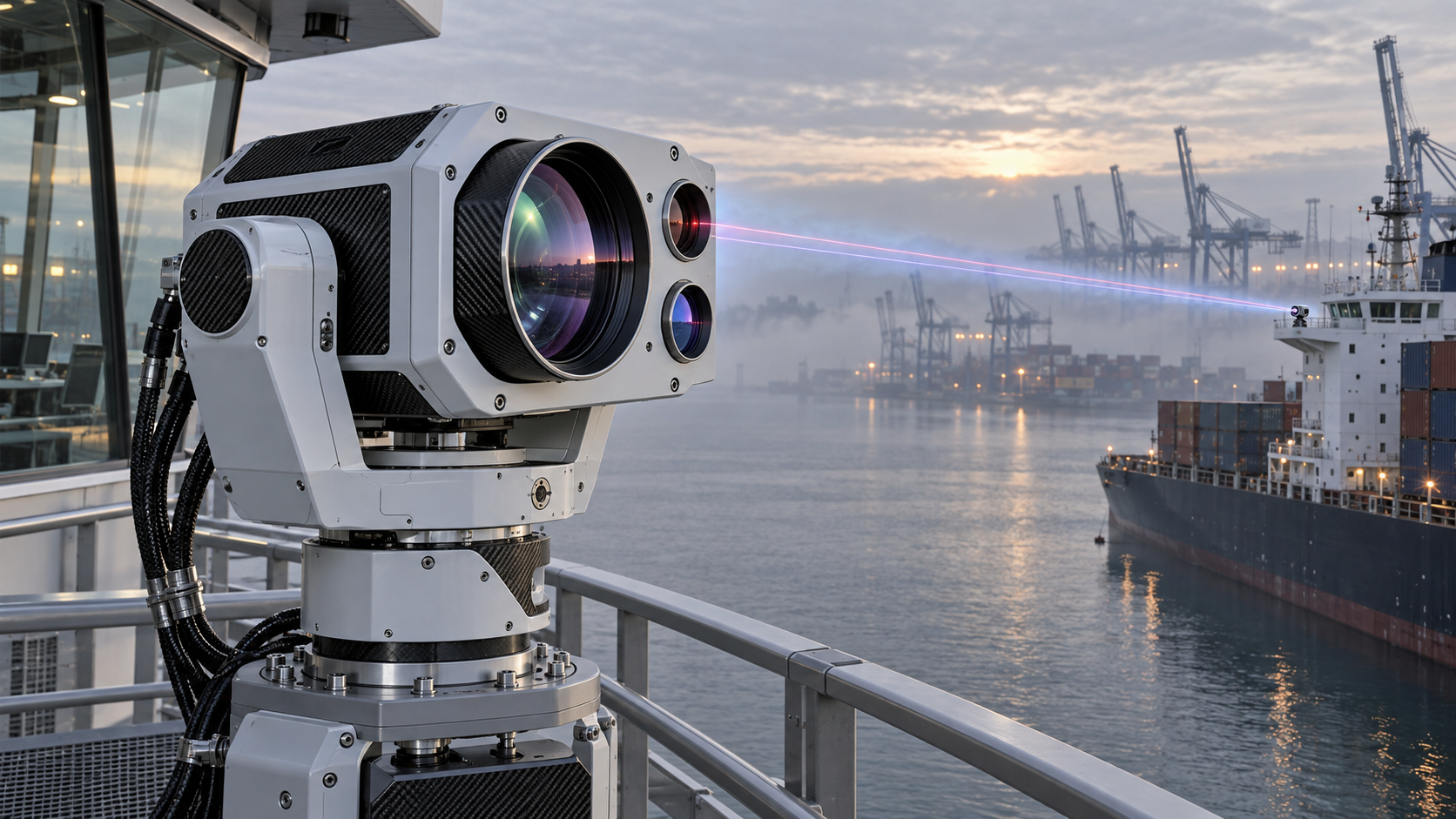
QuINSiDa Lab Demonstration Targets Free-Space QKD, LiFi and Encryption for Harbors, Ships and Fiberless Sites
A six-partner German consortium demonstrates free-space quantum key distribution at two wavelengths running beside LiFi data transport, key management and encryption in one working wireless stack. We read what line-of-sight quantum-secure communications would let a harbor, a ship or a forward site protect, and measure the laboratory result against the BSI position paper, the missing key-rate figures and the field trials that still separate this bench from a pier.
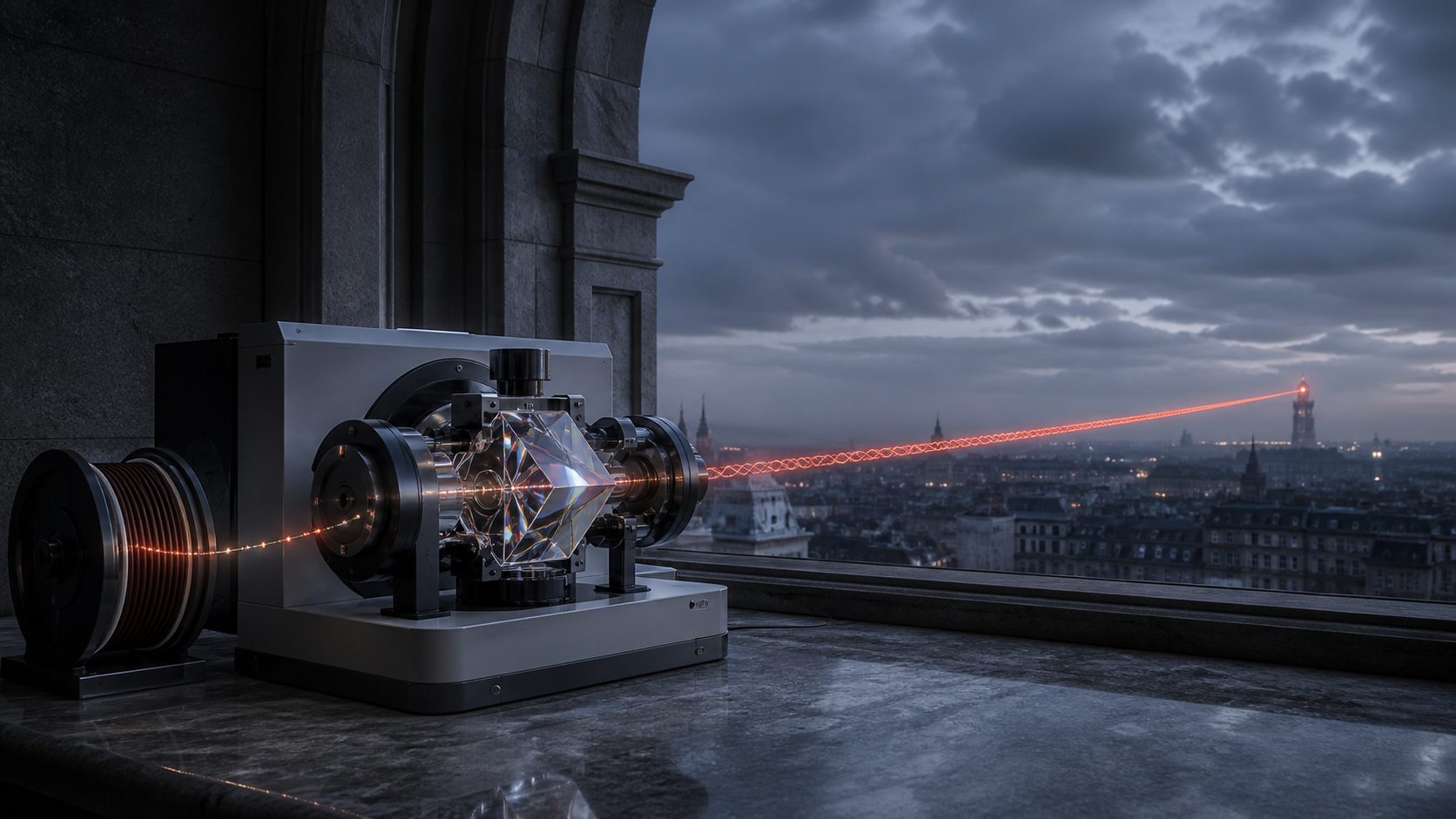
A Quantum Key Crosses From Fiber to Open Air Without a Trusted Node
A Tel Aviv University team, with the Hebrew University and HEQA Security, demonstrated end-to-end quantum key distribution across a hybrid channel: telecom fiber joined to outdoor free-space links of 90 and 750 meters, with the encoding converted all-optically so the junction never reads the key. A close look at what removing the trusted node means for military and critical-infrastructure networks, who gains on each side of the seam, and the engineering and doctrinal distance still separating a rooftop demonstration from a quantum-secure communications procurement.
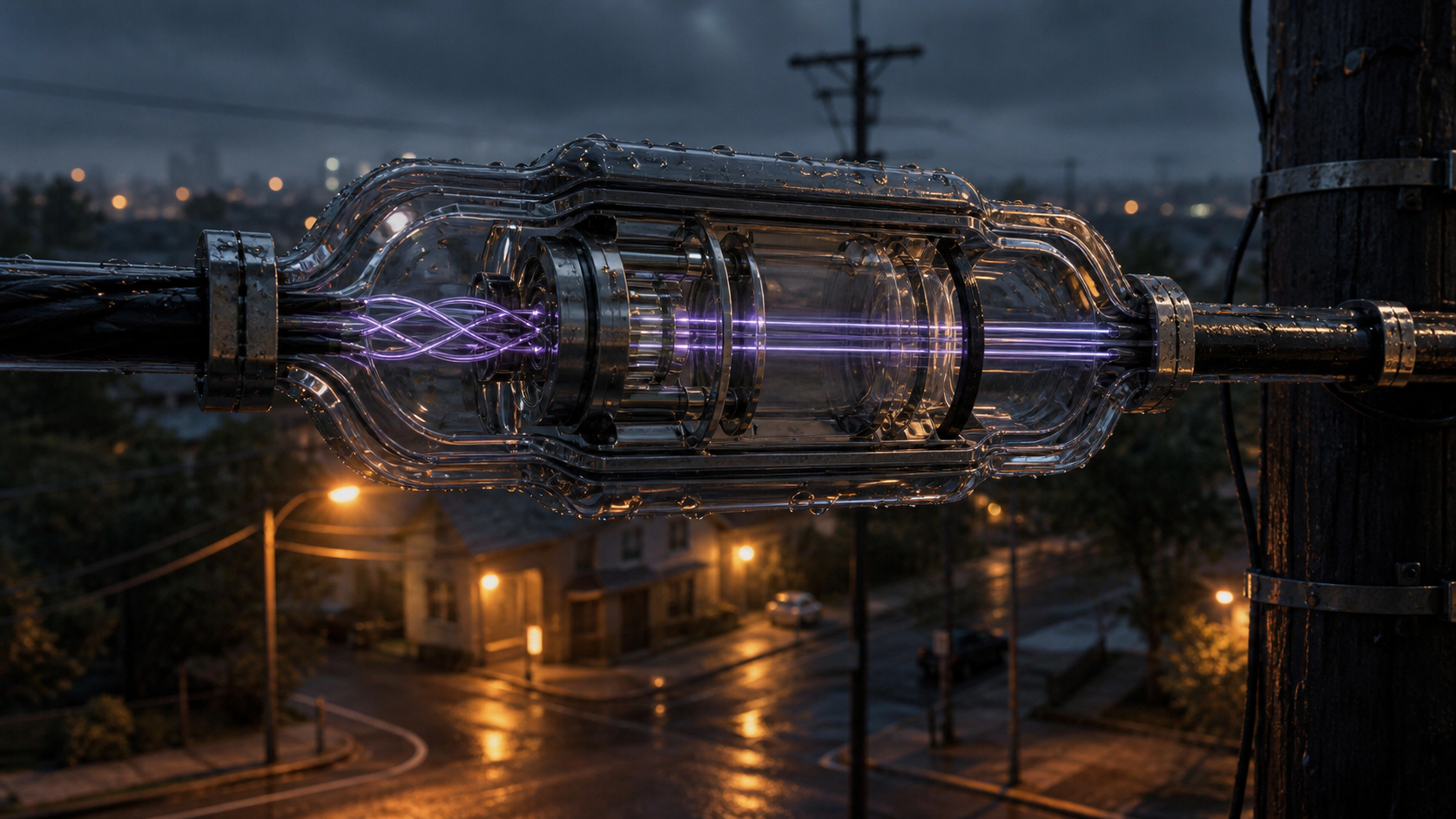
Entanglement Survives 62 Kilometers of Ordinary Aerial Fiber
A NIST, Joint Quantum Institute and Qunnect team sustained entanglement distribution across a 24-hour trial, at 92.8 percent uptime, over 62 kilometers of noisy aerial telecom fiber, moving quantum key distribution links from bespoke builds toward existing infrastructure.