
Daiichi Sankyo Uses QSimulate's QUELO Quantum Chemistry Software in Several Drug Discovery Programs to Predict Binding Affinity: What the June 2026 AWS Account Shows
How Daiichi Sankyo uses QSimulate's quantum chemistry to predict drug binding
Quentir Medicine Monitor
Evidence-based insights for quantum medicine.
Daiichi Sankyo is using software from the Boston start-up QSimulate to bring quantum chemistry into one of the most routine and most expensive judgments in drug discovery: how tightly a candidate molecule will bind to its protein target. The main public account is a Japanese-language blog on the Amazon Web Services site, published on 11 June 2026.
That blog was written jointly by scientists from Daiichi Sankyo's Smart Research Institute II, by QSimulate, and by an AWS solutions architect, and it describes how the company evaluated and then adopted QSimulate's QM-FEP method, a version of free energy perturbation that uses quantum mechanics for the energy of the interaction between drug and protein.
Predicting binding affinity well matters because it decides which molecules a medicinal chemistry team actually makes. Each round of the design, make, test and analyze cycle costs weeks of synthesis and assay work. A computer model that ranks candidates more reliably lets chemists spend that time on the compounds most likely to work, and lets them drop weak ideas before anyone orders reagents.
No quantum computer is involved here. QSimulate's software runs quantum mechanical calculations on ordinary graphics processors in the cloud. The interest for medicine lies in a large pharmaceutical company putting physics-level chemistry into its everyday design work today, years before quantum hardware is expected to take on the same problem.
The Daiichi Sankyo authors explain the problem in practical terms. Their teams already use structure-based drug design and conventional free energy perturbation, which estimates binding by simulating the gradual transformation of one molecule into another inside the protein. That method depends on a classical force field, a fixed set of rules for how atoms push and pull on each other. The authors write that more accurate energy functions are needed, especially for the chemical modalities they expect to grow more complex, where conventional FEP has struggled with non-classical interactions and with covalent drugs that form a chemical bond with their target.
Tanaka Precious Metal Technologies and Nagoya University Develop Lead-Free Silver Quantum Dots for Shortwave Infrared Sensing, With Samples From January 2027
What Tanaka and Nagoya University developed for shortwave infrared sensing
Quentir Medicine Monitor
Evidence-based insights for quantum medicine.
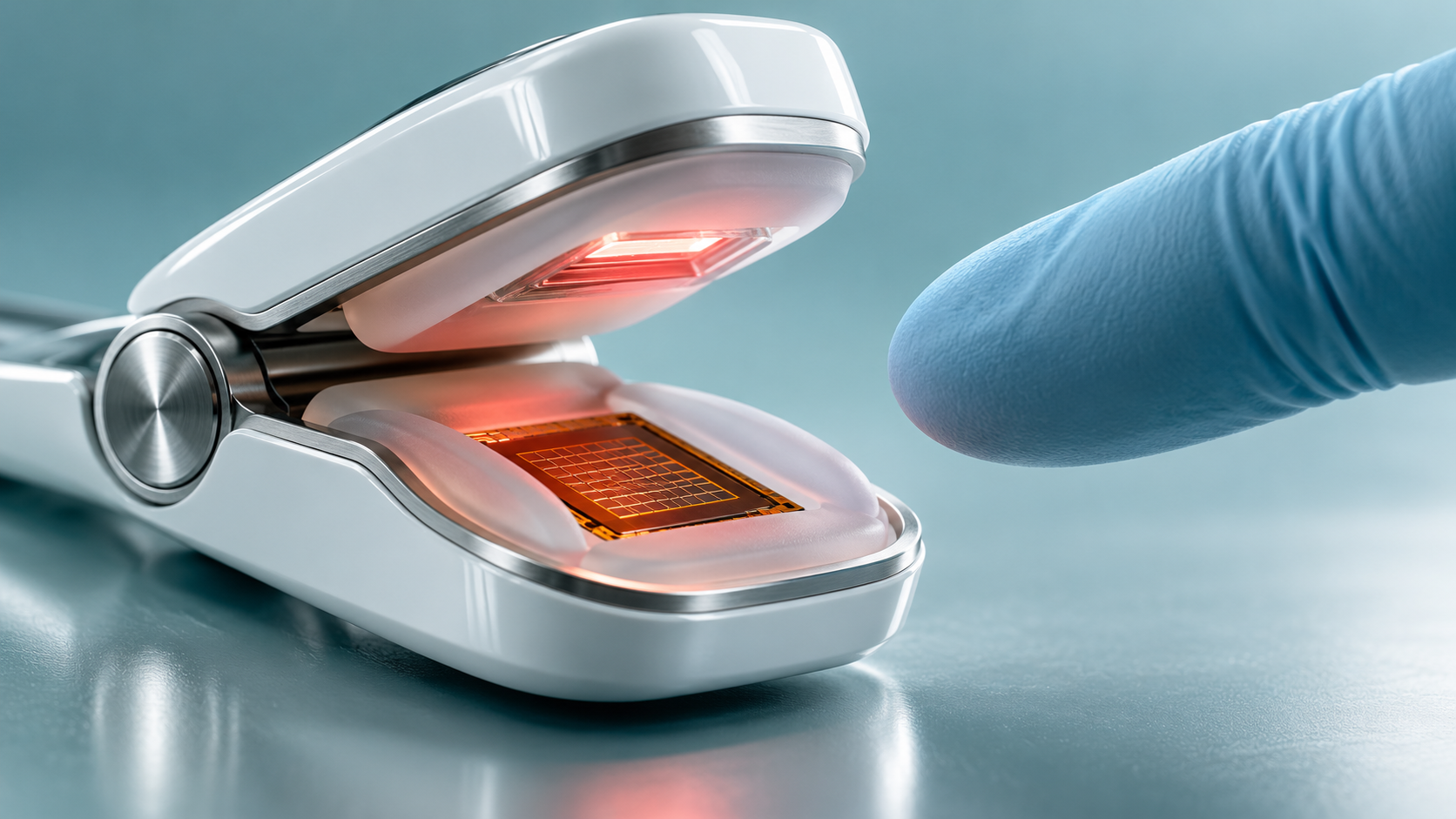
Tanaka Precious Metal Technologies and the Torimoto Laboratory at Nagoya University have developed lead-free quantum dots made of silver, sulfur and tellurium that respond to near-infrared and shortwave infrared light. The company says it will begin supplying samples of the material in January 2027 and expects uses in consumer electronics and in the medical field.
The announcement went out on 20 October 2026. In Tanaka's own test, a simple light sensor that used the silver, sulfur and tellurium dots as its light-absorbing layer reached a maximum external quantum efficiency of 18.4 percent for light between 1,200 and 1,700 nanometers, according to Dellows News' Japanese-language article based on the company's release. The trade journal Compound Semiconductor reported the same figures on 20 October, along with the two conferences where the material will be shown: Okinawa Colloids from 1 to 6 November and nano tech 2026 in Tokyo from 16 to 18 December.
The work addresses a materials problem that has slowed infrared sensing for years. The standard detector material for this band, indium gallium arsenide, detects light out to about 1,700 nanometers with high sensitivity. It is made with vacuum processes, which makes yield and cost hard to control in volume, and Tanaka notes that indium supply is under pressure from demand in other advanced industries. Quantum dots of lead sulfide can be printed over large areas instead, and the release says sensors made that way cost about one tenth as much as indium gallium arsenide sensors.
Lead is the catch. The European Union's RoHS Directive restricts ten substances in electrical and electronic equipment, with lead and cadmium among them, and it applies to every product with an electrical or electronic component unless that product is specifically excluded. Tanaka says the lead content of lead sulfide dots has limited their use in consumer electronics. The new dots contain neither lead nor cadmium and still cover a similar range of wavelengths.
For readers in medicine, the interest lies in the wavelengths. The release states that light between 1,200 and 1,700 nanometers passes readily into materials and into the inside of the body, is less affected by sunlight and bad weather, and is safer for the human eye. It lists biological sensing among the applications, alongside smartphone face recognition, 3D sensing, wearable devices and automotive lidar. Those are the company's general statements about the band. How deep the light reaches and what exposure is safe depend on wavelength, tissue and light intensity, and the announcement offers no medical-device safety data.

Dong-A University Opens Its G-LAMP Atomic and Quantum Research Center in Busan on 20 October 2026: KRW 25 Billion for Quantum Computing, Medical Image Analysis and Radioisotope Drugs
What Dong-A University opened in Busan on 20 October 2026
Quentir Medicine Monitor
Evidence-based insights for quantum medicine.
Dong-A University in Busan opened the offices of its new G-LAMP research group on 20 October 2026, with about 100 guests on its Seunghak Campus. The group has roughly KRW 25 billion in national funding to build a research platform on atomic and quantum technology that reaches from basic science into diagnosis and treatment.
The university announced the opening on 21 October, and Korean outlets including Money Today reported it the same day. G-LAMP is a basic science research hub program run by Korea's Ministry of Education and the National Research Foundation of Korea. Dong-A was selected as a new group in 2025, and the October ceremony marks the start of its full research activity. President Lee Hae-woo, project director Jeong Jin-woong, Busan's deputy mayor for administration Kim Kyung-deok and Heo Jeong-eun of the National Research Foundation were among those present.
The research plan, as the university describes it, has a clear medical end. Its listed priorities include quantum computing and information processing applied to medical image analysis, the synthesis of new quantum materials, research using radioisotopes, and the development of diagnostic and therapeutic substances with clinical application. Jeong said the group would build an integrated platform covering everything from basic technology to clinical application, and Lee spoke of combining atomic and quantum science with advanced medical technology to open a new field.
For a reader in a hospital or a pharmaceutical company, the opening is an early signal. It funds people, laboratories and a direction of work in Korea's southeast. The reports of the opening cite no study, no device, no measured outcome and no timetable for clinical work. What it does show is where a Korean university chose to point about KRW 25 billion of public money for quantum research: toward imaging, radiopharmaceuticals and the clinic.
The reports also leave some details uneven. The venue is given as the arts and sports college hall in some accounts and as the natural sciences college lobby in others, and the length of the funding period is reported in two ways. The substance of the plan is the same in every account. The differences matter for anyone who cites the program in a funding comparison.

Fraunhofer IAF Puts a Diamond Quantum Sensor Inside a Laser Cavity: 100% Optical Contrast and a Calculated Limit Below 400 fT/√Hz, Nature Communications, 22 October 2026
What a Fraunhofer IAF team in Freiburg reported in Nature Communications on 22 October 2026
Quentir Medicine Monitor
Evidence-based insights for quantum medicine.
The magnetic field of a thinking brain is hundreds of millions of times weaker than the field of the Earth. Measuring it today usually means a liquid-helium machine or a helmet of vapor-cell sensors, and in both cases a room lined with metal shielding to keep the city's magnetic noise out.
A paper published in Nature Communications on 22 October 2026 describes a different route toward that measurement. A team at the Fraunhofer Institute for Applied Solid State Physics IAF in Freiburg, led on the paper by first author Florian Schall and senior author Jan Jeske, placed a small diamond containing nitrogen-vacancy centers inside the cavity of a semiconductor laser. The atomic defects in the diamond respond to magnetic fields, and in this arrangement they decide whether the laser runs at all. The authors report that the magnetic resonance of the diamond can switch the laser completely off, which gives the sensor a full on-off signal where conventional diamond sensors see a change of a few percent in their glow.
The technique is called laser threshold magnetometry. It was first proposed in theory, and the Freiburg group now shows it working on a laboratory bench with real diamonds. The paper, Laser-enhanced quantum sensing boosts sensitivity and dynamic range, was received on 18 August 2026 and accepted on 22 September 2026.
The authors connect the result directly to medicine. They write that the improved performance could enable a new generation of quantum sensors for medical applications and could help measure physiological and neurological signals, and they name magnetoencephalography outside magnetically shielded rooms as one application in view. Magnetoencephalography, or MEG, maps brain activity from the magnetic fields that neurons produce, and hospitals use it today to locate the source of seizures before epilepsy surgery.
The paper is careful about what it has and has not shown. Its headline sensitivity is a calculated limit for the setup, and the authors state plainly that it has not yet been reached in an actual measurement. That distinction shapes everything a clinician or a hospital buyer should take from it.

Forescout's October 2026 Healthcare Report Finds 6% of Medical IoT Devices on Post-Quantum-Capable SSH and 31% of Exposed Hospital Systems on TLS 1.3
What a hospital-network survey of 2.5 million devices found, October 2026
Quentir Medicine Monitor
Evidence-based insights for quantum medicine.
A CT scan taken in a hospital this week will still describe the same patient in 2040. The encryption that carries that image from the scanner to the archive, and from the archive to an outside radiologist, was mostly designed for a world without large quantum computers.
The security firm Forescout has now put numbers on that gap. Its research report PQC in Healthcare: From Data Risk to Migration Readiness, released in early October 2026, looks at how far hospital networks have moved toward post-quantum cryptography, the new public-key algorithms meant to resist a future quantum computer. The answer is uneven. In the enterprise networks Forescout tracks, half of ordinary IT devices run OpenSSH versions that support the new algorithms. Among the devices of the Internet of Medical Things, such as infusion pumps, patient monitors and imaging equipment, the share is 6%.
The report also searched the open internet for hospital systems that anyone can reach. It found more than 5,500 of them, mostly electronic medical record platforms and image archives, and only 31% of those systems support TLS 1.3, the only version of the web's standard encryption protocol that can carry the standardized post-quantum key exchange.
For a hospital board or a chief medical information officer, the figures separate the devices a hospital can upgrade on its own from the devices whose encryption changes only when a manufacturer ships new firmware. They come from one vendor's customer data and from public internet scans, so they describe the networks Forescout can see, not a random sample of all hospitals.
The dataset comes from Forescout's own device cloud: more than 2.5 million connected devices across more than 50 healthcare delivery organizations, an average of around 50,000 devices per organization. About two-thirds are IT assets, such as workstations and servers. The rest are network equipment, building and facility systems, and medical devices, which make up about 5% of the total.

Basque Health Department Funds an Alzheimer's Drug-Target Search on IBM's Quantum System Two in San Sebastián, With Brain-Organoid Validation Planned at BioBizkaia
A first-year report on the Basque quantum computer, 18 October 2026
Quentir Medicine Monitor
Evidence-based insights for quantum medicine.
Alzheimer's disease involves thousands of genes and biological processes acting on one another, and a drug developer has to pick one place to intervene. In the Basque Country, a small team of brain-imaging researchers is now trying to make that choice with help from a quantum computer in San Sebastián.
The machine is the IBM Quantum System Two that IBM and the Basque Government inaugurated on 14 October 2025 at the Ikerbasque building in Donostia-San Sebastián. On its first anniversary, the regional newspaper elDiario.es reported on 18 October 2026 that the system had supported 64 scientific projects, with 444 researchers holding access and average use at about half its capacity. Ten international publications have drawn on it so far.
One of those projects belongs to medicine. The Basque Department of Health is backing a study called Quantum-Enhanced Drug Target Discovery for Alzheimer's Disease, or ADQ, run by the Computational Neuroimaging Group of the BioBizkaia Health Research Institute near Bilbao. According to elDiario.es, the project has €70,000 for 2026 and 2027. It combines reinforcement-learning models with hybrid quantum-classical algorithms to analyze gene-expression networks, and its stated goal is a short list of three to five possible therapeutic targets against the disease.
That is a modest budget and a precise aim. A hospital research institute is asking whether a quantum processor can help sort a large biological network into a handful of candidates worth testing, and then checking those candidates in brain organoids grown from patients' own cells.
The project matters to clinicians for a plain reason. Figures cited by the regional broadcaster Onda Vasca put the number of people living with Alzheimer's in the Basque Country at 43,300, and few new Alzheimer's medicines have reached patients in recent decades. Any method that narrows the list before expensive laboratory work begins is worth watching, even at this early stage.

Curia's September 2026 Report Asks HM Treasury for a Five-Year NHS Program in AI, Data and Quantum, With Quantum Sensing for Diagnostics First
A UK investment case for AI, data and quantum in the NHS, published September 2026
Quentir Medicine Monitor
Evidence-based insights for quantum medicine.
Any innovator who has tried to sell a new diagnostic to the NHS knows the first obstacle is finding the door. Lord Kamall, who served as the UK's minister for technology, innovation and life sciences, opens Curia's new report with exactly that memory: start-ups knocking at primary care, at hospital trusts and at integrated care systems, with some getting in and others giving up and taking their product abroad.
The report, AI, Data, and Quantum in UK Healthcare: From Evidence to Investment, was published by the policy group Curia in September 2026 and written with HM Treasury as its first reader. It grew out of a parliamentary roundtable hosted by Lord Kamall, now Shadow Minister for Health and Social Care, and chaired by Professor Gillian Leng, former chief executive of NICE and president of the Royal Society of Medicine. Speakers included Lawrence Tallon, chief executive of the MHRA; Sir Peter Knight, who chairs the strategy advisory board of the UK's national quantum technologies program; Roger McKinlay, chair of UKQuantum; Michael Cuthbert, director of the NQCC, the UK's national laboratory for quantum computing; Nicola Hodson of IBM UK and Ireland; and Lara Jehi of Cleveland Clinic, who joined online.
Its central request is a five-year national program that treats AI, health data, classical computing and quantum technology as one capability organized around named NHS problems. The ordering inside that capability is the part a hospital buyer should notice first. The report puts quantum sensing for imaging and diagnostics ahead of quantum computing in time, and it calls data quality the foundation everything else depends on.
Politics UK summarized the report on 20 October 2026. Curia stresses in its own text that the roundtable was a "light-touch expert affirmation and challenge" of its direction, and that participants did not endorse the program design or the recommendations, which Curia developed afterwards from the discussion and published evidence.
That caveat matters for how the document should be read. It is an investment case written by a policy group, informed by senior people from the regulator, the national quantum program and industry, and it carries their themes without carrying their signatures.

GSK's Anthony Rowe Puts Useful Quantum Chemistry at About 2,000 Logical Qubits Around 2030; Cleveland Clinic's Lara Jehi Tells Hospitals to Prepare Now
A pharma threshold and a hospital demonstration, reported 19 October 2026
Quentir Medicine Monitor
Evidence-based insights for quantum medicine.
Anthony Rowe, who runs research data platforms, scientific computing and AI infrastructure at GSK, gave a drug company's answer to the oldest question in quantum computing: how big must the machine be before it helps? Speaking at the City Quantum & AI Summit earlier in October, he put the tentative threshold at about 2,000 logical qubits for chemistry problems he judges beyond conventional computers, with 2030 as the horizon on current hardware roadmaps.
On the same stage, Lara Jehi, chief research information officer at Cleveland Clinic, described how her hospital, IBM and the quantum software company Algorithmiq modelled a light-activated cancer drug with a hybrid quantum-classical workflow, work that won a $2 million prize from Wellcome Leap in April 2026. Her message to hospitals was to take part now, while the machines are still being designed.
Computer Weekly reported both talks on 19 October 2026. Read together, they give a hospital research office and a pharmaceutical buyer two useful reference points: a working demonstration at today's scale, and an industry estimate of the scale at which the chemistry starts to pay. The distance between the two is the planning problem.
Rowe's figure came from his earlier pilots in quantum chemistry, protein folding and optimisation before he joined GSK. According to Computer Weekly's account of the summit, he called the threshold tentative and acknowledged that better algorithms or hardware could change it. A logical qubit is an error-corrected unit built from many physical qubits, so 2,000 logical qubits implies a machine with a far larger number of physical ones.
The more candid part of his talk concerned people. Rowe had assembled a team to explore quantum applications, and its members asked to work on AI instead. "They all came to me and said, 'We'd rather work on problems in AI right now because we can be more successful.' So fine. I mean, we can pivot," he said, adding that the industry side has to keep generating a return on investment. He also argued that the computational chemists and physicists already working in life sciences have skills that would transfer to applied quantum computing as the hardware matures.

Siloton Announces £8.4 Million Innovate UK Contract on 14 October 2026 to Trial Its Chip-Based Handheld OCT Eye Scanner With Sunderland Eye Hospital
Siloton takes its chip-based retinal scanner toward NHS trials
Quentir Medicine Monitor
Evidence-based insights for quantum medicine.
The Bristol start-up Siloton has won an £8.4 million contract from Innovate UK to finish two versions of its handheld eye scanner, one for clinics and one for patients' homes, and to test both over the next two years. The company announced the award on 14 October 2026. The money comes through Contracts for Innovation: Quantum Missions Primer, a UK Research and Innovation program in which public bodies set a problem and pay companies to develop a solution.
The device performs optical coherence tomography, or OCT, the scan that eye clinics use to see the layers of the retina in cross-section. Siloton says it has compressed a tabletop's worth of fragile optics onto a photonic chip smaller than a £1 coin, set in a binocular-style headset that a patient looks into. Clinical trials of the in-clinic version will run with Sunderland Specialist Eye Hospital, and York Health Economics Consortium will use the trial data to refine estimates of what the system could save the NHS.
For a hospital eye service, the question is practical. OCT is the main tool for following age-related macular degeneration, diabetic eye disease and glaucoma, and most patients on those pathways need repeat scans for years. A scanner small and cheap enough to sit in a community clinic, or in a living room, would change where those repeat visits happen.
According to Siloton's press release of 14 October 2026, the contract pays for the design of in-clinic and at-home versions of its GiraffeOCT device and for trials on both. Patients in the North East and North Cumbria will have access to the in-clinic system during the Sunderland trials. The company expects the funding to shorten its development by up to two years, and it plans to grow its staff to 16 by August 2028, with hiring in photonics, electronics and software.
Chief executive Alasdair Price said the contract also covers a wider range of detectable diseases, integration of a second-generation chip called BlueJay, which he described as the same architecture used in the company's system for astronauts, and a cloud platform behind the service. The European Space Agency is listed as a customer; it wants a way to follow the eye problems astronauts often develop in orbit. Siloton also plans a second-generation device, CheetahOCT, designed to measure further layers of the retina, and intends to raise more investment on the back of the award.
The company frames the need with NHS figures: ophthalmology is the busiest outpatient specialty in England, with about nine million attendances in 2023/24, and at the end of July 2026 nearly 623,000 people were waiting for an eye appointment, 8.7 percent of all NHS waits. These numbers come from the press release, which does not cite the underlying NHS dataset.

Kipu Quantum Ran a Molecular Toxicity Classifier on QuEra's 256-Qubit Aquila: What 200 Neutral Atoms Added for 122 Drug-Candidate Molecules
Kipu Quantum tests neutral-atom features for drug toxicity prediction
Quentir Medicine Monitor
Evidence-based insights for quantum medicine.
The German quantum software company Kipu Quantum has reported a molecular toxicity experiment run on QuEra Computing's Aquila, a neutral-atom quantum processor with up to 256 atoms. Each of 122 molecules from a public toxicity dataset was encoded into the controlled quantum-state evolution of 200 atoms, and the measured patterns were turned into about a thousand new numerical features per molecule for an ordinary machine learning classifier.
On those 122 molecules, drawn from a dataset of 171 laboratory-tested compounds, the quantum features raised the balanced accuracy of the toxic or non-toxic call from about 0.55 to about 0.70, according to the authors. For anyone who screens drug candidates for safety, the result is an early test of whether a quantum device can make a classical prediction model better at spotting the harmful minority of compounds.
The work is described in a technical blog post on the company's site, Reading Toxicity of Molecules with Neutral-Atom Quantum Processors, by Antonio Ferrer Sánchez, Carlos Flores and Alejandro Gómez Cadavid, carrying a publication date of 10 July 2026. Quantum Computing Report brought it to wider attention on 17 October 2026. The post is not a peer-reviewed paper, and it neither links nor cites a preprint with the full methods. The figures below are the authors' own, read from the post.
Aquila is an analog machine. It holds single atoms in place with focused laser beams and drives them with smooth light pulses into a highly excited Rydberg state; when one atom is excited, its close neighbors respond, and this interaction shapes how the whole array evolves. QuEra's product page states that Aquila has been publicly available through Amazon Braket since 2022, with a minimum atom spacing of 4 micrometers.
Kipu Quantum's method, which it calls quantum feature extraction, writes the description of each molecule into the settings of that evolution. The team assigned each molecule its own set of driving schedules and atom spacings, laid out 200 atoms on a grid of 14 by 15 positions a few micrometers apart, and let the system evolve for a little under four microseconds before reading out every atom. The authors write that they reached the machine through their own Kipu Quantum Hub platform.
They submitted the training set one molecule at a time, with 500 independent measurements per molecule, and processed 122 molecules in total, roughly two thirds labeled non-toxic and one third toxic. From the strings of excited and unexcited atoms they built about 1,000 features per molecule. A conventional classifier then made the final toxic or non-toxic decision. The quantum processor never classified anything itself; it acted as a transformation step in front of standard software.

Universal Quantum Announced a Series A of More Than $100 Million on 8 October 2026: What Published Cytochrome P450 Resource Estimates Say About Quantum Drug-Metabolism Chemistry
Universal Quantum funds trapped-ion machines with drug discovery in view
Quentir Medicine Monitor
Evidence-based insights for quantum medicine.
On 8 October 2026 the University of Sussex announced that its spin-out Universal Quantum had raised a Series A round of more than $100 million, co-led by Firgun Ventures and DCVC. The university calls it the largest Series A raised by a UK quantum company and the company's first significant institutional financing. Universal Quantum builds trapped-ion quantum computers from linked chip modules, and it lists drug discovery among the uses that larger, error-corrected machines could open up.
For readers in hospitals and pharmaceutical research, the useful question behind the money is how large a machine has to become before it can calculate something a medicinal chemist cannot already calculate on a classical computer. One published benchmark concerns the cytochrome P450 enzymes, which break down most medicines in the liver, and its estimate runs to millions of physical qubits on a generic error-corrected machine.
The university's announcement names further investors, among them the Singapore investor EDBI, Invus, Integral GlobalTech, Main Sequence, Hostplus, NGS Super and Roblox founder Dave Baszucki. Chief executive Sebastian Weidt, who co-founded the company with physicist Winfried Hensinger, said the round reflects investors' belief that Universal Quantum offers "one of the most credible paths to quantum computing at scale." The university states that the company now employs more than 100 people on three continents.
A trapped-ion computer holds single charged atoms in electric fields above a chip and uses each ion as a qubit. Most trapped-ion systems address their ions with many finely aimed laser beams. Universal Quantum follows the design that Hensinger and Weidt published in 2017 as a blueprint for a large machine, in which a global microwave field drives the qubit operations and local voltages select which ions respond. According to reporting by Tech.eu on the round, the company's chip carries hundreds of ion qubits on a die larger than 400 square millimeters and is made on a standard 200-millimeter commercial foundry line.
The harder engineering problem is connecting chips. In a paper in Nature Communications of 8 February 2023, Mamun Akhtar and colleagues in Hensinger's Sussex group moved ions physically from one chip module to the next at a rate of 2,424 transfers per second, with a probability below 7 in 100 million that an ion is lost during a transfer. Separately, the authors found no measurable loss of the qubits' phase coherence from the transport. That link is the basis of the modular, tileable machine the company wants to build. Tech.eu also reports a €67 million contract from the German Aerospace Center (DLR) in 2023 and a hub in Hamburg that the new money will expand, alongside growth in the United States and Japan.
Drug safety depends heavily on metabolism. A Google Research post by Nicholas Rubin and Ryan Babbush of 12 October 2023 notes that enzymes of the P450 family carry out more than 70 percent of all drug metabolism. When two drugs compete for the same P450 enzyme, levels of one can rise into a toxic range; when a patient's genes make an enzyme fast or slow, a standard dose can be too weak or too strong. Predicting how a new molecule binds and reacts at the iron center of these enzymes is therefore a real problem in pharmaceutical development.

INmune Bio Becomes Quantum Computing Inc.'s First Pharma Customer on 14 October 2026: What Dirac-3S Will Search for in the XPro Alzheimer's Trial Data
INmune Bio puts XPro trial data on a quantum optimizer
Quentir Medicine Monitor
Evidence-based insights for quantum medicine.
On 14 October 2026 the Alzheimer's drug developer INmune Bio and the photonics company Quantum Computing Inc. (QCi) announced that INmune Bio will use QCi's Dirac-3S quantum optimization machine to look for new diseases in which its anti-inflammatory candidate drug might work. The engagement is a first stage with options for more, and QCi describes it as its first commercial customer in the pharmaceutical and biotechnology market.
The drug is XPro1595, which INmune Bio calls XPro. It is designed to neutralize the soluble form of tumor necrosis factor, a signaling protein that drives inflammation, while leaving the membrane-bound form, which the immune system and nerve cells rely on, largely untouched. INmune Bio has tested it in early Alzheimer's disease in patients whose blood shows signs of inflammation.
According to the joint announcement issued from Boca Raton and Hoboken, the two companies will combine INmune Bio's data from preclinical work and four clinical trials with public biomedical datasets. The aim is to find new indications, meaning diseases driven by the same inflammatory biology XPro targets, and to rank them by their chance of success. INmune Bio's chief executive David Moss said the search would start with rare diseases, where trials can be smaller and faster, and where a qualifying pediatric approval may earn a priority review voucher from the US Food and Drug Administration.
The announcement contains one commitment that deserves more attention than the headline. The companies say they will compare the quantum machine's output with conventional statistical and machine-learning methods and judge which approach suits which part of the analysis. Whether that comparison is published will decide how much the collaboration teaches anyone outside the two companies.
The largest body of patient data INmune Bio brings to the work comes from MINDFuL, a randomized, double-blind, placebo-controlled phase 2 trial registered as NCT05318976 on ClinicalTrials.gov. The registry lists 207 enrolled participants, a start in February 2022 and completion on 12 May 2025. Patients aged 50 to 85 with mild cognitive impairment or mild dementia and raised inflammatory biomarkers received a weekly injection under the skin of XPro1595 at 1.0 mg/kg or a placebo for 24 weeks, at 35 centers in eight countries.
The results, written up by Judith Jaeger, Christopher Barnum and colleagues in a preprint posted to medRxiv on 27 September 2025, are mixed. In the 200 patients of the modified intent-to-treat population, the drug did not beat placebo on the primary endpoint, a composite of six cognitive tests called the Early and Mild Alzheimer's Cognitive Composite (EMACC), with p = 0.672. The authors write plainly that XPro1595 did not meet the primary endpoint in the overall population.
SpinQ and DIVBIO Add a Five-Qubit Circuit to GLP-1 Receptor Potency Prediction: What the arXiv Study of 9 October 2026 Shows
A five-qubit circuit sharpens GLP-1 receptor potency prediction
Quentir Medicine Monitor
Evidence-based insights for quantum medicine.
Researchers at the Shenzhen quantum computing company SpinQ Technology and the Shenzhen drug developer DIVBIO Pharmaceutical report that a small simulated quantum circuit, bolted onto a conventional neural network, makes slightly better predictions of how strongly candidate molecules switch on the GLP-1 receptor. That receptor is the target of the drug class now used widely for type 2 diabetes and weight management, so even modest gains in early compound triage attract attention.
The preprint, posted to arXiv on 9 October 2026 by Chenyan Jia, Yaping Ma, Yuen Wang and Cong Guo, tests what the authors call a quantum-circuit residual head: a five-qubit circuit that adds a correction on top of an ordinary linear prediction. Its subject is potency prediction, the task of estimating from a molecule's structure the concentration at which it produces half of its maximal effect in a laboratory assay. The study also includes a careful classical control, and that control shapes how the result should be read.
The full paper, its 19 pages of supporting information and the abstract are open on arXiv under identifier 2610.13037. It has not yet been peer reviewed.
The team drew its measurements from release 37 of ChEMBL, the open bioactivity database run by EMBL's European Bioinformatics Institute. They kept only records for the human receptor that measured cAMP, the signalling molecule a cell produces when the GLP-1 receptor is activated, and that reported an exact EC50 value. After removing flagged and duplicate entries and merging repeat measurements of the same structure by their median, the GLP-1 receptor set held 1,052 compounds, of which 472 were small molecules and 580 were peptides under the authors' grouping rule, which counts amide bonds.
Two further receptors served as checks. The beta-2 adrenergic receptor (ADRB2) set held 829 compounds, 711 of them small molecules, and the melanocortin-4 receptor (MC4R) set held 767. Both receptors are established drug targets, the first in asthma and the second in rare genetic forms of obesity.
The authors point out a limitation of public potency data. A single cAMP potency value merges measurements taken in different laboratories under different assay conditions, so part of the error any model shows reflects noise in the labels themselves.

Saveetha University's DFT Study of "DTPB" in Results in Chemistry Describes Penoxsulam, a Rice Herbicide: What It Means for Computational Drug Discovery
A Saveetha University DFT study describes the rice herbicide penoxsulam
Quentir Medicine Monitor
Evidence-based insights for quantum medicine.
A computational chemistry paper from Saveetha University in Chennai presents a fluorinated sulfonamide called DTPB as a molecule with nonlinear optical promise and a possible starting point for drug design. The full chemical name in its title identifies the same compound as the registered rice herbicide penoxsulam, and the paper's abstract does not use that name.
The study appeared in Results in Chemistry, volume 31, as article 103949, and was covered on 11 October 2026 by the science news site Bioengineer.org under the headline that quantum chemistry "reveals hidden power" in the molecule. For a reader who follows computational drug discovery, the paper is a useful case in how to read a calculated portrait of a compound: what the calculations can establish, what they cannot, and what a quick lookup in a public chemical database adds before anyone talks about medicine.
The authors are L. Sasikala, P. V. Avinash, M. Suganthi, A. Suvitha, Sheeba Britto, S. Vimal and Marimuthu Prabhaharan, four of them listed at Saveetha University and one at St. Joseph's Institute of Technology. The article is open access under the DOI 10.1016/j.rechem.2026.103949.
The team used density functional theory, the standard quantum-mechanical method for computing a molecule's electron structure on ordinary computers, at the B3LYP/6-311G(d,p) level. According to the abstract, the optimized geometry is well defined, and the gap between the highest occupied and lowest unoccupied molecular orbitals falls between 4.61 and 4.89 electronvolts across the solvent models used. The authors read that as moderate stability with favorable internal charge transfer.
The headline number concerns optics. The calculated first-order hyperpolarizability is 1.5 × 10⁻³⁰ electrostatic units, which the abstract puts at about eleven times the value for urea, a common reference material. Maps of electrostatic potential and electron localization point to the oxygen- and nitrogen-containing regions as the reactive sites. A graph-theory section reports topological indices of 170, 201 and 878.

Zhejiang University Pairs Diamond Quantum Sensors With Structured Illumination to Map Oxidative Stress Inside Live HeLa Cells: Nature Communications, 10 October 2026
Diamond quantum sensors map oxidative stress inside live cells in Hangzhou
Quentir Medicine Monitor
Evidence-based insights for quantum medicine.
A team at Zhejiang University in Hangzhou has built a microscope that reads diamond quantum sensors inside living human cells at roughly twice the sharpness of conventional fluorescence imaging, and used it to watch reactive oxygen species change from one part of a cell to another. The paper, published in Nature Communications on 10 October 2026, reports that small diamonds in different regions of the same cell responded to two drug treatments in five distinct ways, a variety that a conventional averaged measurement smoothed into a single trend.
The performance figures in the abstract need careful reading, because they come from different experiments. The headline spatial resolution of 136 nanometers was measured on nanodiamond samples outside cells. Inside a live cell the team reports 161 nanometers for the optical image and 178 nanometers for the quantum sensing map. The 150 millisecond figure is the update interval of the sensing images, which the instrument reaches by reusing recent exposures in a rolling reconstruction. The 180 by 180 micrometer field of view is a mosaic of 5 by 5 smaller fields, captured in 12 seconds.
The article in Nature Communications (DOI 10.1038/s41467-026-78321-2) lists Yuxian Lu, Yibo Yang and Ke Xu as equal first authors, with Jiandong Feng as corresponding author. Most of the eleven authors work in the Laboratory of Experimental Physical Biology in Zhejiang University's Department of Chemistry, with co-authors from the university's College of Optical Science and Engineering, Zhejiang Normal University and China Jiliang University. The journal has released the accepted manuscript ahead of the final Version of Record.
The sensing element is the nitrogen-vacancy center, a defect in diamond where a nitrogen atom sits beside a missing carbon atom. Its electron spin responds to temperature and to magnetic noise in its surroundings, and the defect reports that response as a change in red fluorescence. The team fed HeLa cells, a standard human cancer cell line, with fluorescent nanodiamonds about 100 nanometers across, which the cells took up over roughly a day.

Europol and UC3M's 7 October 2026 Harvest Now, Decrypt Later Report Puts Health Records in the Ten-Year Risk Window: Hospital TLS, Archives and the EU Roadmap's 2030 Target
Europol names medical records among data worth stealing now and decrypting later
Quentir Medicine Monitor
Evidence-based insights for quantum medicine.
A patient's file can stay sensitive for most of a lifetime. A diagnosis made in childhood, a psychiatric admission, an HIV test or a genetic result can still matter to that person forty years later, for insurance, for employment and for plain dignity. The symmetric ciphers that encrypt the content of that file, such as AES-256, are considered robust against quantum attack. The weak point is the public-key cryptography, RSA and elliptic curves, that sets up those content keys in transit or wraps them in an archive. It was designed for a far shorter horizon, and it rests on mathematics that a large enough quantum computer is expected to break.
On 7 October 2026 Europol put that mismatch on paper. Its cybercrime unit, EC3, released two reports on quantum computing, and the second, titled harvest now, decrypt later and written jointly with Universidad Carlos III de Madrid (UC3M), lists medical records among the kinds of information that must stay confidential for many years and are therefore worth stealing in encrypted form today. The attacker in this scenario needs no quantum computer at the moment of theft. They copy encrypted traffic or files now and keep them until the means to read them exists.
For hospital security officers, health-IT vendors and the people who buy their systems, the report is useful because it is specific. It names the protocols at issue, explains which configurations leak the most, and ties its advice to the move to post-quantum cryptography, the new public-key algorithms designed to resist both conventional and quantum attack. It also says plainly that there is currently no clear evidence of this technique being exploited systematically at scale.
The Europol press release of 7 October 2026 announces two publications. The first, on cryptocurrencies, concludes that wallet keys are the main point of exposure for digital assets. The second, the Harvest Now, Decrypt Later report, was produced by Europol and UC3M within the Europol EC3 Advisory Group on Research and Development. The release states that the approach is particularly relevant to government communications, intellectual property, medical records and law enforcement files.

Quantum X Labs and SciSparc, 6 and 7 October 2026: CliniQuantum's Search of 7.3 Billion Gene Triplets From 11 Patients Ran on IBM's Qiskit Aer Simulator and One NVIDIA GPU
A quantum-simulated gene search, 11 patients and one GPU
Quentir Medicine Monitor
Evidence-based insights for quantum medicine.
Precision oncology and many other parts of personalized medicine depend on finding small groups of genes that move together in a patient's tumor or blood. When a laboratory measures thousands of genes in only a handful of patients, the number of possible gene groups grows into the billions, and computing time becomes a real constraint on the analysis.
Two Nasdaq-listed companies announced the same benchmark of that kind of search this week. On 6 October 2026 Quantum X Labs said that CliniQuantum, which it describes as its subsidiary, had analyzed a clinical gene-expression dataset of 11 patients and 3,531 genes, testing every possible combination of three genes for correlated behavior. On 7 October SciSparc published nearly the same text, describing CliniQuantum as the majority-owned subsidiary of NeuroThera Labs, which SciSparc in turn controls. Both releases call the work quantum-enabled. The computation itself ran as a quantum simulation on conventional hardware: IBM's open-source Qiskit Aer simulator, accelerated by a single NVIDIA graphics card on a rented Amazon Web Services machine.
For a hospital genomics lead, a clinical research director or an investor reading the headlines, the useful work is to separate three things the releases put side by side: what was computed, how fast it was computed, and what the result means for patients. The releases answer the first two with specific numbers. On the third they are candid: the benchmark, in their own words, did not evaluate or establish the clinical validity, predictive value or potential utility of any gene combination it found.
The Quantum X Labs release of 6 October, distributed by GlobeNewswire, reports an approximately 16.8-fold computational acceleration. The comparison is between one machine using only its 64 virtual processor cores and the same machine using a single NVIDIA T4 graphics processor. The search took about 8.4 hours on the processors alone and about half an hour with the graphics processor, and both runs returned the same set of qualifying gene triplets. Dr. Tidhar Turgeman, quoted in the release as head of clinical trials data analysis, called the result an important development milestone.

IIT Bombay Review, 8 October 2026: Where Diamond Quantum Sensors and Fluorescent-Protein Qubits Stand for Medicine, From Living Cells to a Rat's Heartbeat
Quantum sensors for medicine, from diamond to fluorescent proteins
Quentir Medicine Monitor
Evidence-based insights for quantum medicine.
A cardiologist reads the heart through electrodes on the skin, and a neurologist reads the brain through sensors on the scalp. A small research field is trying to place quantum sensors next to the molecules themselves, inside cells and tissue, where they can report temperature, magnetic fields or chemical stress from within.
On 8 October 2026 three engineers at the Indian Institute of Technology Bombay posted a review of where that effort stands. Jyotiprakash Parhi, Ayan Majumder and Kasturi Saha follow quantum sensors for biomedicine from their established form, tiny defects in diamond, to a newer one: the fluorescent-protein qubit, a sensor a living cell can make for itself from its own genetic instructions. Between those two ends sit the nanodiamond probes that have already been placed inside cells to measure heat and the stiffness of the material around them.
The paper, "From Solid-State Spin Defects to Fluorescent Proteins: A Perspective on Quantum Optical Sensing Platforms for Biomedical Applications," is a preprint on arXiv (2610.11644) and has not been peer reviewed. It reports no new experiment. Its value for a hospital research director, a pathologist or a medical-device buyer is the map it draws: which measurements have been shown in cells, which in a living animal, and which problems the authors say still stand between these sensors and clinical use. A summary table sets out, sensor by sensor, the furthest biomedical stage reached, the representative study and the main barrier to translation.
The common thread is a defect or molecule whose electron spin changes how brightly it glows. Shine green or blue light on it, often together with a weak microwave signal, and the glow dims or brightens depending on the magnetic field, the temperature or the chemistry nearby. Because the readout is light, a microscope can collect it from inside a cell without wires.

Researchers in Taiwan, Korea and at Brookhaven Test a Quantum Attention Model on Merck's Alzheimer's Drug Verubecestat: arXiv 2610.04588, 3 October 2026
A quantum attention model tested on an Alzheimer's drug series
Quentir Medicine Monitor
Evidence-based insights for quantum medicine.
Merck stopped its large Alzheimer's trial of verubecestat early, a pill designed to block the enzyme BACE1, which helps produce the amyloid found in the brains of patients. The drug had been carefully refined molecule by molecule, yet in a trial involving 1,958 participants with mild-to-moderate disease it did not reduce cognitive or functional decline compared with placebo.
That chemistry now has a second life as a test set. On 3 October 2026 five researchers from National Yang Ming Chiao Tung University, KAIST, Taiwan's National Center for High-Performance Computing, Brookhaven National Laboratory and Taipei Medical University posted a study of quantum attention for drug discovery. They used the compound series that led to verubecestat as a case study, asking whether a model with a small quantum circuit inside it orders those molecules by potency the way the laboratory did. The same models were also scored on standard benchmarks, including whether a molecule can cross the blood-brain barrier.
The paper, "Variational Quantum Attention for Molecular Graph Learning," by Yu-Cheng Lin, Yu-Chao Hsu, Tai-Yue Li, Nan-Yow Chen and Samuel Yen-Chi Chen, is a preprint on arXiv (2610.04588) and has not yet been peer reviewed. For a pharmacologist, a hospital formulary lead or a research director weighing quantum computing claims in drug discovery, its value lies in how plainly it reports what changed and what did not.
Software that predicts molecular properties is already a routine filter in early drug discovery. Chemists draw large numbers of candidate structures, and models rank them for solubility, brain penetration or binding strength before anyone spends money on synthesis and testing. A poor ranking sends chemists after the wrong molecules. The question this paper asks is narrow and useful: what happens to such a model when one small part of it is replaced by a quantum circuit?

QST's Heat-Etched Nanodiamond Quantum Sensors Cut Particle-to-Particle Variation to a Quarter and Raise the Signal 55 Percent: ACS Nanoscience Au, 7 October 2026
Uniform nanodiamond quantum sensors for blood diagnostics
Quentir Medicine Monitor
Evidence-based insights for quantum medicine.
A diagnostic test is only useful when it gives the same answer for the same sample, whichever batch of reagent the laboratory happens to open that morning. Tiny diamond particles that act as quantum sensors have shown remarkable sensitivity in research settings, yet each particle has behaved slightly differently, and that spread has stood between the laboratory result and a test a hospital could rely on.
On 7 October 2026 Japan's National Institutes for Quantum Science and Technology (QST), with Chiba University, Institute of Science Tokyo, Kyoto University and the Chiba start-up Type-I Technologies, reported a new way to make nanodiamond quantum sensors that behave far more alike. According to the QST press release of 7 October 2026, the new process reduces particle-to-particle variation to about a quarter of that of conventional particles and raises the quantum signal by 55 percent. The groups see the work as groundwork for quantum liquid biopsy, the detection of very small amounts of disease-related molecules in blood, and for batch production of uniform sensors rather than hand-picking a few outstanding particles.
The paper, "Spin-Uniform Nanodiamond Quantum Sensors for Reproducible Intracellular Thermometry," by Chihiro Suzuki, Ryuji Igarashi and nine co-authors, appeared online in ACS Nanoscience Au (DOI 10.1021/acsnanoscienceau.6c00068) on the same day. For a laboratory director, a diagnostics buyer or a clinician following early cancer detection, it addresses the question that comes before any claim of sensitivity: whether two sensors given the same sample report the same value.
A nanodiamond sensor depends on a defect called the nitrogen-vacancy center, a spot in the diamond lattice where a nitrogen atom sits next to a missing carbon atom. When green laser light falls on the particle, the defect glows red, and microwave measurements of that glow, a method called optically detected magnetic resonance (ODMR), reveal small changes in temperature and in the chemical surroundings. Particles a few tens to a few hundred nanometers across can enter living cells.
The conventional route crushes larger diamond into nanoparticles first and creates the sensing defects afterward. QST explains that mechanical crushing leaves scratches and strain that differ from particle to particle, so every particle carries its own quirks into the measurement. The new process reverses the order. The team first builds nitrogen-vacancy centers into relatively large diamond particles of good crystal quality, then heats them gently in air so that the surface oxidizes away a little at a time. Diamond faces oxidize at different rates, and the researchers tuned the conditions so that disordered outer material goes first. What remains is the most orderly central tenth of the original particle, still small enough for work inside cells.