Korea Put Two Quantum Deliverables Inside a KRW 200 Trillion Research Strategy on 1 September 2026, While KRW 15 Billion of Its 100-Qubit Project Moved to Year Five
Korea confirmed a five-year plan on 1 September 2026 committing more than KRW 200 trillion to national research through 2030, naming two quantum deliverables inside it: two types of domestically produced full-stack quantum computer and a demonstration of a 100 kilometer class quantum network. In the same week Lee Yong-ho, who directs the superconducting quantum computing project at the Korea Research Institute of Standards and Science, told JoongAng that cleanroom and equipment contracts had been delayed beyond a year and that KRW 15 billion of his project's first three years had been rephased into year five. The three funding quantities in circulation, the strategy envelope, the approved project budget and the annual budget profile, measure different commitments.
MIT and Google Cryptographers Refute Daniel Simon's Claimed Quantum Attack on the Lattice Problems Behind ML-KEM
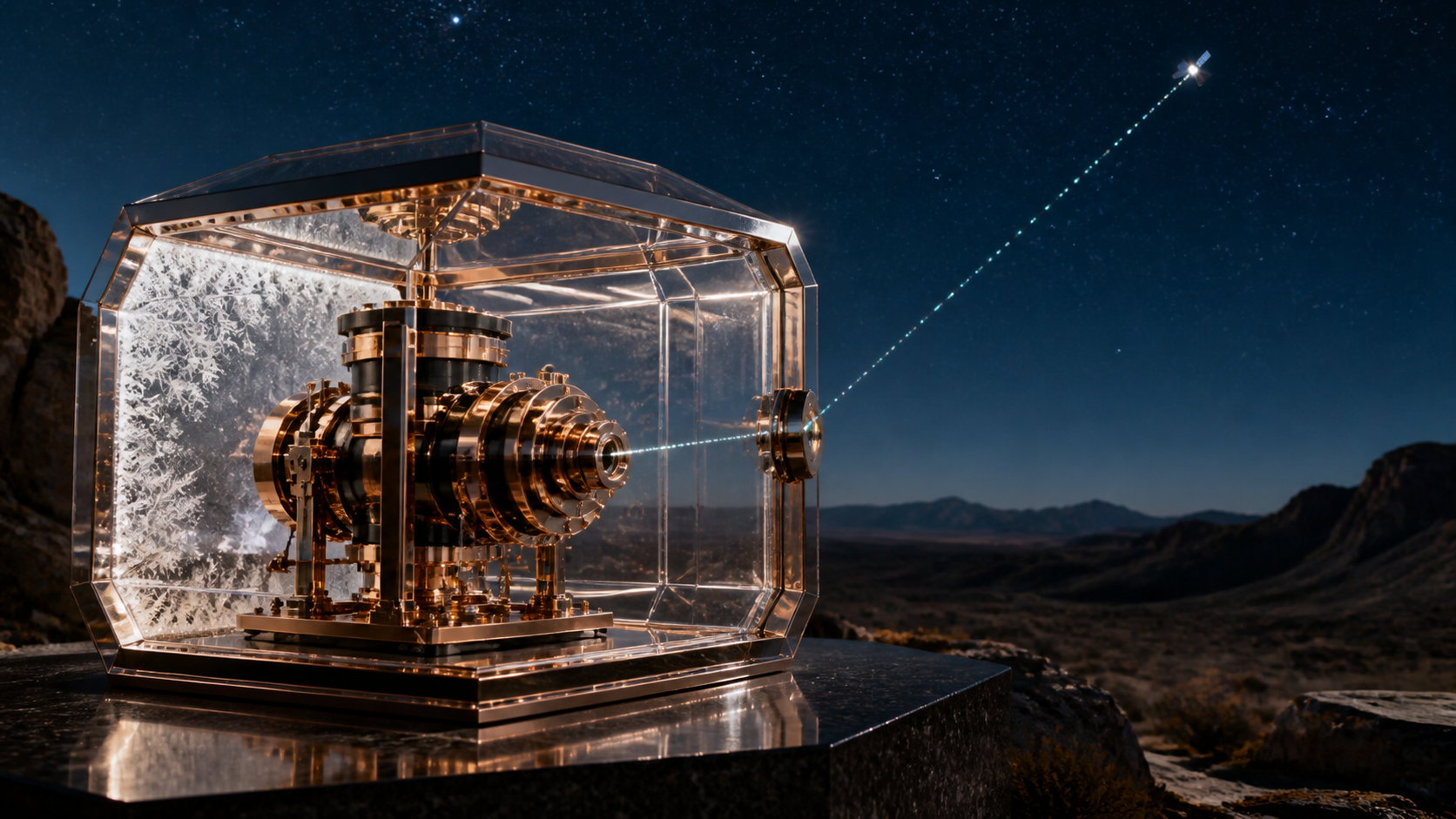
DAS Photonics' Faint Pulse Source Passes Space Qualification for ESA's QKDSat, Europe's Satellite Key Distribution Mission
The European Space Agency confirms that DAS Photonics completed the ECSS qualification campaign of the Quantum Faint Pulse Source for QKDSat and delivered the engineering model to Redwire Europe. We read what a qualified engineering model means for satellite quantum key distribution, why the trusted-node architecture belongs in every procurement conversation, and where the mission sits beside SAGA and EuroQCI in Europe's secure connectivity build-out.
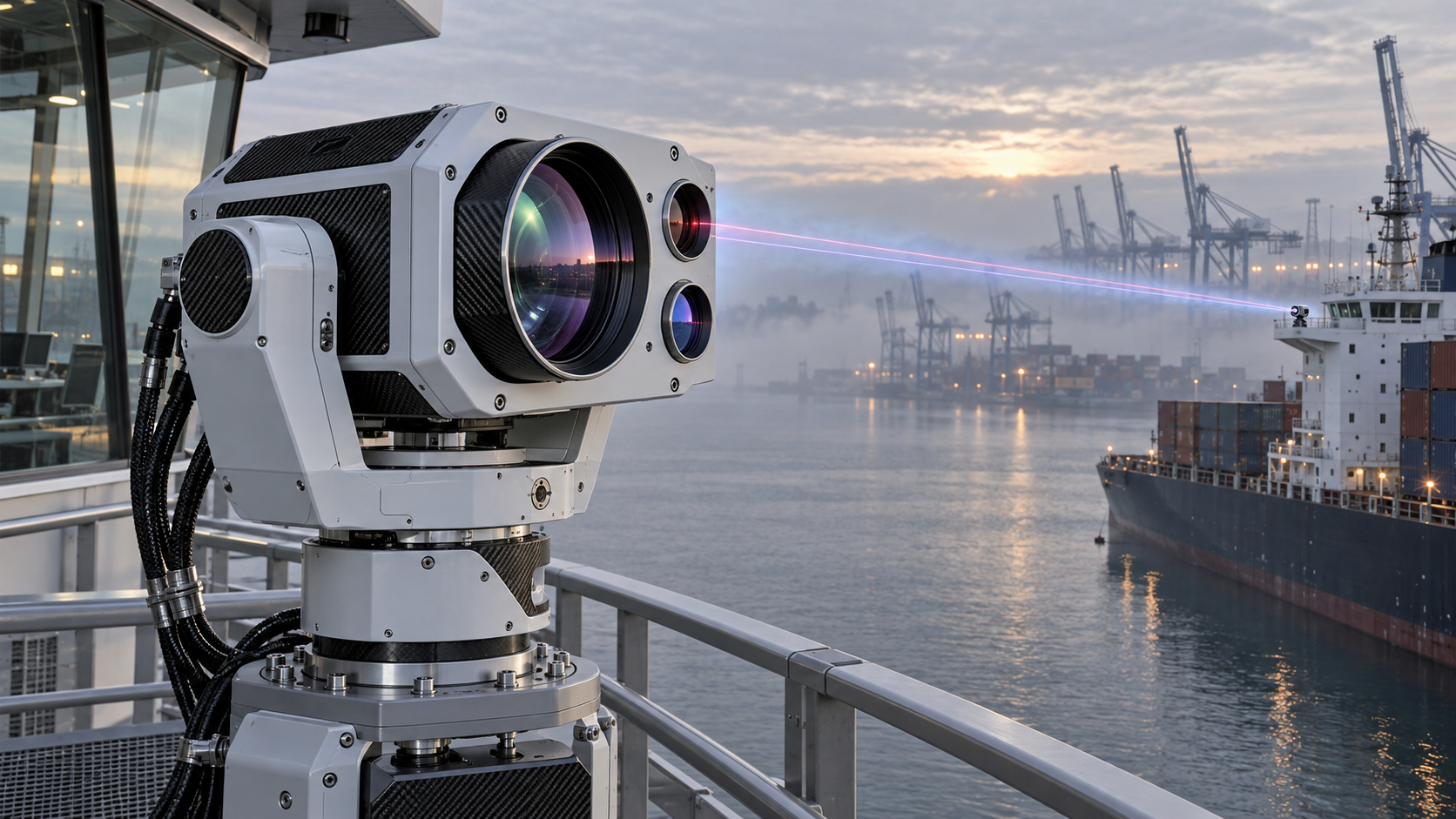
QuINSiDa Lab Demonstration Targets Free-Space QKD, LiFi and Encryption for Harbors, Ships and Fiberless Sites
A six-partner German consortium demonstrates free-space quantum key distribution at two wavelengths running beside LiFi data transport, key management and encryption in one working wireless stack. We read what line-of-sight quantum-secure communications would let a harbor, a ship or a forward site protect, and measure the laboratory result against the BSI position paper, the missing key-rate figures and the field trials that still separate this bench from a pier.
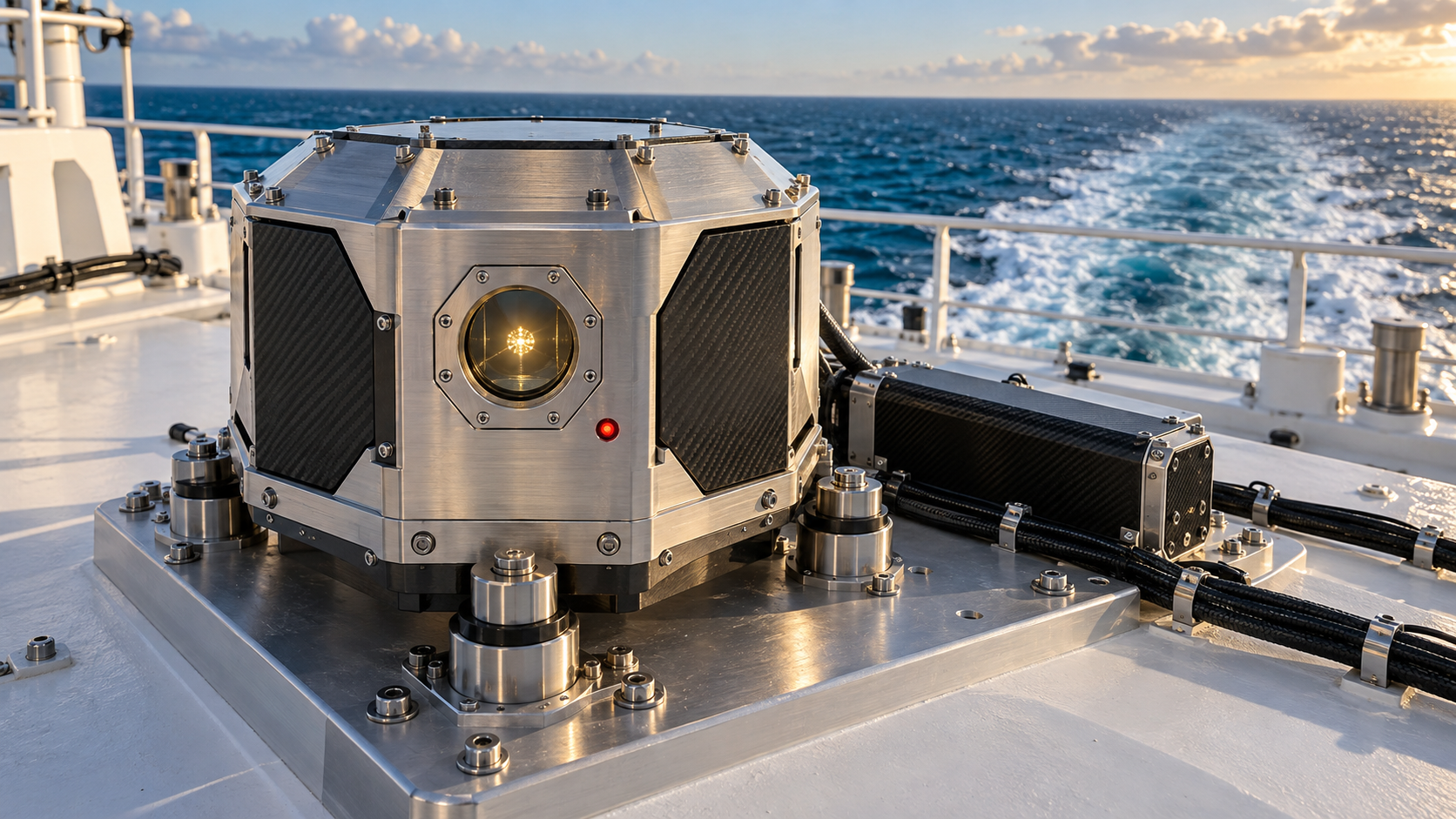
Q-CTRL Navigates 83 Kilometers of the Coral Sea Without GNSS Fixes: Near One Nautical Mile for 70 Kilometers, 2.2 at the Finish

Army Research Laboratory and UC Berkeley Pair Two Diamond Spin Signals to Cut a Clock's Temperature Drift Tenfold

A Technion Team Fixes the Disconnected-Route Flaw in Quantum Vehicle Routing and Tests the Repair on IQM Emerald
A Technion team shows the standard QUBO vehicle routing encoding rewards routes that never touch the depot, proves a flow-based repair correct, and runs both versions on IQM's 54-qubit Emerald processor, where the corrected circuit returned no fully feasible route across its hardware runs. We read what that means for quantum optimization in military logistics and the questions a program office should now put to vendors.
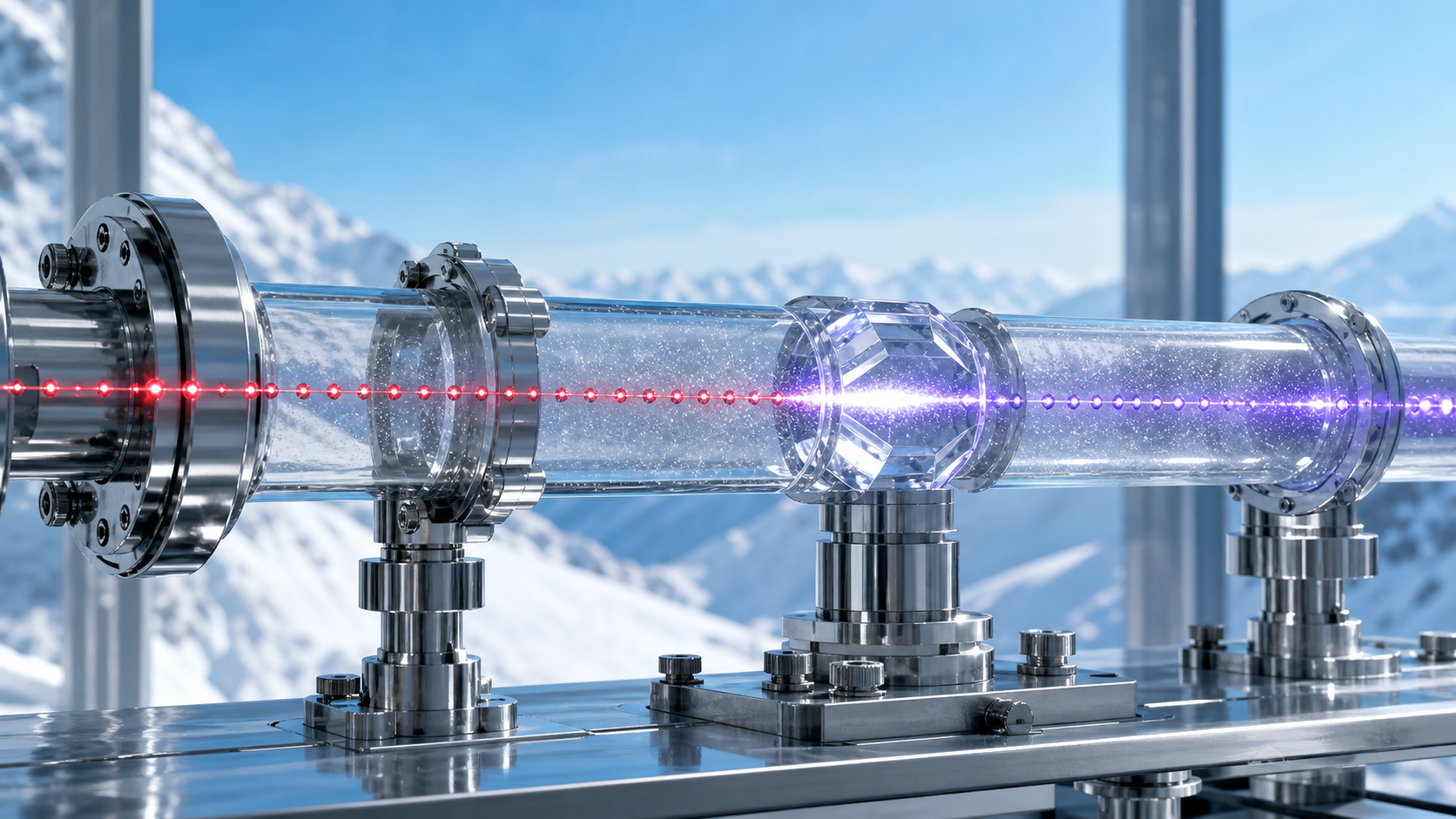
A Numerical Model Maps Spectral-Phase Correlation in a Xenon-Filled Fiber from Telecom to Ultraviolet
A UCLA, SLAC, Rochester and Ottawa team numerically models four-wave mixing in a xenon-filled hollow-core fiber as a candidate for quantum wavelength conversion from the telecom band to visible and ultraviolet light, calculating classical spectral-phase correlations above 0.99 under favorable conditions. We read the result as a candidate interface for quantum repeater architectures that connect mismatched wavelengths, weigh what phase-faithful conversion could buy secure fiber networking, and walk the distance between a simulation study and hardware a program office could field.

A 24 August Proof Shows an Unbounded Quantum Memory Advantage in Online Sequence Classification
A new proof by Ng, Li, Gu and Thompson shows that for constructed stream-classification tasks, quantum memory stays bounded where any exact classical watcher needs memory that grows without limit, and that for each classical agent below the threshold there exists a suitable input distribution under which its performance approaches guessing. We read the result as the mathematical skeleton of machine learning for ISR, weigh what it would let an edge platform notice on a fixed power budget, and walk the honest distance between a first proof and anything a program office could field.
A Task Force for the Ciphertext Already on Deposit
The U.S. Treasury has launched a Quantum-Readiness Task Force to move the financial sector onto post-quantum cryptography, anchored to Executive Order 14412 and its 2030 and 2031 federal deadlines. We read the announcement through the threat it exists to counter, harvest now, decrypt later collection against long-lived financial data, and list the checkpoints that would show a coordination body turning into an enforceable migration calendar.
The Battle Plan That Rewrites Itself in Sixty Seconds

The Imported Key Travels in a Quantum-Resistant Envelope
Google Cloud has opened a preview of quantum-resistant key import in Cloud KMS, wrapping customer key material in ML-KEM and X-Wing envelopes designed to resist known classical and quantum attacks on a recorded transfer. We read what the release means for harvest now, decrypt later exposure, why the wrapped key is the densest target that attack pattern has, and what still separates a preview label from a bring your own key mandate a program office can rely on.
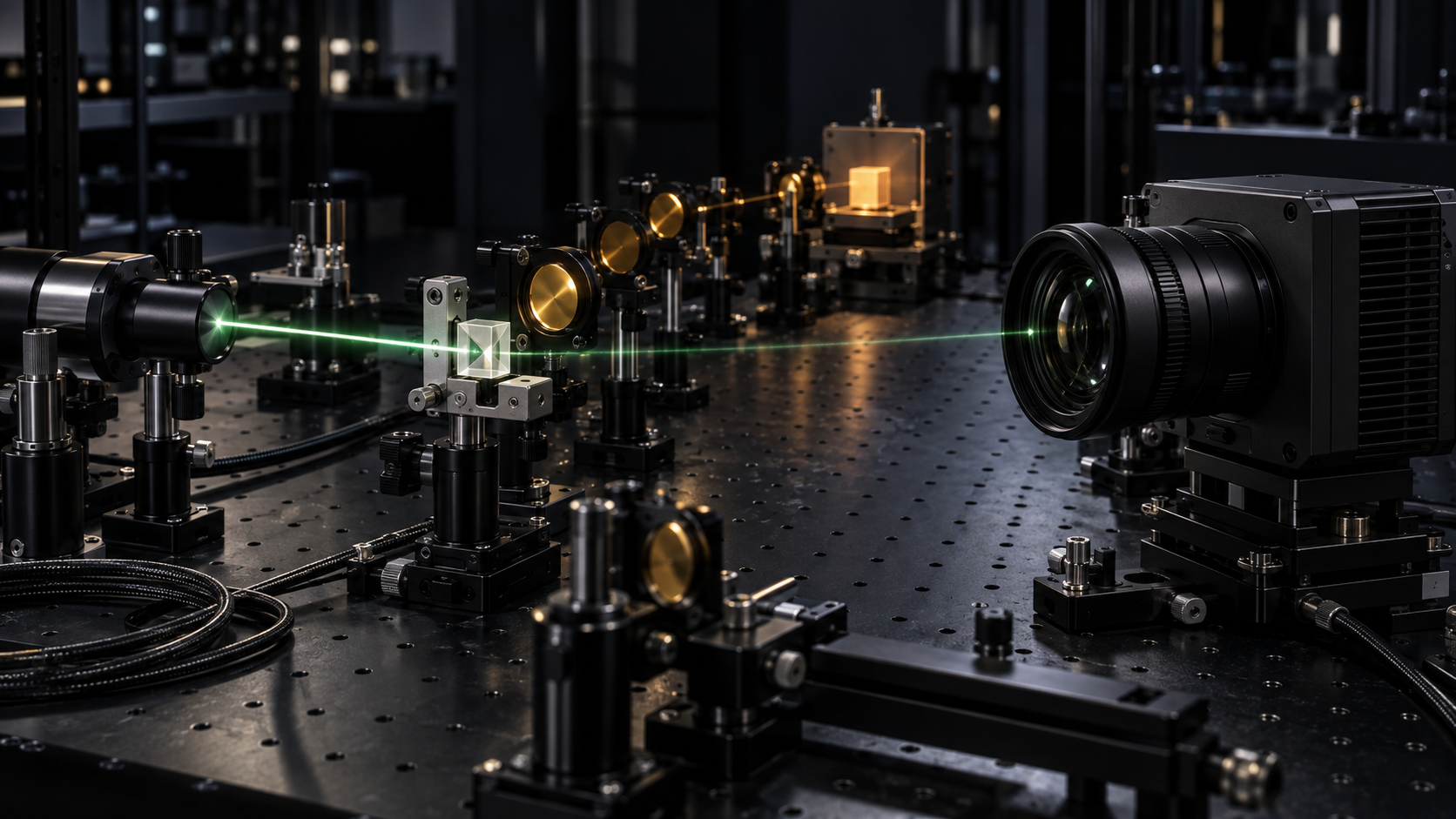
A Silicon Camera Reads an Infrared Band It Cannot See
Imperial College London physicists demonstrate wide-field thermal infrared imaging with a specialized Peltier-cooled silicon scientific camera, using quantum imaging with undetected photons to reach 100 times past the background limit at room temperature, and putting a published exception under the assumption that serious infrared performance requires a cryogenically cooled infrared focal-plane detector.
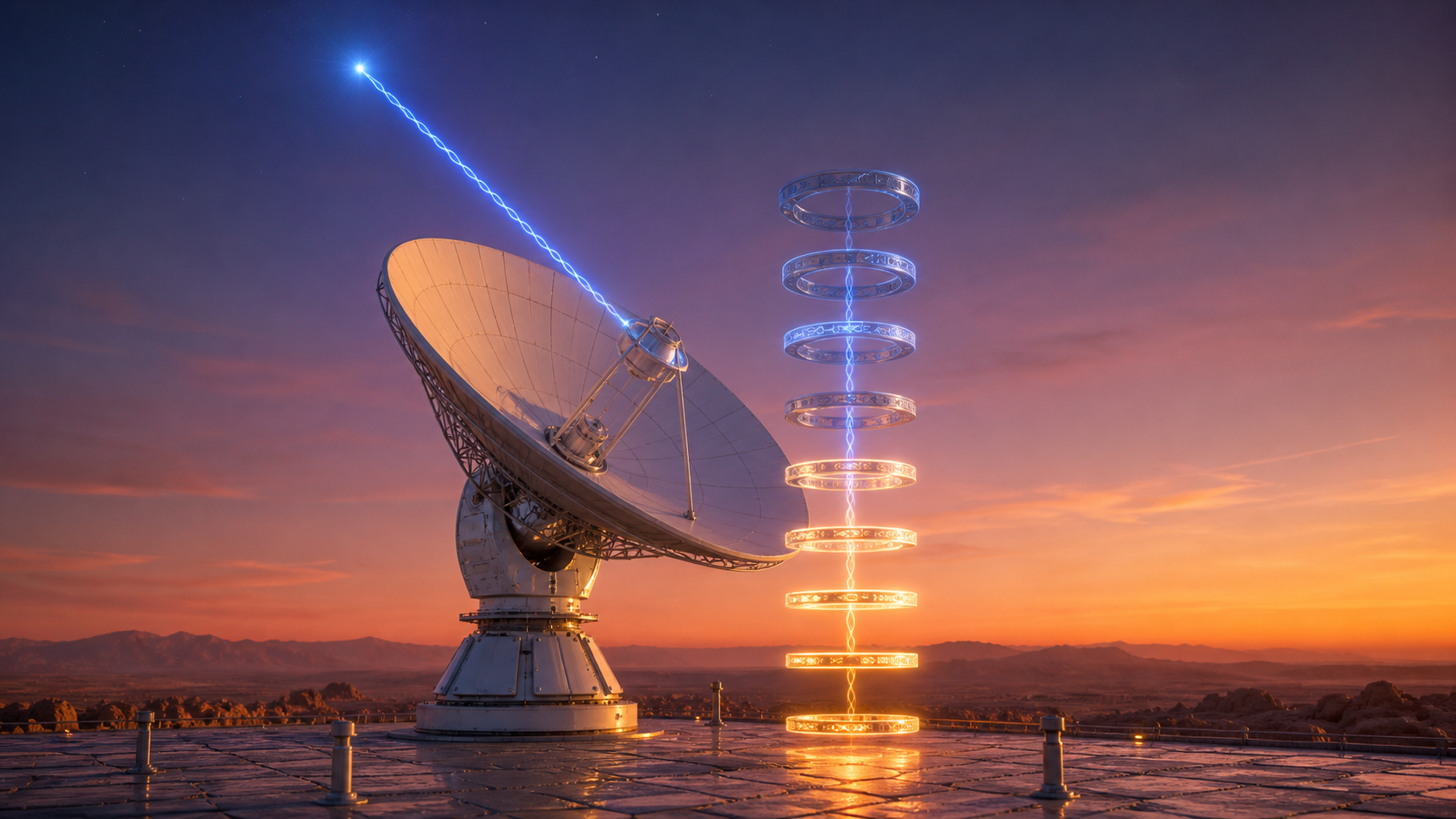
A Hybrid Quantum Classifier Learns to Vouch for Radar Satellites
Researchers at KAUST and the University of Pisa report QUASAR, a hybrid quantum-classical neural network that performs physical-layer authentication of X-band radar-satellite illumination pulses: an eight-qubit variational circuit coupled to a convolutional encoder, evaluated on a representative 10 percent subset of a 3.76-terabyte corpus of real ICEYE emissions, reaching 96.9 percent aggregate accuracy and rejecting most spoofed signals. A close look at radio-frequency fingerprinting as a defensive electronic warfare capability, what the simulated quantum circuit does and does not prove, and the distance between a strong paper and a satellite receiver system a program office could rely on.
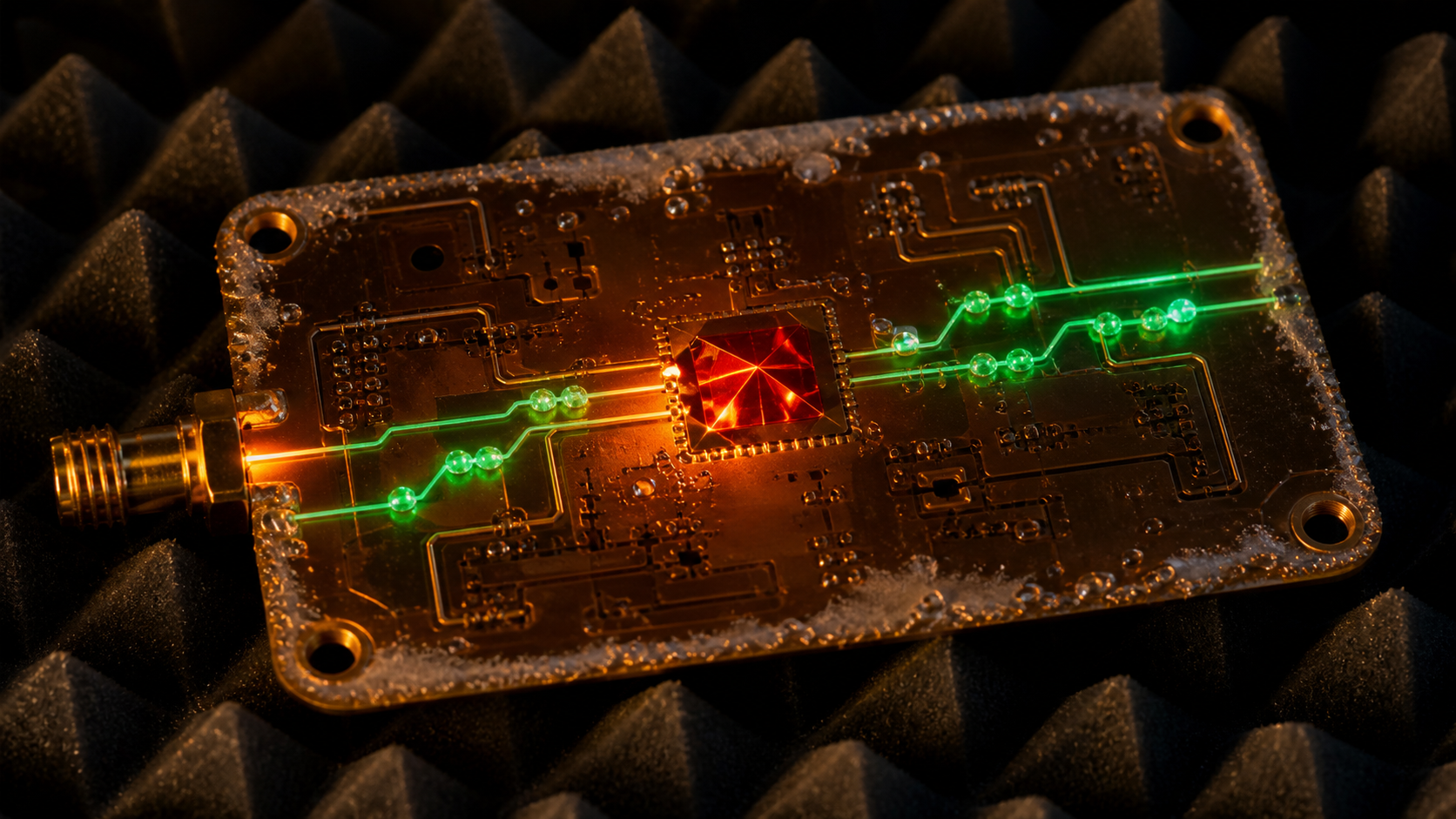
The Raw Material of Quantum Radar Arrives at Room Temperature
MIT researchers report in Nature Electronics a cavity-magnonic device that generates paired correlated microwave signals at room temperature: a yttrium iron garnet film on a printed circuit board splits one pump photon into two outputs at distinct frequencies with a strongly correlated phase relationship. A close look at why the dilution refrigerator has kept quantum illumination radar and correlation-assisted links confined to laboratories, what a warm pair source changes for whom, and the honest distance between strong correlations on a bench and the entangled, target-ranging quantum radar a program office could rely on.
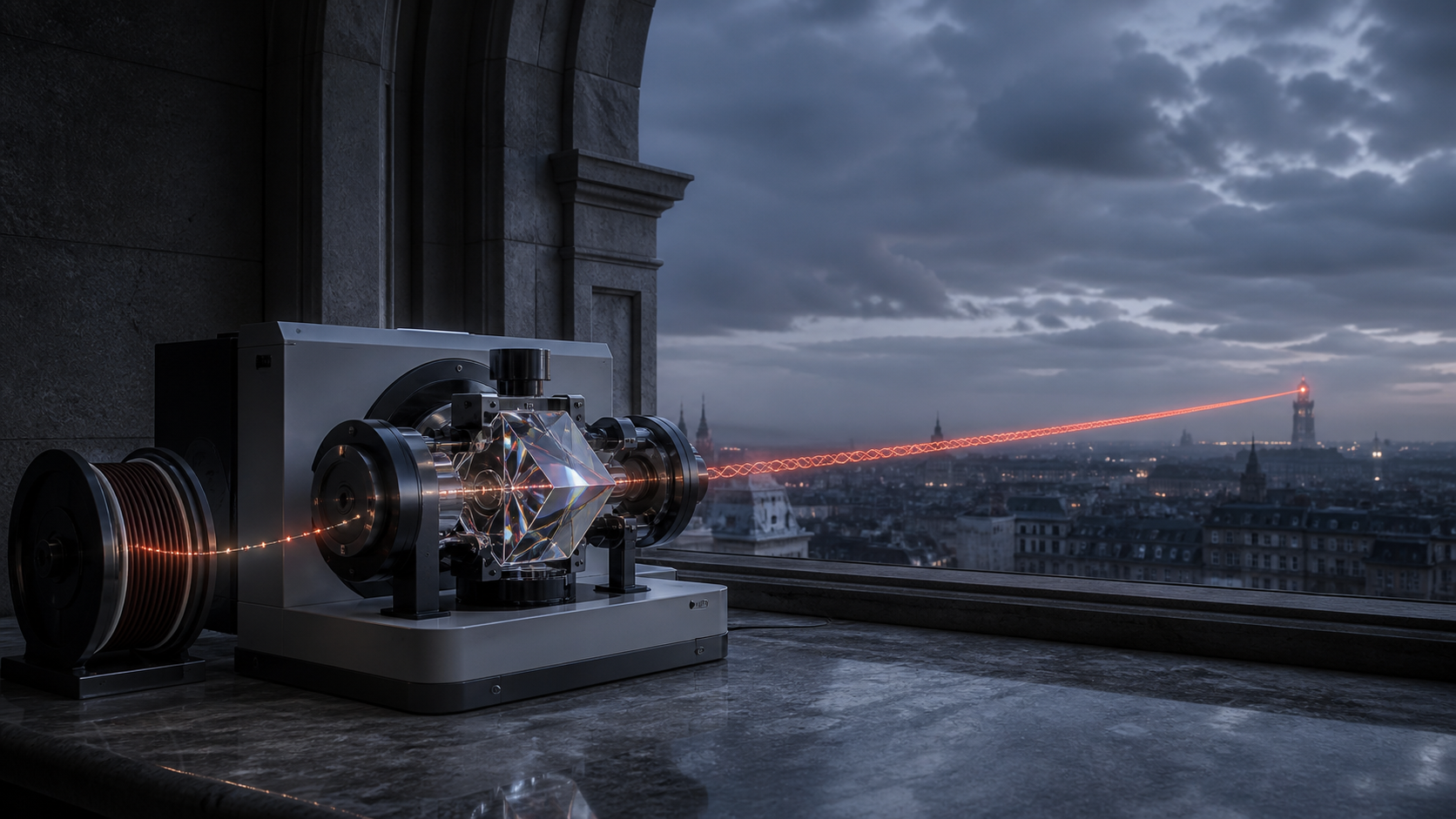
A Quantum Key Crosses From Fiber to Open Air Without a Trusted Node
A Tel Aviv University team, with the Hebrew University and HEQA Security, demonstrated end-to-end quantum key distribution across a hybrid channel: telecom fiber joined to outdoor free-space links of 90 and 750 meters, with the encoding converted all-optically so the junction never reads the key. A close look at what removing the trusted node means for military and critical-infrastructure networks, who gains on each side of the seam, and the engineering and doctrinal distance still separating a rooftop demonstration from a quantum-secure communications procurement.

Quantum Sampling Reaches a Nucleus Beyond a 768-GB Node's Memory
An IIT Roorkee team produced an unconverged approximate ground-state energy for the exotic nucleus magnesium-32 by sampling configurations from IBM quantum processors after their 768-gigabyte supercomputer node ran out of memory, the first use of sample-based quantum diagonalization on the nuclear shell model. A close look at why nuclear structure is a defense workload, how it feeds stockpile stewardship simulation and evaluated nuclear data, and the accuracy gap still separating a rented quantum sampler from a production weapons code.
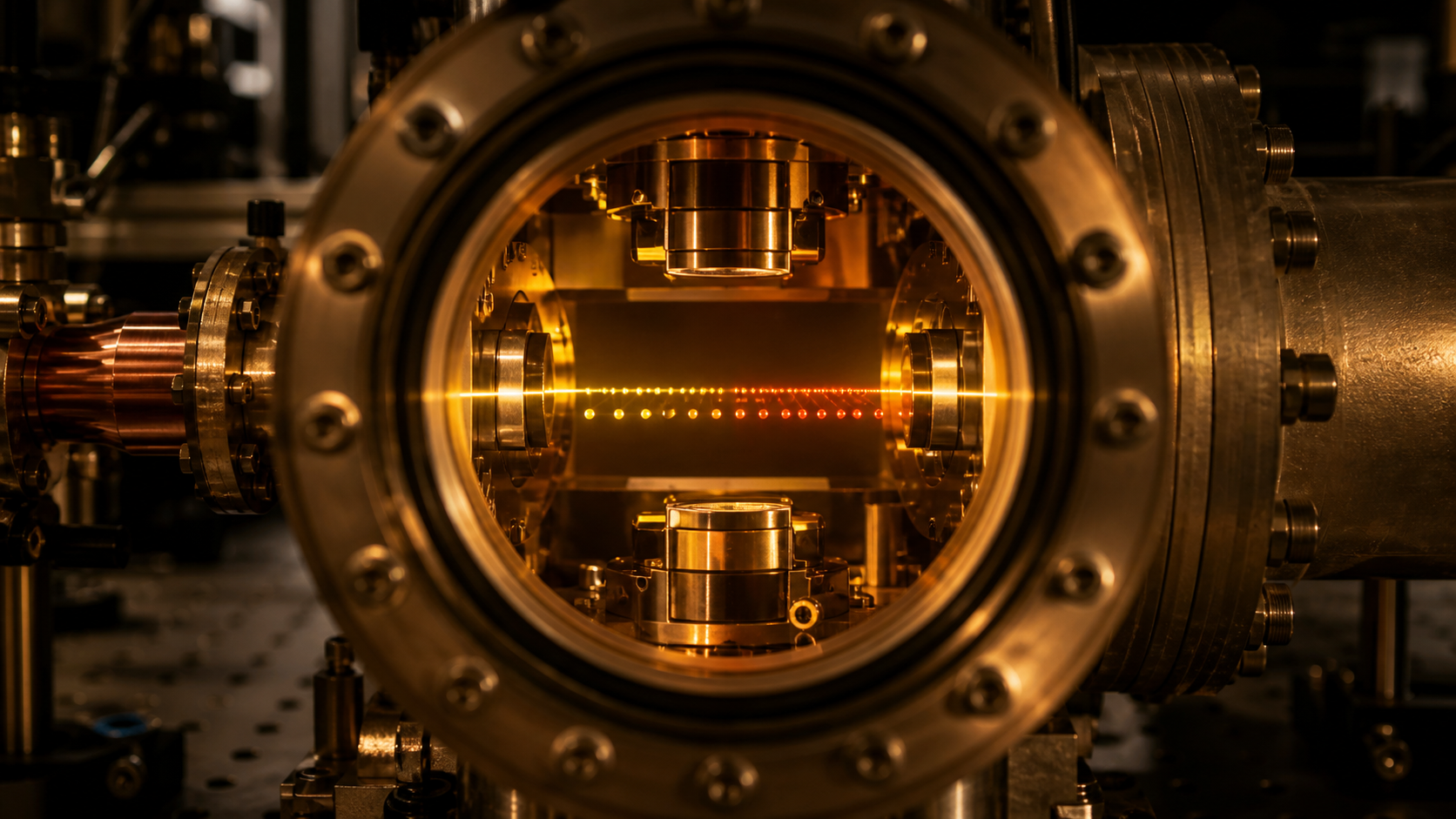
A Cold-Atom Comagnetometer Reaches a Fitted 60-Second Spin-Coherence Time
A new experiment traps the nuclear spins of two ytterbium isotopes in one optical lattice and reports a fitted 60-second spin-coherence time, posting a magnetic noise suppression factor above thirty thousand. Comagnetometry broadly sits at the root of nuclear-spin gyroscopes, the inertial instruments behind navigation without GPS, although this cold-atom comagnetometer demonstration does not measure rotation. Quentir places the demonstration at TRL 4 of 9: a validated laboratory instrument with minute-long spin coherence, several rungs below anything a program office could field; an eventual rotation measurement would provide important readiness evidence but would not by itself validate field deployment.
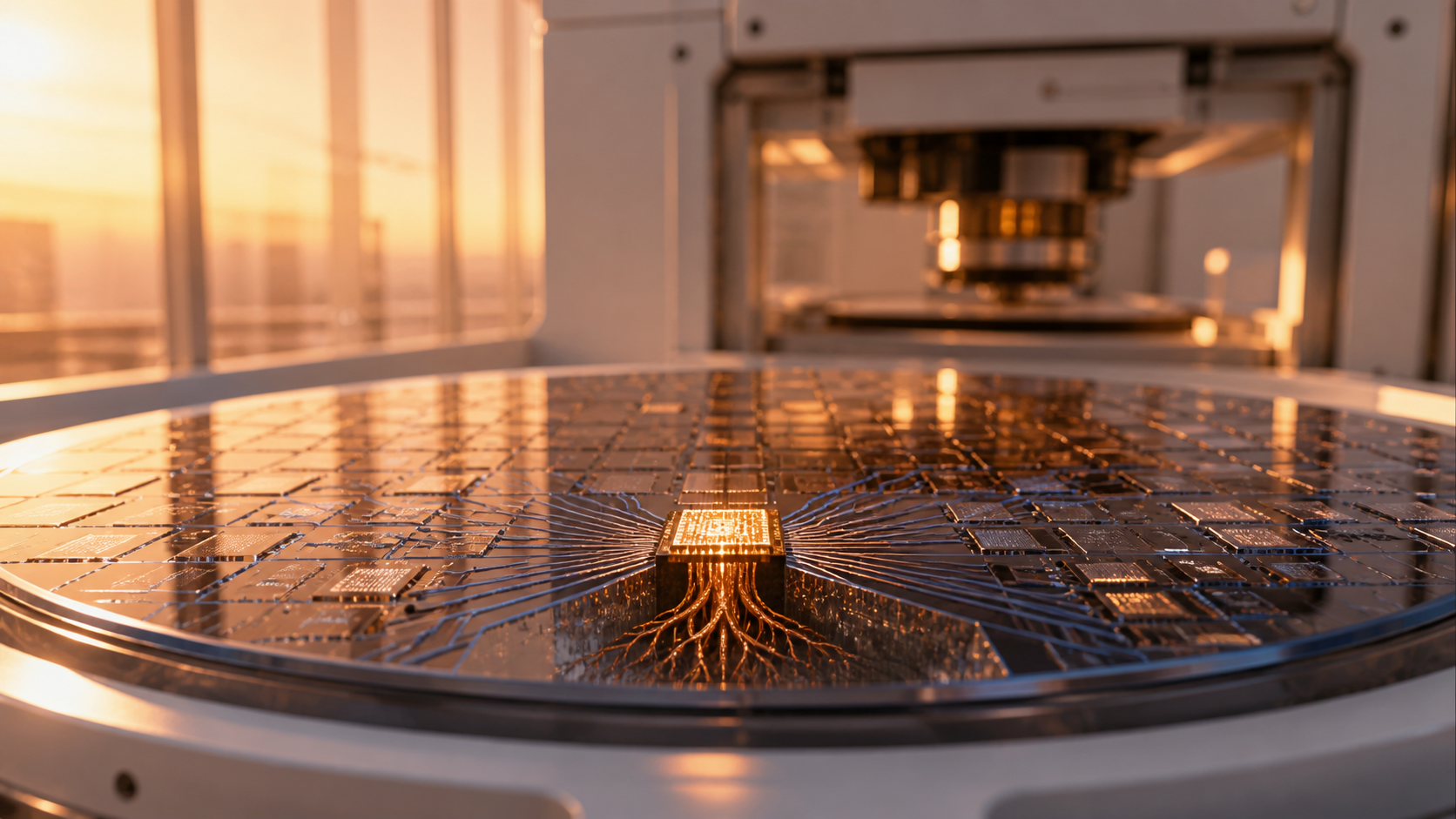
The Post-Quantum Migration Reaches the Silicon Layer
In one August week, a Wuhan university team released a 28-nanometer post-quantum cryptography chip with a naval research institute in the room, and a Canada-Taiwan consortium validated a compute-in-memory rival for the same NIST algorithms. A close look at what a hardware root of trust means for forces whose platforms outlive their ciphers, and at the evaluation gates still standing between both chips and a program office.

A Quantum Lidar Reads Multiple Directions at Once
A POSTECH team funded by South Korea's Agency for Defense Development demonstrated a quantum lidar that resolves multiple targets across a finite fan of directions in one measurement—not omnidirectional coverage—through background light a thousand times stronger than the signal. An early-stage low-light sensing result that establishes no field or fog performance.