UK Government Awards £50 Million to Six Quantum Sensing and PNT Firms, 13 October 2026: ColdQuanta UK's Mobile Quantum Radio, Quantum Fabrix's Satellite Clock and MoniRail's GPS-Free Rail Positioning
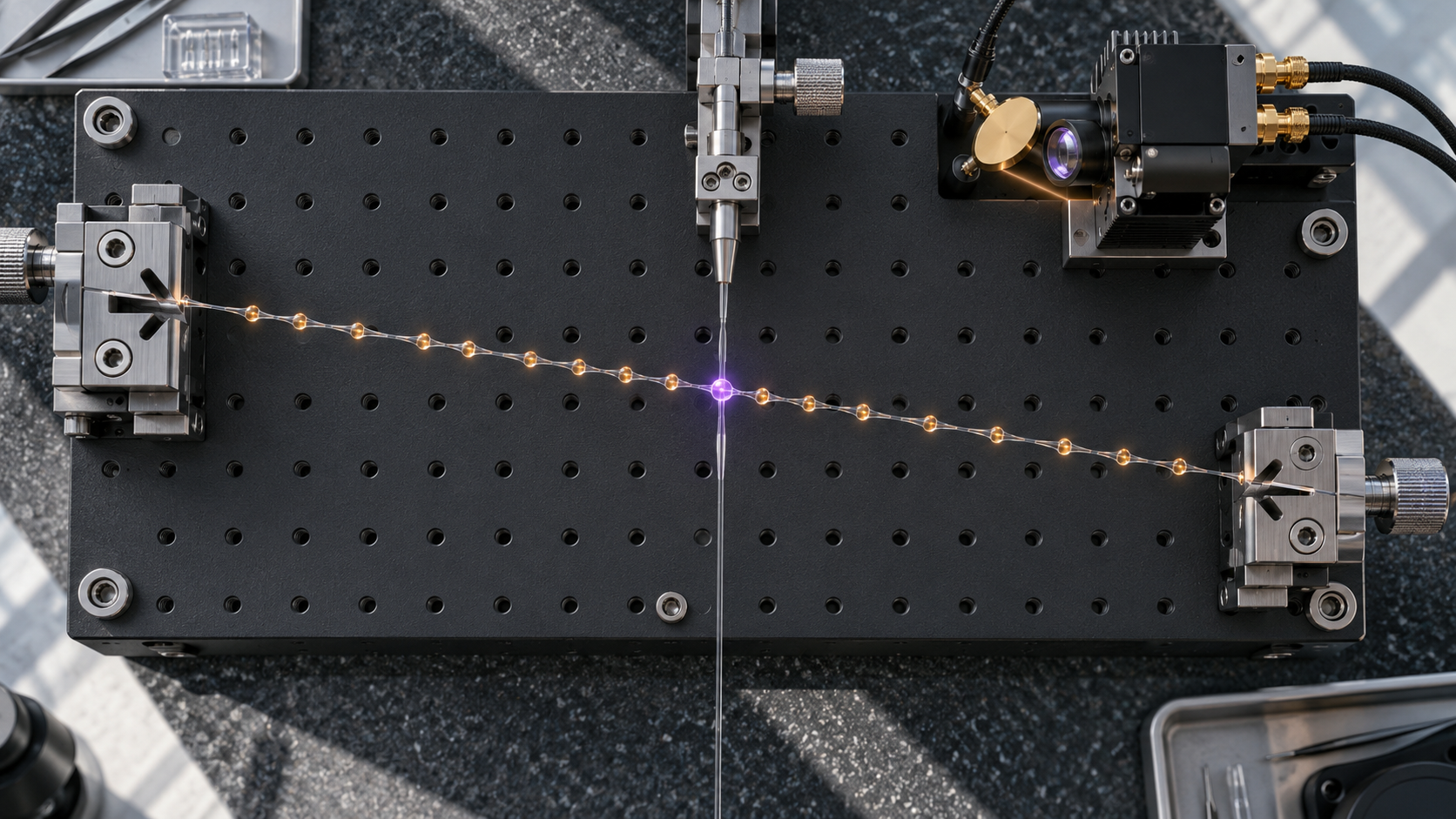
Army Research Laboratory and University of Maryland Chain 21 Laser-Written Microresonators on One Glass Fiber Into a Topological Photonic Simulator, Nature Communications, 29 September 2026, TRL 3
Nathaniel Fried, Dashiell Vitullo and Avik Dutt of the DEVCOM Army Research Laboratory and the University of Maryland wrote 21 microresonators onto one glass fiber with a carbon dioxide laser and used the chain as a topological photonic simulator of Su-Schrieffer-Heeger lattices. In a separate ten-site SSH2 device, localized defects consistent with scattering, possibly from surface impurities, caused no notable edge-mode changes. The Army release adds resilient networks and GPS-free quantum navigation as future uses, which the paper does not test. The result is an open, dual-use TRL 3 bench proof of concept in the simulation pillar.
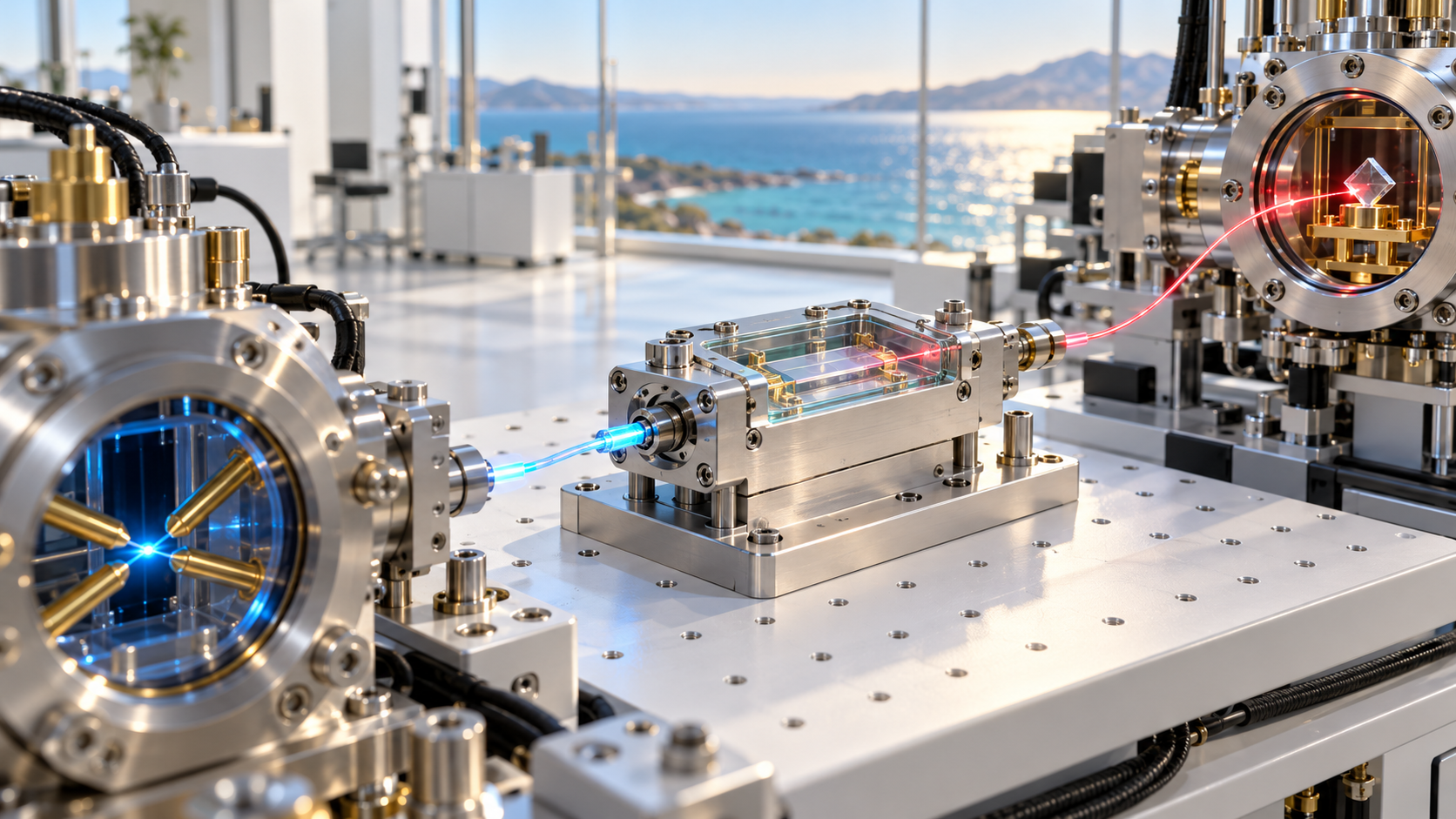
IonQ and Duke Entangle a Trapped Barium Ion With a Diamond Silicon-Vacancy Memory at 1,032 Bell Pairs per Second and 87.9 Percent Fidelity, arXiv 2610.10705, 9 October 2026, TRL 4
IonQ and the Duke Quantum Center report a photonic link between a trapped barium-138 ion and a silicon-vacancy center in a diamond cavity that produces 1,032 Bell pairs per second at 87.9 percent fidelity, four times the earlier best between two trapped ions. The result is the first public measurement of a quantum memory interconnect of the kind DARPA's HARQ program is funding, and it reads as dual-use networking capability for modular processors and future repeaters. The two nodes are interpreted here as sharing one bench, but no distance was reported and no entanglement was stored, which is a TRL 4 laboratory link.
South Korea's DAPA Orders a Concept Study on Quantum Computing for Battlefield Prediction and Asset Optimization, 8 October 2026: What It Will Benchmark and Why It Has No TRL Yet
On October 8, 2026 South Korea's Defense Acquisition Program Administration ordered a concept study on quantum computing for battlefield prediction and asset optimization. It will type the computational problems of defense, compare classical methods, quantum simulators and hybrid environments on the same representative problems, and design a defense quantum computing benchmark with a non-sensitive standard problem family and synthetic data. The agency names the two obstacles itself, data input and output and the cost of transforming the problem, and the post lays out the classical baseline questions a program office should hold until the comparison is run. Technology readiness: not assessed, the announcement concerns a study, with insufficient evidence to assess a specific system.
Europol and UC3M's Harvest Now, Decrypt Later Report, 7 October 2026: Which Captured TLS, SSH and OpenPGP Traffic a Quantum Computer Could Read, and Why Government Communications Rate High Risk
Two Thorium-229 Nuclear Clocks in Nature, 7 October 2026: TU Wien and PTB Run One Unattended for a Day, a Tsinghua-Led Team Reaches 5e-13 Instability, for GNSS-Denied Timing, TRL 4
Nature published two independent thorium-229 nuclear clocks on October 7, 2026: a TU Wien and PTB clock that ran unattended for a day and measured within-run instability in the low 1e-14 range, and a Tsinghua-led clock at 5e-13 whose two home-grown crystals agree to one part in ten trillion. A solid-state reference at room temperature is the shape of holdover timing a GNSS-denied force eventually needs, and both papers state the barriers plainly: day-to-day reproducibility of 5e-13, crystal strain and the ultraviolet laser power a field-deployable nuclear clock would have to carry. TRL 4.
Quantum Brilliance and Oak Ridge Ran Fragment-Based Quantum Chemistry Across Three Room-Temperature Diamond QPUs, arXiv 6 October 2026: 93.6 Percent Parallel Efficiency on Helium Clusters, TRL 3
Université de Sherbrooke Plans Five Drone Surveillance Tours Over Quebec With Wildfire Risk Maps and a Neutral-Atom Quantum Heuristic, arXiv 2 October 2026: 31 Valid Plans on an Emulator, TRL 3
Airbus Quantum-Secure Tactical Communications Trial in Malta, 10 and 11 September 2026: Agnet, Telsy QKD, Stormshield Encryptors and Merqury Key Management, and What a Program Office Still Needs
Sectigo Quantum Ready, Announced September 17, 2026: What Cryptographic Discovery Must Show a Defense Buyer
Quantum X Labs Pairs Rydberg Atom RF Sensing With Its Ramsey-CPT Atomic Clock, Announced 28 September 2026: What Is Shown, What DARPA and the Airbus RydRa Study Measured, and Why It Sits at TRL 2
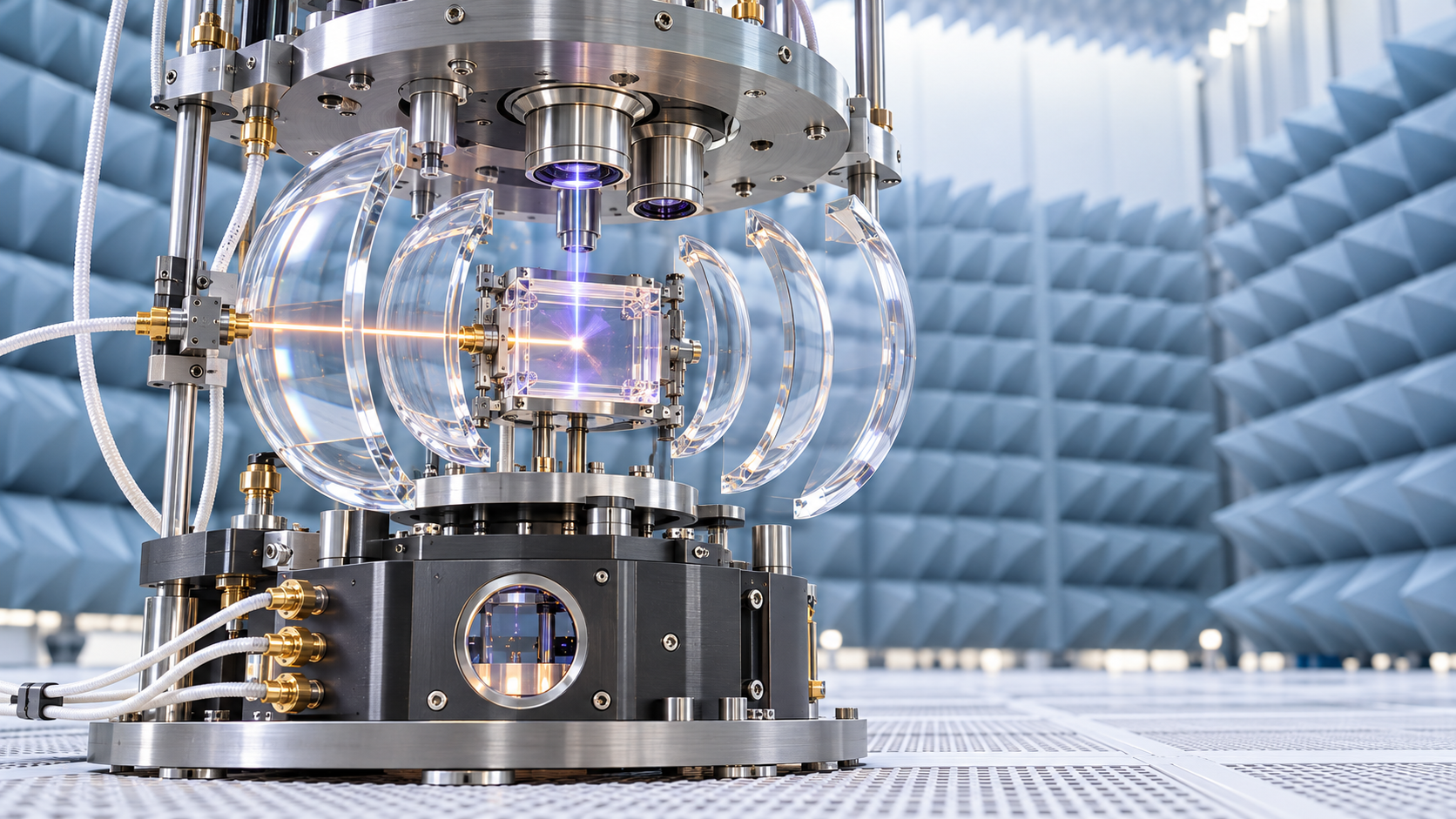
On September 28, 2026 Quantum X Labs of Tel Aviv said it is developing Rydberg atom RF sensing and integrating it with the Ramsey-CPT atomic clock it reported in July at a stability of 1 × 10⁻13 at one second. The company states plainly that no integrated system has been demonstrated and gives no sensitivity, band or form factor for the sensor. We read the release against the public measurements that exist: NIST's self-calibrating atom-based field probes, DARPA's ROCkN holdover clocks tested on an aircraft, vehicles and a ship, and the Airbus, QVIL and DLR RydRa study that priced a Rydberg radar receiver at better than minus 170 dBm per hertz with 10 MHz per cell and a seven-meter array for directivity. The combined head is a formulated concept at TRL 2, dual-use by construction, and we set out the four results that would move it.
NATO's Quantum Technology Roadmap, Published 29 September 2026: QUESTOR Sea Trials for GNSS-Denied PNT in 2026 and 2027 and a Quantum Zero Beacon Pilot Between Brussels and Mons by Q4 2027
Brazil's Army Inaugurated a 12 km Quantum Key Distribution Link Between CITEx and the Ministry of Defense on 30 September 2026: What the Rede Quandanga Demonstration Shows and What It Leaves Open
UNSW Bench Test Posted 29 September 2026: Polarization Post-Selection Extends Entangled-Photon Clock Acquisition 2 to 3 dB Into Channel Loss, 30 to 40 Percent More Range for One Downlink
C12 and Thales Win the 2026 Quantum Effects Hardware Award for QuantumTrack, a Radar Multiple Hypothesis Tracker: What the April arXiv Paper Shows and the TRL 5 Label Does Not
C12 and Thales announced QuantumTrack on September 29, 2026 and took the Quantum Effects Award for quantum computing hardware with a hybrid method for real-time multi-target radar tracking. We read the April 2026 arXiv paper behind it: a carbon nanotube spin-qubit annealer tested in two synthetic tracking scenarios with one and two targets, and a 50 millisecond run time that rests on an active reset not demonstrated on the processor in the cited paper. The release's 100-times speed claim and its TRL 5 label are absent from the paper, so the defense-specific capability for air-defense radars facing saturation attacks sits at rung 3 of the shared ladder until the same scenarios run on physical hardware.
ETSI TR 104 171, Announced 24 September 2026, Sets Entropy Zero Trust and Four Trust Levels for Quantum Random Number Generators: What Its Side-Channel Catalog Means for Military Key Generation
ETSI announced on September 24, 2026 its technical report TR 104 171, published in March 2026, on building a quantum random number generator whose output stays unpredictable once real detectors, power supplies and drivers surround the quantum source. We read its Entropy Zero Trust profile, its four trust levels up to a military and critical-infrastructure grade, and its catalog of blinding, electromagnetic, radiation, power and timing side channels as defense-specific capability: who gains from an attested entropy source beneath a hardware root of trust, what a surveillance-drone one-time pad and a certificate authority ask of the same device, and why an informative report with no test method for its top trust level still leaves a program office to write its own acceptance test.
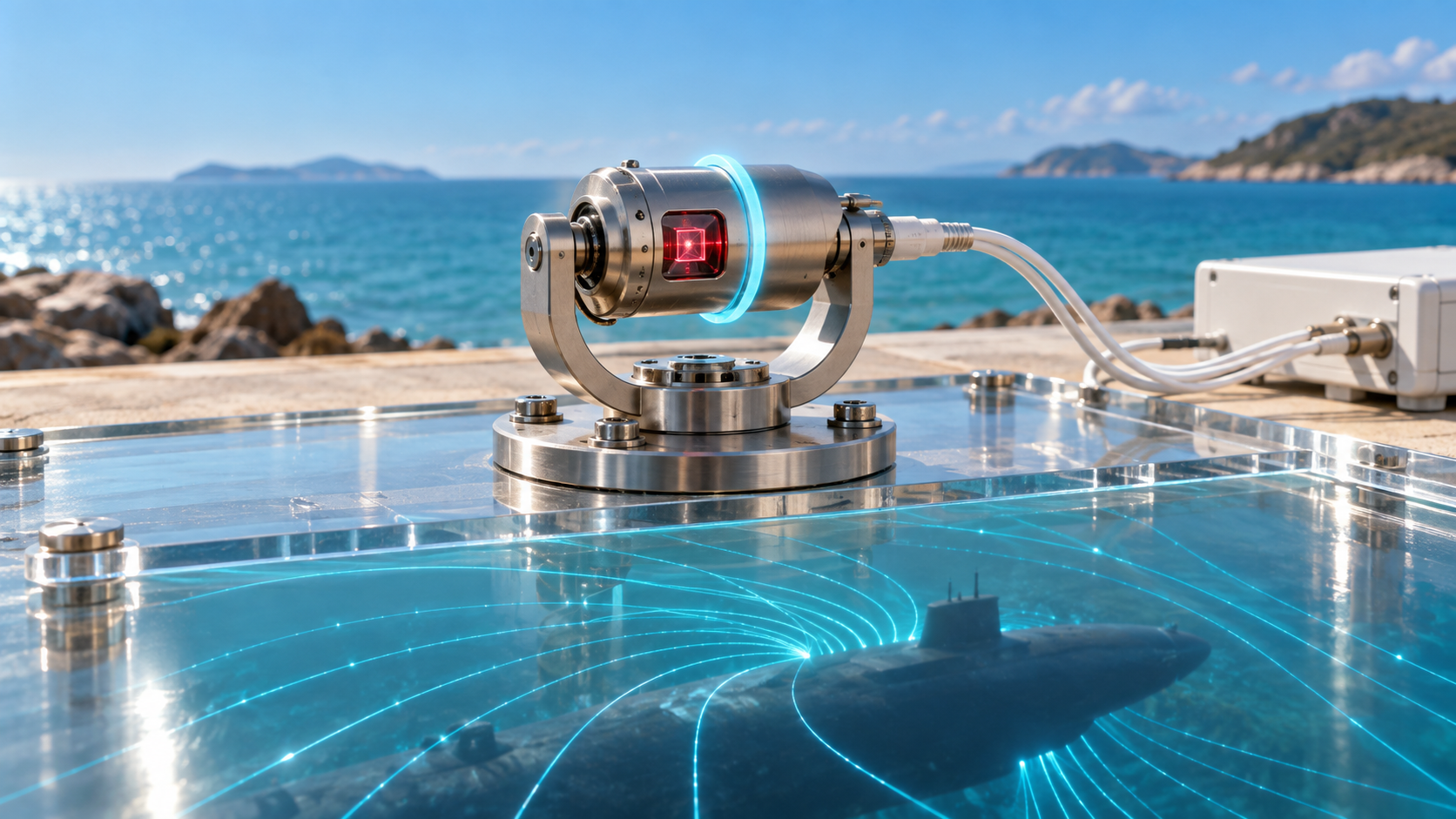
USTC's Wang, Jiang and Peng Field-Test a 7 cm³ Rubidium Magnetometer at 10 pT/√Hz and 25,200 nT/s Slew: Subway Trains, a G4 Storm and a Buried Magnet, Acta Physica Sinica, September 2026
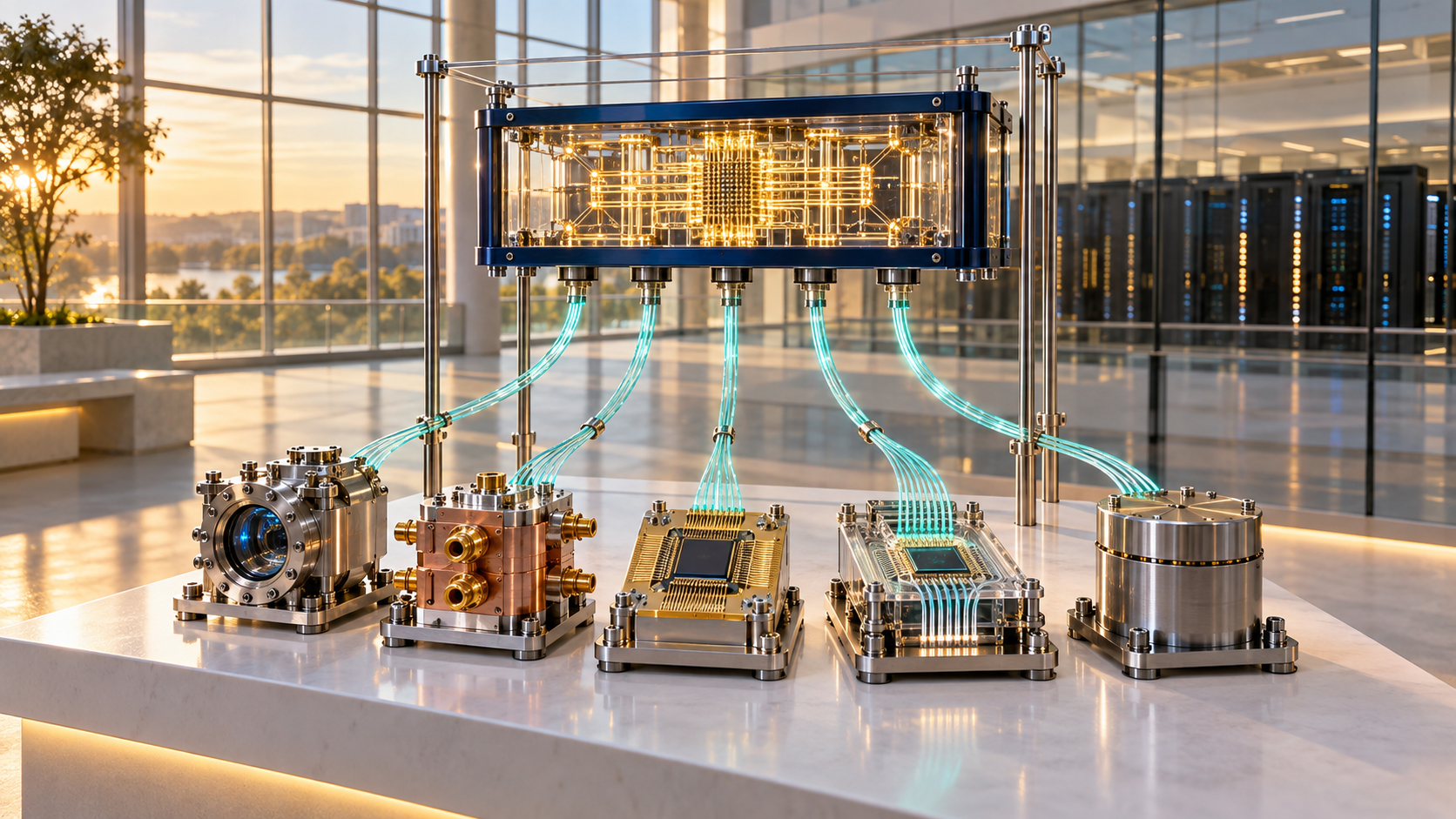
France's Defense Innovation Agency Launches ALIQUANTE, a Five-Year Classified Quantum Programming Platform From Thales, Bull and CEA for the PROQCIMA Computers, Announced 24 September 2026
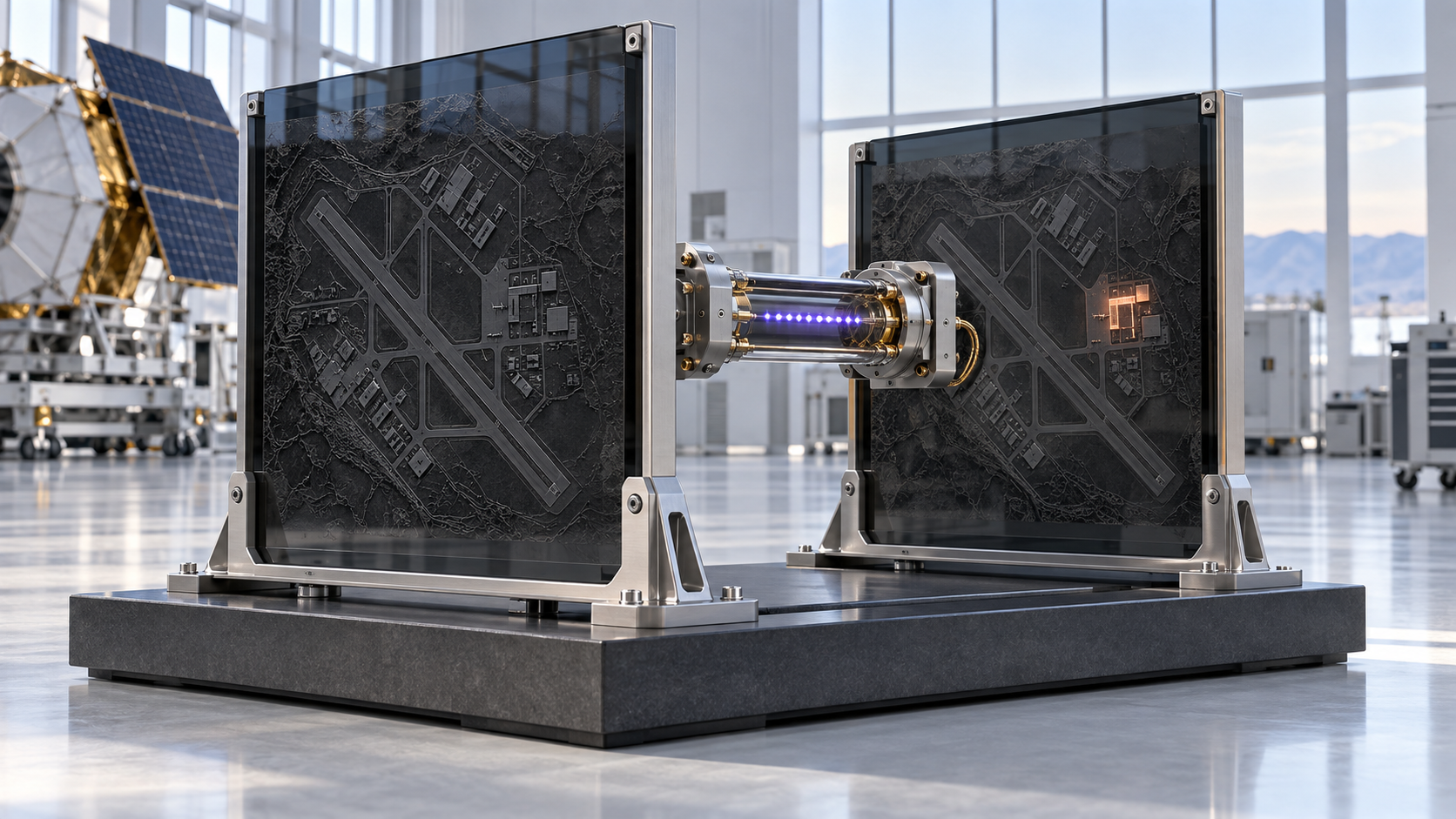
IonQ and Capella Run a 20-Qubit Quantum Circuit Born Machine for SAR Change Detection on Forte Hardware: Filtered F1 0.32 Against 0.24 and 0.16 at MCAS Miramar, arXiv 2609.05313, 4 September 2026
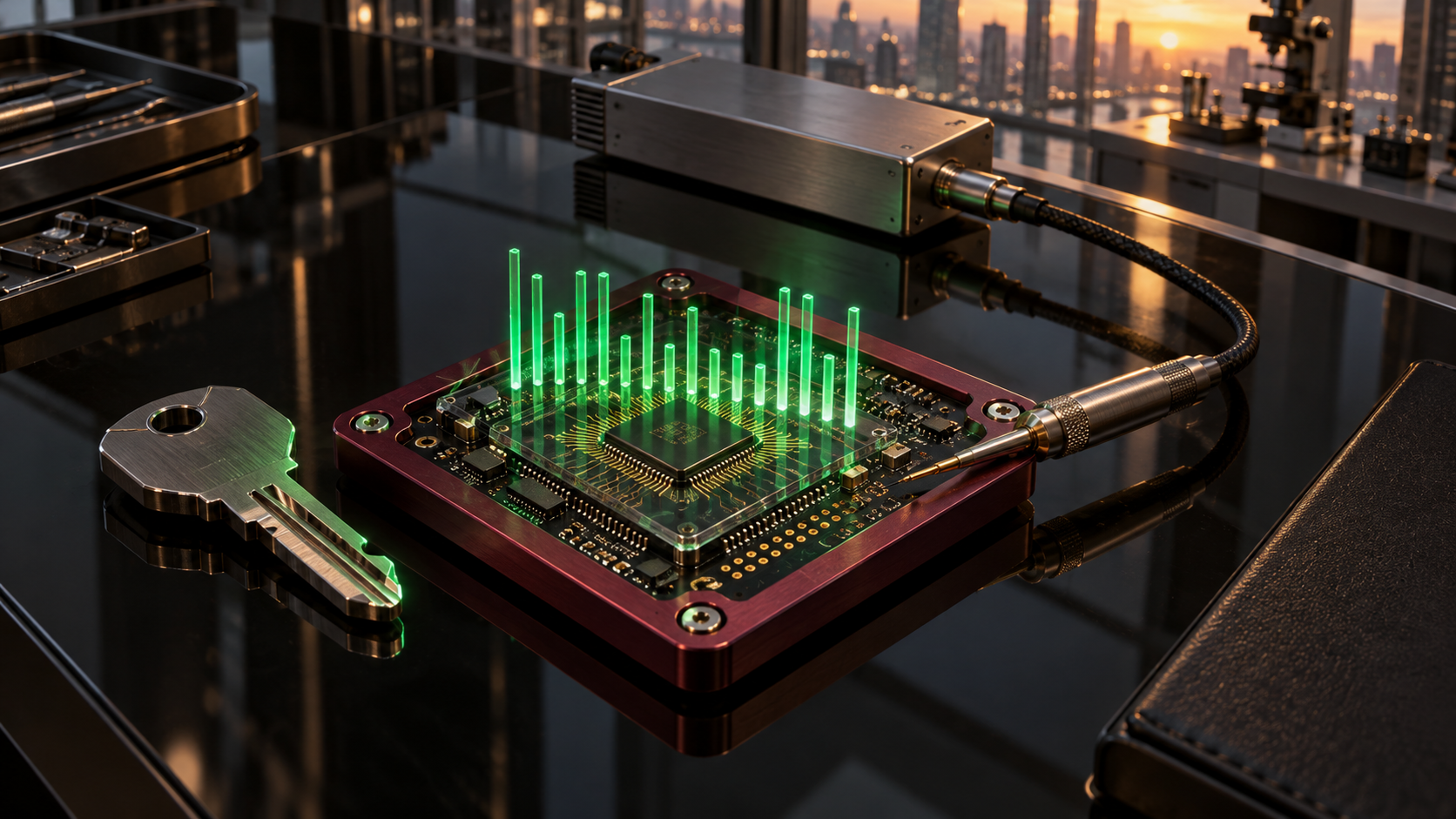
Shandong University's Chen and Li Recover 16 Private-Key-Dependent Bits From BIKE's BGF Decoder by Deep-Learning Power Analysis at 95.68 Percent, Cybersecurity 9:215, 16 September 2026
On September 16, 2026, the journal Cybersecurity published a paper by Geng Chen, Yanbin Li and colleagues at Shandong University that reads a private-key-dependent 16-bit sequence out of the BIKE post-quantum decoder from a single power trace on an ARM Cortex-M4 board, at 95.68 percent perfect recovery. We read the deep-learning side-channel attack as an offensive extraction method, weigh what it does and does not transfer to the ML-KEM and HQC code a force will field, and set out the missing key-recovery stage, the untested countermeasures and the single-board evidence that stand between this post-quantum implementation security result and anything a program office would plan against.