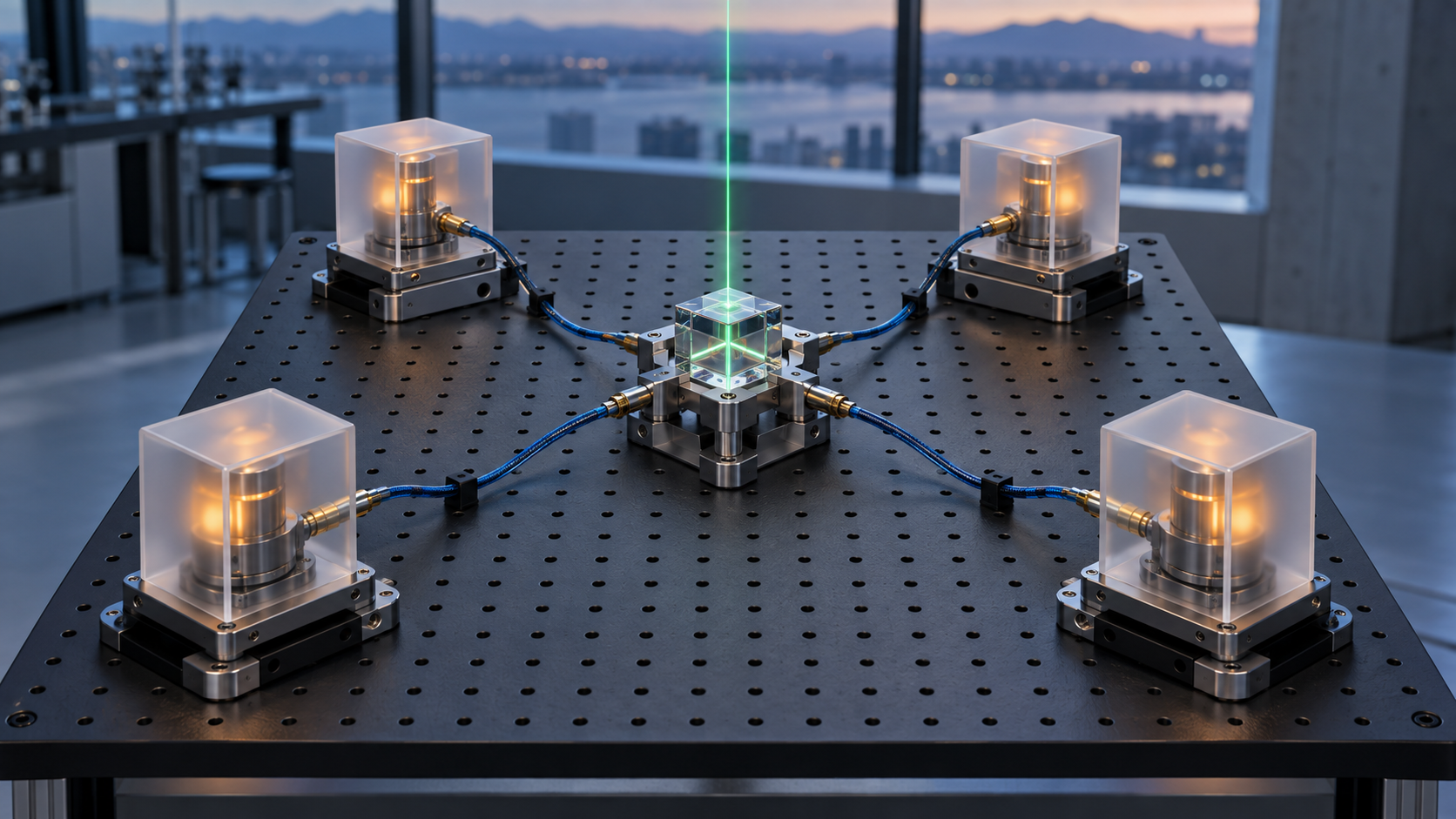
Sorbonne, Welinq and Leiden Demonstrate Private Quantum Networked Sensing With a Four-Photon GHZ State at 96.9 Percent Fidelity, arXiv 15 September 2026
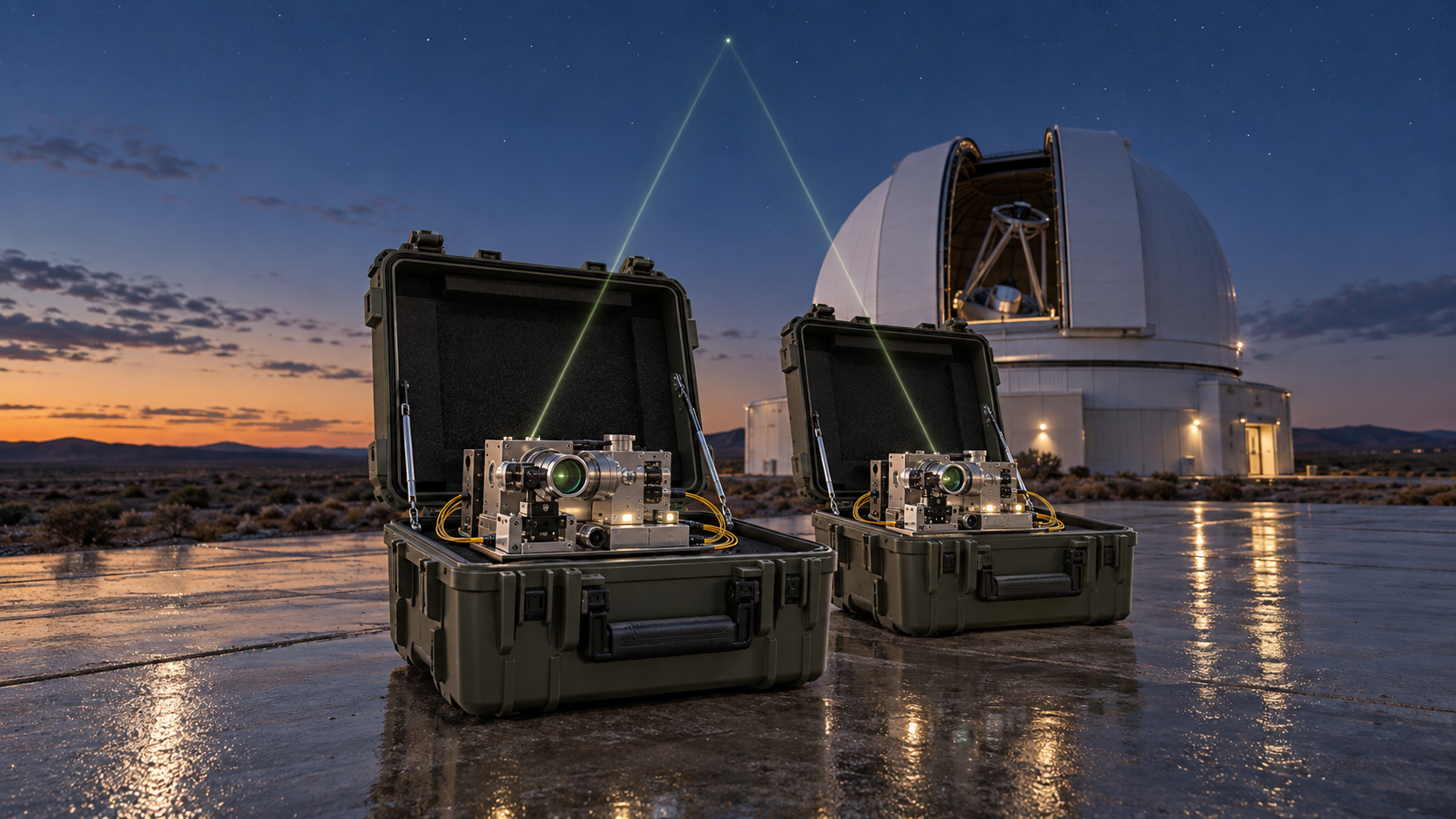
CSIRO Delivers Two Entangled-Photon Quantum Light Sources to Australia's Defence Science and Technology Group for an Intended Tamper-Evident Ground-to-Satellite Timing Link
In July 2026 CSIRO delivered two portable entangled-photon Quantum Light Sources to Australia's Defence Science and Technology Group, source hardware intended for a future quantum time transfer link between ground stations and satellites. We read the delivery beside the holdover clocks and inertial sensors other programs are flying, and set out what still separates two delivered sources from an authenticated timing layer intended to help address GPS jamming and spoofing.
Korea Put Two Quantum Deliverables Inside a KRW 200 Trillion Research Strategy on 1 September 2026, While KRW 15 Billion of Its 100-Qubit Project Moved to Year Five
Korea confirmed a five-year plan on 1 September 2026 committing more than KRW 200 trillion to national research through 2030, naming two quantum deliverables inside it: two types of domestically produced full-stack quantum computer and a demonstration of a 100 kilometer class quantum network. In the same week Lee Yong-ho, who directs the superconducting quantum computing project at the Korea Research Institute of Standards and Science, told JoongAng that cleanroom and equipment contracts had been delayed beyond a year and that KRW 15 billion of his project's first three years had been rephased into year five. The three funding quantities in circulation, the strategy envelope, the approved project budget and the annual budget profile, measure different commitments.
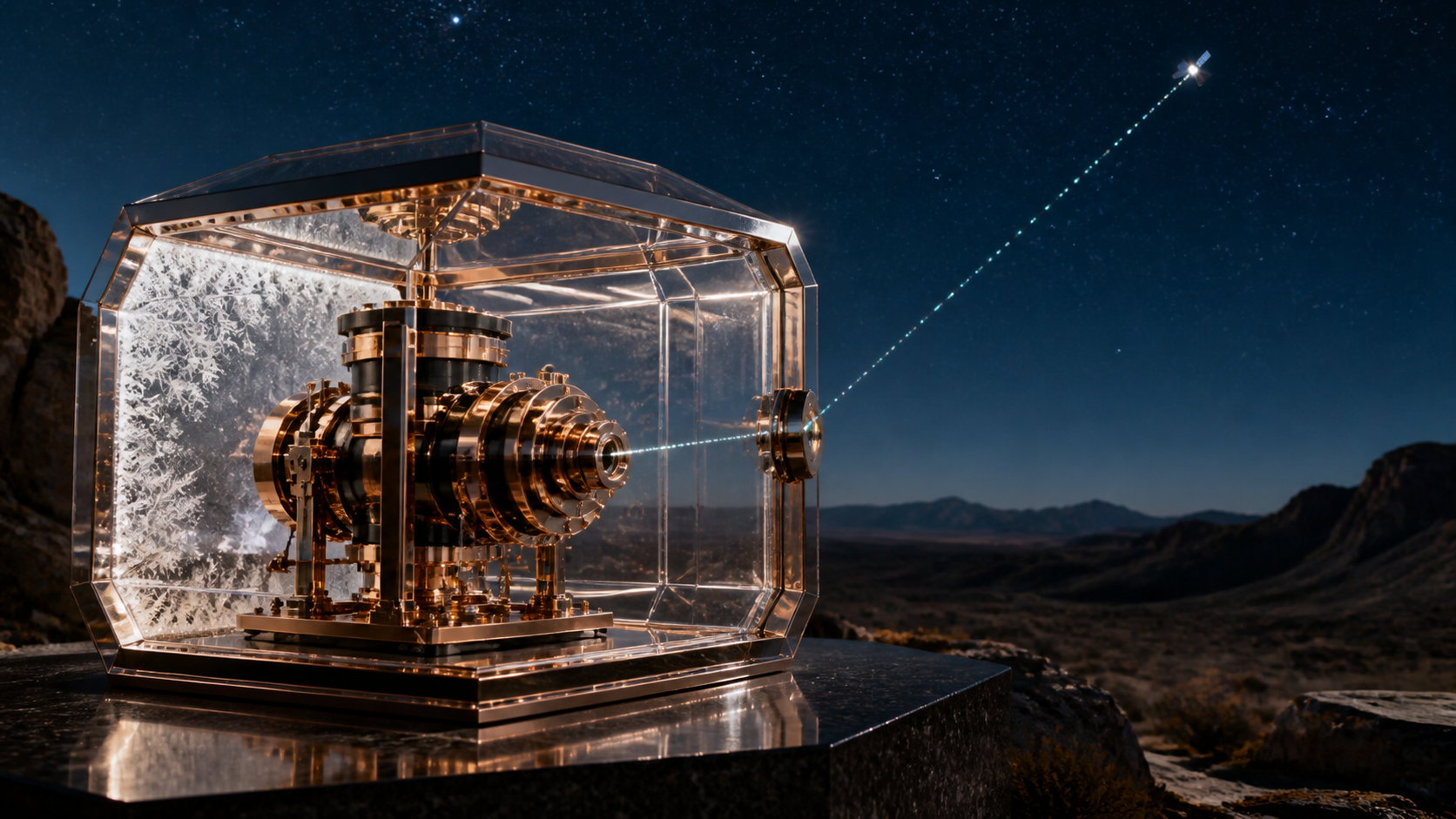
DAS Photonics' Faint Pulse Source Passes Space Qualification for ESA's QKDSat, Europe's Satellite Key Distribution Mission
The European Space Agency confirms that DAS Photonics completed the ECSS qualification campaign of the Quantum Faint Pulse Source for QKDSat and delivered the engineering model to Redwire Europe. We read what a qualified engineering model means for satellite quantum key distribution, why the trusted-node architecture belongs in every procurement conversation, and where the mission sits beside SAGA and EuroQCI in Europe's secure connectivity build-out.
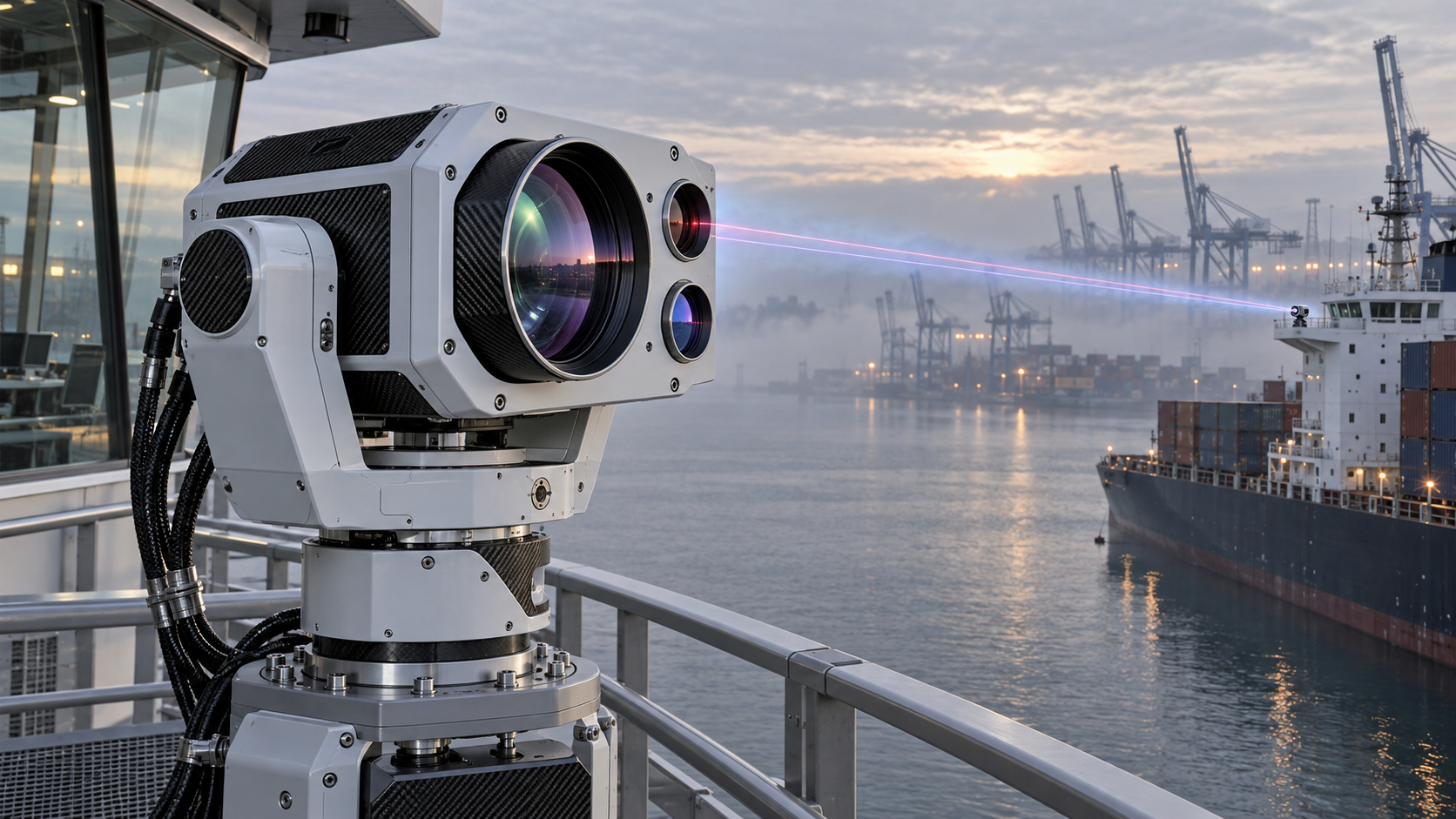
QuINSiDa Lab Demonstration Targets Free-Space QKD, LiFi and Encryption for Harbors, Ships and Fiberless Sites
A six-partner German consortium demonstrates free-space quantum key distribution at two wavelengths running beside LiFi data transport, key management and encryption in one working wireless stack. We read what line-of-sight quantum-secure communications would let a harbor, a ship or a forward site protect, and measure the laboratory result against the BSI position paper, the missing key-rate figures and the field trials that still separate this bench from a pier.
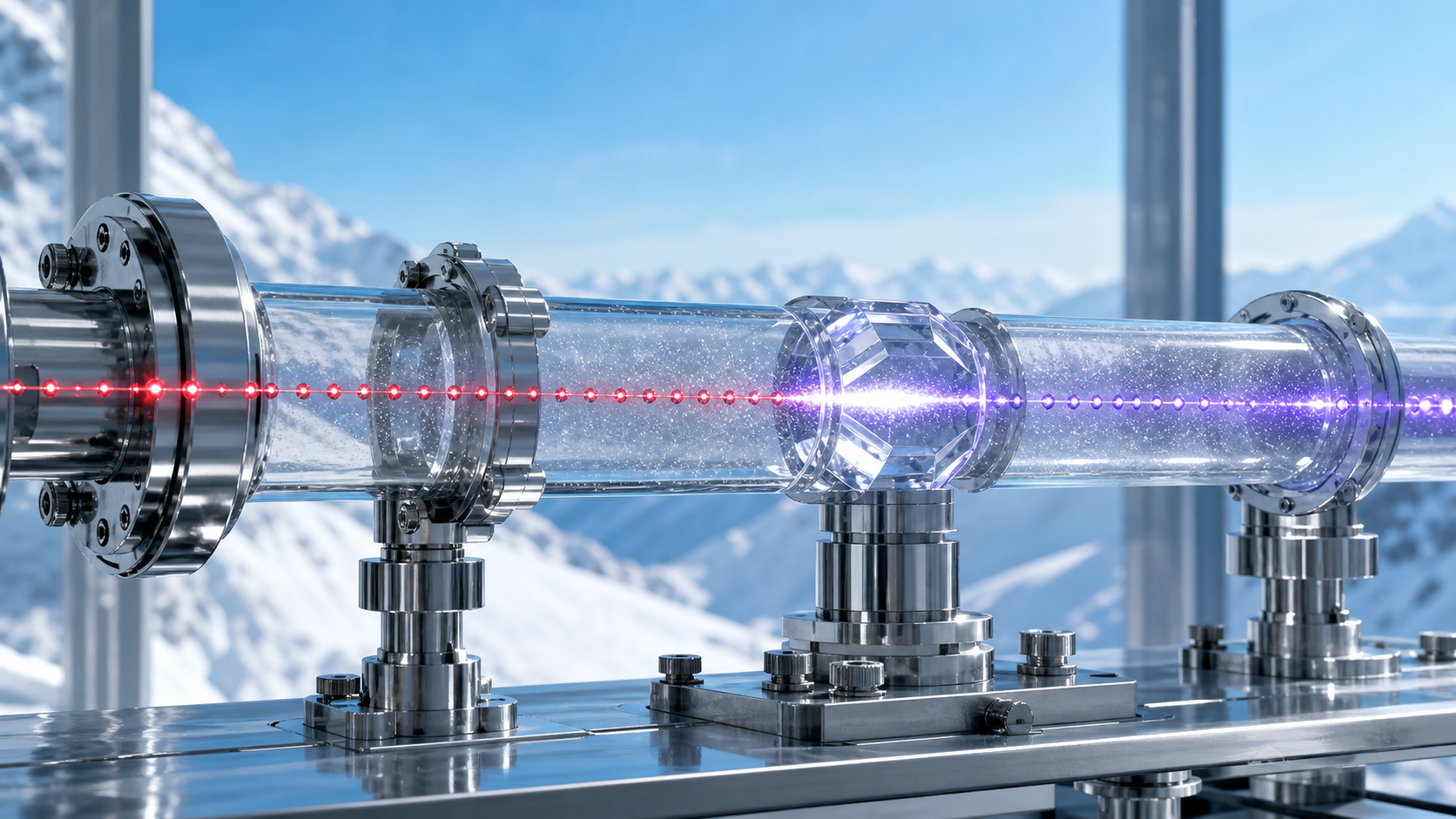
A Numerical Model Maps Spectral-Phase Correlation in a Xenon-Filled Fiber from Telecom to Ultraviolet
A UCLA, SLAC, Rochester and Ottawa team numerically models four-wave mixing in a xenon-filled hollow-core fiber as a candidate for quantum wavelength conversion from the telecom band to visible and ultraviolet light, calculating classical spectral-phase correlations above 0.99 under favorable conditions. We read the result as a candidate interface for quantum repeater architectures that connect mismatched wavelengths, weigh what phase-faithful conversion could buy secure fiber networking, and walk the distance between a simulation study and hardware a program office could field.
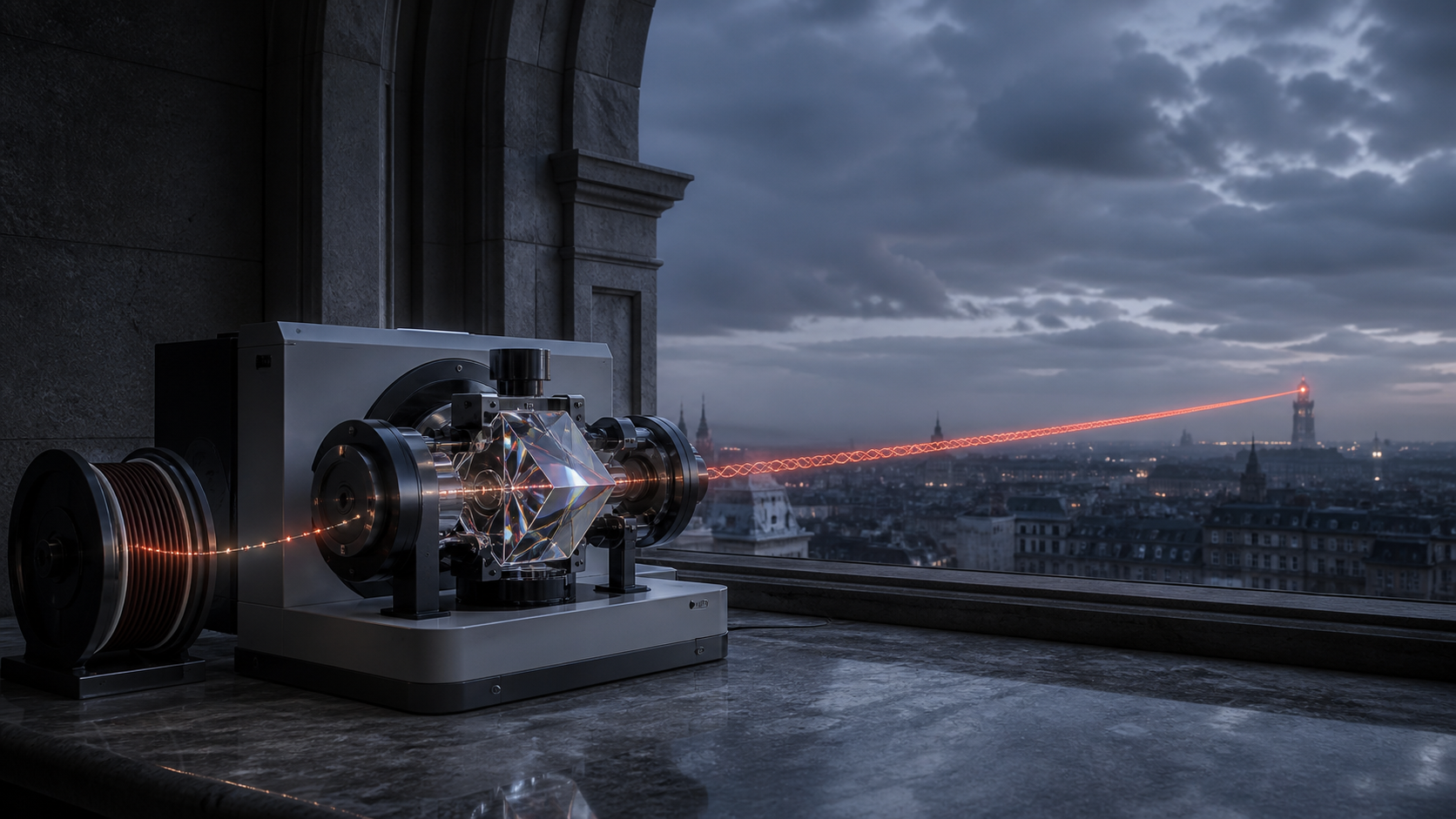
A Quantum Key Crosses From Fiber to Open Air Without a Trusted Node
A Tel Aviv University team, with the Hebrew University and HEQA Security, demonstrated end-to-end quantum key distribution across a hybrid channel: telecom fiber joined to outdoor free-space links of 90 and 750 meters, with the encoding converted all-optically so the junction never reads the key. A close look at what removing the trusted node means for military and critical-infrastructure networks, who gains on each side of the seam, and the engineering and doctrinal distance still separating a rooftop demonstration from a quantum-secure communications procurement.
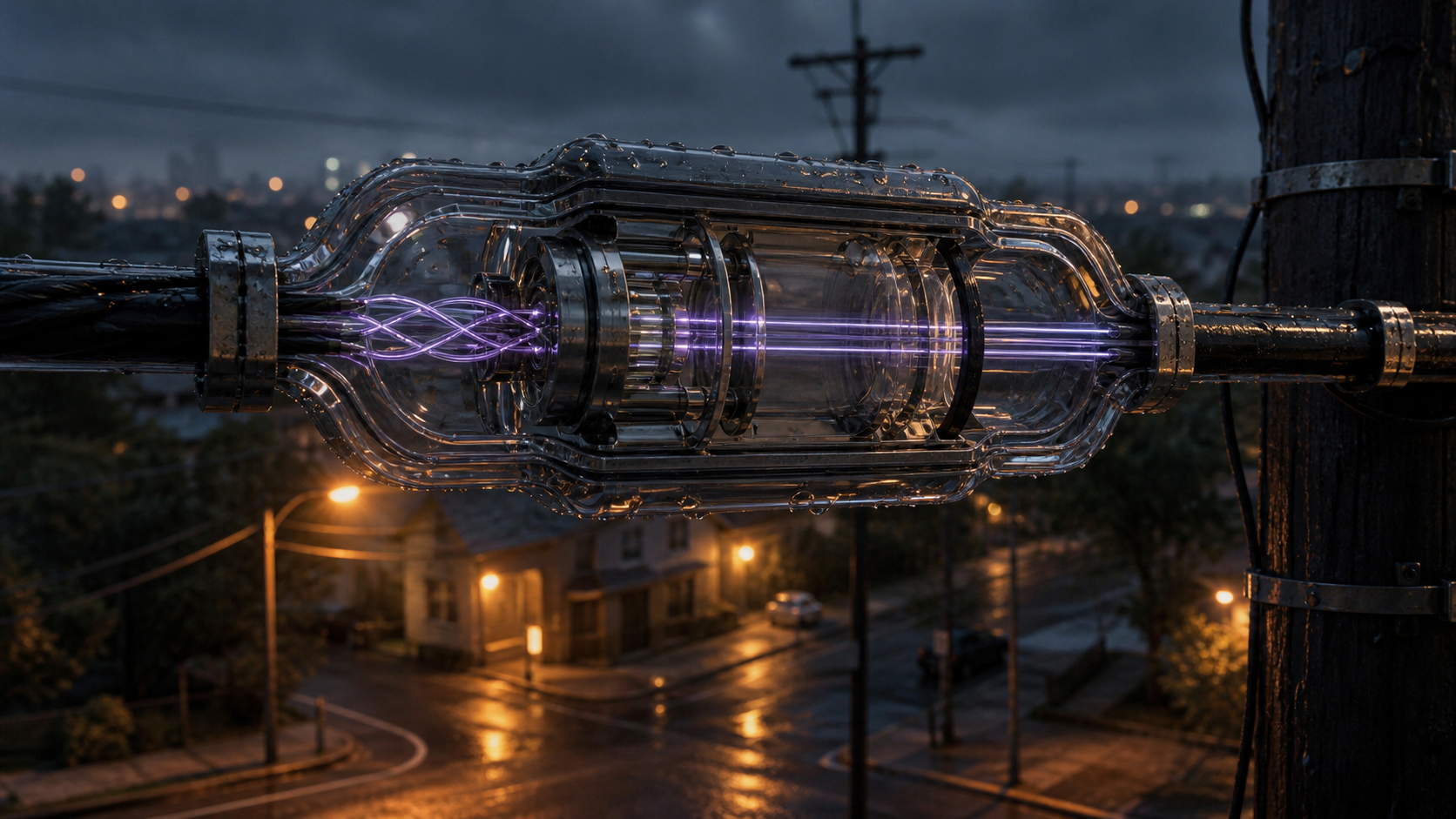
Entanglement Survives 62 Kilometers of Ordinary Aerial Fiber
A NIST, Joint Quantum Institute and Qunnect team sustained entanglement distribution across a 24-hour trial, at 92.8 percent uptime, over 62 kilometers of noisy aerial telecom fiber, moving quantum key distribution links from bespoke builds toward existing infrastructure.
Quantum Telephone Makes a Multinode Network Legible
A multinode experiment used global quantum tomography to recover channel information hidden by noise, opening a measured path toward quantum network assurance while automated field operation remains ahead.
Chicago Shows Quantum Links Can Share Busy Fiber
A 24.4-kilometer trial shows quantum networking can share installed fiber with high-capacity classical traffic, while repeaters and multi-hop service remain ahead.