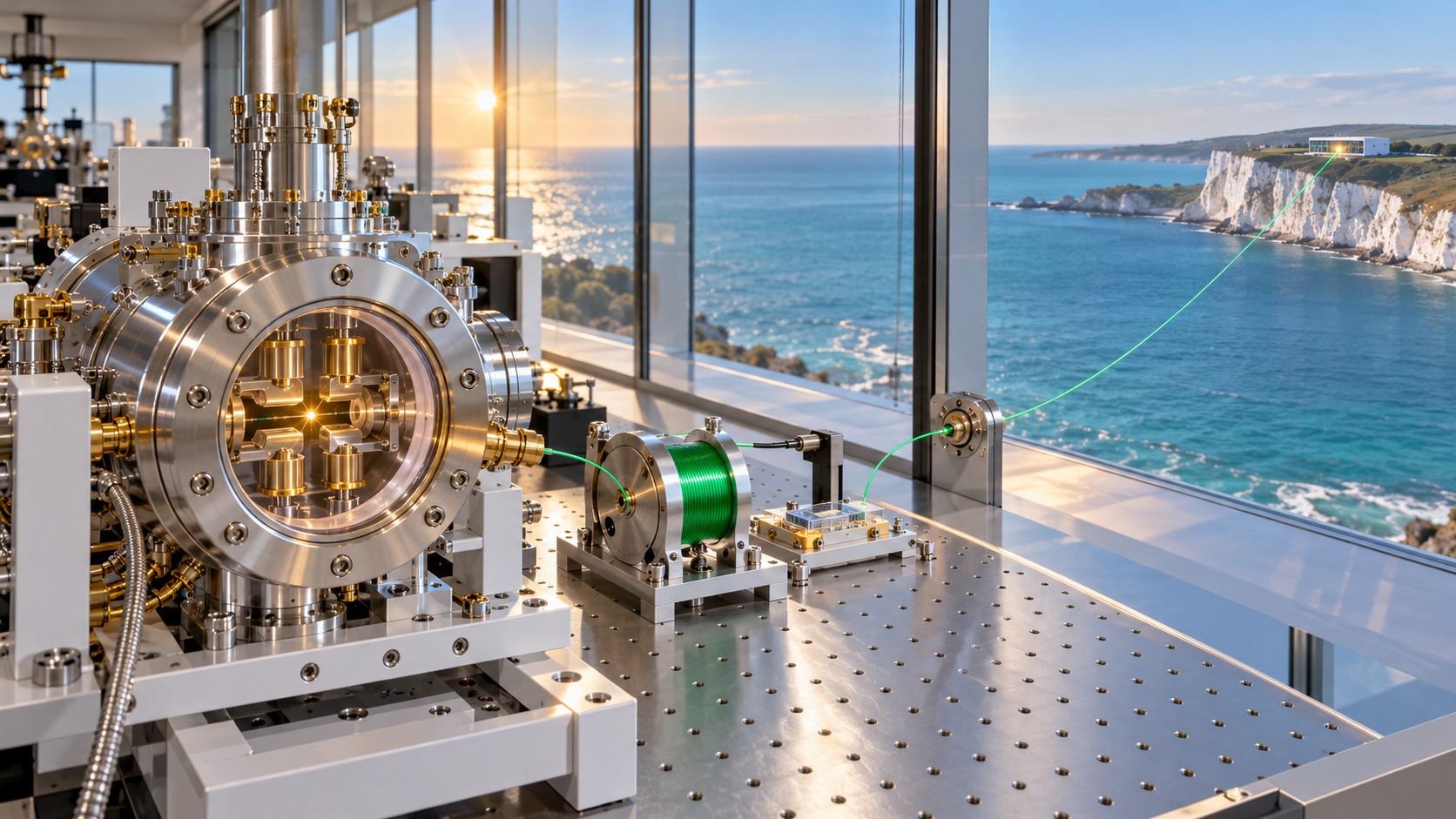
NPL and PTB Compare Two Ytterbium-Ion Optical Clocks Over a 2220 km Fiber Link at 4.8e-18 Uncertainty, arXiv 21 October 2026: The First International Comparison Under the CCTF's 5e-18 Bar, TRL 5
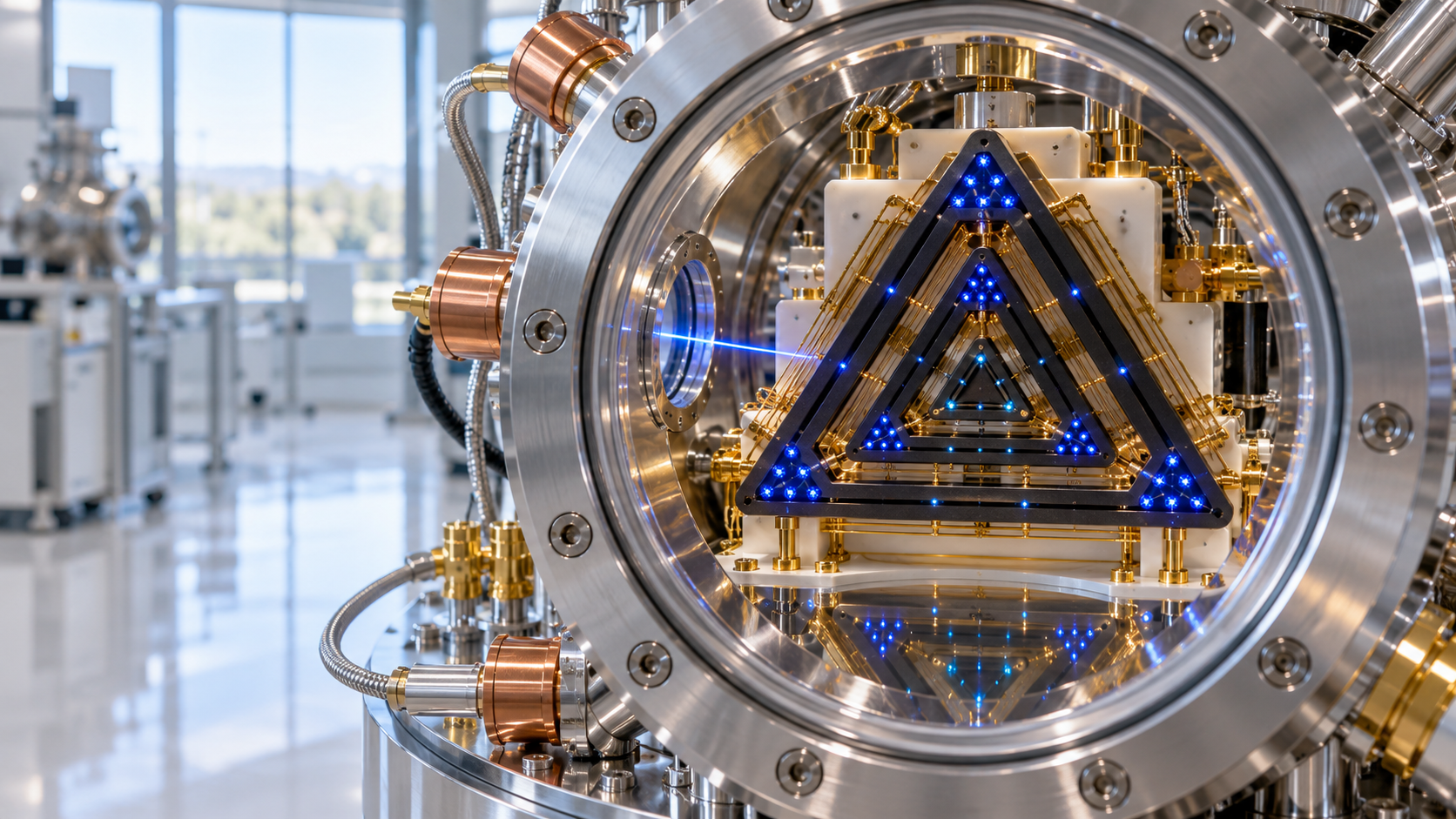
Quantinuum's Helios Holds a Distance-7 Color Code at Five Logical Errors per Million Rounds, 19 October 2026: What 73 Barium Ions per Logical Qubit Change in the RSA-2048 Clock, TRL 3
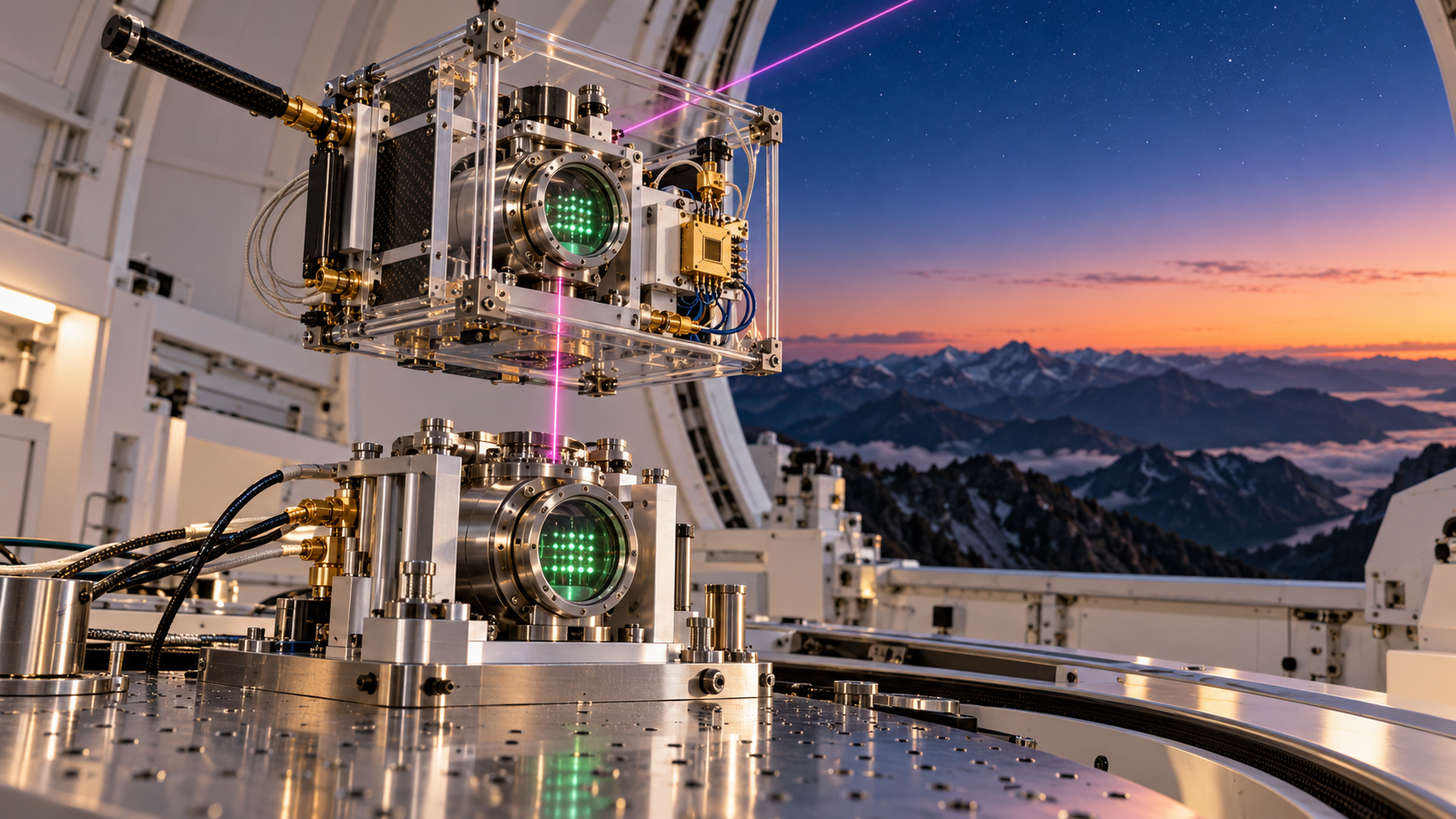
Utah and Rice Test EntangledEdge, a Satellite-to-Ground Quantum Sensing and Learning System, on IBM Heron Processors With a Simulated Orbital Link: arXiv 2610.24353, 17 October 2026, TRL 3
Researchers at the University of Utah and Rice University posted EntangledEdge on 17 October 2026, an orbital quantum sensing architecture in which a satellite teleports its sensed state to ground stations whose IBM Heron processors classify it with quantum autoencoders, never measuring it in between. What the hybrid prototype reached on ESA OPS-SAT and NASA SMAP telemetry (OPS-SAT F1 0.63 against 0.52 for isolated stations), why the result reads as a distributed sensor array for defense, and what still separates the paper from a program office.
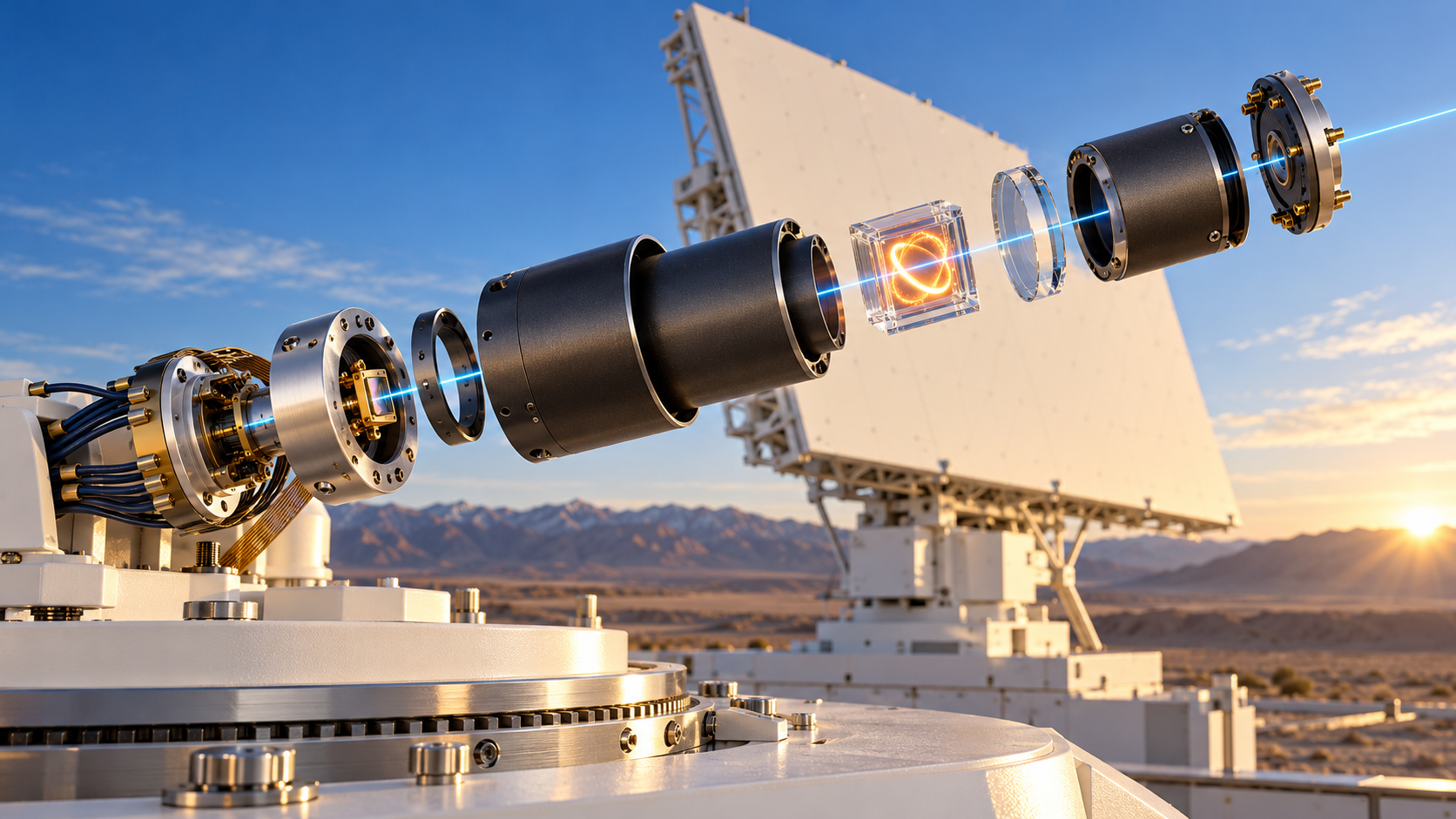
Arda Atomics Builds a Nuclear Magnetic Resonance Gyroscope to Find North for Radars Without GPS, Announced 15 October 2026 Under SPRIND's Quantum-Driven Intelligence Funke With HENSOLDT, TRL 4
Arda Atomics, TRUMPF's quantum sensing subsidiary, announced on 15 October 2026 that it is developing a nuclear magnetic resonance gyroscope intended to enable radar alignment without GPS, with HENSOLDT setting the requirements inside SPRIND's Quantum-Driven Intelligence Funke. What the laboratory and QYRO CubeSat trail establishes, the gyrocompassing arithmetic that decides whether it works, and the projected US strategic-grade NMRG figures a buyer will hold it against.
Vietnam's Government Cipher Committee Publishes Three Draft Post-Quantum Cryptography Standards on 17 October 2026: Home-Grown HB-PQSign Beside ML-KEM and ML-DSA, on a 2027 to 2035 Roadmap

The Dutch Government-Wide Quantum Strategy, 5 October 2026: Submarine-Finding Sensors, GPS-Free Navigation, Purple NECtar Challenges and a 2045 Defense Target With No New Budget
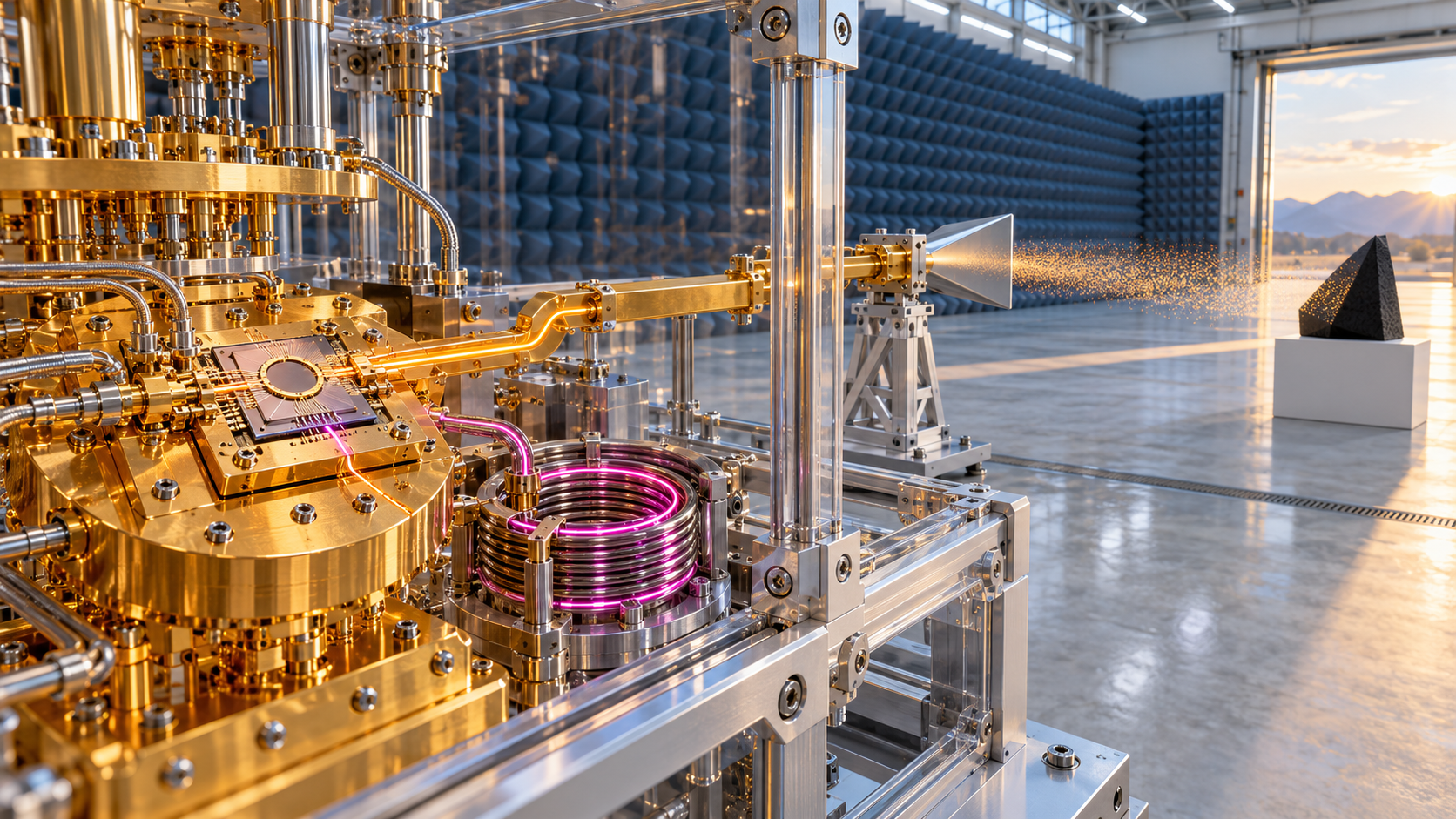
Big Bang Boom Solutions Puts Its Quantum Illumination Radar at TRL 3 at QuantEW 2026, IEEE MILCOM, 12 October 2026: What the 6 dB Theory and a 15 mK Experiment Leave Open
Big Bang Boom Solutions used its QuantEW 2026 workshop at IEEE MILCOM on 12 October 2026 to announce a quantum illumination radar program it rates at TRL 3, with TRL 4 to 5 targeted in 24 months. The published physics caps the prize at a 6 dB error-exponent advantage under low-brightness, high-noise conditions, and the strongest measured result is a factor of 1.2 inside a 15 millikelvin dilution refrigerator. What the sources establish, and what a program office should ask before relying on the roadmap.
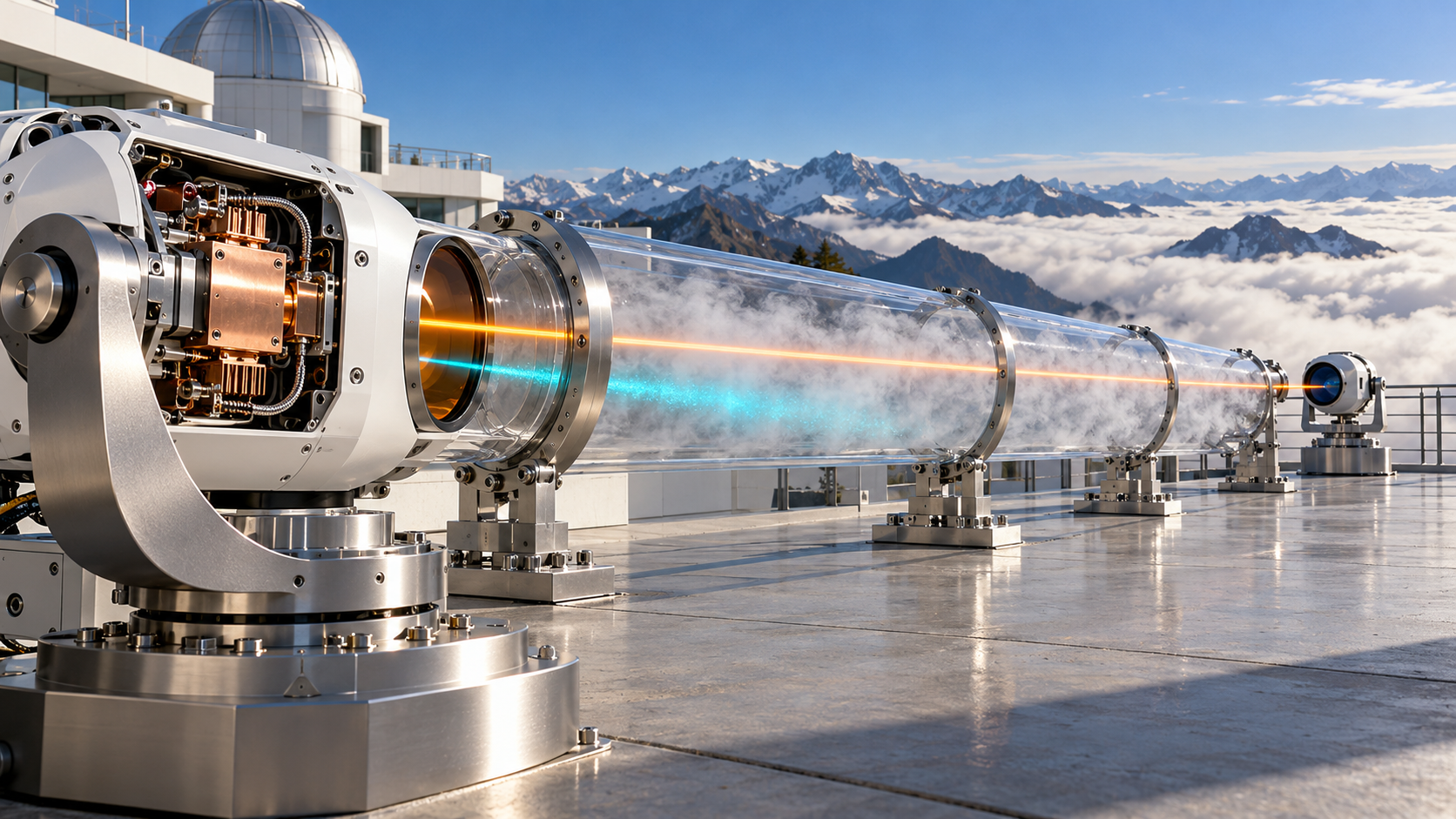
CNR-INO, QTI and the Italian Space Agency Simulate Mid-Infrared Free-Space Quantum Key Distribution in Advanced Quantum Technologies, October 2026: 10 km Through Fog Against 7.5 km at 1,550 nm, TRL 2
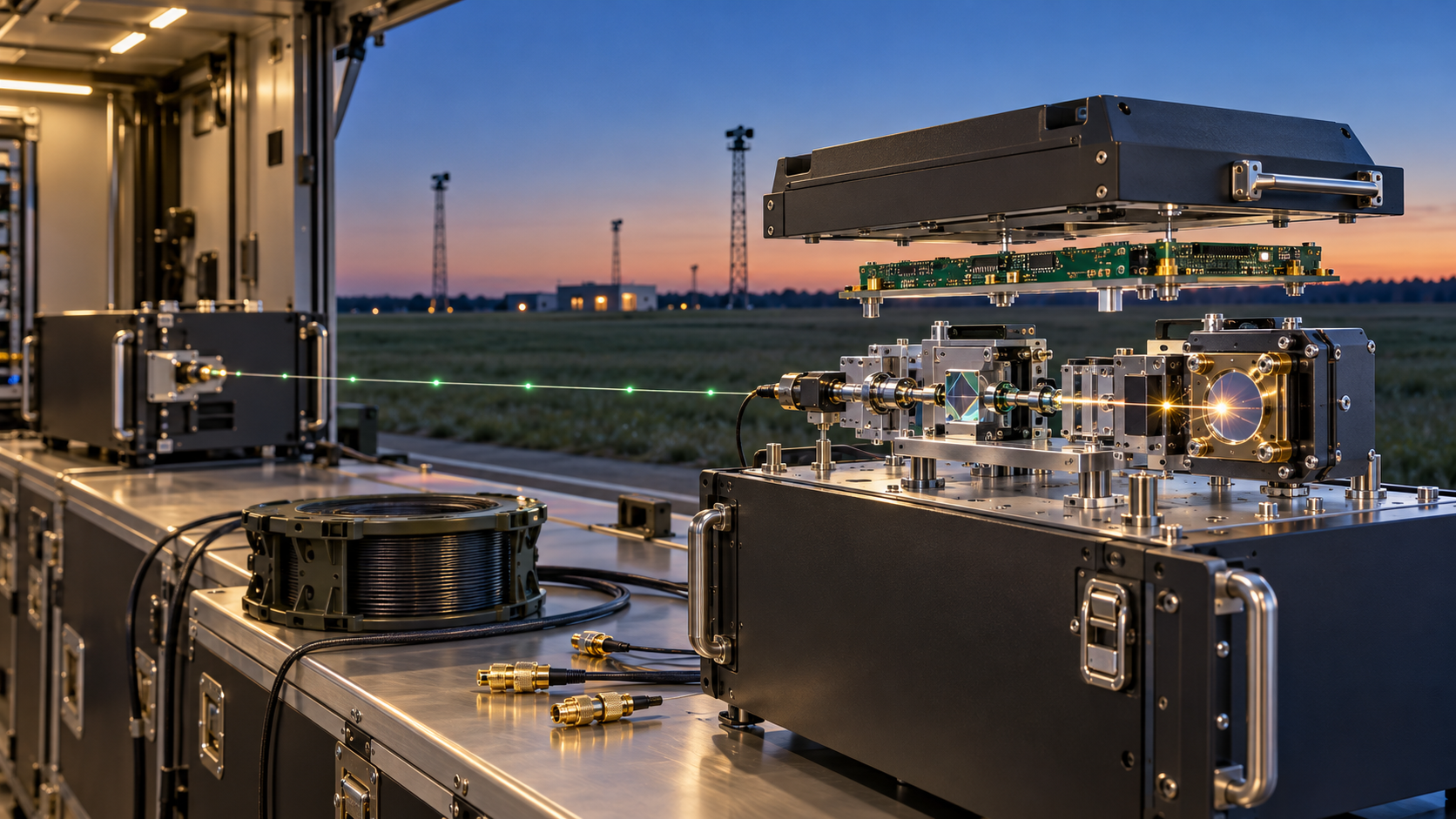
DRDO Tests a Quantum Key Distribution Platform on the Live Network of the Proof and Experimental Establishment at Chandipur, 14 October 2026, to Secure Artillery and Armored Weapon Trial Telemetry
UK Government Awards £50 Million to Six Quantum Sensing and PNT Firms, 13 October 2026: ColdQuanta UK's Mobile Quantum Radio, Quantum Fabrix's Satellite Clock and MoniRail's GPS-Free Rail Positioning
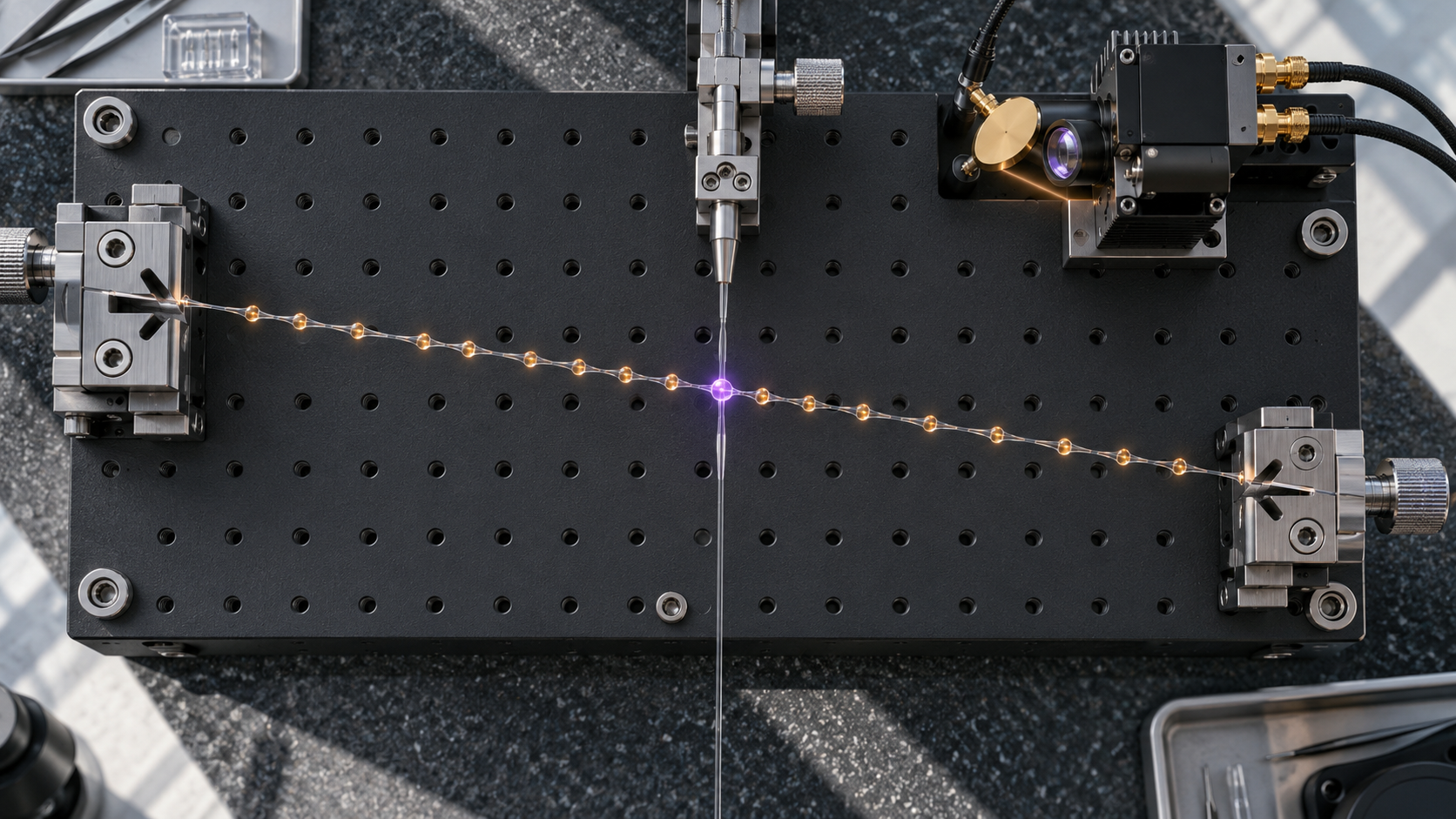
Army Research Laboratory and University of Maryland Chain 21 Laser-Written Microresonators on One Glass Fiber Into a Topological Photonic Simulator, Nature Communications, 29 September 2026, TRL 3
Nathaniel Fried, Dashiell Vitullo and Avik Dutt of the DEVCOM Army Research Laboratory and the University of Maryland wrote 21 microresonators onto one glass fiber with a carbon dioxide laser and used the chain as a topological photonic simulator of Su-Schrieffer-Heeger lattices. In a separate ten-site SSH2 device, localized defects consistent with scattering, possibly from surface impurities, caused no notable edge-mode changes. The Army release adds resilient networks and GPS-free quantum navigation as future uses, which the paper does not test. The result is an open, dual-use TRL 3 bench proof of concept in the simulation pillar.
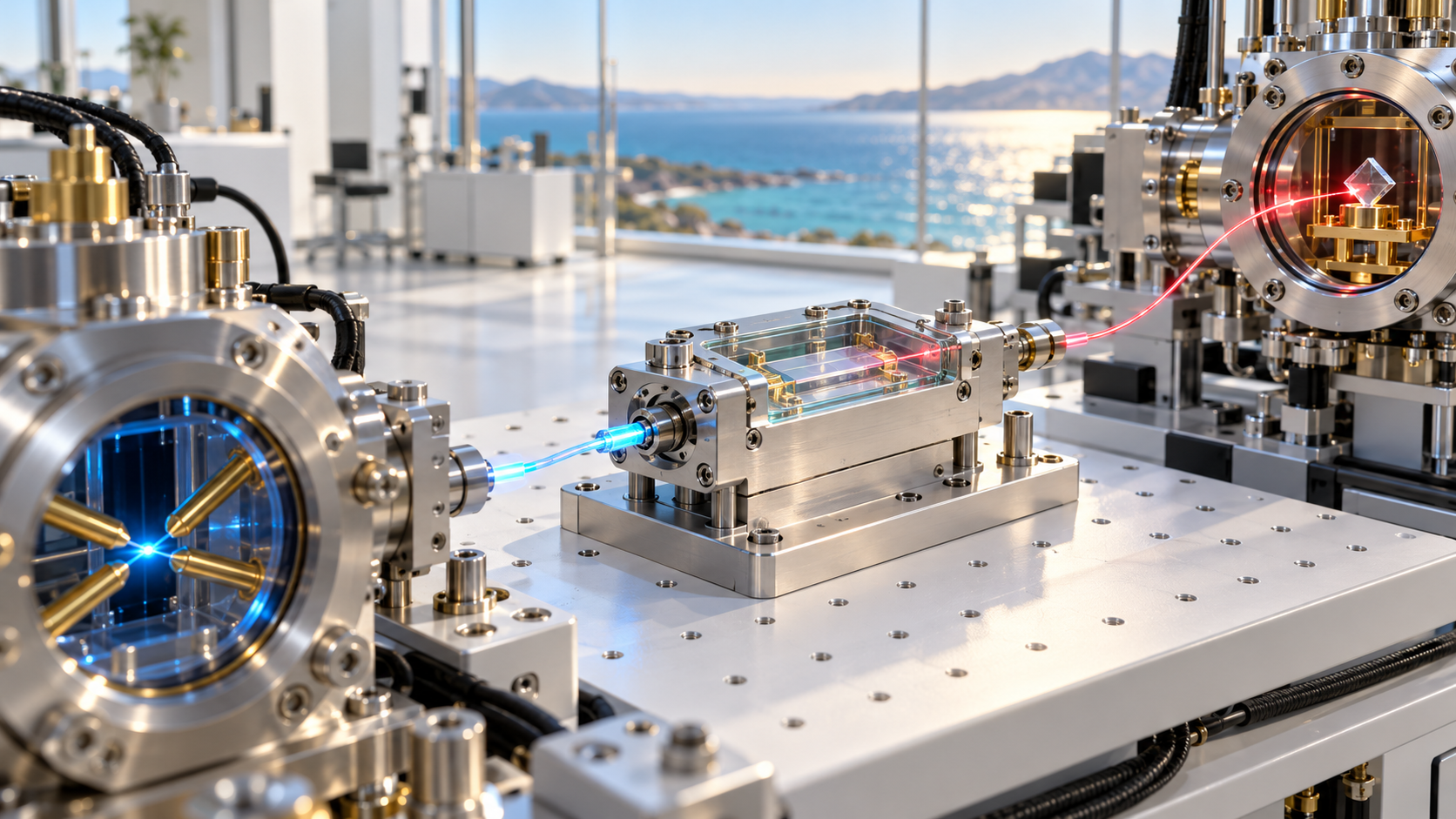
IonQ and Duke Entangle a Trapped Barium Ion With a Diamond Silicon-Vacancy Memory at 1,032 Bell Pairs per Second and 87.9 Percent Fidelity, arXiv 2610.10705, 9 October 2026, TRL 4
IonQ and the Duke Quantum Center report a photonic link between a trapped barium-138 ion and a silicon-vacancy center in a diamond cavity that produces 1,032 Bell pairs per second at 87.9 percent fidelity, four times the earlier best between two trapped ions. The result is the first public measurement of a quantum memory interconnect of the kind DARPA's HARQ program is funding, and it reads as dual-use networking capability for modular processors and future repeaters. The two nodes are interpreted here as sharing one bench, but no distance was reported and no entanglement was stored, which is a TRL 4 laboratory link.
South Korea's DAPA Orders a Concept Study on Quantum Computing for Battlefield Prediction and Asset Optimization, 8 October 2026: What It Will Benchmark and Why It Has No TRL Yet
On October 8, 2026 South Korea's Defense Acquisition Program Administration ordered a concept study on quantum computing for battlefield prediction and asset optimization. It will type the computational problems of defense, compare classical methods, quantum simulators and hybrid environments on the same representative problems, and design a defense quantum computing benchmark with a non-sensitive standard problem family and synthetic data. The agency names the two obstacles itself, data input and output and the cost of transforming the problem, and the post lays out the classical baseline questions a program office should hold until the comparison is run. Technology readiness: not assessed, the announcement concerns a study, with insufficient evidence to assess a specific system.
Europol and UC3M's Harvest Now, Decrypt Later Report, 7 October 2026: Which Captured TLS, SSH and OpenPGP Traffic a Quantum Computer Could Read, and Why Government Communications Rate High Risk
Two Thorium-229 Nuclear Clocks in Nature, 7 October 2026: TU Wien and PTB Run One Unattended for a Day, a Tsinghua-Led Team Reaches 5e-13 Instability, for GNSS-Denied Timing, TRL 4
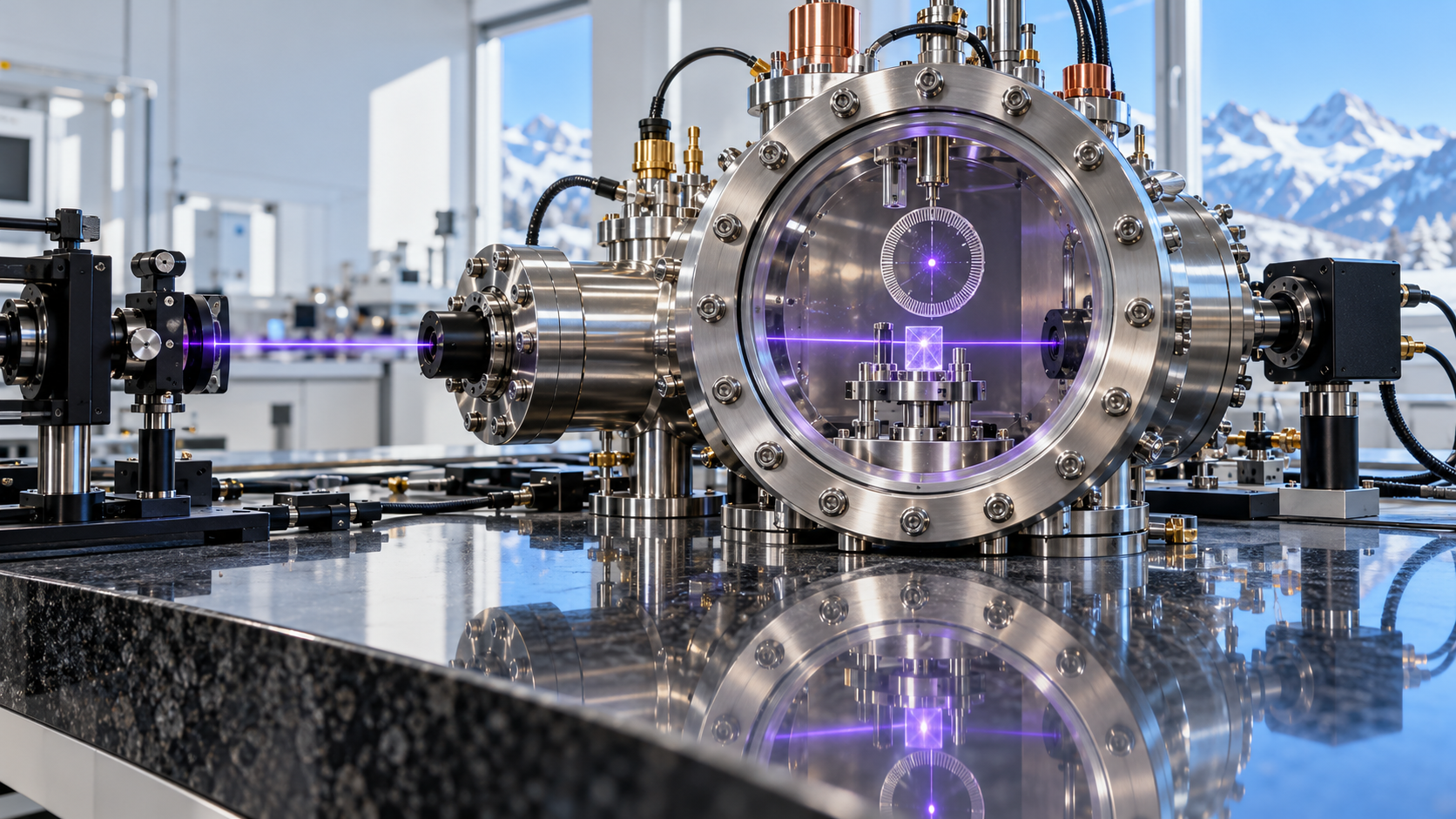
Nature published two independent thorium-229 nuclear clocks on October 7, 2026: a TU Wien and PTB clock that ran unattended for a day and measured within-run instability in the low 1e-14 range, and a Tsinghua-led clock at 5e-13 whose two home-grown crystals agree to one part in ten trillion. A solid-state reference at room temperature is the shape of holdover timing a GNSS-denied force eventually needs, and both papers state the barriers plainly: day-to-day reproducibility of 5e-13, crystal strain and the ultraviolet laser power a field-deployable nuclear clock would have to carry. TRL 4.
Quantum Brilliance and Oak Ridge Ran Fragment-Based Quantum Chemistry Across Three Room-Temperature Diamond QPUs, arXiv 6 October 2026: 93.6 Percent Parallel Efficiency on Helium Clusters, TRL 3
Université de Sherbrooke Plans Five Drone Surveillance Tours Over Quebec With Wildfire Risk Maps and a Neutral-Atom Quantum Heuristic, arXiv 2 October 2026: 31 Valid Plans on an Emulator, TRL 3
Airbus Quantum-Secure Tactical Communications Trial in Malta, 10 and 11 September 2026: Agnet, Telsy QKD, Stormshield Encryptors and Merqury Key Management, and What a Program Office Still Needs
Sectigo Quantum Ready, Announced September 17, 2026: What Cryptographic Discovery Must Show a Defense Buyer
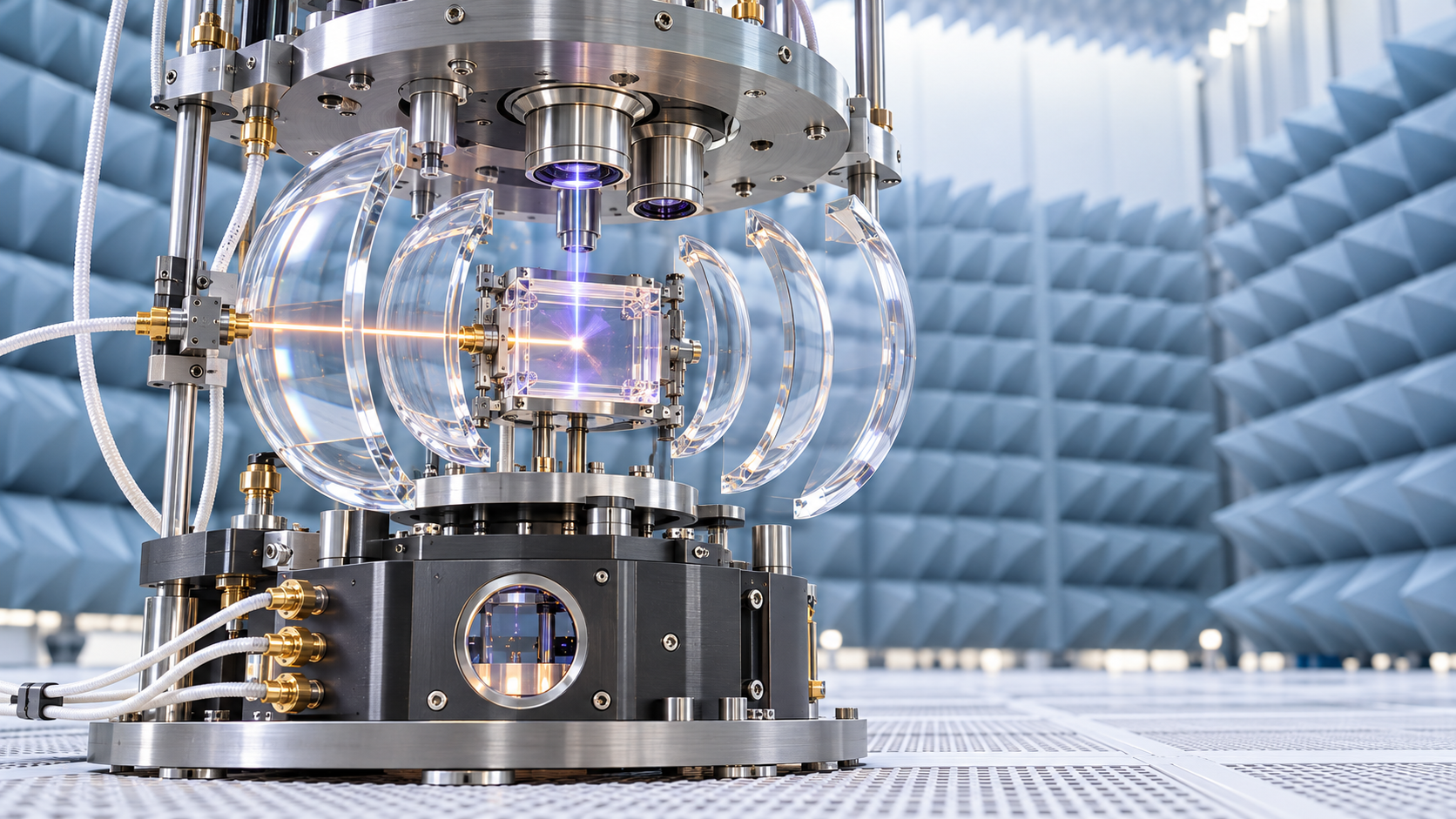
Quantum X Labs Pairs Rydberg Atom RF Sensing With Its Ramsey-CPT Atomic Clock, Announced 28 September 2026: What Is Shown, What DARPA and the Airbus RydRa Study Measured, and Why It Sits at TRL 2
On September 28, 2026 Quantum X Labs of Tel Aviv said it is developing Rydberg atom RF sensing and integrating it with the Ramsey-CPT atomic clock it reported in July at a stability of 1 × 10⁻13 at one second. The company states plainly that no integrated system has been demonstrated and gives no sensitivity, band or form factor for the sensor. We read the release against the public measurements that exist: NIST's self-calibrating atom-based field probes, DARPA's ROCkN holdover clocks tested on an aircraft, vehicles and a ship, and the Airbus, QVIL and DLR RydRa study that priced a Rydberg radar receiver at better than minus 170 dBm per hertz with 10 MHz per cell and a seven-meter array for directivity. The combined head is a formulated concept at TRL 2, dual-use by construction, and we set out the four results that would move it.